Artwork
Coama
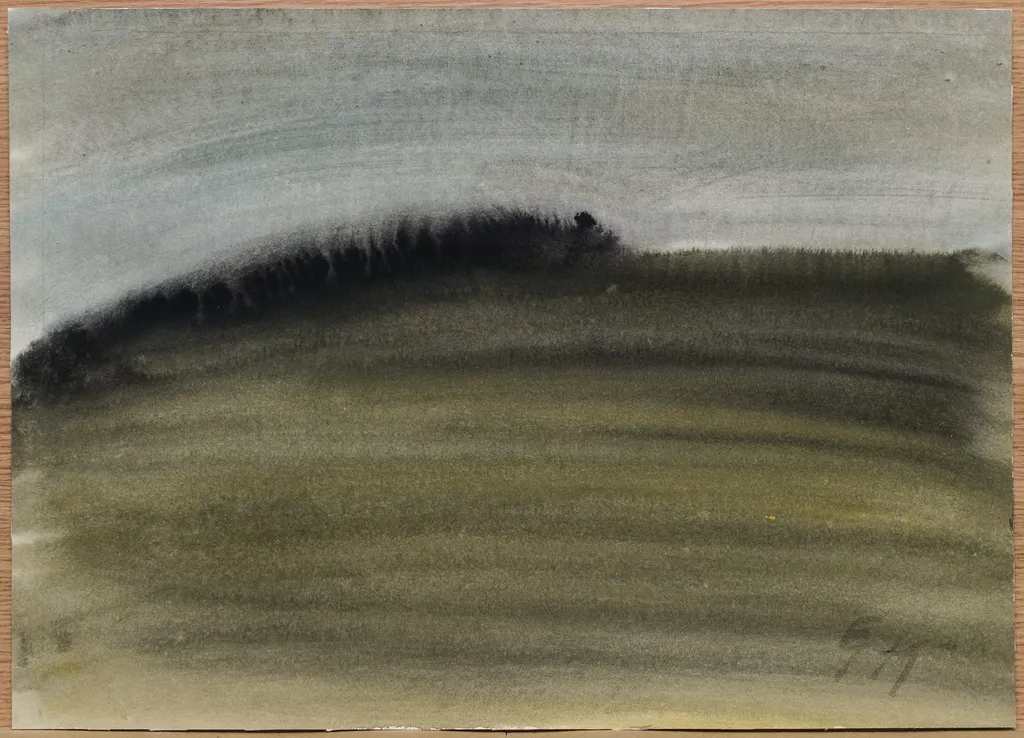
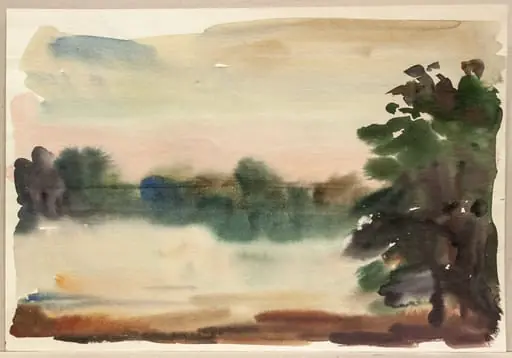
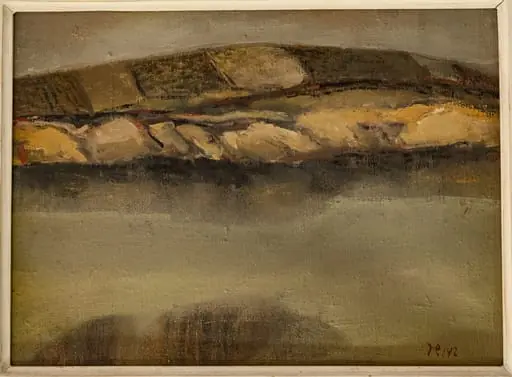
Coama is an unspecified painting by Eugen Gâscă. It dates from 1950 and is held in the collection of the Gavrila Simion Eco-Museum Research Institute Tulcea.
About this work
Overview
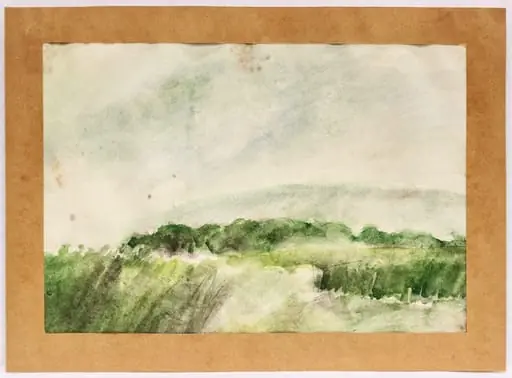
Coama, attributed to Romanian artist Eugen Gâscă around 1950, is an image held in the collection of the Museum of Ethnography. The work presents a simplified landscape dominated by a broad green field that recedes toward the lower edge, set against a darker, curved silhouette suggestive of a hill or forest and a muted sky above.
Subject & Meaning
The composition focuses on a natural scene, using the contrast between the deep green foreground and the darker, arching form to evoke a sense of terrain and atmospheric depth. The limited palette and restrained detail invite contemplation of the landscape’s quiet, perhaps rural, character without explicit narrative elements.
Technique & Style
Gâscă employs a restrained range of greens, grays, and blacks, allowing tonal variations to suggest texture and spatial recession. The smooth transition from richer to lighter hues creates a subtle gradation of depth, while the curved line across the upper half functions as a compositional anchor, highlighting the artist’s controlled handling of form and color.
History & Provenance
Created circa 1950, Coama entered the holdings of the Museum of Ethnography, where it remains accessible to the public. The work is catalogued under the artist’s name, Eugen Gâscă, and is referenced in the museum’s documentation of mid‑twentieth‑century Romanian visual art.
Artist & collection
Artist
Eugen Gâscă’s paintings show everyday life in Romania’s Danube Delta. In *Coama*, a woman’s headscarf catches soft light against a blurred background. *Port pescăresc la Sf. Gheorghe* captures boats by the waterfront…
Museum
Gavrila Simion Eco-Museum Research Institute Tulcea
Continue through works from the same source collection.