Artwork
Dealuri dobrogene
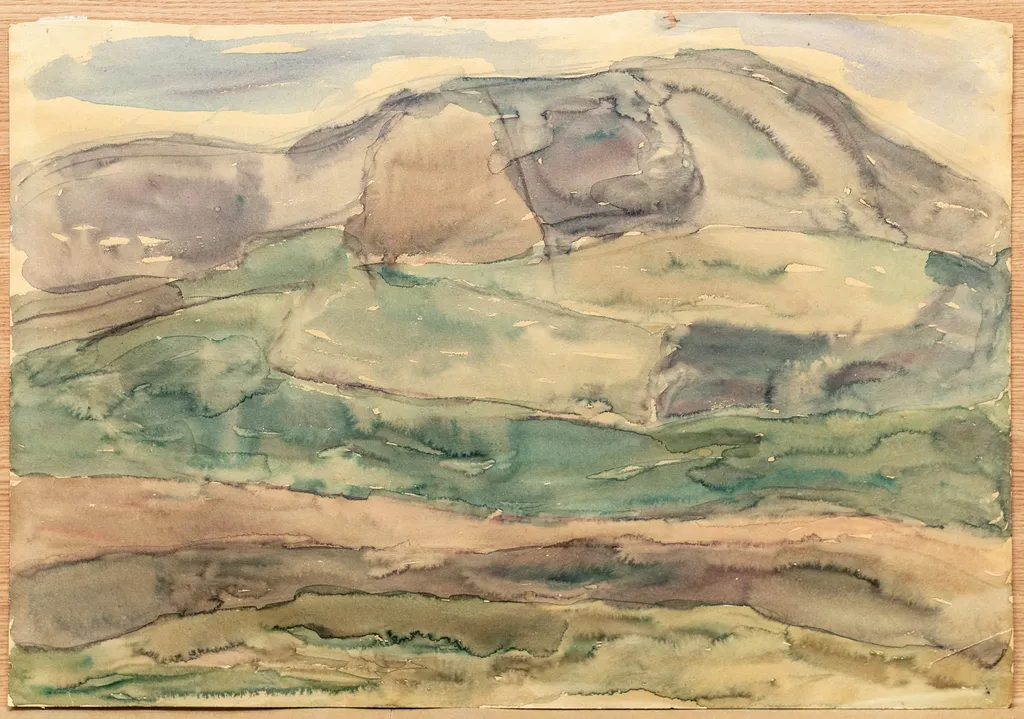
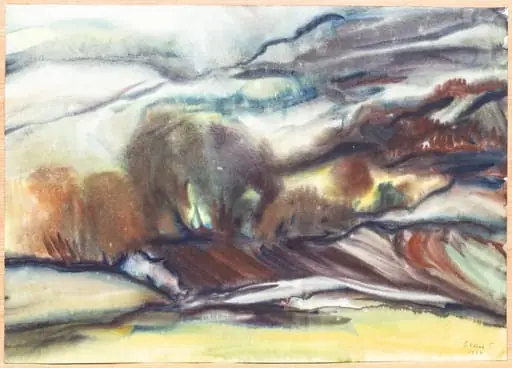
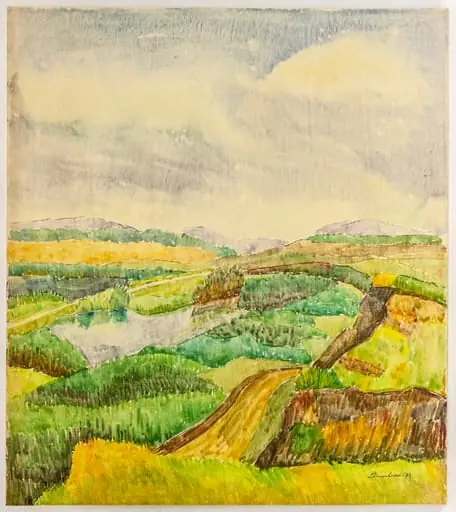
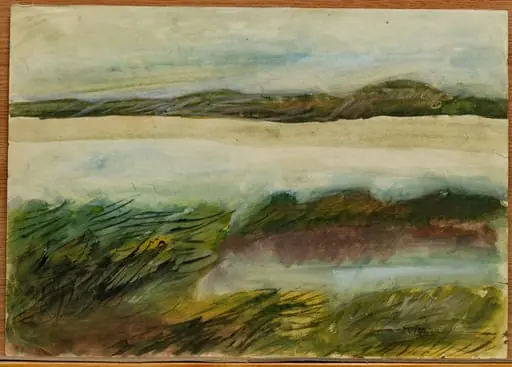
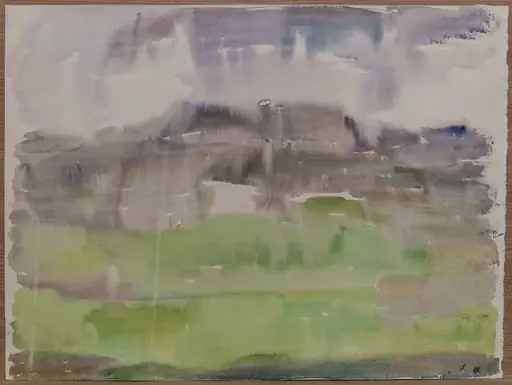
Dealuri dobrogene is a print by Silvia Jelescu-Grosu. It dates from 1950 and is held in the collection of the Gavrila Simion Eco-Museum Research Institute Tulcea.
About this work
Overview
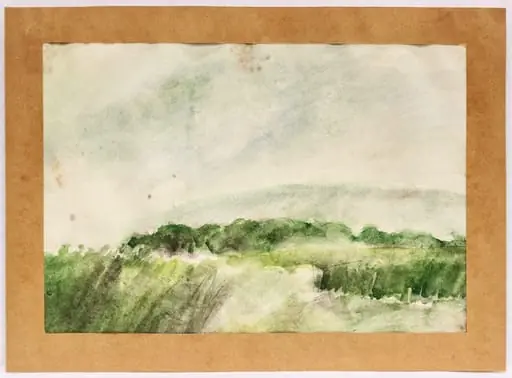
Created around 1950 by Silvia Jelescu-Grosu, Dealuri dobrogene is a landscape painting in oil or water-based medium, currently held by the Museum of Ethnography. The work captures the subtle topography of the Dobruja region through a restrained palette and fluid brushwork. Its quiet composition avoids dramatic contrasts, instead emphasizing harmony between land and sky.
Subject & Meaning
The painting depicts the gently undulating hills of Dobruja, a region in southeastern Romania known for its pastoral landscapes. Rather than documenting specific landmarks, Jelescu-Grosu conveys a sense of place through atmosphere. The absence of human figures or structural elements suggests a contemplative relationship with the land, rooted in regional identity rather than narrative.
Technique & Style
The artist employed loose, translucent brushstrokes that allow pigments to blend organically on the surface. Colors—muted greens, earthy browns, and soft tans—are applied with minimal definition, creating a seamless transition between terrain and sky. This watery technique produces a hazy, continuous form, reinforcing the painting’s serene and introspective tone.
History & Provenance
The work entered the collection of the Museum of Ethnography shortly after its creation, likely as part of a broader effort to document regional artistic expressions in postwar Romania. Its preservation within an ethnographic context suggests it was valued for its cultural resonance rather than its formal innovation, reflecting local aesthetic sensibilities of the time.
Context
In the early 1950s, Romanian art was increasingly shaped by state-endorsed realism, yet Jelescu-Grosu’s approach remained quietly lyrical. Dealuri dobrogene aligns with regionalist tendencies that prioritized indigenous landscapes over ideological themes. Its subdued style may reflect both personal inclination and the limited freedom for abstraction under prevailing cultural policies.
Legacy
Though not widely exhibited beyond institutional circles, the painting contributes to a lesser-known strand of mid-century Romanian art that valued emotional resonance over political messaging. Jelescu-Grosu’s focus on quiet natural forms offers a counterpoint to the era’s more dominant styles, preserving a personal, regional voice in the national artistic record.
Artist & collection
Artist
Silvia Jelescu-Grosu made paintings and prints of the Romanian landscape in the mid-20th century.
Museum
Gavrila Simion Eco-Museum Research Institute Tulcea
Continue through works from the same source collection.