Artwork
Saint Ambrose Suppressing Heresy
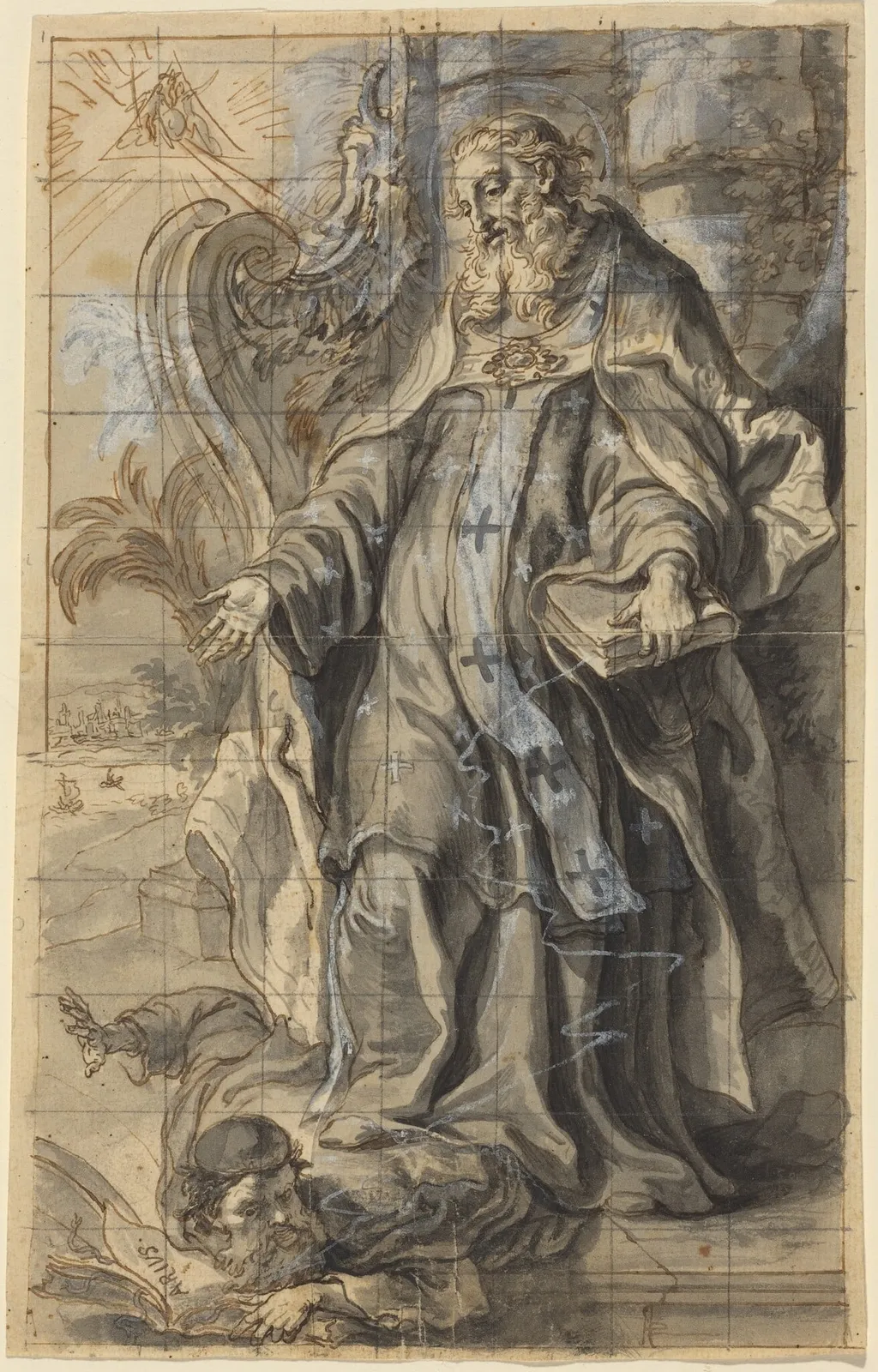
Saint Ambrose Suppressing Heresy is an ink drawing by the Baroque artist Gottfried Bernhard Götz. It dates from 1741 and is held in the collection of the National Gallery of Art.
About this work
Overview
Saint Ambrose Suppressing Heresy is a pen-and-ink drawing executed by Gottfried Bernhard Götz in 1741. Rendered with brown ink, gray wash, and white highlights on a gridded sheet of paper, the work records a compact, preparatory study for a larger composition. The lower‑left corner contains a later insert that re‑draws part of the image, indicating a revision during its creation.
Subject & Meaning
The composition centers on a bearded, robed saint—identified by his halo—who stands dominant over a crumpled figure lying on the ground. The saint’s right hand is raised in a gestural command, while his left hand rests on his chest, suggesting a solemn oath. A scroll or book tucked under his arm reinforces his role as a doctrinal authority, emphasizing the theme of confronting heretical belief.
Technique & Style
Götz employed a combination of brown ink lines and a gray wash to model volume, particularly in the folds of the saint’s robe and the texture of his beard.
Götz employed a combination of brown ink lines and a gray wash to model volume, particularly in the folds of the saint’s robe and the texture of his beard. Cross‑hatching builds the darkest areas, while white accents create highlights. The background is suggested with loose, atmospheric strokes of clouds and an implied architectural element, all laid out on a paper divided into squares to aid scaling.
History & Provenance
Created in the mid‑18th century, the drawing served as a preparatory study for a larger religious painting, a common practice among German artists of the period. The presence of a later redrawn insert in the lower left corner testifies to Götz’s iterative process. The work remains in a museum collection, where it is displayed as part of the artist’s oeuvre documenting his approach to narrative religious subjects.
Artist & collection


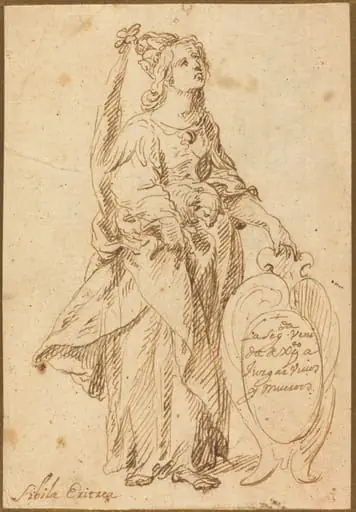 Eritrean Sibyl
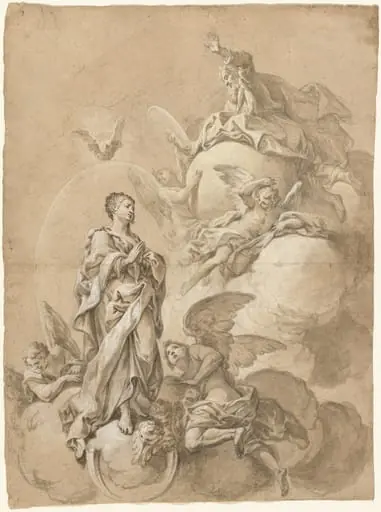 Vision of the Immaculate Conception
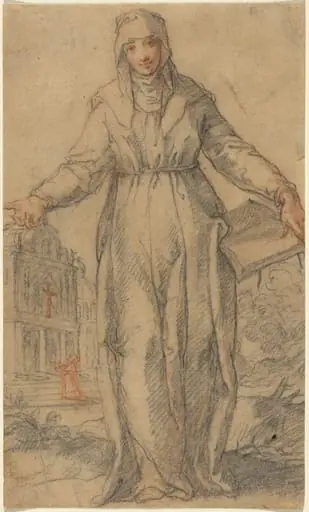 Female Saint (Saint Clare of Assisi or Saint Catherine of Siena?)
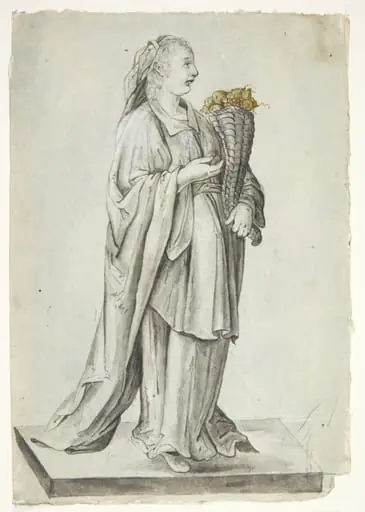 Abondantia
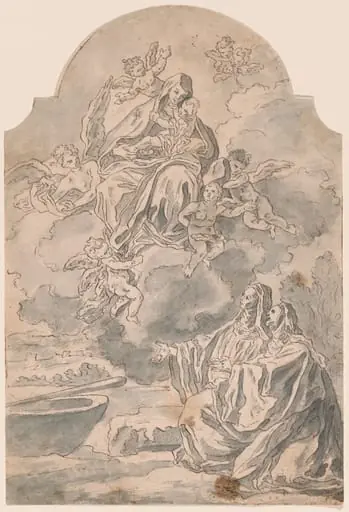 The Virgin and Child Appearing to Two Female Monastics
![Mary Magdalene [verso], by Biagio Pupini](https://artifactworldgallery.com/img/biagio-pupini--mary-magdalene-verso--8b62d2d37815f802-w320.webp) Mary Magdalene [verso]
Mary Magdalene [verso]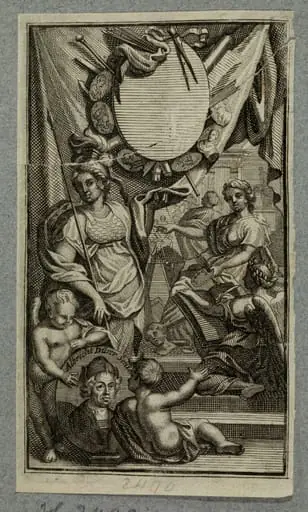 Frontispiece with portrait of Albrecht Dürer d.Ä.
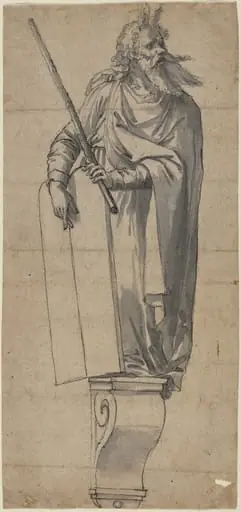 A Sculpture of Moses
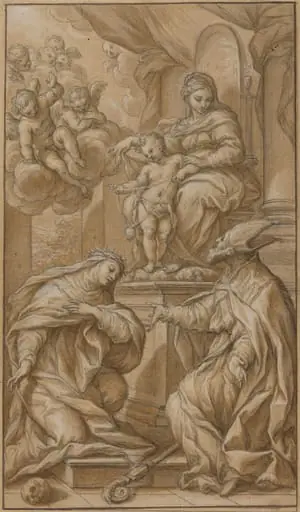 The Madonna and Child Enthroned, Adored by Two Saints
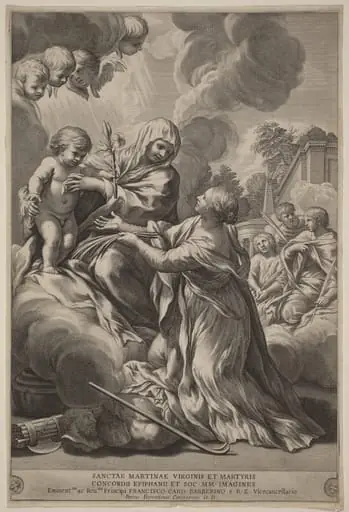 Virgin and Child with Martyrs
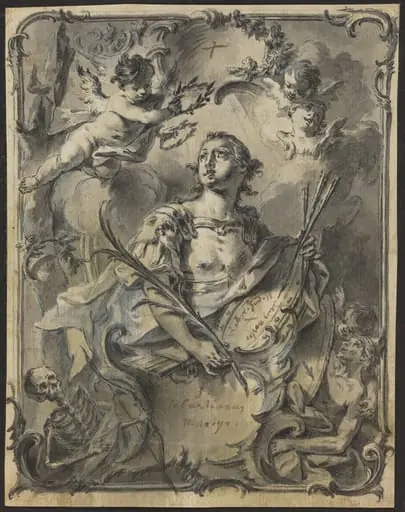 Saint Sebastian
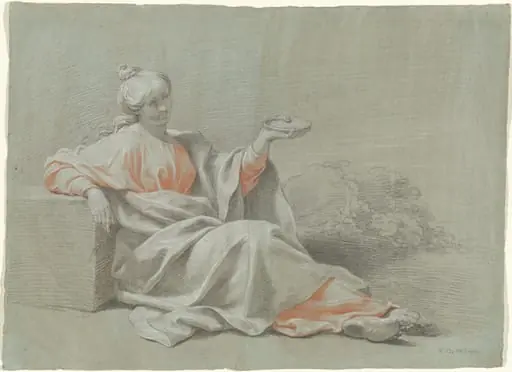 Young Woman with a Bowl, Seated Outdoors