Artwork
Virgin and Child with Martyrs
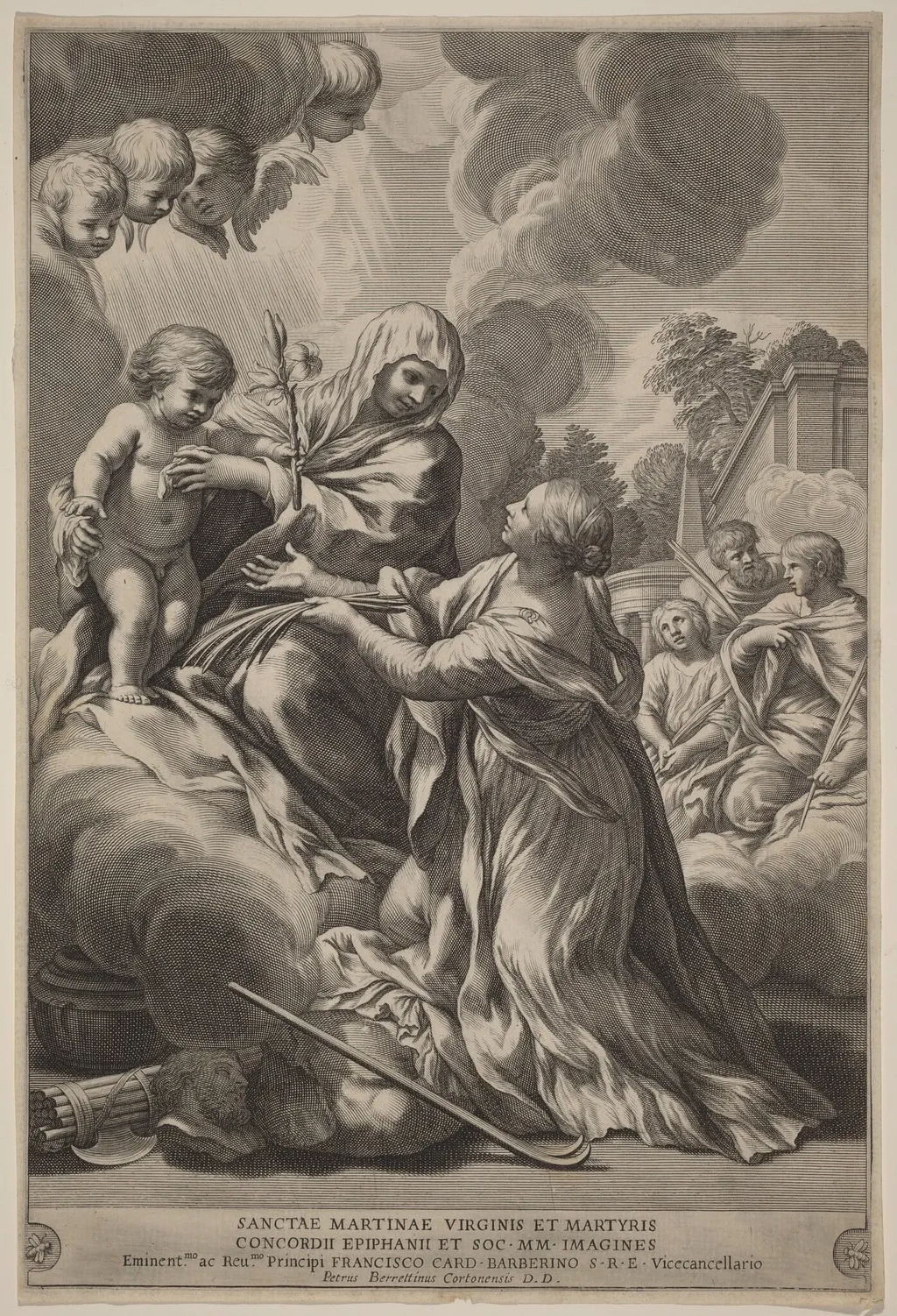
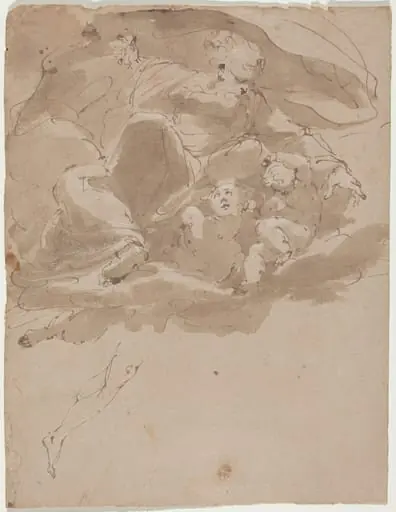
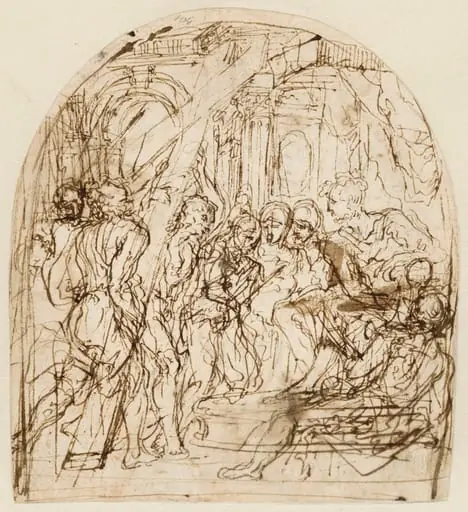
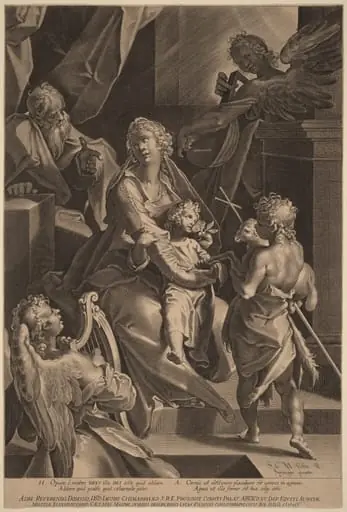
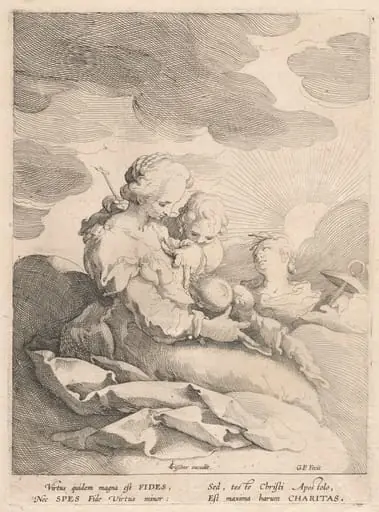
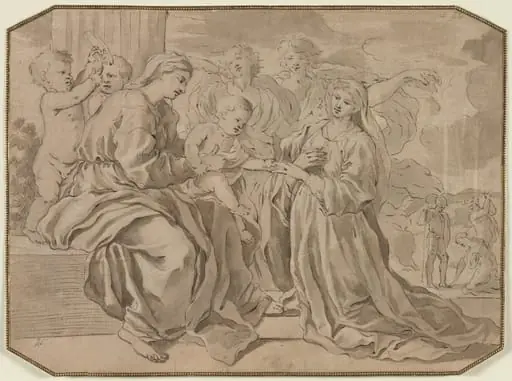
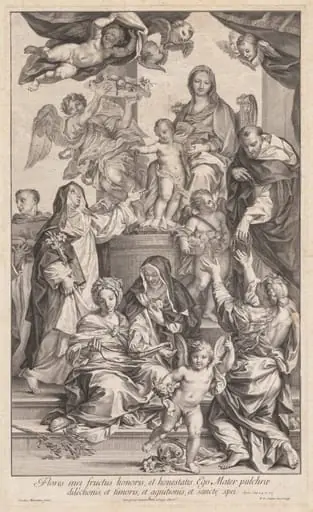
Virgin and Child with Martyrs is an ink print by the Baroque artist Italian 17th Century. It is held in the collection of the National Gallery of Art. This black-and-white engraving depicts a sacred group of figures arranged in a vertical composition.
About this work
Overview
The entire scene is rendered through incised lines on metal, transferred to laid paper, creating subtle tonal contrasts and intricate textures.
This black-and-white engraving depicts a sacred group of figures arranged in a vertical composition. A kneeling woman holds a palm branch, while another woman leans toward her with an outstretched hand. Two children stand nearby, one bearing a cross, the other a banner. Above them, angels drift in a hazy sky, their forms suggested by delicate, flowing lines. The entire scene is rendered through incised lines on metal, transferred to laid paper, creating subtle tonal contrasts and intricate textures.
Subject & Meaning
The figures represent the Virgin Mary and the Christ Child surrounded by martyrs and celestial beings. The palm branch symbolizes martyrdom, the cross signifies Christ’s sacrifice, and the banner may denote divine victory. The intimate gesture between the women suggests intercession or spiritual comfort. Angels in the upper register reinforce the heavenly context, framing the scene as a moment of sacred communion between earthly devotion and divine presence.
Technique & Style
The image was created using engraving, a method in which lines are meticulously carved into a metal plate with a burin. The artist employed fine, controlled strokes to model forms and suggest depth, using varying line density to create shadow and volume. The background sky is rendered with soft, irregular hatching, contrasting with the sharper contours of the figures. The use of laid paper enhances the tactile quality of the print, preserving the fine detail of the engraved lines.
History & Provenance
The print likely dates to the late 15th or early 16th century, a period when religious engravings were widely circulated across Europe. It was produced in a workshop familiar with Northern Renaissance iconography, possibly in the Rhineland or southern Germany. No definitive record of its earliest ownership survives, but similar prints were collected by clergy and devout laypersons for private devotion and instructional use.
Context
During the late Middle Ages and early Renaissance, engravings served as affordable devotional aids, especially in regions where access to painted altarpieces was limited. This image reflects the popularity of Marian themes and the veneration of martyrs in Christian piety. The composition echoes contemporary panel paintings and illuminated manuscripts, adapting their spiritual narratives into a portable, reproducible format for personal contemplation.
Legacy
Though unsigned and unattributed, the print exemplifies the technical precision and devotional intent of early printmaking. Its survival in multiple institutional collections suggests ongoing scholarly interest in its iconography and craftsmanship. It remains a representative example of how religious imagery was disseminated through mechanical reproduction, bridging the gap between elite art and popular piety in pre-Reformation Europe.
Artist & collection

Artist
This Italian artist worked in the 17th century, making engravings, ink drawings, and oil paintings.