Artwork
Saint Matthew the Evangelist
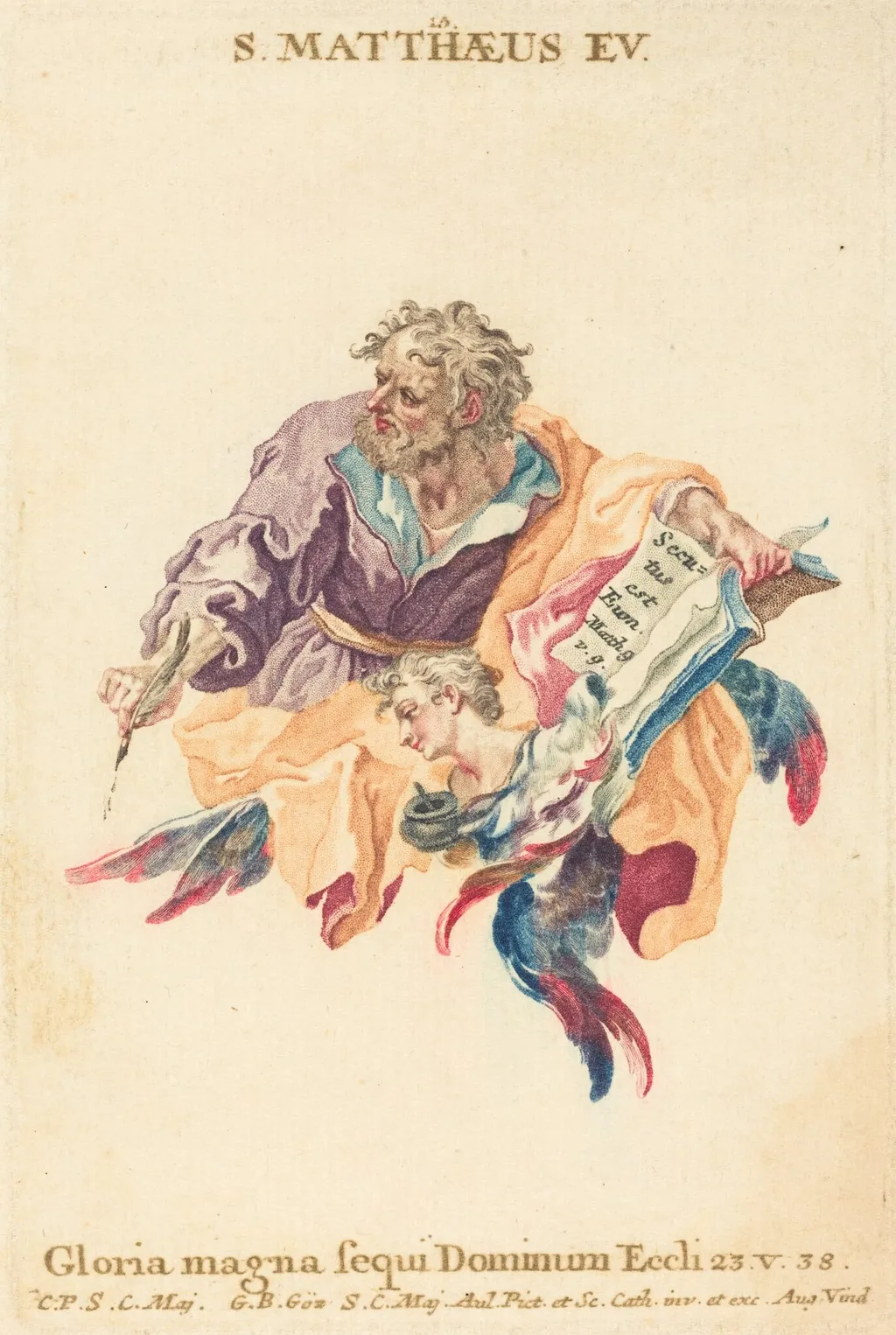
Saint Matthew the Evangelist is an ink print by the Baroque artist Gottfried Bernhard Götz. It dates from 1741 and is held in the collection of the National Gallery of Art.
About this work
Overview
Saint Matthew the Evangelist is a color etching created by Gottfried Bernhard Götz in 1741. The print depicts the evangelist in a contemplative pose, accompanied by a small angel. Characterized by soft colors (pink, blue, earth tones) and expressive, swirling lines, the work showcases Götz's use of etching techniques to achieve depth and detail.
Subject & Meaning
The subject is Saint Matthew, one of the four Gospel writers, identified by the inscription *S. Matthæus Ev.* at the top. He is portrayed as a bearded, curly-haired man in a long robe, engaged in writing (quill and book), with a small angel emerging from his garment, symbolizing divine inspiration or guidance.
Technique & Style
The etching combines fine lines with shaded areas to create depth. Götz utilized the roulette inked à la poupée technique on laid paper, resulting in loose, expressive edges. The soft palette (pink, blue, earth tones) contributes to the serene, introspective atmosphere.
History & Provenance
Created in 1741 by Gottfried Bernhard Götz, specific provenance details are not provided in the available information.
Context
As a religious etching from 1741, the work reflects the Baroque to Rococo transitional period's artistic preferences for detailed, emotionally charged religious subjects. The use of color etching was a relatively innovative technique during this time.
Legacy
The legacy of *Saint Matthew the Evangelist* lies in its representation of Götz's skill in etching and his contribution to the religious art of the 18th century, though its broader impact or notable exhibitions are not specified in the provided details.
Artist & collection


 Diogenes
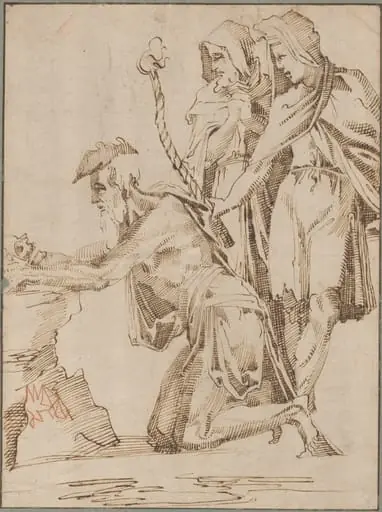 Kneeling Hermit and Two Draped Figures Contemplating a Skull
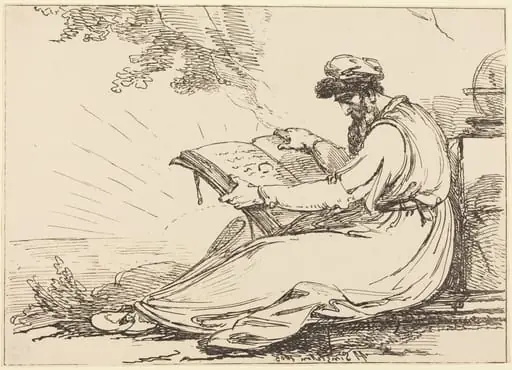 Oriental with Beard, Reading a Book
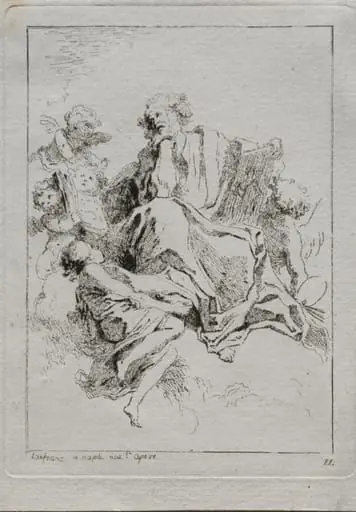 Saint Luke
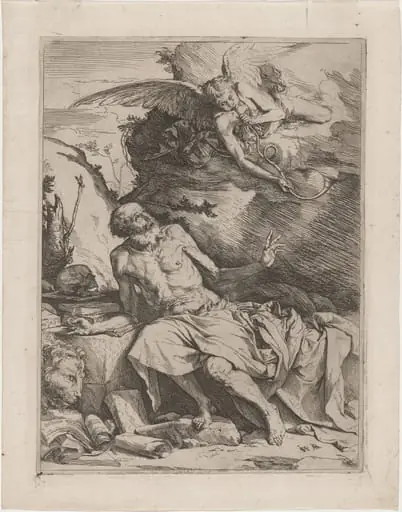 Saint Jerome Hearing the Trumpet of the Last Judgment
 Salvator Rosa
 Der hl. Hieronymus
 St. Jerome
 The Genius of Franklin (Au Génie de Franklin)
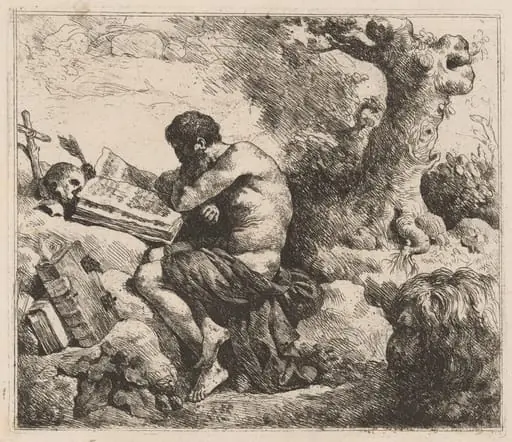 Saint Jerome
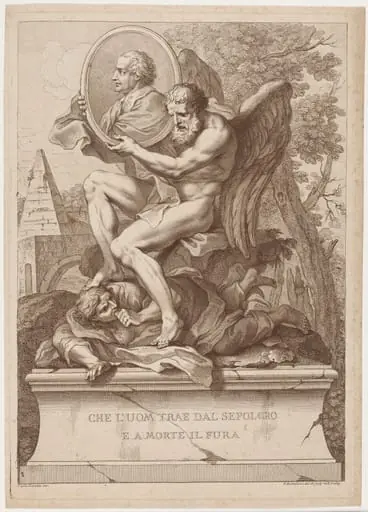 Pietro Berrettini da Cortona
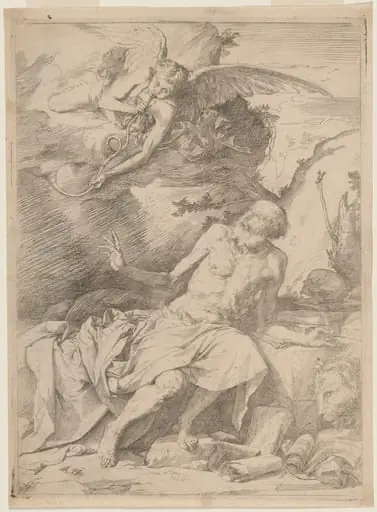 Saint Jerome Hearing the Trumpet of the Last Judgement