Artwork
Castru roman
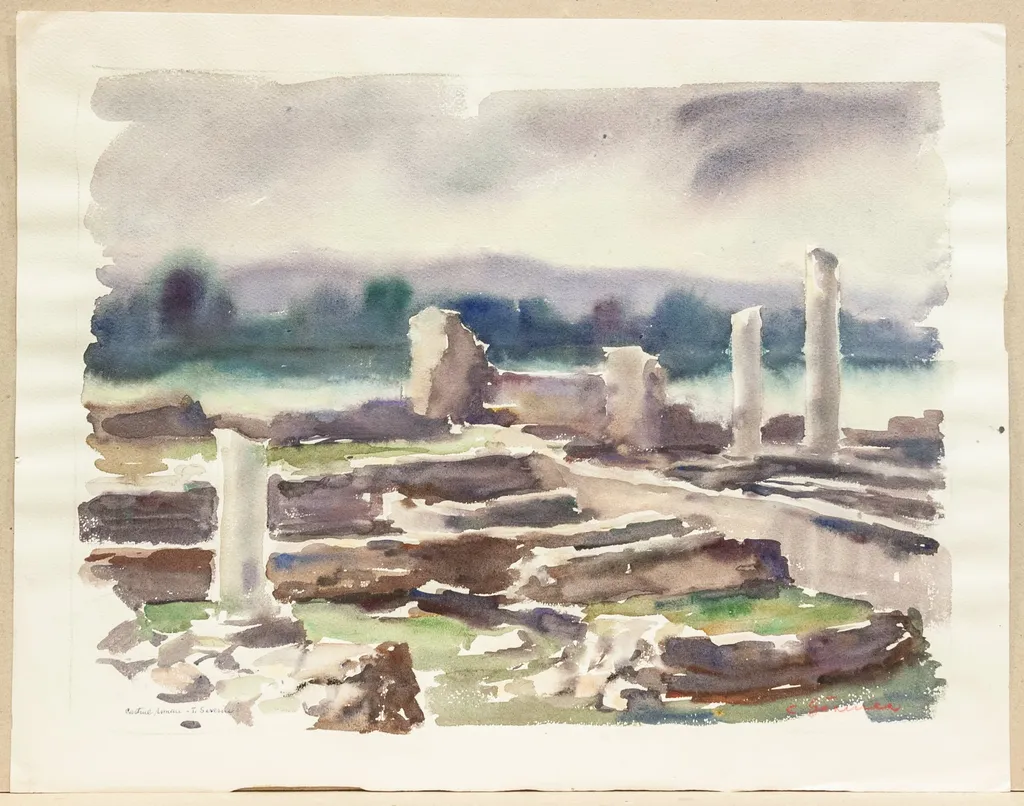
Castru roman is a print by the Impressionist artist Constantin Găvenea. It dates from 1950 and is held in the collection of the Gavrila Simion Eco-Museum Research Institute Tulcea.
About this work
Overview
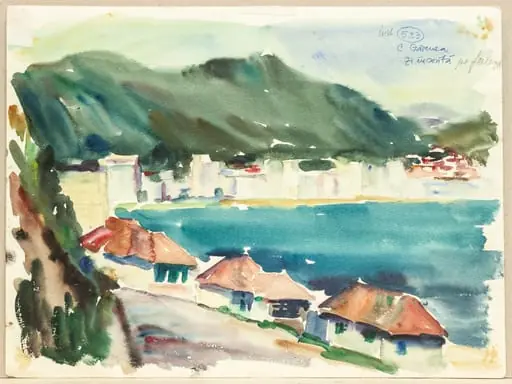
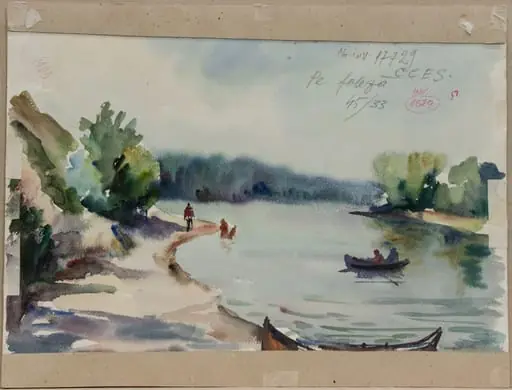
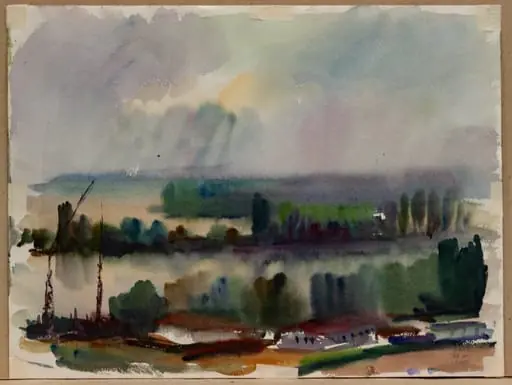
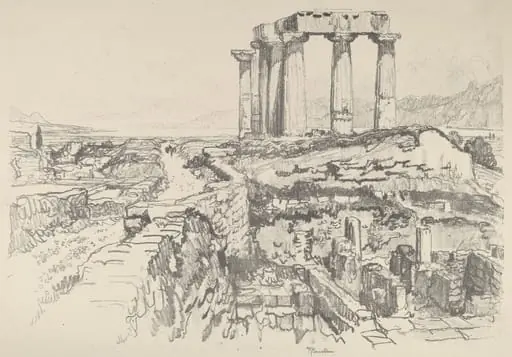
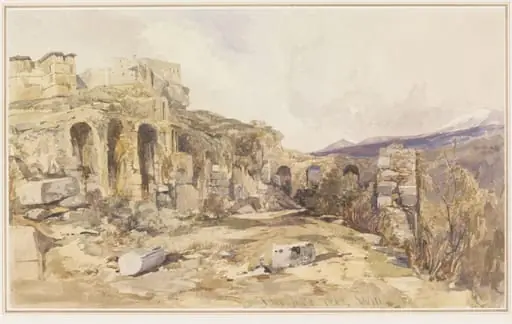
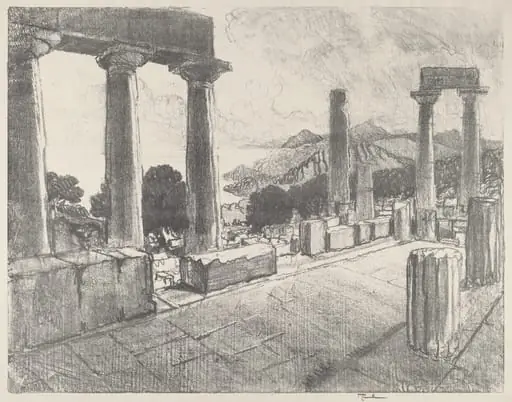
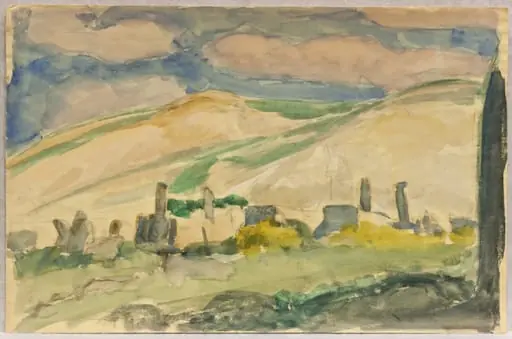
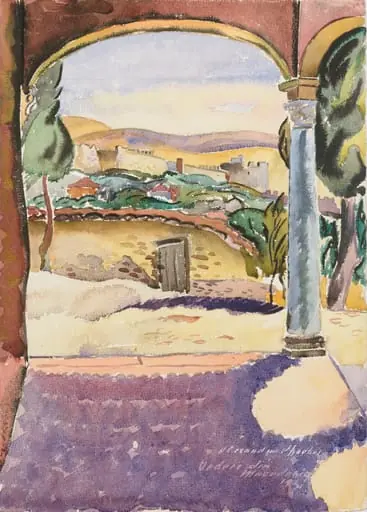
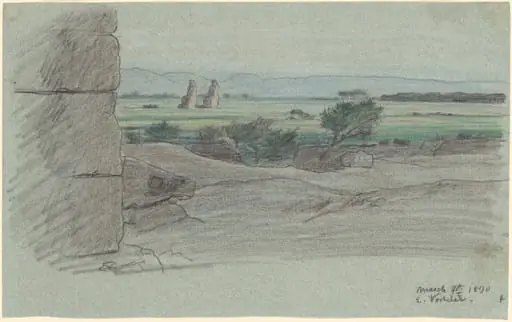
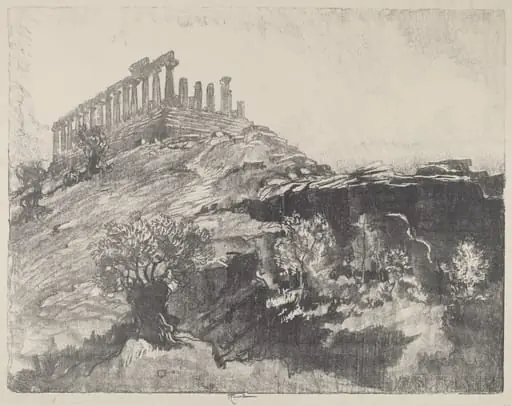
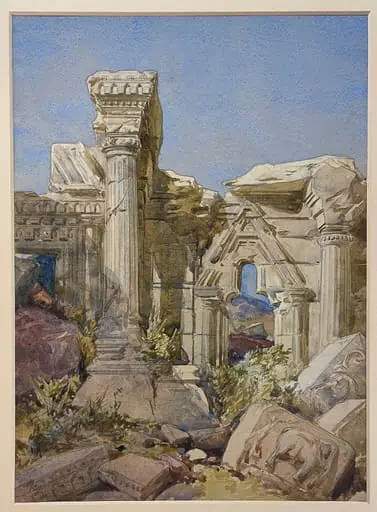
Castru roman, created circa 1950 by Constantin Găvenea, is a watercolor painting housed at the Museum of Ethnography. It depicts a landscape dominated by ancient ruins in the foreground, set against a softly rendered background of trees and hills.
Subject & Meaning
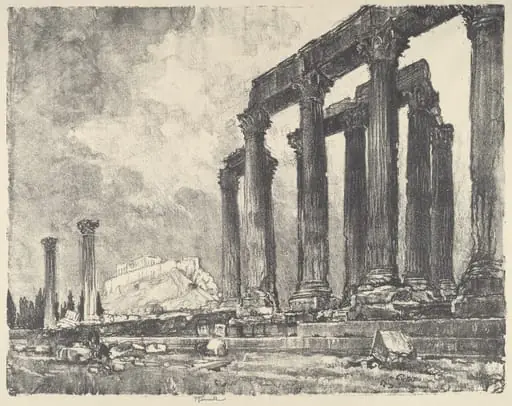
The subject of Castru roman is an ancient Roman ruin, conveyed through crumbling walls and tall, upright columns. The emphasis on decay and natural overgrowth may suggest the passage of time and the reclamation of human structures by nature.
Technique & Style
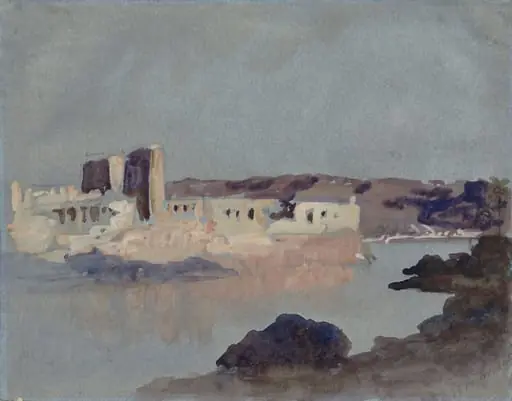
Executed in watercolors, the painting features muted tones predominantly in grays, browns, with accents of green and blue in the background. This choice of medium and color palette imbues the scene with a soft, dreamy quality.
History & Provenance
Created around 1950, Castru roman is part of the collection at the Museum of Ethnography, though the work's specific historical or cultural context within the artist's oeuvre is not detailed here.
Context
While specific contextual details about the painting's creation are scarce, it reflects a broader interest in antiquity and the intersection of natural and man-made landscapes, common in mid-20th-century Romanian art.
Legacy
The legacy of Castru roman is not broadly outlined in available information, suggesting it may be more notable within the specific collection of the Museum of Ethnography or the artist's body of work rather than a widely recognized piece in the global art historical canon.
Artist & collection
Museum
Gavrila Simion Eco-Museum Research Institute Tulcea
Continue through works from the same source collection.