Artwork
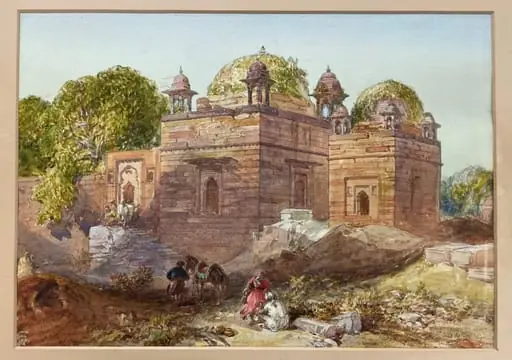
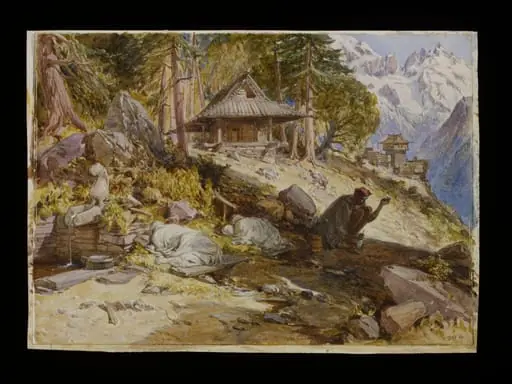
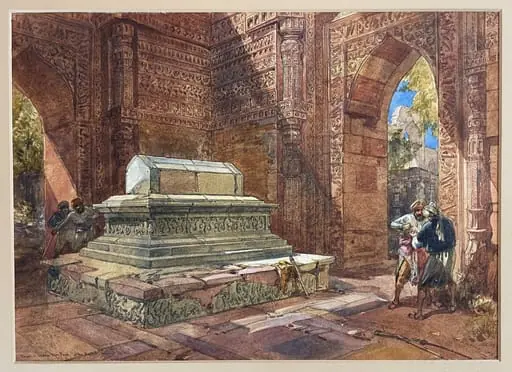
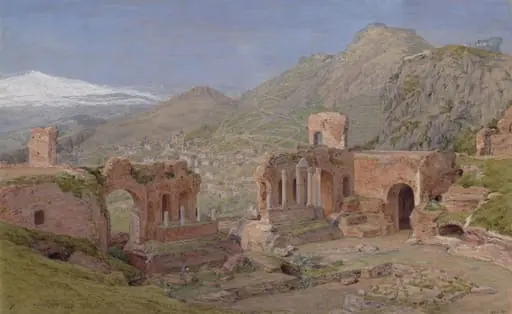
Enclosure of Martand, Kashmir
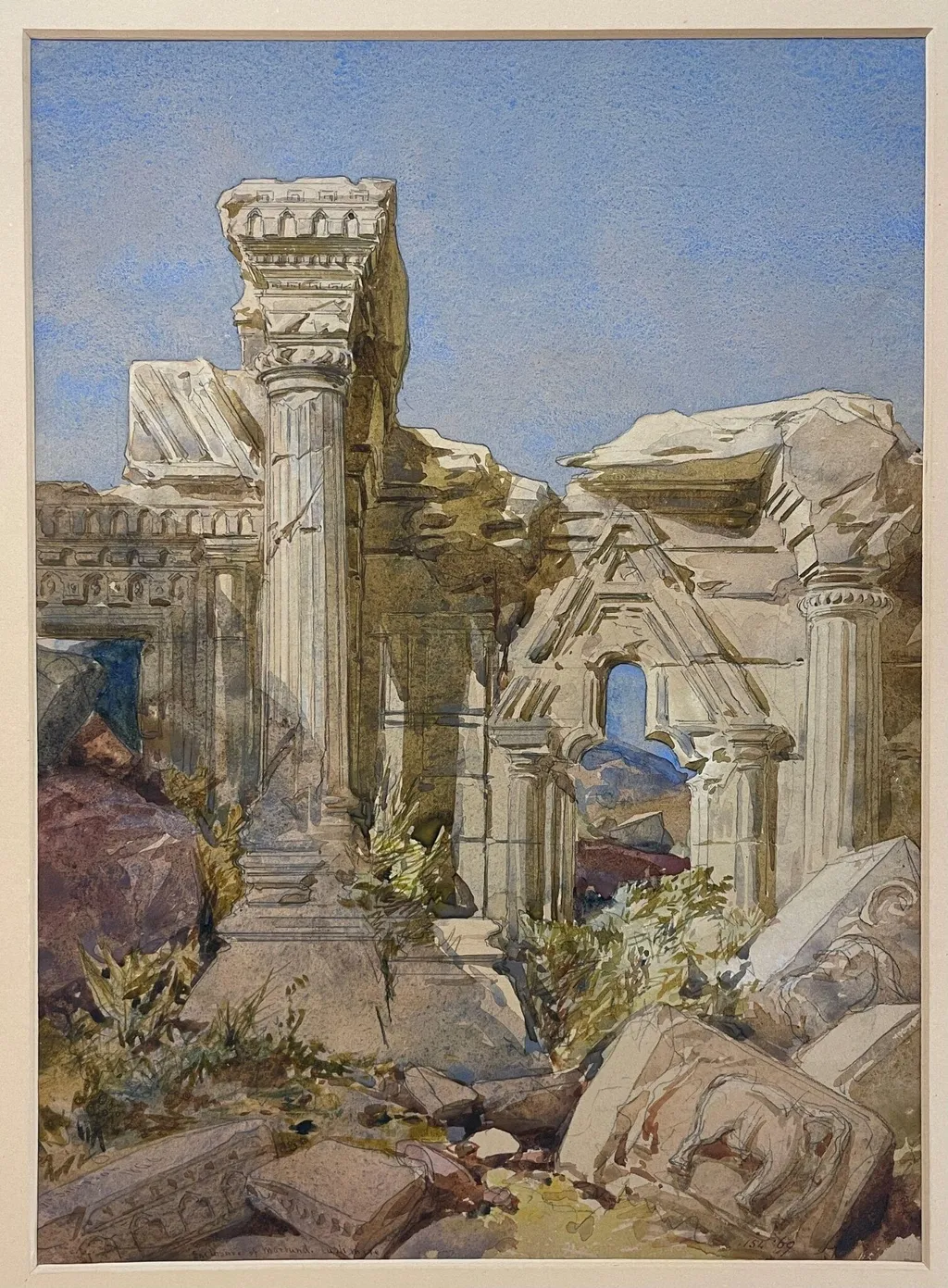
Enclosure of Martand, Kashmir is a paint painting by the Impressionist artist William Simpson. It dates from 1860 and is held in the collection of the Victoria and Albert Museum.
About this work
This watercolor shows a sweeping view of the Martand Temple ruins in Kashmir. Soft light glows on the stone arches and crumbling walls. Simpson painted it in 1860 after sketching the site by hand.
Simpson worked fast on paper. He often drew scenes in pencil first, then colored them later. This piece feels calm, not dramatic.
See it yourself at the Victoria and Albert Museum.
Overview
William Simpson’s watercolor of the Martand Temple, created in 1860, presents a broad perspective of the ruined sanctuary in Kashmir. The composition captures the softened illumination on stone arches and deteriorating walls, conveying a tranquil atmosphere that contrasts with the dramatic upheavals of the period in which it was made.
Subject & Meaning
The work records the architectural remnants of the 8th‑century Martand temple complex, an important example of early Kashmiri stone construction. By rendering the site’s decay, Simpson offers a visual document of the temple’s form and setting, preserving its appearance for audiences far from the Himalayas.
Technique & Style
Simpson employed rapid pencil sketches on site, later developing them into full‑color watercolours after returning to London. His method emphasizes precise architectural detail while the watercolor medium adds atmospheric softness, producing an image that is both accurate and evocatively serene.
History & Provenance
After traveling extensively in India from 1859, Simpson completed the Martand painting upon his return to England in 1862. The piece entered the collection of the Victoria and Albert Museum, where it remains on display as part of the museum’s holdings of 19th‑century British watercolours.
Context
Commissioned by the lithographic firm Day and Sons, Simpson’s Indian studies were part of a broader effort to document sites linked to the 1857 Indian Rebellion. His encounter with architect James Fergusson, a leading authority on Indian architecture, led to a presentation at the Royal Institute of British Architects, highlighting the significance of his Kashmir drawings.
Artist & collection