Artwork
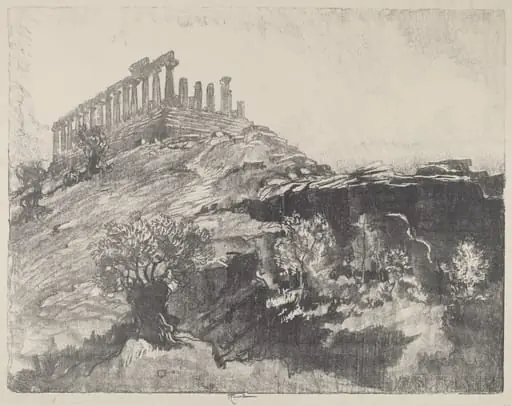
Columns of the Temple of Juno, Girgenti
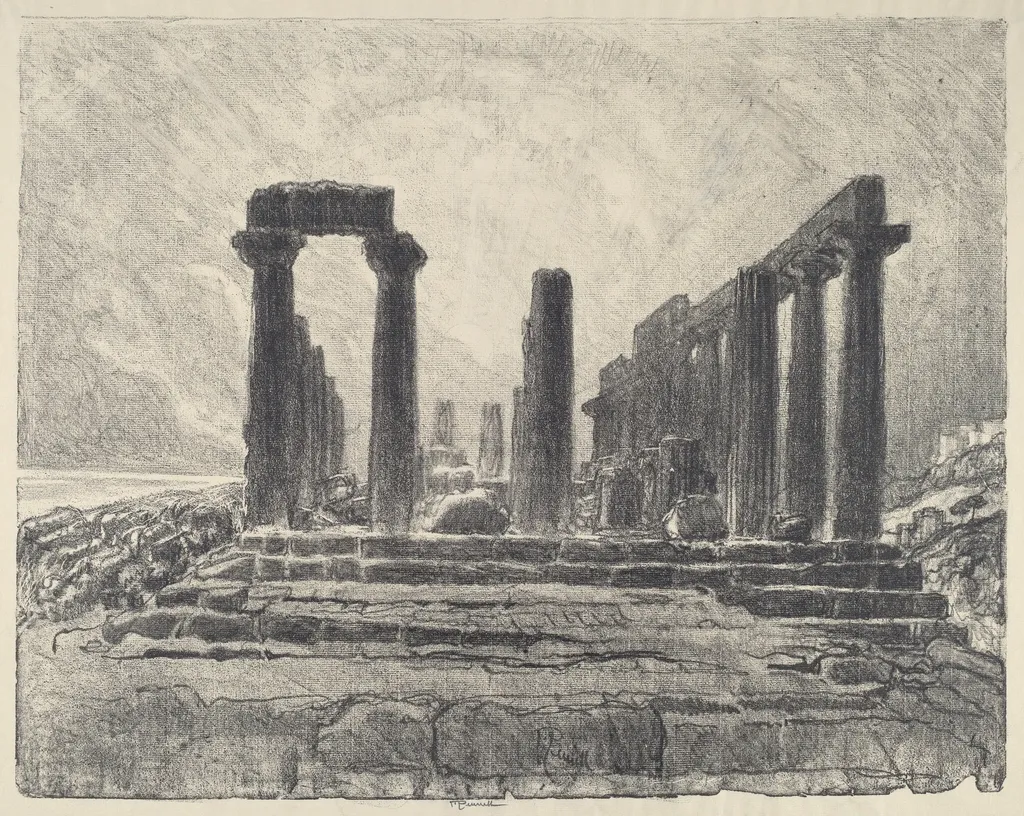
Columns of the Temple of Juno, Girgenti is an ink print by Joseph Pennell. It dates from 1913 and is held in the collection of the National Gallery of Art.
About this work
Overview
Executed in the lithographic medium, the print reflects his sustained interest in architectural decay and the passage of time.
Joseph Pennell’s 1913 lithograph captures the weathered remains of the Temple of Juno in Agrigento, Sicily. Executed in the lithographic medium, the print reflects his sustained interest in architectural decay and the passage of time. Pennell, an American artist based in Europe, used this work to document classical ruins with precision and quiet reverence, avoiding romanticization in favor of observed detail.
Subject & Meaning
The composition centers on fragmented columns and crumbling steps, their surfaces scarred by centuries of exposure. Rather than idealizing the temple’s former grandeur, Pennell emphasizes its erosion—cracks, missing segments, and uneven stone surfaces speak to entropy. The scene conveys endurance through ruin, inviting contemplation of time’s effect on human achievement.
Technique & Style
Pennell employed lithography to render fine, deliberate lines that trace every chip and fissure in the stone. The tonal range is restrained, relying on ink density and line weight to suggest texture and depth. His approach is direct and unembellished, aligned with the tonal subtleties of Whistler and the observational rigor of his academic training under Eakins and Lambdin.
History & Provenance
Created during Pennell’s travels through southern Italy, the print emerged from his broader project of documenting European architecture. It was likely produced as part of a series of lithographs commissioned for publication, possibly in collaboration with his wife, Elizabeth Robins, who wrote extensively on art and travel. The work entered circulation among collectors of modern printmaking in the early 20th century.
Context
In 1913, interest in classical antiquity persisted among artists and intellectuals, yet Pennell’s focus on decay diverged from prevailing neoclassical ideals. His work aligned with a growing modernist tendency to find aesthetic value in imperfection and ruin, reflecting broader cultural shifts toward realism and the acknowledgment of entropy in the built environment.
Legacy
Pennell’s lithograph remains a quiet example of early 20th-century architectural documentation. It contributes to a body of work that redefined printmaking as a tool for recording historical sites with fidelity rather than embellishment. Its influence is seen in later artists who turned to ruins as subjects of formal and philosophical inquiry.
Artist & collection
Artist
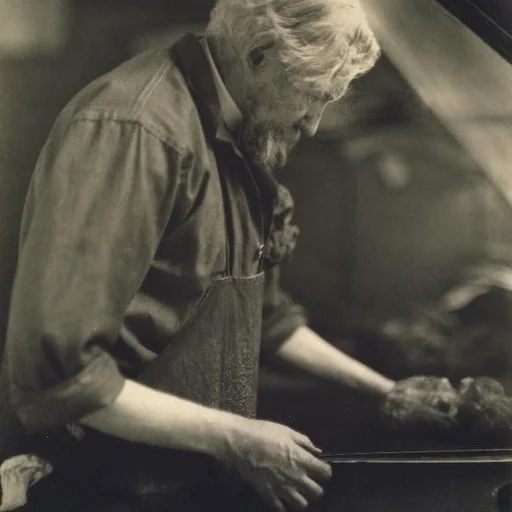
Joseph Pennell (July 4, 1857 – April 23, 1926) was an American draftsman, etcher, lithographer, and illustrator for books and magazines.

 The Temple of Concord on the Wall, Girgenti
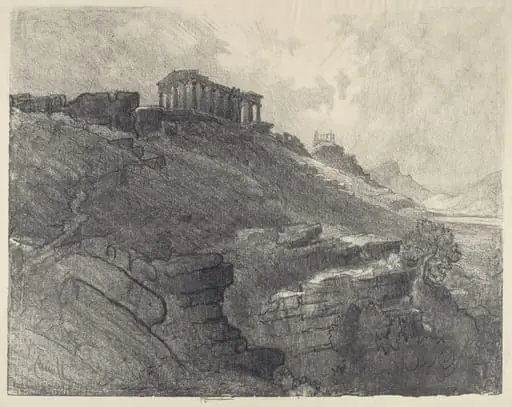 The Temples on the Wall, Girgenti
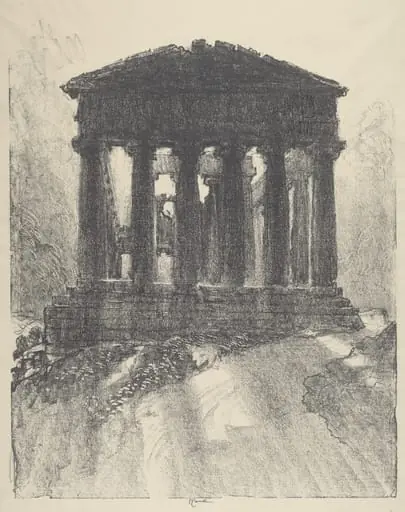 Sunrise Behind Temple of Concord, Girgenti
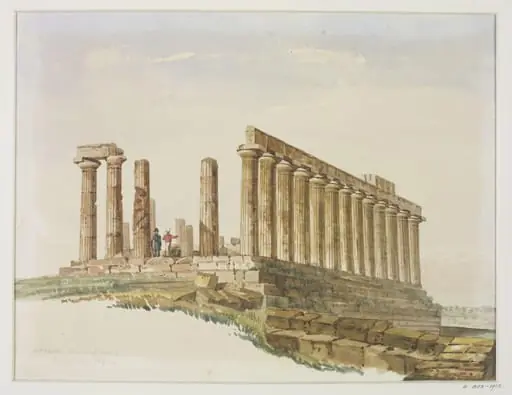 Girgenti. Temple of Juno Lucina.
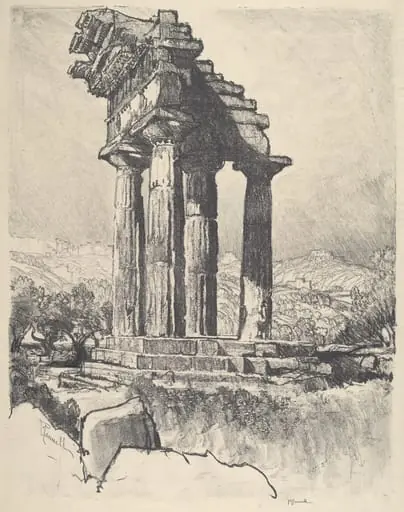 The Columns of Castor and Pollux, Girgenti
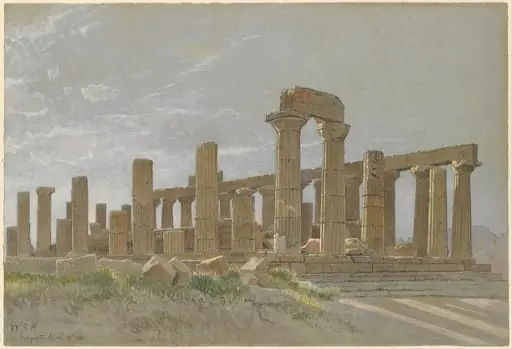 Girgenti (The Temple of Juno Lacinia at Agrigentum)
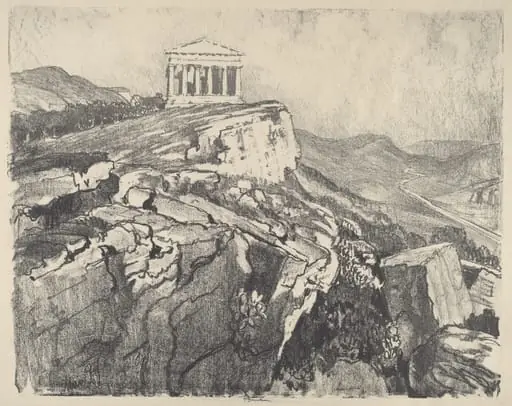 The Temple of Concord on the Wall, Girgenti
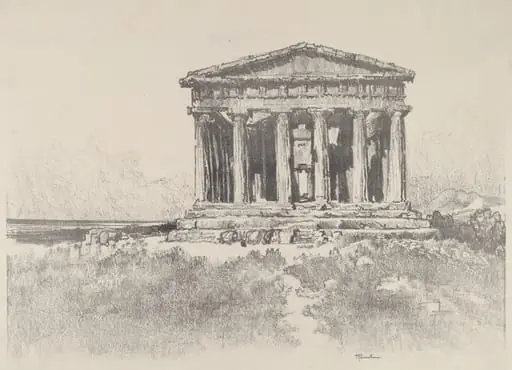 The Temple by the Sea, Temple of Concord, Girgenti