Artwork
Tlos
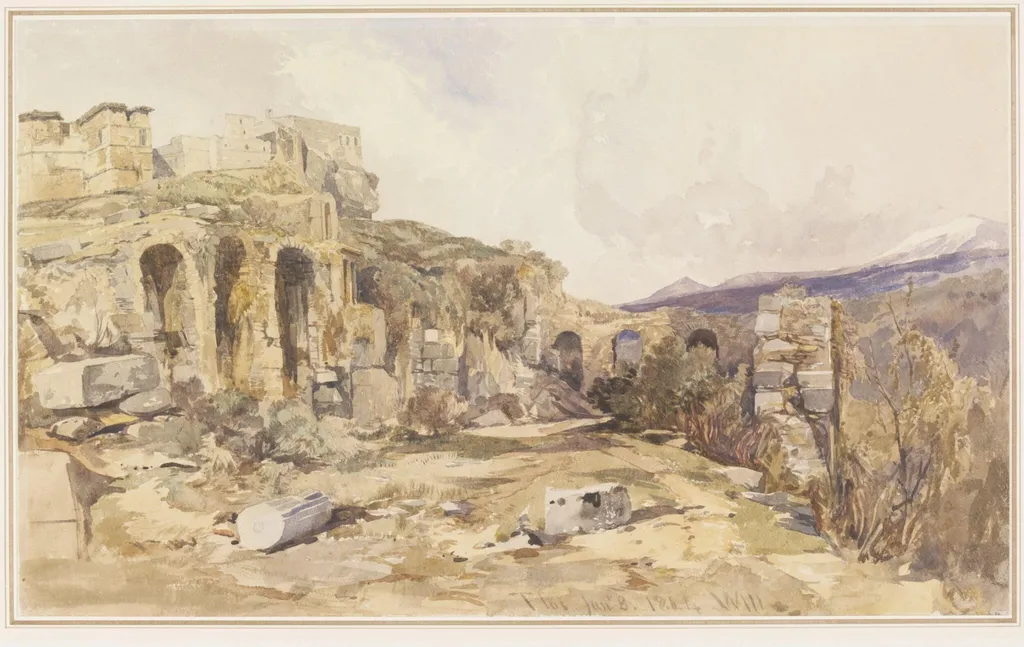
Tlos is a watercolor work on paper by the British Romanticist artist William James Müller. It dates from 1844 and is held in the collection of the Victoria and Albert Museum.
About this work
Find more of his fast sketches at the Victoria and Albert Museum.
William James Müller painted a quiet Turkish town. Watercolor shows white buildings stacked on hills. Shadows stretch long in the late afternoon light.
His trip to Turkey in 1843–44 let him sketch these scenes. He raced to capture details before the sun changed. Most artists stayed in studios. He walked among the ruins.
This scene looks like a stage set. Find more of his fast sketches at the Victoria and Albert Museum.
Overview
William James Müller’s watercolor depicts the eastern façade of the Roman arches perched on the crag that crowns the ancient Lycian acropolis of Tlos. The composition integrates the stone ruins with the surrounding rugged terrain, rendered in muted earth tones that suggest the late‑afternoon atmosphere of the Turkish landscape.
Subject & Meaning
The work records the archaeological remains of Tlos, a city once part of Lycia, emphasizing the dialogue between human construction and the natural rock outcrop. By situating the arches within a broader mountainous setting, Müller highlights the endurance of antiquity amid a timeless, untamed environment.
Technique & Style
Müller employed a rapid, fluid watercolor method, using broad brushstrokes of earthy pigments while allowing the white of the paper to remain exposed, creating the impression of light and air. The subtle tonal variations convey depth and atmospheric perspective, characteristic of his skill as a swift sketcher.
History & Provenance
The piece originates from Müller’s second Near‑Eastern journey, undertaken in 1843–44 when he traveled through southwestern Turkey. During this trip he made numerous on‑site sketches of ruins, people, and scenery, later developing them into finished works such as this watercolor.
Context
Müller, known primarily for his watercolors, sought to expand his reputation as an oil painter but found greater success with his rapid watercolor sketches. His travels to Egypt (1838‑39) and Turkey (1843‑44) provided the exotic subjects that distinguished his oeuvre from the more studio‑bound practices of many contemporaries.
Artist & collection


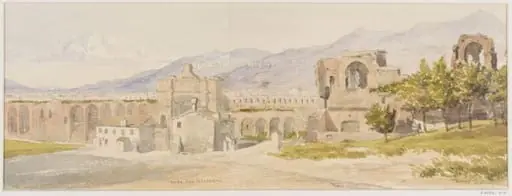 Porta San Giovanni and Porta Asinaria, Rome
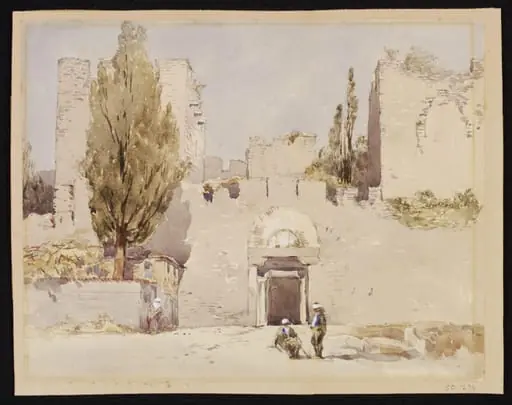 Entrance to the Cannon Gate (Top Kapisi) in Constantinople
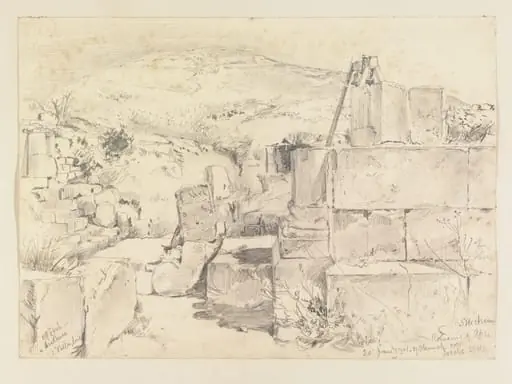 Shechem Remains of Apse of Church over Jacobs Well
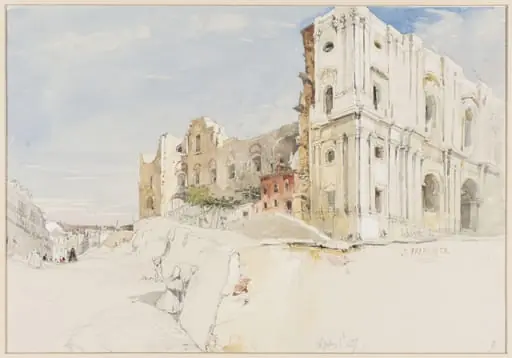 S. Francisco
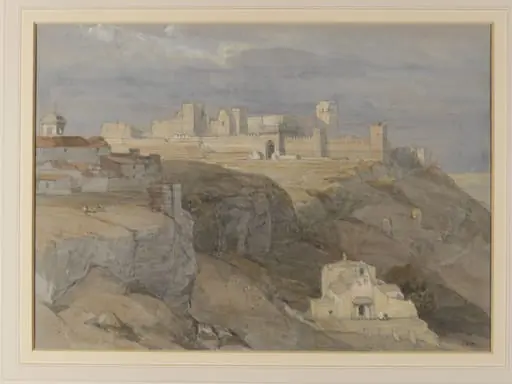 The Alcazar of Carmona, Andalusia
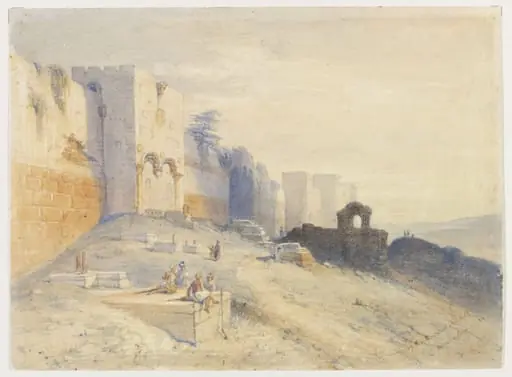 Remains of the Ancient Temple of Jerusalem
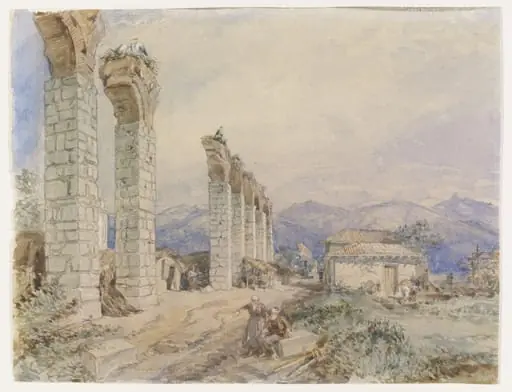 The Aqueduct - Ephesus
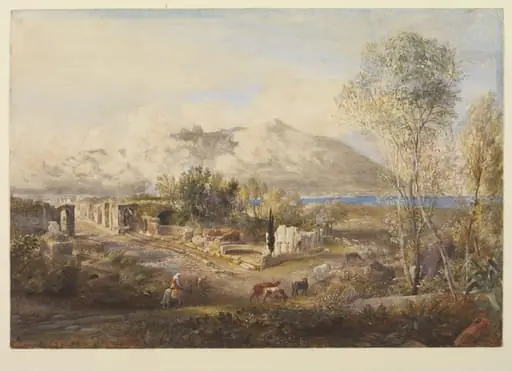 Street of the Tombs, Pompeii
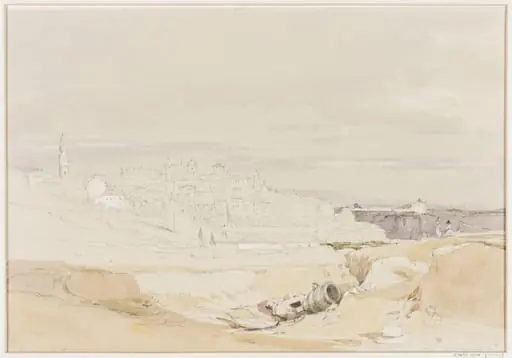 Sketch in Portugal