Artwork
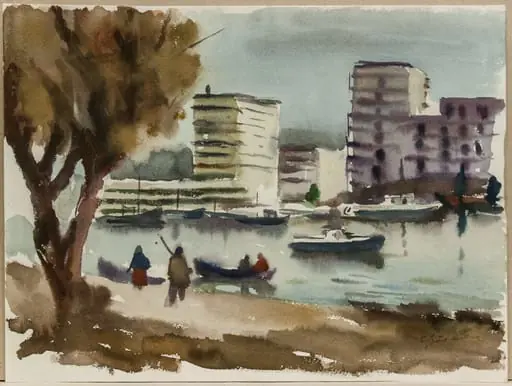
Înserare în Deltă
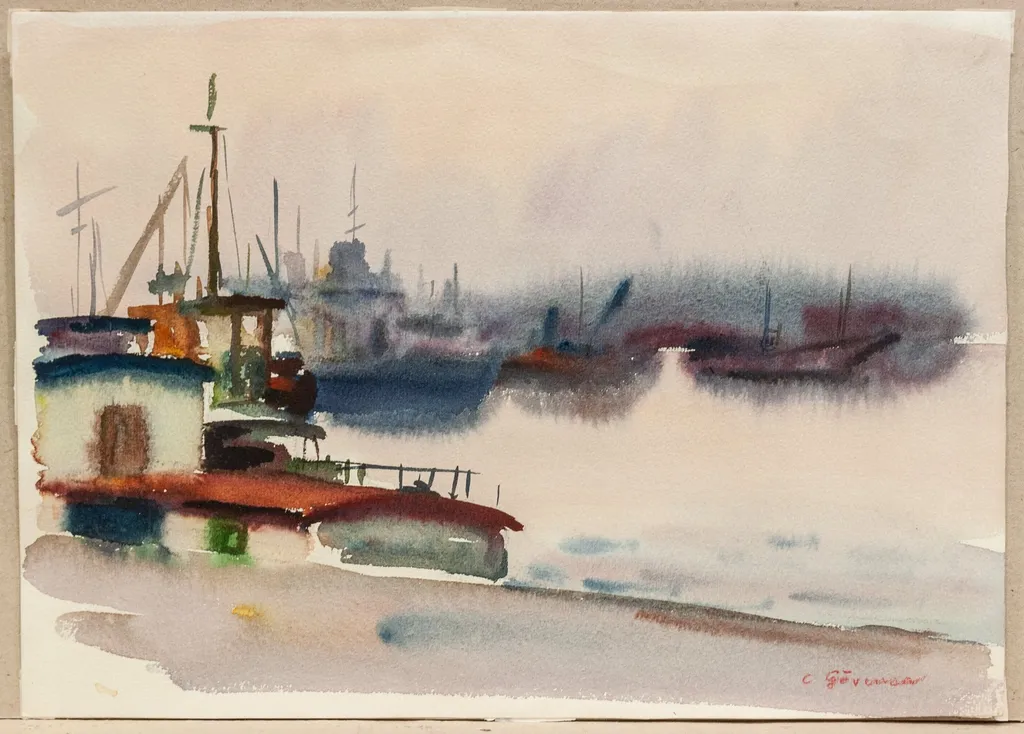
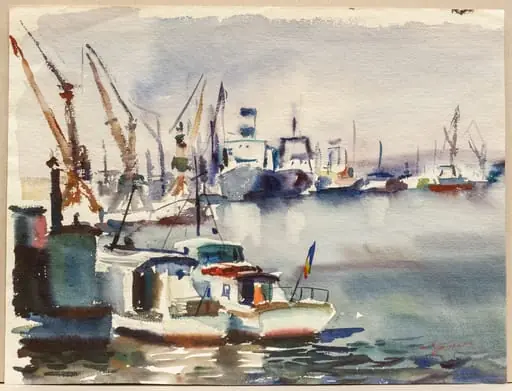
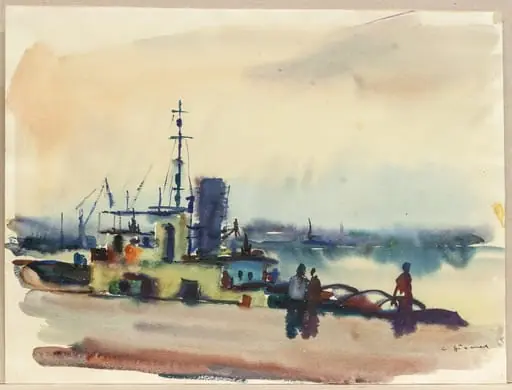
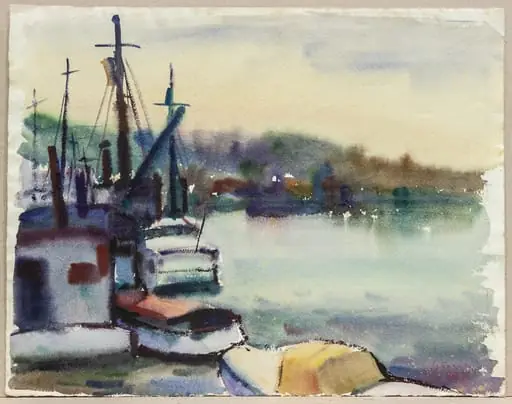
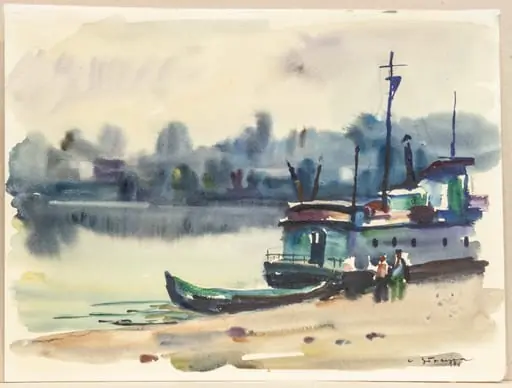
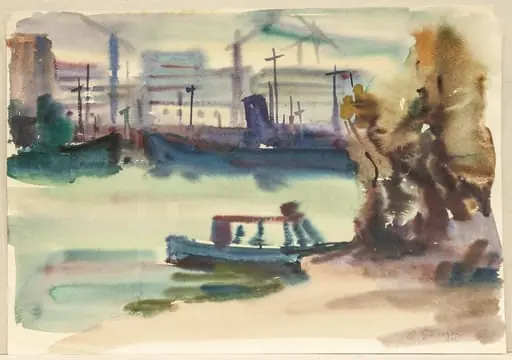
Înserare în Deltă is a print by Constantin Găvenea. It dates from 1950 and is held in the collection of the Gavrila Simion Eco-Museum Research Institute Tulcea.
About this work
Overview
The work is part of the collection at the Museum of Ethnography, reflecting Găvenea’s interest in regional landscapes and everyday maritime life.
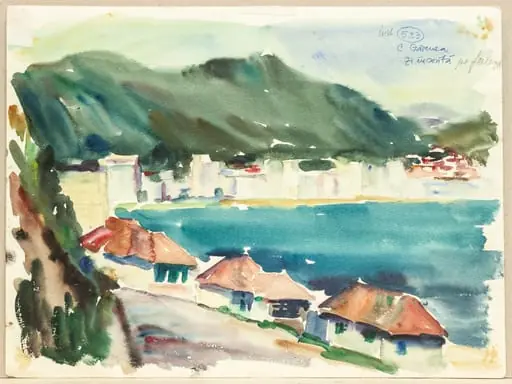
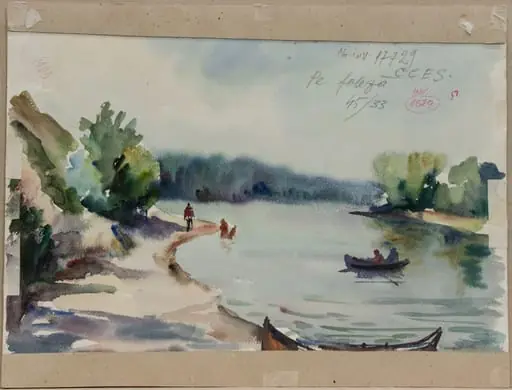
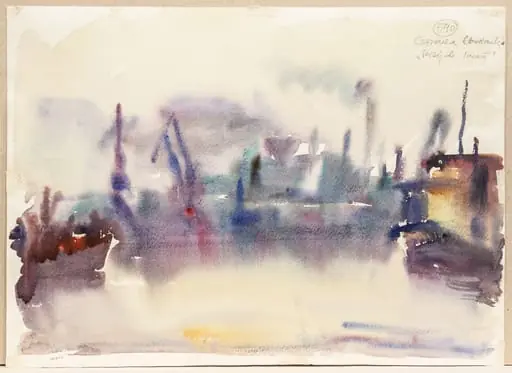
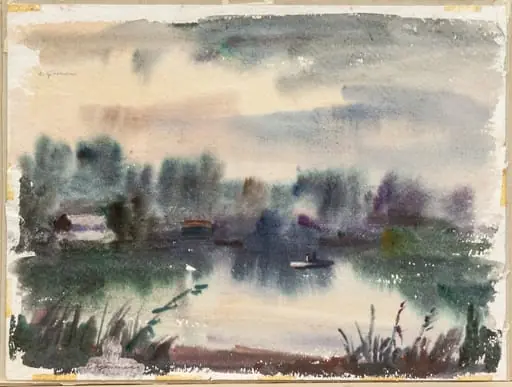
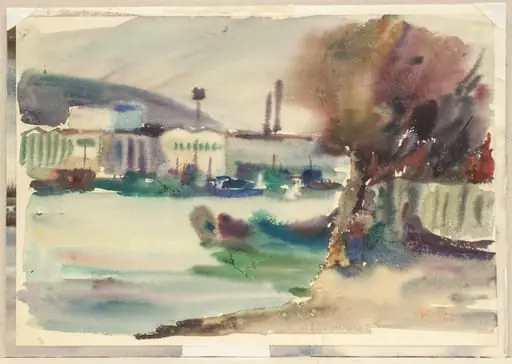
Înserare în Deltă is a watercolor painting by Romanian artist Constantin Găvenea, dated around 1950. It depicts a quiet harbor scene in the Danube Delta, rendered with a loose, spontaneous technique. The work is part of the collection at the Museum of Ethnography, reflecting Găvenea’s interest in regional landscapes and everyday maritime life. Its modest scale and unpolished finish suggest a personal, observational approach rather than a formal commission.
Subject & Meaning
The painting captures three wooden boats moored in still water, their forms simplified into geometric blocks. No figures are present, emphasizing solitude and stillness. The muted palette—blues, grays, and browns—conveys a sense of quiet routine, while a single yellow accent near the base introduces a subtle note of warmth. The scene suggests a moment of pause in the daily rhythms of delta life, without narrative or drama.
Technique & Style
Găvenea employed watercolor with a fluid, sketch-like quality, allowing washes to bleed and edges to soften. The brushwork is economical, suggesting form rather than detailing it. Background elements are blurred into hazy horizons, reinforcing depth without perspective precision. The lack of sharp outlines and the transparency of layers align with informal, plein-air practices, prioritizing atmosphere over technical finish.
History & Provenance
Created in the early 1950s, the work emerged during a period of state-sponsored cultural focus on rural and regional themes in Romania. It entered the Museum of Ethnography’s collection shortly after its creation, likely through institutional acquisition or donation. Its preservation reflects its value as a document of postwar Romanian artistic practice, particularly in depicting lesser-documented landscapes.
Context
In the early 1950s, Romanian artists were encouraged to portray national identity through depictions of labor and nature. Găvenea’s focus on the Danube Delta aligned with this directive, though his approach remained intimate and understated. Unlike grand socialist realist works, this painting avoids propaganda, instead offering a quiet record of a specific place and its quiet rhythms.
Legacy
Înserare în Deltă stands as a quiet example of mid-century Romanian watercolor practice, valued for its sincerity and restraint. It contributes to a broader understanding of how artists navigated state expectations while preserving personal vision. Though not widely exhibited, it remains a reference point for studies of regional art and informal landscape representation in postwar Eastern Europe.
Artist & collection
Museum
Gavrila Simion Eco-Museum Research Institute Tulcea
Continue through works from the same source collection.