Artwork
Portul comercial Tulcea
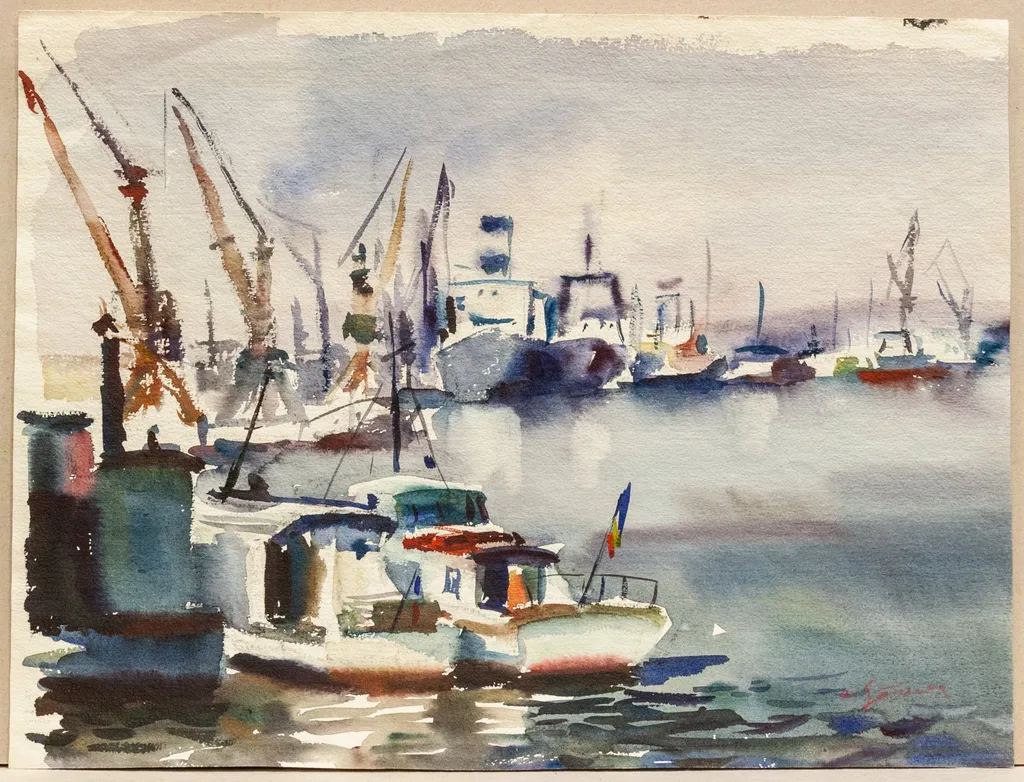
Portul comercial Tulcea is a print by Constantin Găvenea. It dates from 1950 and is held in the collection of the Gavrila Simion Eco-Museum Research Institute Tulcea.
About this work
Overview
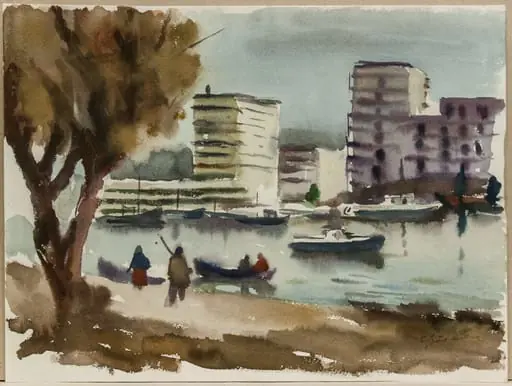
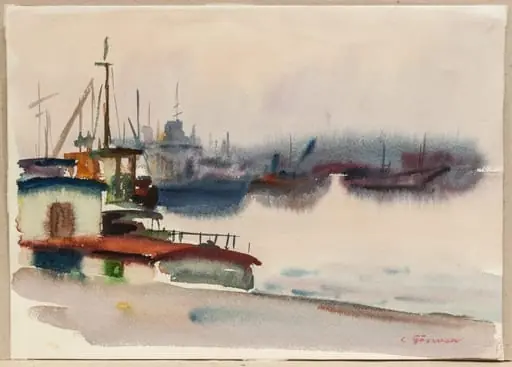
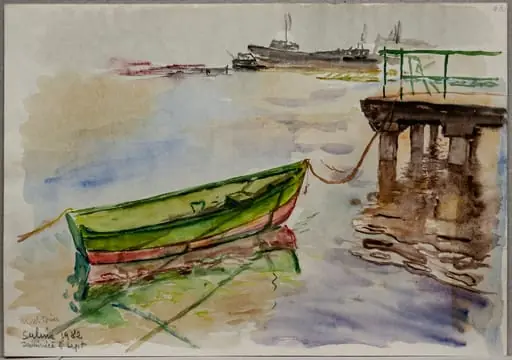
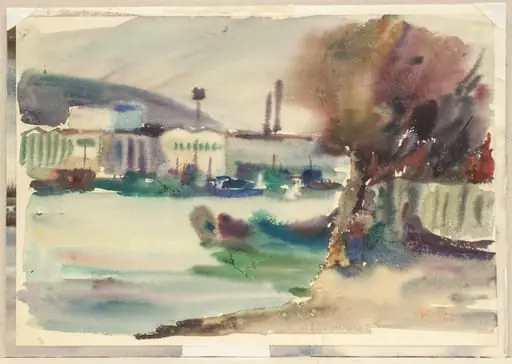
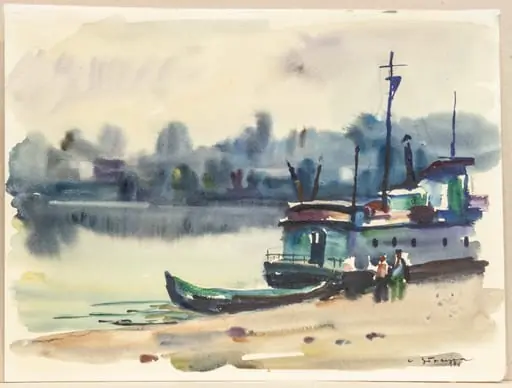
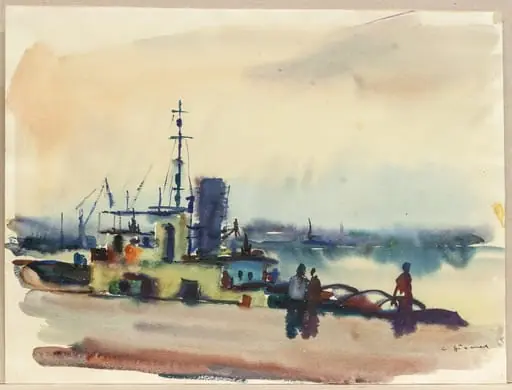
Created around 1950 by Romanian artist Constantin Găvenea, this watercolor depicts the commercial harbor of Tulcea, a key port on the Danube River.
Created around 1950 by Romanian artist Constantin Găvenea, this watercolor depicts the commercial harbor of Tulcea, a key port on the Danube River. The work is part of the Museum of Ethnography’s collection and captures a quiet moment in the daily rhythm of river trade. Rendered with gentle washes and minimal detail, the scene conveys a sense of stillness and routine rather than bustling activity.
Subject & Meaning
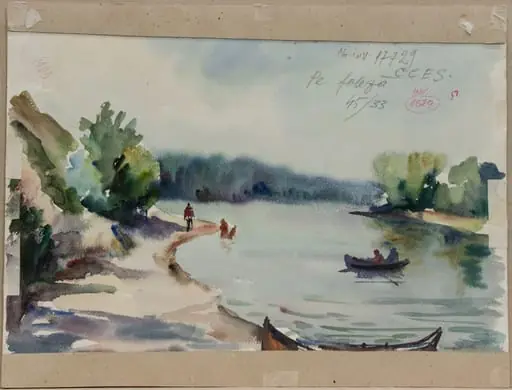
The painting presents a modest harbor with several white vessels, accented by small red and blue details, and one boat flying the Romanian flag. Cranes stand idle along the dock, suggesting paused labor. The absence of figures and the subdued palette imply a moment between transactions—perhaps early morning or late afternoon—emphasizing the quiet dignity of regional commerce rather than its economic scale.
Technique & Style
Găvenea employed watercolor with soft, blended brushwork to create a hazy, atmospheric effect. The gray sky merges subtly with the water and dock, while the boats are defined by light outlines and faint color shifts rather than sharp contours. This restrained technique avoids dramatic contrast, reinforcing the painting’s tranquil mood and aligning with mid-century Romanian realist tendencies focused on everyday scenes.
History & Provenance
The painting entered the Museum of Ethnography’s collection shortly after its creation, likely as part of a broader effort to document Romania’s regional infrastructure and cultural life in the early postwar period. Its preservation reflects institutional interest in vernacular landscapes, though little public documentation exists about its initial exhibition or acquisition beyond its current institutional home.
Context
In the early 1950s, Romania’s cultural institutions increasingly emphasized depictions of industrial and commercial progress under socialist policy. Yet Găvenea’s work avoids propaganda, instead focusing on the quiet, unembellished reality of port life. Tulcea, as a gateway to the Danube Delta, held strategic importance, and this painting quietly acknowledges its role without overt political messaging.
Legacy
Though not widely exhibited outside institutional archives, the painting remains a quiet example of postwar Romanian watercolor practice. It contributes to a lesser-known body of work that records everyday Romanian landscapes with restraint and observational precision, offering a counterpoint to more monumental or ideological art of the era.
Artist & collection
Museum
Gavrila Simion Eco-Museum Research Institute Tulcea
Continue through works from the same source collection.