Artwork
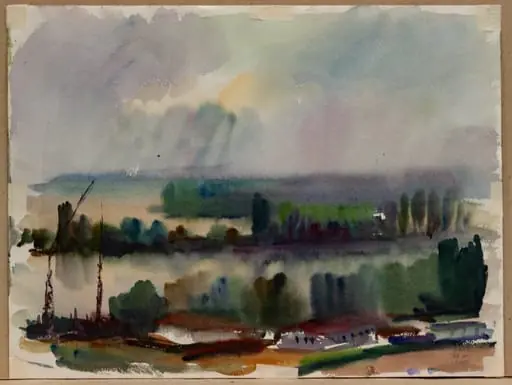
Peisaj la șantierul naval
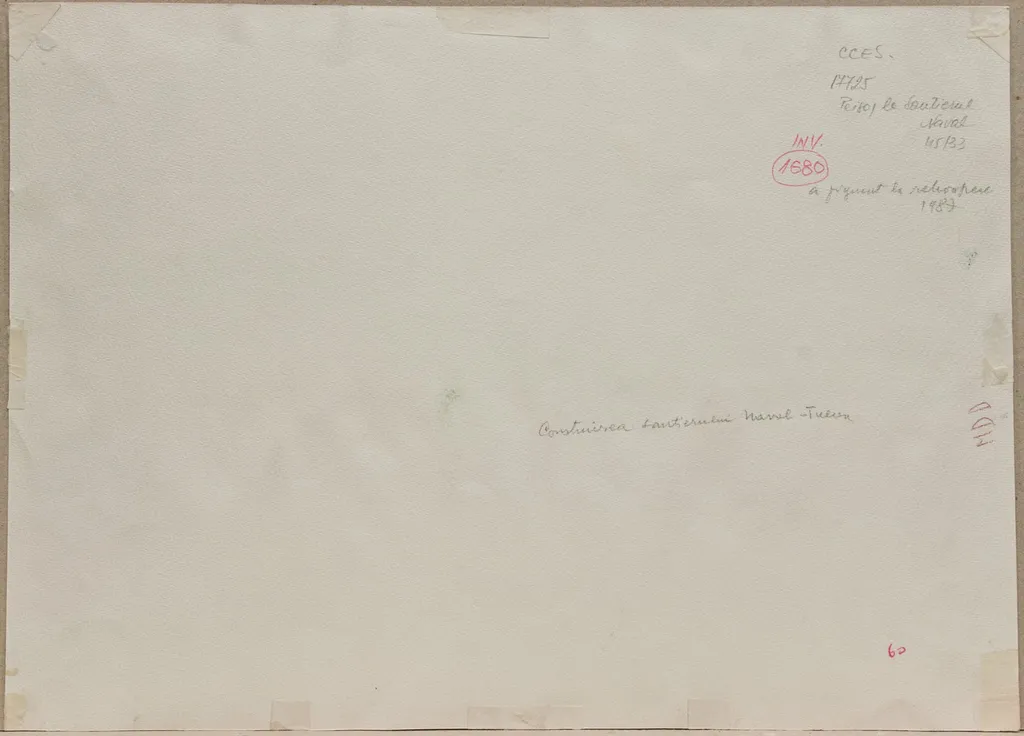
Peisaj la șantierul naval is an unspecified painting by Constantin Găvenea. It dates from 1950 and is held in the collection of the Gavrila Simion Eco-Museum Research Institute Tulcea.
About this work
The notes suggest this was once a sketch or inventory record for a painting titled *Peisaj la șantierul naval*—that means "Landscape at the Naval Yard.
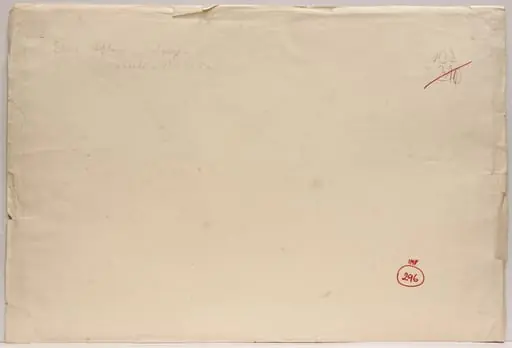
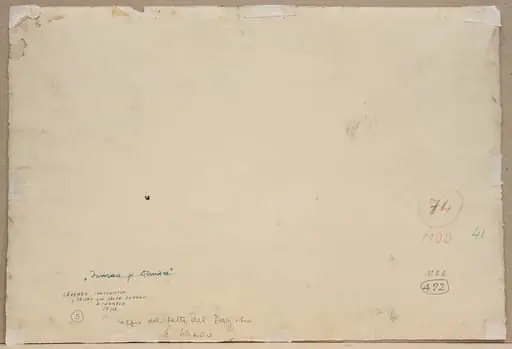
This is a blank canvas with faded handwritten notes in ink. The paper is yellowed and worn, showing small tears at the edges. A few numbers and words are scrawled in different hands, including "1680" circled in red and "Peisaj la șantierul naval" written near the top.
The notes suggest this was once a sketch or inventory record for a painting titled *Peisaj la șantierul naval*—that means "Landscape at the Naval Yard." The handwriting looks old, and the paper feels like something kept for a long time.
If you like this kind of quiet, forgotten detail, look up Museum of Ethnography to see where it’s kept.
Overview
Peisaj la șantierul naval, attributed to Constantin Găvenea and dating circa 1950, is a peculiar artwork housed at the Museum of Ethnography. Contrary to its title suggesting a landscape painting, the piece is actually a yellowed, worn canvas featuring faded handwritten notes in ink.
Subject & Meaning
Ironically, the subject of the artwork is not visually represented. Instead, handwritten notes, including the circled number '1680' and the title 'Peisaj la șantierul naval' (Landscape at the Naval Yard), imply it may have served as a sketch or inventory record for a painting that never materialized or was lost.
Technique & Style
The technique employed is not one of visual art creation but rather of handwritten notation. The varied handwriting styles and the use of red ink for emphasis (e.g., circling '1680') suggest multiple contributors or purposes over time.
History & Provenance
Created around 1950 by Constantin Găvenea, the artwork's history is marked by its current state as a conceptual or preparatory artifact. Its provenance is tied to the Museum of Ethnography, where it is conserved.
Context
The piece exists in a state of liminality, neither a fully realized artwork nor merely a document. It challenges the viewer's expectations of what constitutes a 'work of art,' especially under the title promising a vivid scene.
Legacy
The legacy of Peisaj la șantierul naval lies in its ability to spark curiosity about the artistic process, the fate of the intended landscape painting, and the broader practice of documenting creative intentions in the mid-20th century.
Artist & collection
Museum
Gavrila Simion Eco-Museum Research Institute Tulcea
Continue through works from the same source collection.
 Peisaj
 Întreprinderea de prelucrarea marmurei Tulcea
 Turnu Severin
 S 33 - Peisaj la Sulina (Dunăre și faleză cu tufe de flori grena)
 Obloanele roșii
 Înserare pe Dunăre
 Peisaj pe Dunăre
 S 32 - Peisaj la Sulina (Dunăre și maluri pierdute în pete de culoare)
 Cheile Bicazului
 Canal la Agighiol
 Peisaj (cu stradă)
 Peisaj de pe faleză