Artwork
Untitled
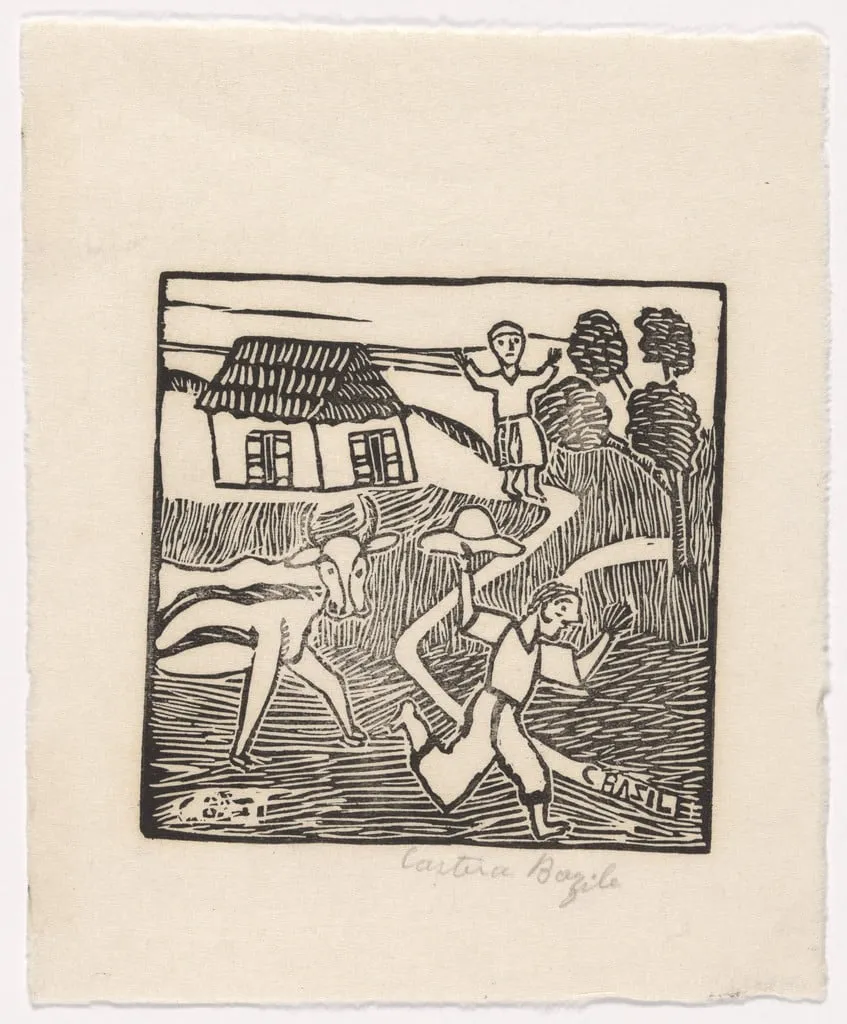
Untitled is an ink print by Castera Bazile. It dates from 1947 and is held in the collection of the Museum of Modern Art.
About this work
Overview
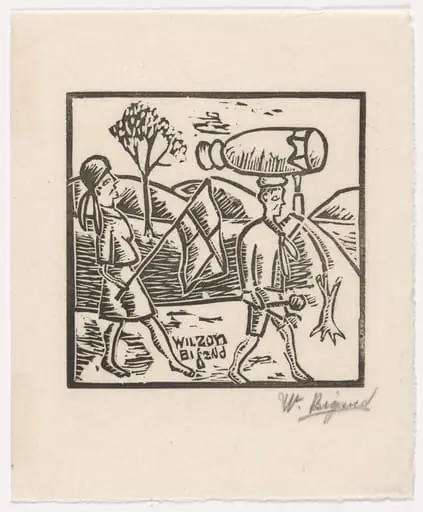
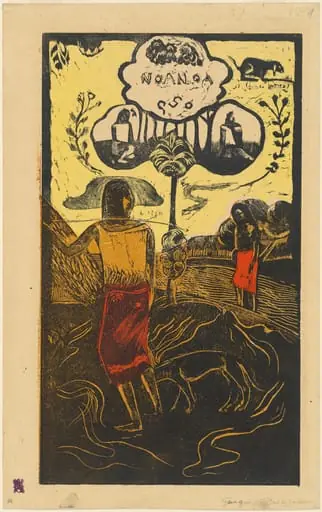
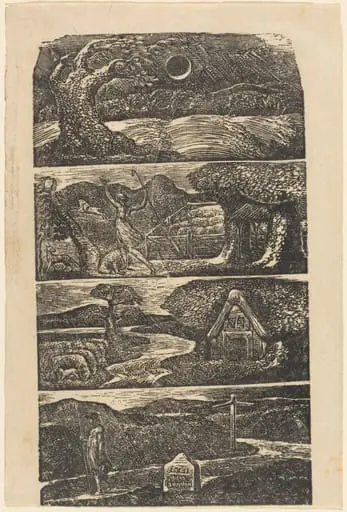
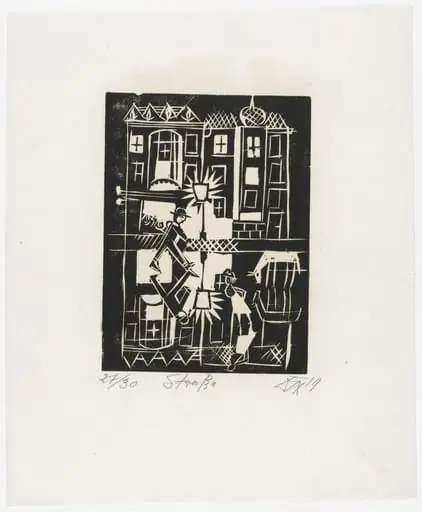
Created in 1947, this woodcut by Castera Bazile is a black-and-white print held in the collection of The Museum of Modern Art.
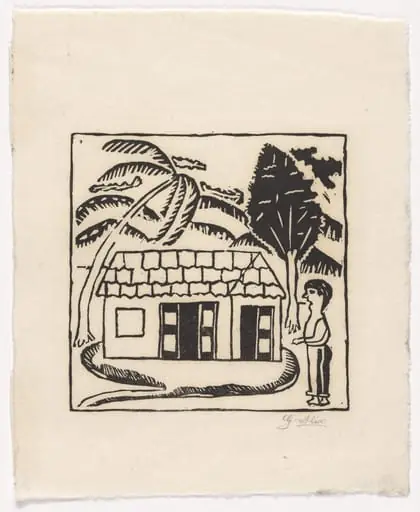
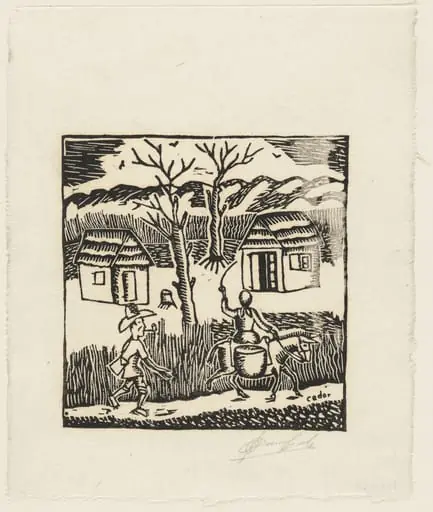
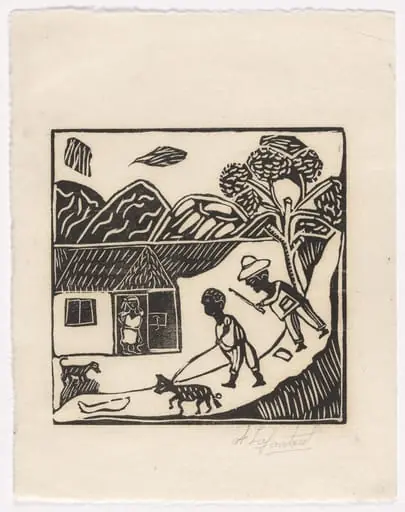
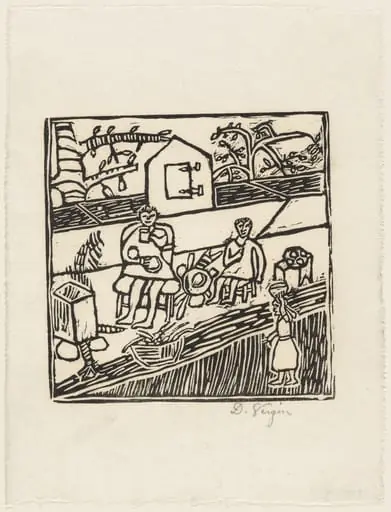
Created in 1947, this woodcut by Castera Bazile is a black-and-white print held in the collection of The Museum of Modern Art. It depicts a quiet rural scene with minimal detail, rendered through carved wood blocks and inked impressions. The composition is restrained, focusing on three figures and a cow near a modest dwelling, all defined by strong contours and simplified forms typical of Haitian folk printmaking traditions of the period.
Subject & Meaning
The scene portrays everyday life in a Haitian village: two individuals engage in quiet movement—one carrying a pole, another leaning on a staff—while a cow rests nearby. The thatched-roof house suggests domesticity, and the absence of overt narrative implies a moment of stillness rather than action. The imagery reflects rural labor and coexistence with animals, grounded in the rhythms of peasant life without romanticization or dramatic emphasis.
Technique & Style
Bazile employed traditional woodcut methods, carving negative space to create bold, high-contrast forms. Lines are sharp and deliberate, defining figures and landscape with flat, non-naturalistic shapes. Texture in the background—wavy strokes for grass, simplified trees—avoids realism, favoring rhythmic abstraction. The style aligns with Haitian art of the mid-20th century, where symbolic clarity and decorative linearity replaced Western perspectival conventions.
History & Provenance
The work was produced in 1947 during a period of renewed interest in Haitian folk expression, supported by local cultural initiatives and international collectors. It entered The Museum of Modern Art’s collection as part of broader efforts to document global modernist practices beyond Europe and North America. Its provenance traces to Haitian artist circles active in Port-au-Prince, though specific prior ownership details remain undocumented.
Context
Bazile worked within a Haitian artistic movement that emerged after the U.S. occupation, emphasizing indigenous themes and vernacular aesthetics. Woodcut printing became a favored medium for its accessibility and capacity to reproduce imagery widely. This piece reflects a broader trend among Haitian artists to draw from oral traditions, agricultural life, and spiritual symbolism, rejecting colonial visual norms in favor of autonomous expression.
Legacy
Though not widely exhibited outside institutional collections, Bazile’s woodcuts contributed to the recognition of Haitian printmaking as a distinct modernist tradition. His use of simplified forms and communal subject matter influenced later generations of Haitian artists who sought to preserve cultural identity through accessible, handcrafted imagery. The work remains a quiet example of how local craft practices informed broader 20th-century visual languages.
Artist & collection

Artist
Castera Bazile was a Haitian painter. Born in Jacmel, Bazile painted several murals in the Holy Trinity Cathedral in Port-au-Prince. He won the grand prize at the Caribbean International Competition in 1955.