Artwork
Silver Sculptural Project for a Large Centerpiece and Two Tureens Which Have Been Executed for His Lordship the Duke of Kingston, plate 115 from Works of Juste-Aurèle Meissonier (Oeuvre de Juste-Aurèle Meissonier)
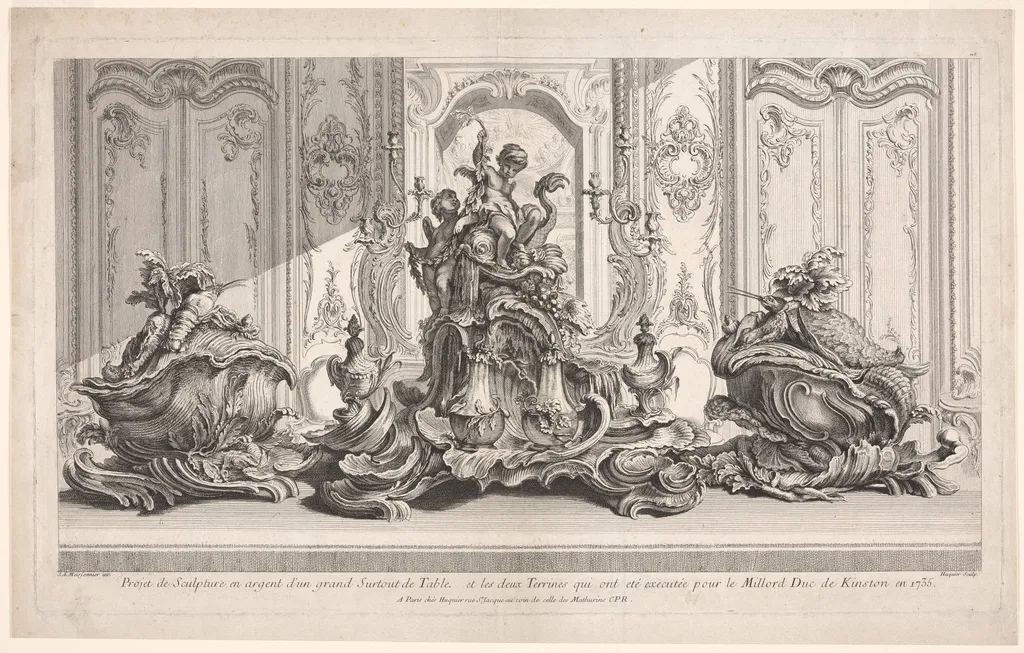
Silver Sculptural Project for a Large Centerpiece and Two Tureens Which Have Been Executed for His Lordship the Duke of Kingston, plate 115 from Works of Juste-Aurèle Meissonier (Oeuvre de Juste-Aurèle Meissonier) is a print by the Baroque artist Gabriel Huquier. It dates from 1736 and is held in the collection of the Cleveland Museum of Art. This etching from Meissonier’s published collection documents a proposed silver ensemble commissioned by the Duke of Kingston.
About this work
Overview
The print functions as both record and promotion, leveraging aristocratic patronage to elevate the designer’s reputation among elite audiences.
This etching from Meissonier’s published collection documents a proposed silver ensemble commissioned by the Duke of Kingston. Though presented as a complete set, only one of the two tureens was actually made, and the central sculptural piece likely never progressed beyond the design stage. The print functions as both record and promotion, leveraging aristocratic patronage to elevate the designer’s reputation among elite audiences.
Subject & Meaning
The composition displays a lavish table setting featuring a tureen shaped as a lobster, its shell and claws rendered in ornate rococo detail. A second, identical tureen is shown from a different angle, suggesting a matched pair. The absence of the crab-topped tureen and the unrealized centerpiece underscores the gap between aspirational design and material reality, framing luxury as an idealized vision rather than a completed collection.
Technique & Style
Executed in fine etching lines, the image captures the fluid, asymmetrical forms characteristic of rococo design. Delicate scrollwork, naturalistic marine motifs, and exaggerated curvilinear handles reflect Meissonier’s signature aesthetic. The precision of the engraving emphasizes texture and volume, transforming silver into a medium of theatrical elegance suited to aristocratic display.
History & Provenance
The print was published as part of Meissonier’s 1756 portfolio, which circulated among European patrons and craftsmen. The inclusion of the Duke of Kingston’s name served to authenticate the designs’ prestige. While one tureen was produced and survives in collections, the centerpiece remains unverified. The print’s survival attests to its role as a tool for disseminating fashionable taste across social circles.
Context
Meissonier’s designs emerged during a period when aristocratic dining was increasingly performative, with tableware signaling wealth and refinement. The publication of such designs mirrored the rise of illustrated catalogs in luxury goods, akin to modern advertising. Contemporary engravers like Gabriel Huquier similarly promoted ornamental styles, reinforcing a visual language of excess tied to courtly culture.
Legacy
Though few of Meissonier’s silver commissions were realized, his published plates influenced silversmiths and interior designers across Europe. This print exemplifies how design theory was commercialized through print, shaping aesthetic expectations beyond the reach of actual production. The work remains a key document in understanding the intersection of art, status, and mass dissemination in the 18th century.
Artist & collection

Artist
Gabriel Huquier (1695–1772) was an entrepreneurial French drawer (artist), engraver, printmaker, publisher, and art collector, who became a pivotal figure in the production of French 18th-century ornamental etchings and engravings

 H Beard Print Collection
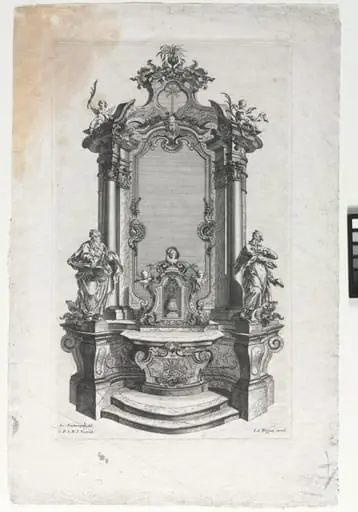 Model for Altar for Woodcarvers
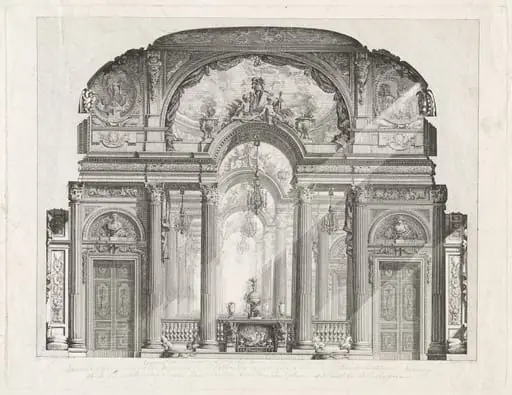 Cross Section of the Salon of the Palazzo Spinola, Genoa
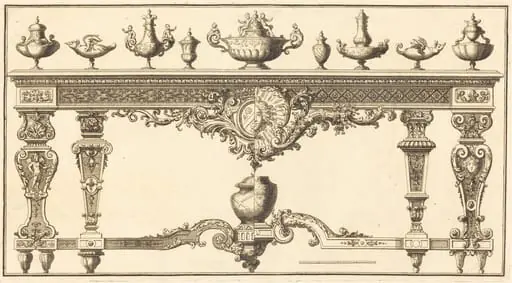 Livre de Tables
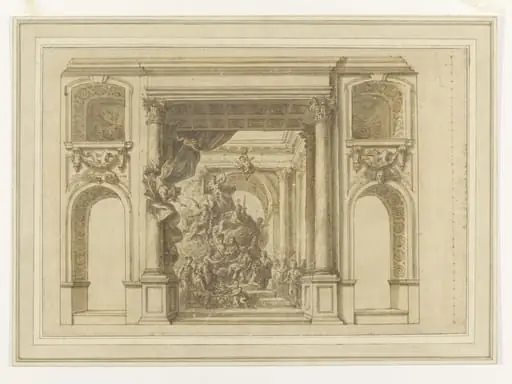 Design for the west wall of the Upper Hall at Greenwich
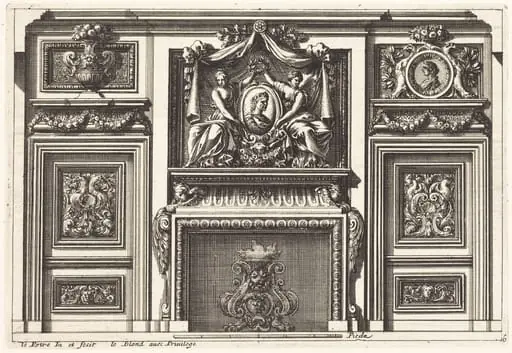 Fireplaces and Other Interior Decorations
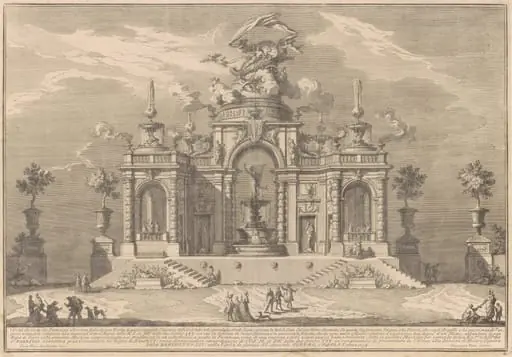 The Prima Macchina for the Chinea of 1754: The Palace of Venus in Cyprus
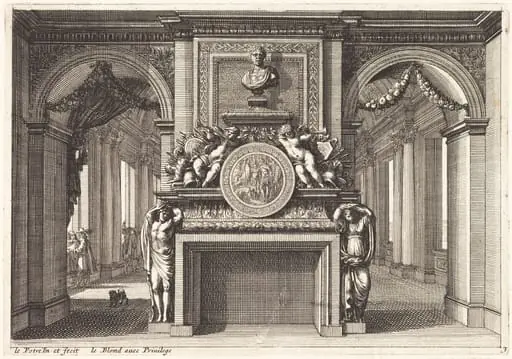 Fireplaces and Other Interior Decorations
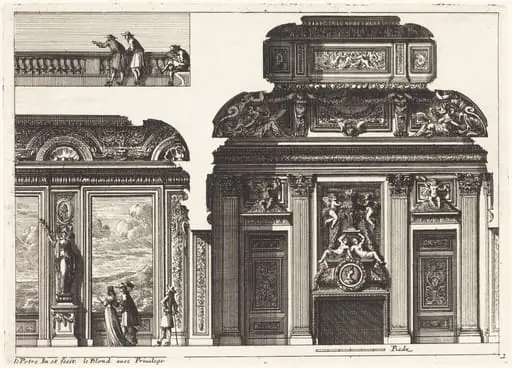 Fireplaces and Other Interior Decorations
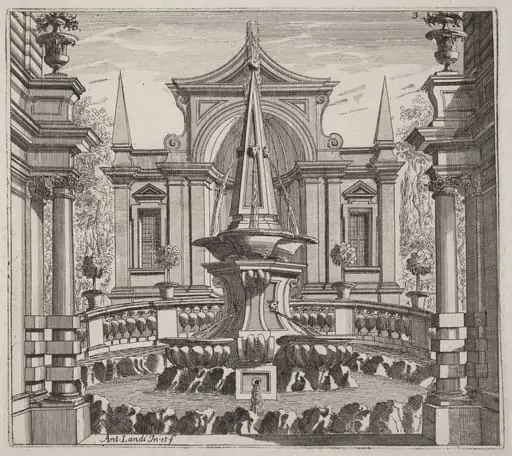 Fantastic Garden with a Fountain and a Garden Pavilion
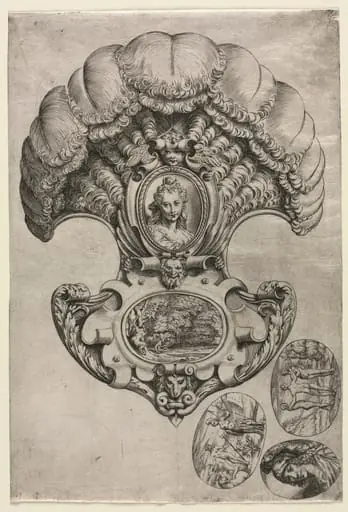 The Fan (L'Eventail)
 Perspectival View of the Salon of the Palazzo Spinola, Genoa