Artwork
Book of Fountains: No. 7
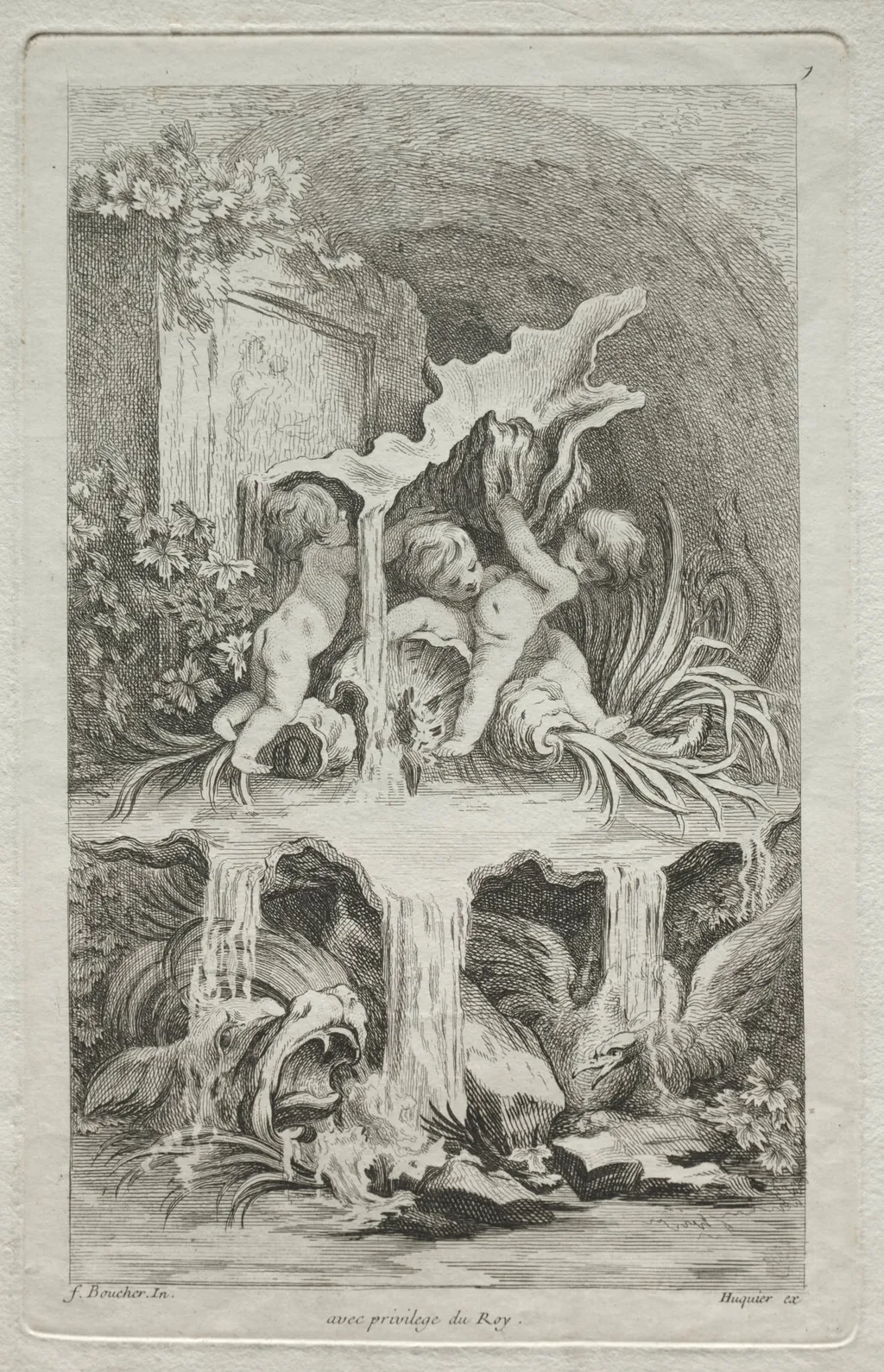
Book of Fountains: No. 7 is a print by the Baroque artist Gabriel Huquier. It dates from 1736 and is held in the collection of the Cleveland Museum of Art. Book of Fountains: No.
About this work
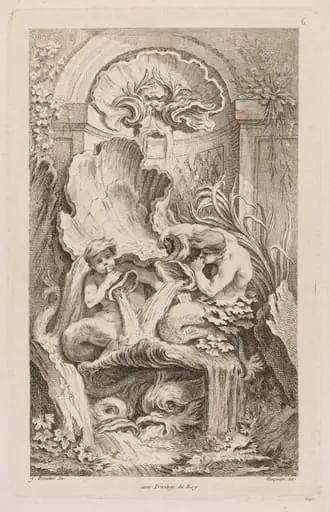
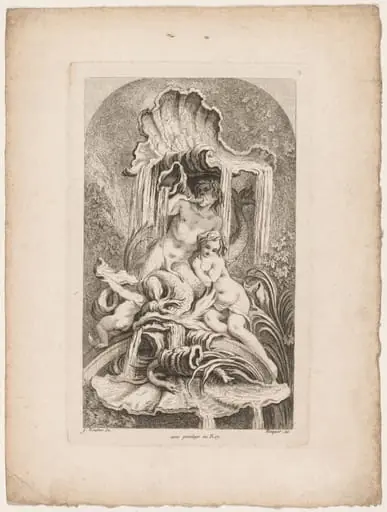
This print shows a fancy 18th-century fountain made of twisting shells and curling water jets. The design looks like lace—all delicate curves and playful details.
Rococo style loved odd shapes like this. It popped up in France around 1720, when people wanted rooms to feel light and happy, not heavy and serious.
Check out more playful prints by Gabriel Huquier at The Cleveland Museum of Art.
Overview
Book of Fountains: No. 7 is a print designed by Jean-Honoré Boucher, exemplifying the Rococo style through its intricate, whimsical depiction of a fantastical fountain.
Subject & Meaning
The print showcases a fanciful 18th-century fountain composed of twisting shells and curling water jets, embodying the Rococo's emphasis on lighthearted, playful aesthetics.
Technique & Style
Characterized by delicate curves, scalloped forms, and aquatic motifs, the design reflects the Rococo's affinity for naturalistic and ornate elements, akin to intricate lace.
History & Provenance
Created around the 1720s in France, this work aligns with the period's shift towards lighter, happier interior designs, contrasting with the heaviness of preceding styles.
Context
Part of a broader vogue for Rococo ornament prints, this piece shares similarities with works by contemporaries like Gabriel Huquier, whose collections can be found at The Cleveland Museum of Art.
Artist & collection

Artist
Gabriel Huquier (1695–1772) was an entrepreneurial French drawer (artist), engraver, printmaker, publisher, and art collector, who became a pivotal figure in the production of French 18th-century ornamental etchings and engravings

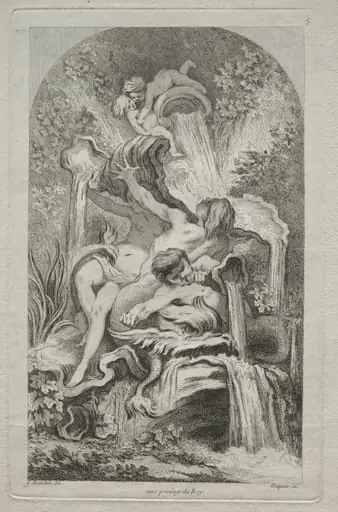 Book of Fountains: No. 5
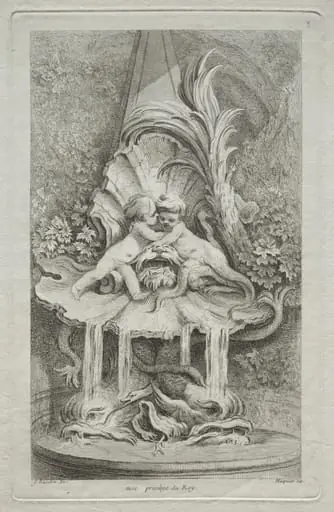 Book of Fountains: No. 3
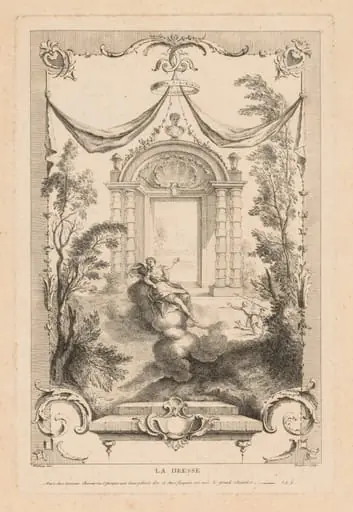 The Goddess, Diana on the Clouds
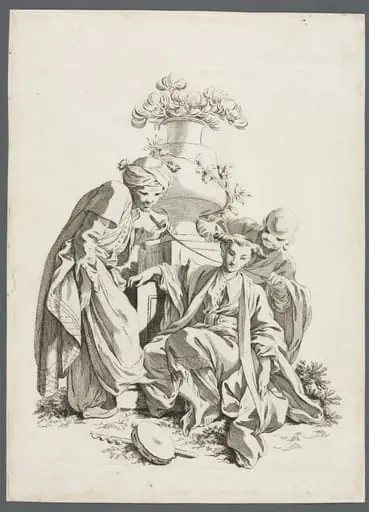 The Senses: Touch (after Boucher)
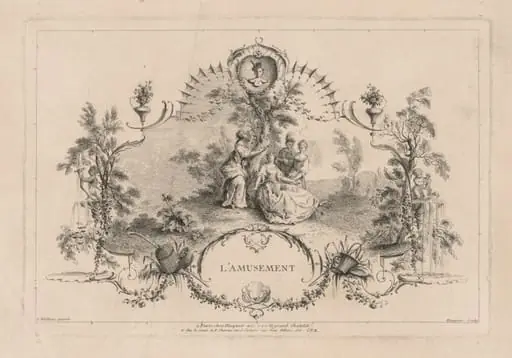 Amusement, Arabesque
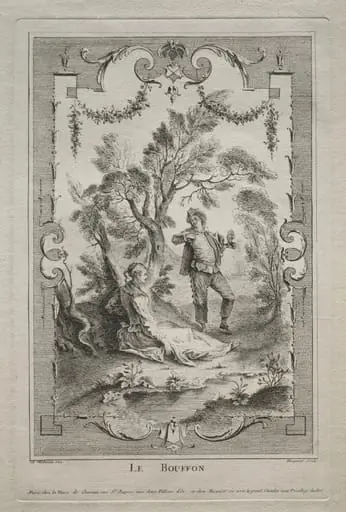 The Buffoon, Arabesque
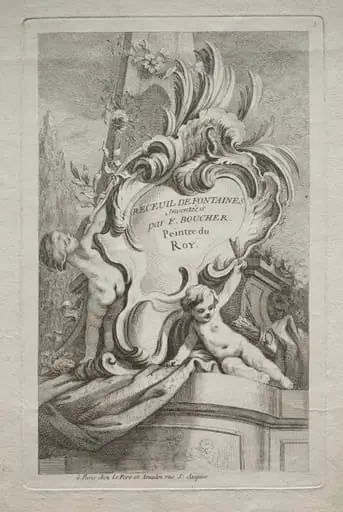 No. 1: Title Page
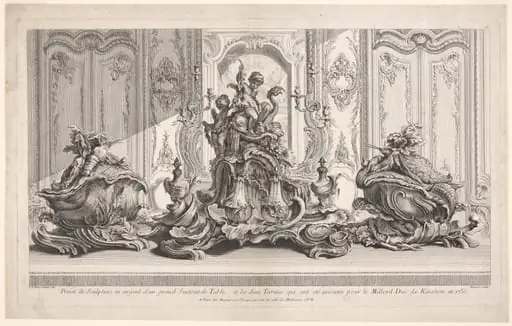 Silver Sculptural Project for a Large Centerpiece and Two Tureens Which Have Been Executed for His Lordship the Duke of Kingston, plate 115 from Works of Juste-Aurèle Meissonier (Oeuvre de Juste-Aurèle Meissonier)