Artwork
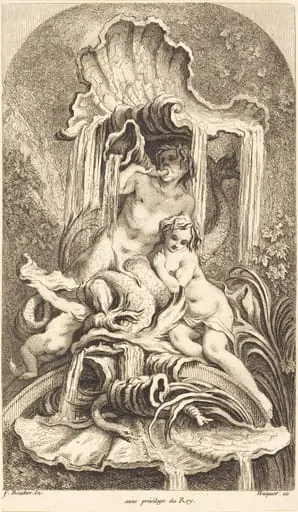
No. 6: Fountain with Two Tritons Blowing Conch Shells
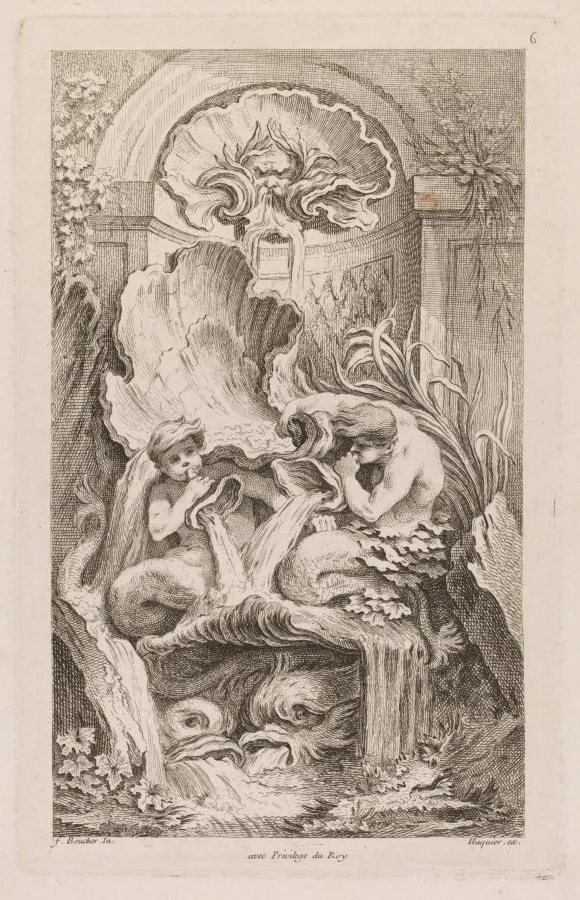
No. 6: Fountain with Two Tritons Blowing Conch Shells is a print by the Baroque artist Gabriel Huquier. It dates from 1736 and is held in the collection of the Cleveland Museum of Art. This print is a reproductive engraving of a design by François Boucher, originally conceived as a decorative scheme for a garden fountain.
About this work
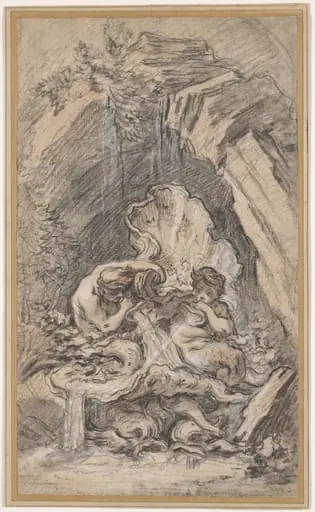
The artist, Huquier, turned Boucher’s rough sketch into a polished drawing, adding shells and sea creatures to match the 1700s love of nature and myth.
Two sea gods with fish tails blow conch shells over a fountain shaped like a giant scallop shell. Water sprays from their horns, and a bearded face peeks from the rocks behind them.
This is actually a print of a design by François Boucher—think of it like a blueprint for a fancy garden fountain. The artist, Huquier, turned Boucher’s rough sketch into a polished drawing, adding shells and sea creatures to match the 1700s love of nature and myth. It’s less about real fountains and more about showing off creativity.
If you like this mix of fantasy and nature, look up *France, 18th century*.
Overview
This print is a reproductive engraving of a design by François Boucher, originally conceived as a decorative scheme for a garden fountain. Gabriel Huquier, a skilled engraver, refined Boucher’s preliminary sketch into a detailed composition, emphasizing ornamental elements favored in mid-18th-century French decorative arts. The image functions less as a blueprint for construction and more as an artistic expression of mythological fantasy, tailored to elite tastes in garden design.
Subject & Meaning
Two tritons—mythological sea deities with human torsos and fish tails—blow into conch shells, their forms emerging from a scallop-shaped basin. Behind them, the bearded face of a sea god emerges from the rockwork, blending natural forms with divine imagery. The scene evokes a mythic aquatic realm, not as a literal representation but as an idealized vision of nature infused with classical symbolism, reflecting contemporary fascination with ancient lore.
Technique & Style
Huquier’s engraving translates Boucher’s fluid draft into precise, linear detail, enhancing textures of shells, scales, and water. The composition is symmetrical and densely ornamented, characteristic of Rococo aesthetics. Shell motifs and marine life are rendered with scientific precision, yet arranged with theatrical flair. The interplay of naturalism and fantasy aligns with period tastes that valued both aesthetic elegance and intellectual allusion.
History & Provenance
The design originated in Boucher’s circle of decorative projects for aristocratic gardens. Huquier’s engraved version was circulated among patrons and artisans as a model for fountain construction. Its inclusion in Antoine-Joseph Dezallier d’Argenville’s 1742 treatise on conchology underscores its cultural resonance beyond art, linking decorative design to the Enlightenment’s broader engagement with natural history and classification.
Context
In 18th-century France, the collection and depiction of shells became a fashionable pursuit among the educated elite, tied to both scientific curiosity and aesthetic display. Garden fountains incorporating marine themes were symbols of refinement, merging classical mythology with natural specimens. This print reflects a cultural moment where art, science, and leisure intersected, turning decorative motifs into expressions of intellectual sophistication.
Legacy
Though never realized as a full-scale fountain, the design endured through prints and publications, influencing decorative arts across Europe. Its fusion of myth and natural history set a precedent for later garden ornamentation and illustrated natural science texts. The work remains a testament to how artistic imagination could be mobilized to frame nature as both beautiful and knowable.
Artist & collection

Artist
Gabriel Huquier (1695–1772) was an entrepreneurial French drawer (artist), engraver, printmaker, publisher, and art collector, who became a pivotal figure in the production of French 18th-century ornamental etchings and engravings

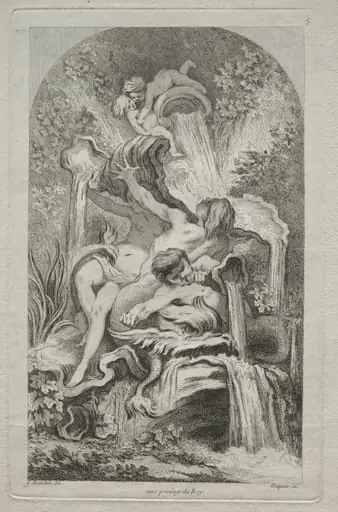 Book of Fountains: No. 5
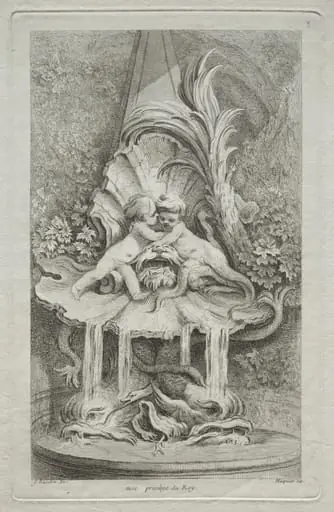 Book of Fountains: No. 3
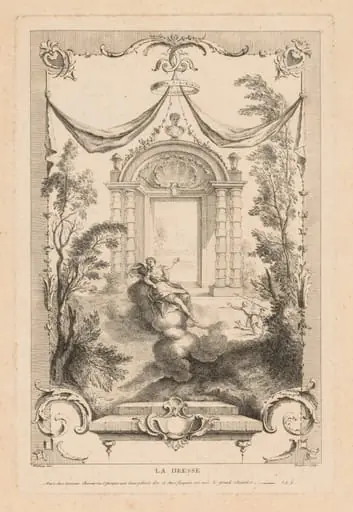 The Goddess, Diana on the Clouds
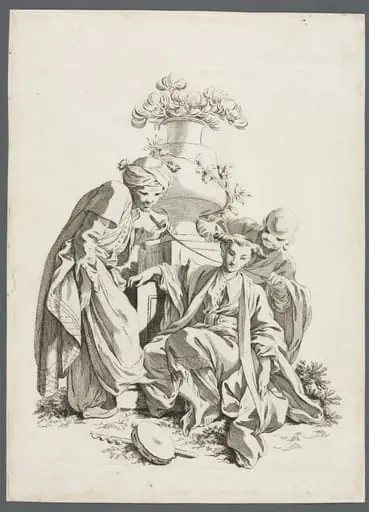 The Senses: Touch (after Boucher)
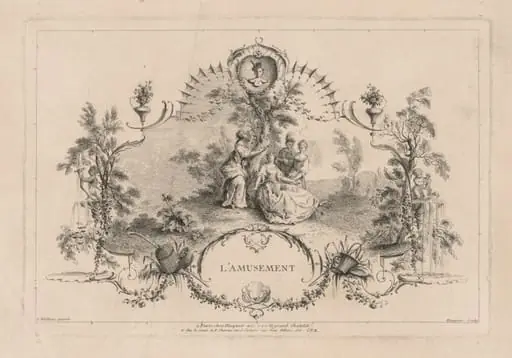 Amusement, Arabesque
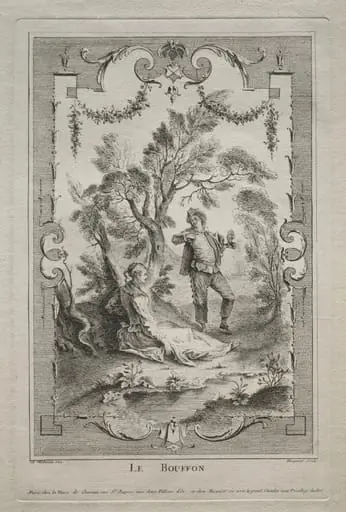 The Buffoon, Arabesque
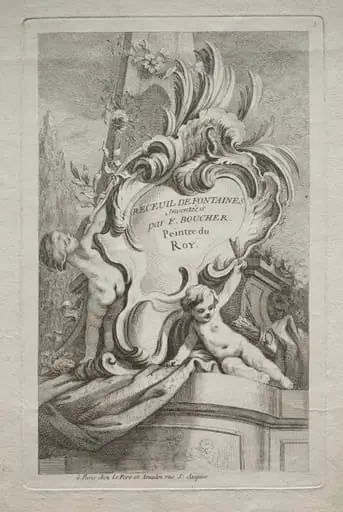 No. 1: Title Page
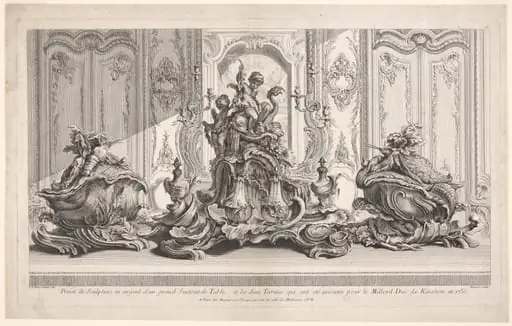 Silver Sculptural Project for a Large Centerpiece and Two Tureens Which Have Been Executed for His Lordship the Duke of Kingston, plate 115 from Works of Juste-Aurèle Meissonier (Oeuvre de Juste-Aurèle Meissonier)
![The Altar of Friendship [l’Autel de l'Amitié], by François Boucher](https://artifactworldgallery.com/img/francois-boucher--the-altar-of-friendship-l-autel-de-l-amitie--7a8337d956e95de0-w320.webp)