Artwork
H Beard Print Collection
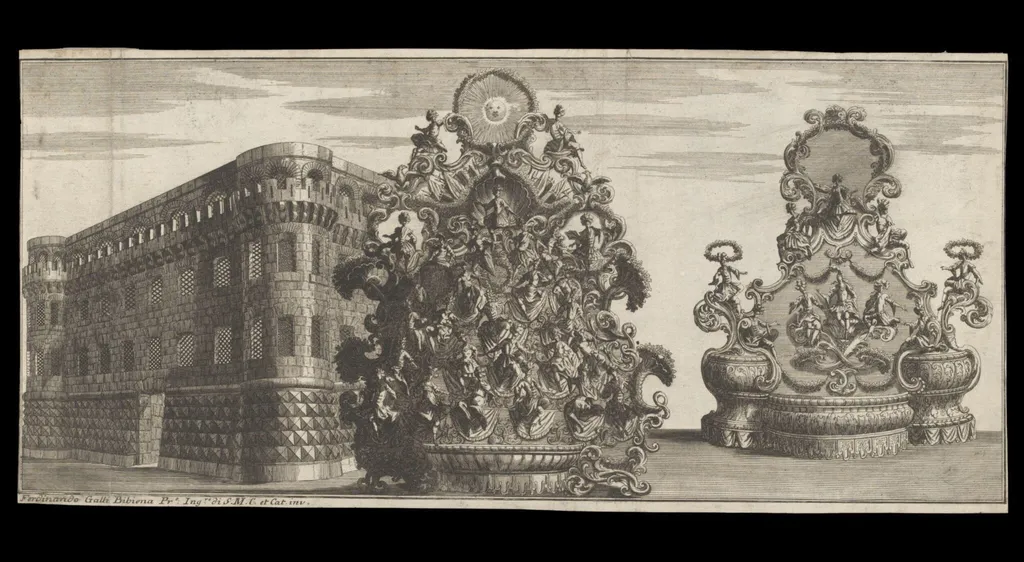
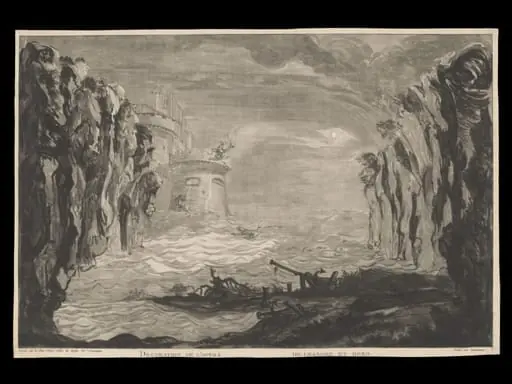
H Beard Print Collection is a print by Ferdinando Galli Bibiena. It dates from 1650 and is held in the collection of the Victoria and Albert Museum.
About this work
This print shows a fortress and two grand thrones. Ferdinando Galli Bibiena designed it in the late 17th to early 18th century. It’s a print, not a painting, so ink on paper was used.
The Victoria and Albert Museum calls it part of a print collection. The thrones look like celebration stages. The fortress adds a bold, architectural feel.
Check out chiaroscuro next.
Overview
This 17th- to 18th-century print, designed by Ferdinando Galli Bibiena, features a prominent fortress alongside two ornate, triumphal thrones, executed in ink on paper.
Subject & Meaning
The print's central elements—a fortress and two grand thrones—suggest a scene of celebration or ceremonial pomp, with the thrones possibly representing stages for dignitaries.
Technique & Style
The use of ink on paper defines the medium. Notably, the composition incorporates chiaroscuro, leveraging strong contrasts of light and dark to enhance the architectural grandeur of the fortress and the ceremonial aura of the thrones.
History & Provenance
Part of the H Beard Print Collection, this work is housed at the Victoria and Albert Museum. Designed by Bibiena, it reflects the Baroque penchant for dramatic and elaborate designs, characteristic of the late 17th to early 18th century.
Context
Created during the Baroque period, the print's emphasis on architectural detail and ceremonial themes aligns with the era's artistic preoccupations. Bibiena's design may have been inspired by or intended for theatrical or ceremonial settings, given the period's fondness for grand public displays.
Legacy
As part of a notable print collection, this work contributes to the understanding of Baroque design principles and the role of prints in disseminating architectural and ceremonial ideas during the late 17th and early 18th centuries.
Artist & collection
Artist
Ferdinando Galli Bibiena spent his life drawing every inch of a stage—curtains, columns, balconies—until they felt like rooms you could step into.

 H Beard Print Collection
 The Prima Macchina for the Chinea of 1754: The Palace of Venus in Cyprus
 Triumphal Arch for Friedrich IV
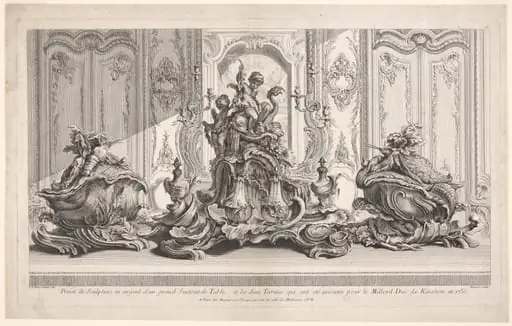 Silver Sculptural Project for a Large Centerpiece and Two Tureens Which Have Been Executed for His Lordship the Duke of Kingston, plate 115 from Works of Juste-Aurèle Meissonier (Oeuvre de Juste-Aurèle Meissonier)
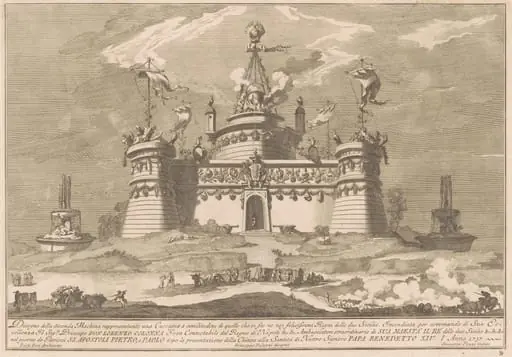 The Seconda Macchina for the Chinea of 1757: The Fortress of Cockaigne
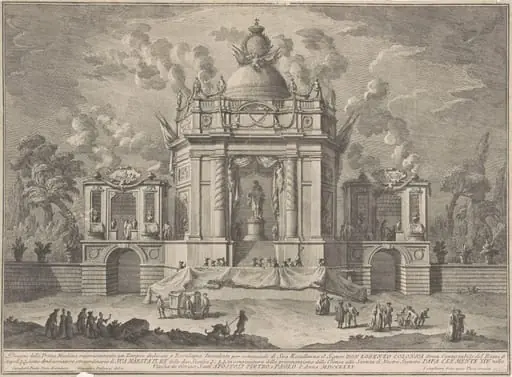 The Prima Macchina for the Chinea of 1771: The Temple of Asclepius
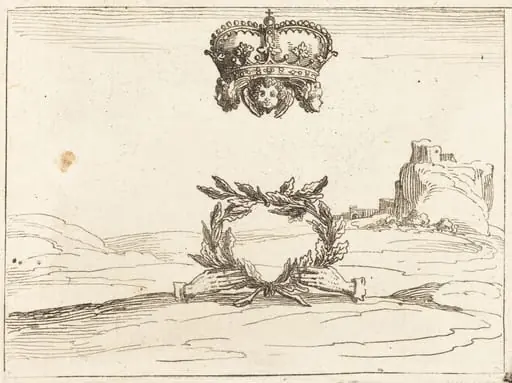 The Two Crowns
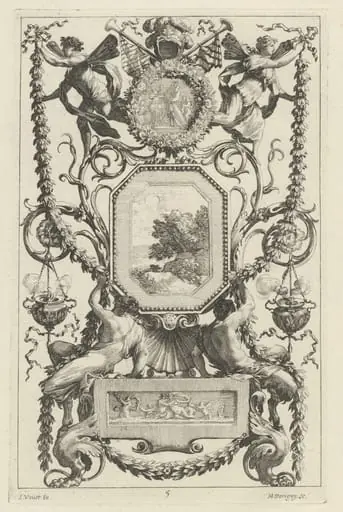 Ornamental Panel Surmounted by a Medallion with a Sacrifice
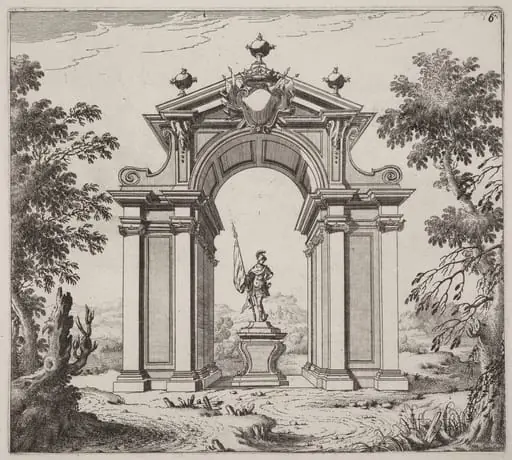 Triumphal Arch in a Landscape
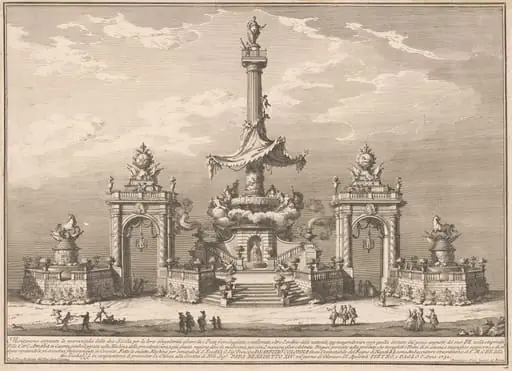 The Seconda Macchina for the Chinea of 1752: The Banquet of the Gods in Villa Carl'Amalia in Caserta
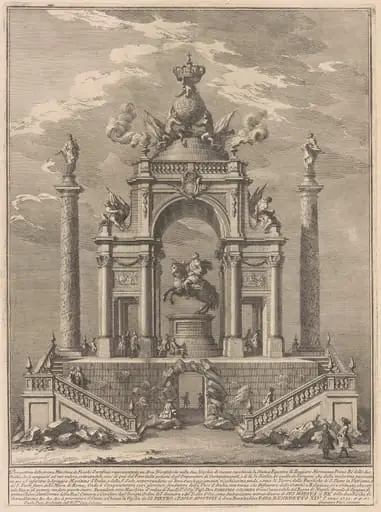 The Prima Macchina for the Chinea of 1751: Triumphal Arch for Roger I of Sicily
 H Beard Print Collection