Artwork
Model for Altar for Woodcarvers
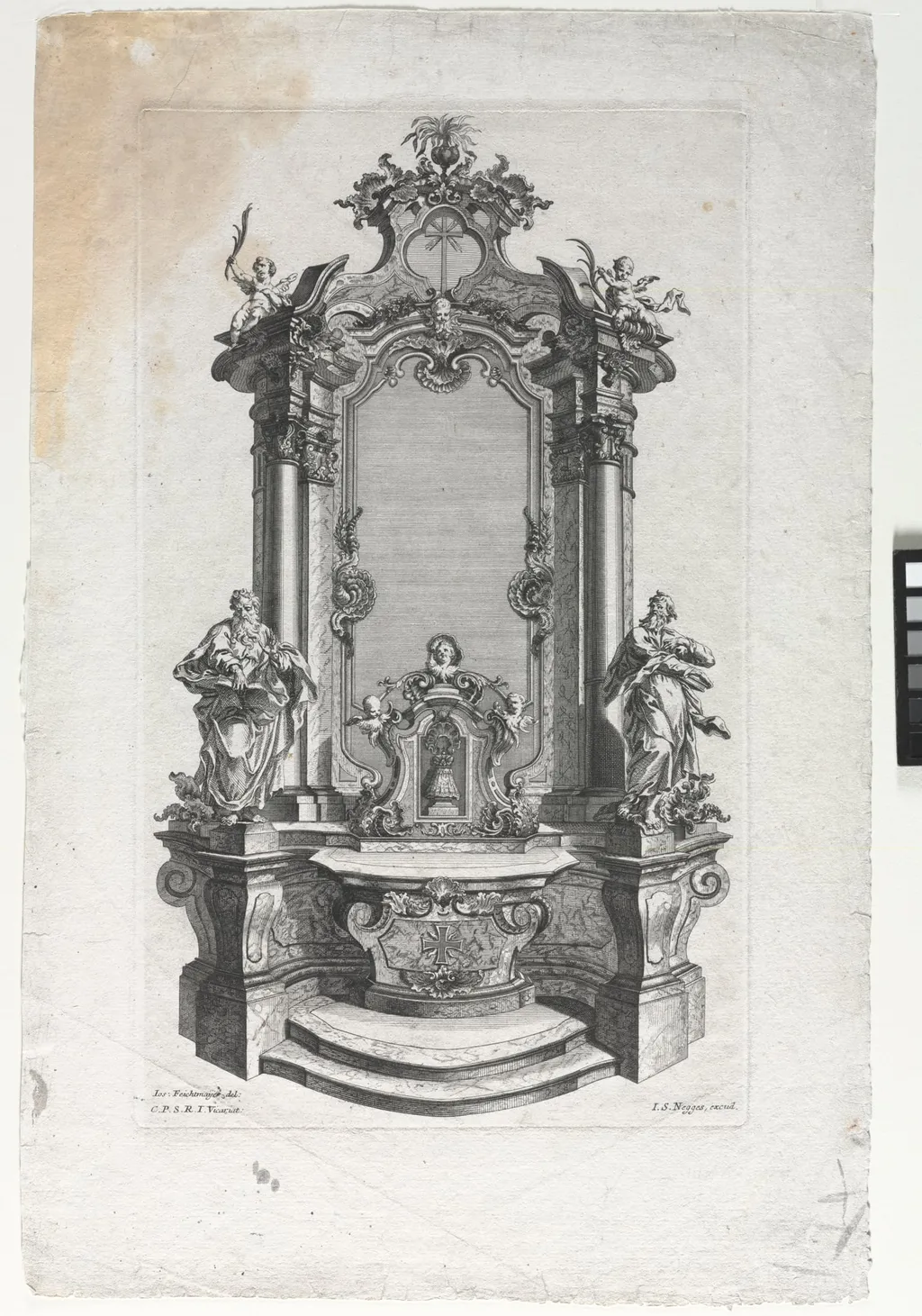
Model for Altar for Woodcarvers is a print by Gottfried Bernhard Götz. It dates from 1751 and is held in the collection of the Cleveland Museum of Art.
About this work
Overview
Model for Altar for Woodcarvers, created by German artist Gottfried Bernhard Götz around 1751, is a print design for an altar, exemplifying the ornate and decorative principles of the Rococo style.
Subject & Meaning
The design depicts an elaborate altar with two figures at the base, holding scrolls or books, a central statue within a curved frame, a shield-like emblem, and a wreath-topped pinnacle with cherubs, one bearing a palm branch, symbolizing victory or martyrdom.
Technique & Style
Götz skillfully blended drawing and engraving techniques to achieve a three-dimensional effect, emphasizing intricate woodcarving details through expressive curves and shading, characteristic of Rococo’s emphasis on grace and detail.
History & Provenance
Created circa 1751 for the woodcarvers' guild, the altar model reflects the artist's ability to design for specific trades, though its exact commission and early ownership history are not detailed here.
Context
This work would have been part of a broader tradition of artists designing altars for various guilds, reflecting the religious and vocational intersections of 18th-century German society.
Legacy
Now housed at The Cleveland Museum of Art, it serves as a detailed example of Rococo design principles and the fusion of artistic and craftsmen's skills in 18th-century Germany.
Artist & collection
Artist
Gottfried Bernhard Göz, also Goez, Goetz or Götz (baptized 10 August 1708 – 23 November 1774), was a German Rococo painter and engraver.

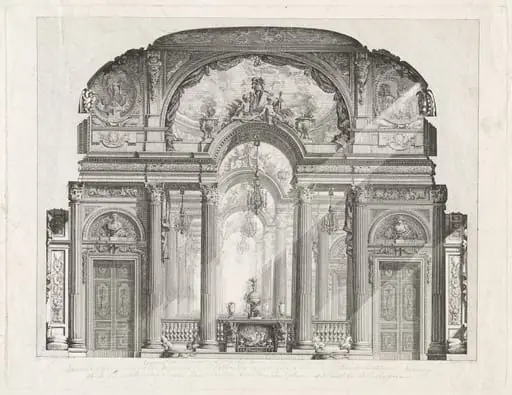 Cross Section of the Salon of the Palazzo Spinola, Genoa
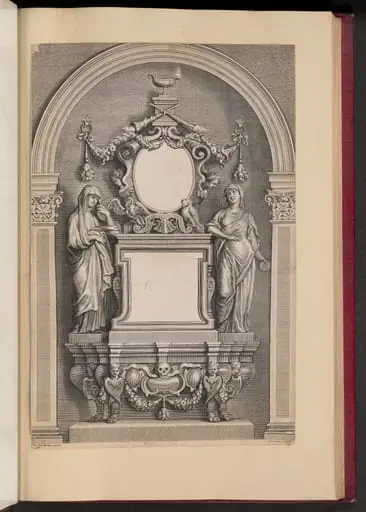 Epitaph of Rubens
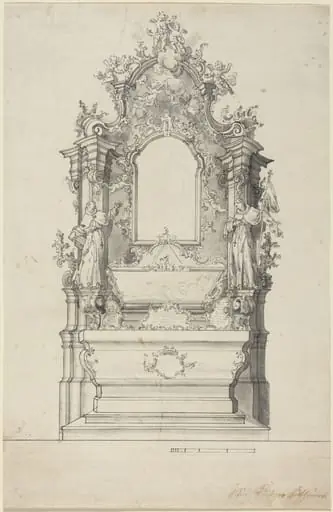 Rococo Altar with a Reliquary Tomb
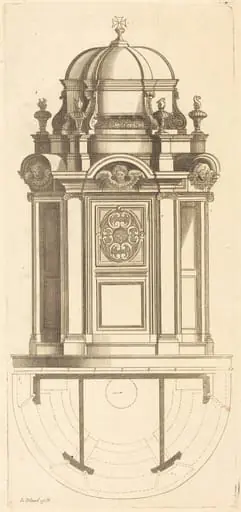 Plan et elevation des plus beaux confessionnaux de Paris, tres fidelemant mesure
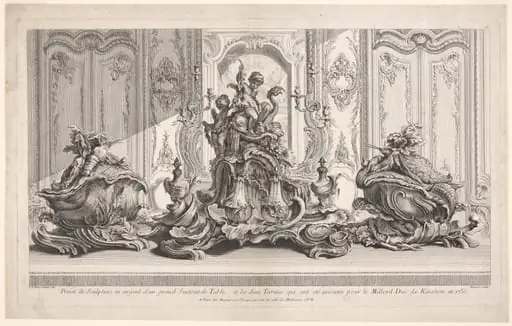 Silver Sculptural Project for a Large Centerpiece and Two Tureens Which Have Been Executed for His Lordship the Duke of Kingston, plate 115 from Works of Juste-Aurèle Meissonier (Oeuvre de Juste-Aurèle Meissonier)
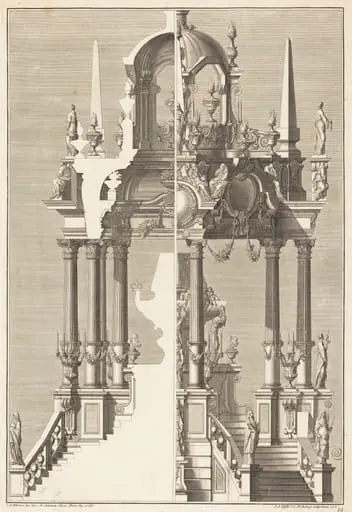 Catafalque
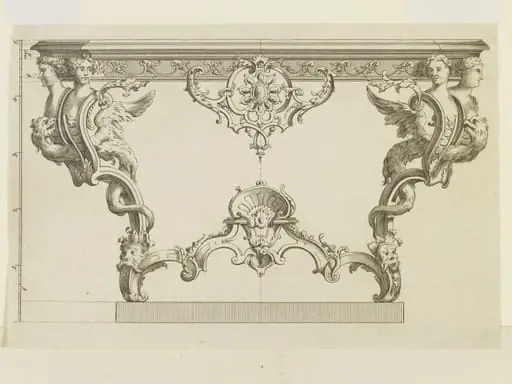 Nouveaux Desseins de Pieds de Tables et de Vases et Consoles de Sculpture
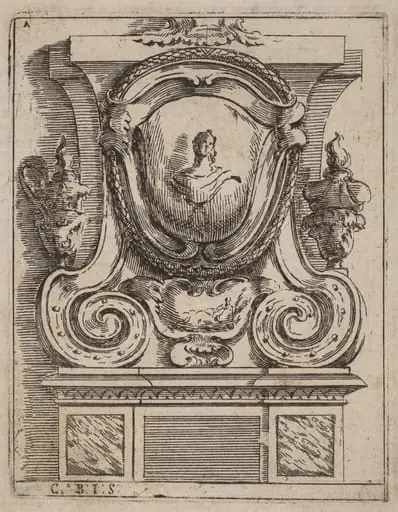 Architectural Motif with Bust and Two Lamps
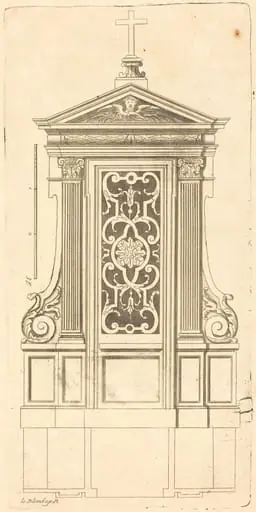 Plan et elevation des plus beaux confessionnaux de Paris, tres fidelemant mesure