Artwork
Furuichi Dance at the Hisagataya
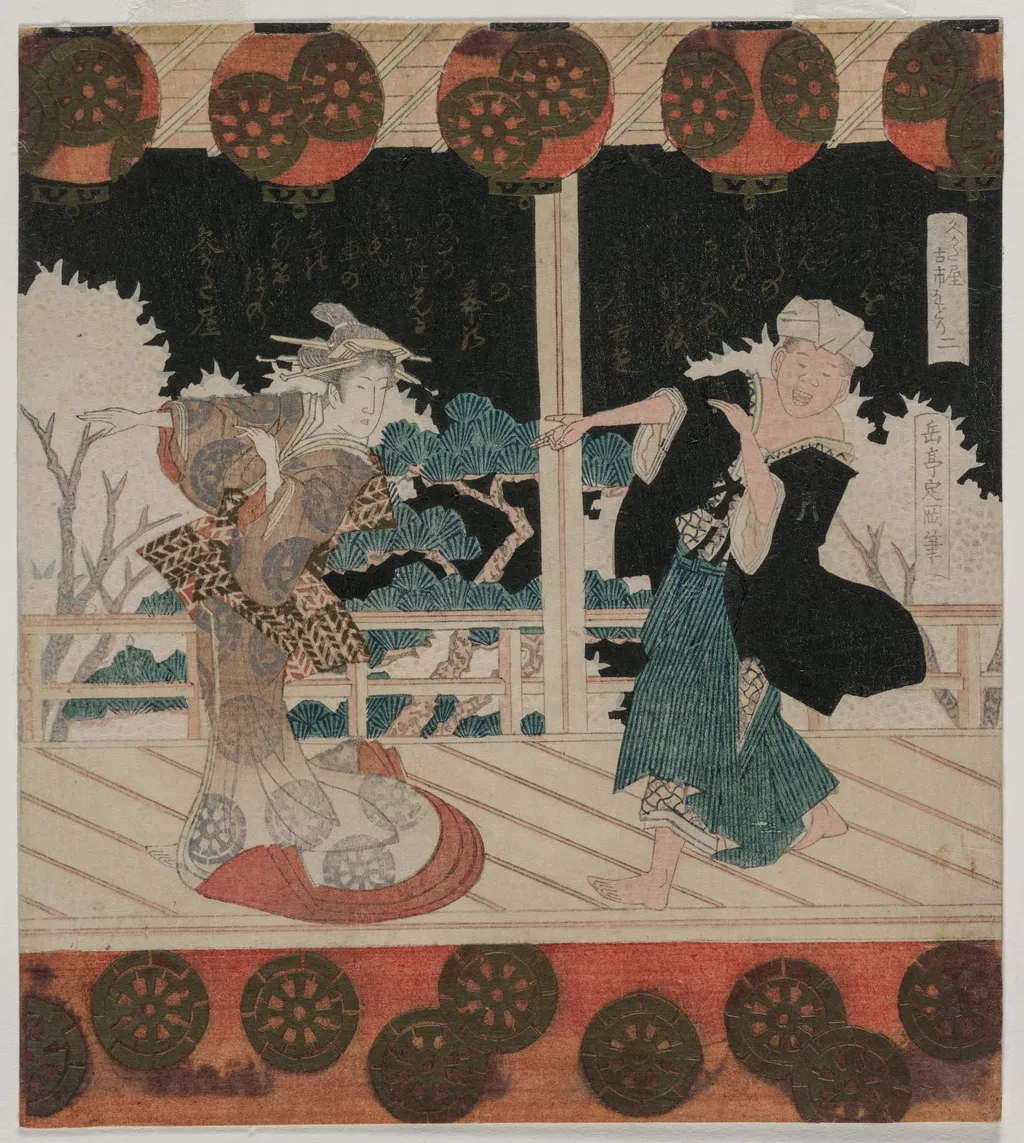
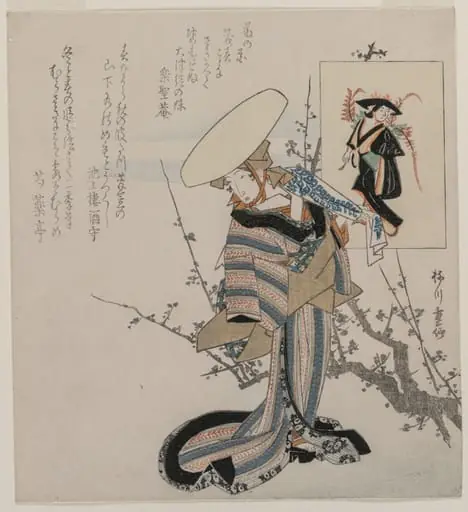
Furuichi Dance at the Hisagataya is a print by the Romanticist artist 1786(?)–1868) Gakutei Harunobu (Japanese. It dates from 1824 and is held in the collection of the Cleveland Museum of Art. This surimono print merges visual art with poetic text to commemorate a private celebration in Edo-period Japan.
About this work
Overview
Produced for a limited, elite audience, it captures a moment of cultural performance at the Hisagataya teahouse in Furuichi, near Ise.
This surimono print merges visual art with poetic text to commemorate a private celebration in Edo-period Japan. Produced for a limited, elite audience, it captures a moment of cultural performance at the Hisagataya teahouse in Furuichi, near Ise. Unlike mass-produced ukiyo-e, surimono were often commissioned by poetry circles and distributed as gifts, emphasizing literary and aesthetic refinement over commercial appeal.
Subject & Meaning
The scene depicts the poet Hisagataya engaged in dance alongside geisha, surrounded by musicians and guests in a teahouse setting. The event likely marked a poetry gathering or seasonal observance, blending performance with literary expression. The inclusion of poetry within the composition invites viewers to participate in the intellectual and emotional resonance of the occasion, reflecting the intimate connection between art and verse in Edo elite culture.
Technique & Style
Rendered in fine woodblock printing with delicate lines and subtle color gradations, the print employs metallic pigments and embossing to enhance its luxury. The figures are arranged in a dynamic yet balanced composition, with attention to textile patterns and facial expressions. The integration of calligraphic verse within the image space reflects the surimono tradition of uniting visual and textual art as a single, cohesive experience.
History & Provenance
Commissioned by members of a literary circle, the print was likely produced around the early 19th century, possibly by the artist Gakutei, known for his refined surimono designs. These prints were rarely sold publicly but circulated among poets, patrons, and artists as tokens of shared cultural appreciation. The Hisagataya teahouse, a known gathering place for literati, lends authenticity to the scene’s social context.
Context
Surimono emerged as a niche genre within ukiyo-e, favored by educated urban elites who valued poetic exchange and aesthetic subtlety. These prints often marked birthdays, New Year’s, or literary milestones, serving as both artistic objects and social artifacts. The Furuichi setting connects the work to pilgrimage routes and regional cultural hubs, where teahouses functioned as centers for artistic and intellectual life.
Legacy
Though not widely known outside specialist circles, surimono like this one influenced later Japanese printmakers by demonstrating the potential of combining text and image with technical precision. Their intimate scale and refined execution contrasted with broader ukiyo-e trends, preserving a tradition of personal, literary engagement that continues to inform studies of Edo-period aesthetics and patronage.
Artist & collection
Artist
1786(?)–1868) Gakutei Harunobu (Japanese
Gakutei Harunobu painted delicate woodblock prints of everyday life in the Edo period.

 Untitled
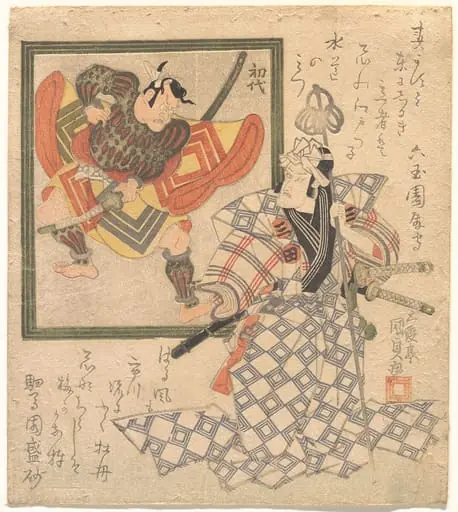 歌川国貞画 七代目市川団十郎と初代市川団十郎|Ichikawa Danjūrō VII Admiring Ichikawa Danjūrō I in an Inset Portrait
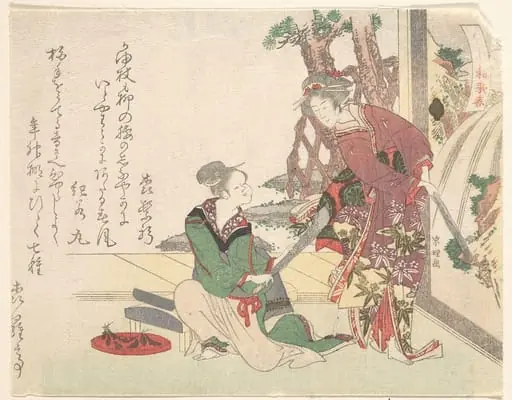 うし和歌春|Two Women, from the series Spring Poems on Ushiwaka for the Year of the Ox (Ushiwaka haru)
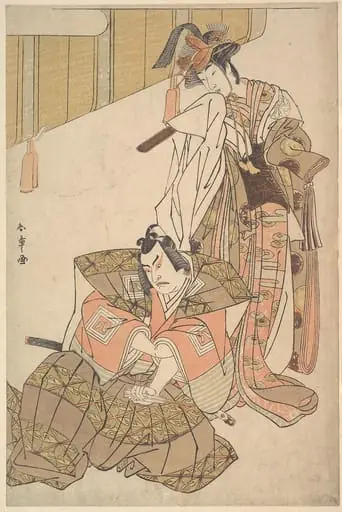 Untitled
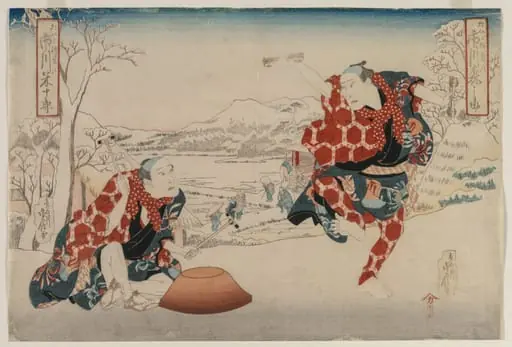 Ichikawa Norinosuke and Ichikawa Yonejuro as Morihachi and Yonehachi, Two Comedians
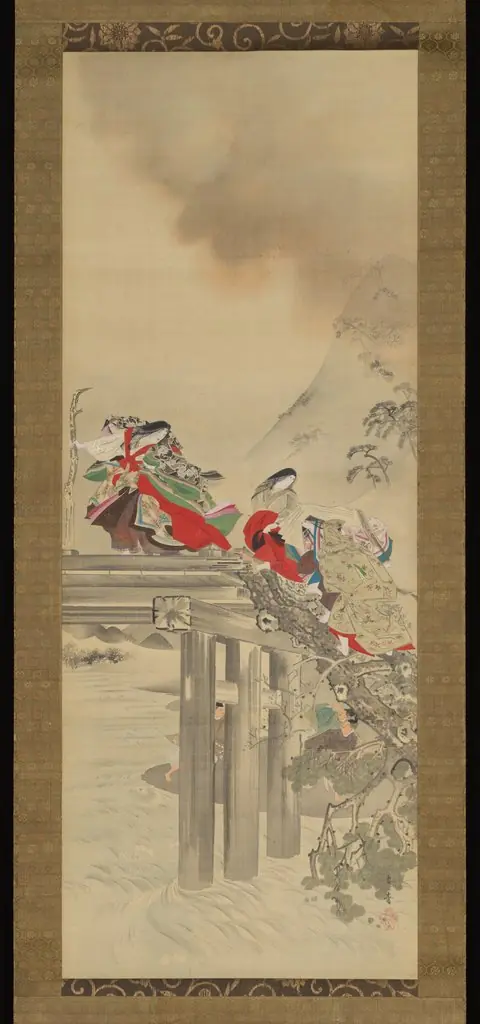 Lady Iga 伊賀局図 (Iga no tsubone zu)
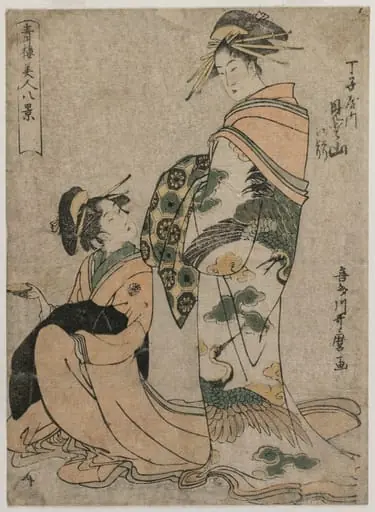 The Courtesan Misyama of Chojiya (from the series Eight Views of Beautiful Women of the Green Houses)
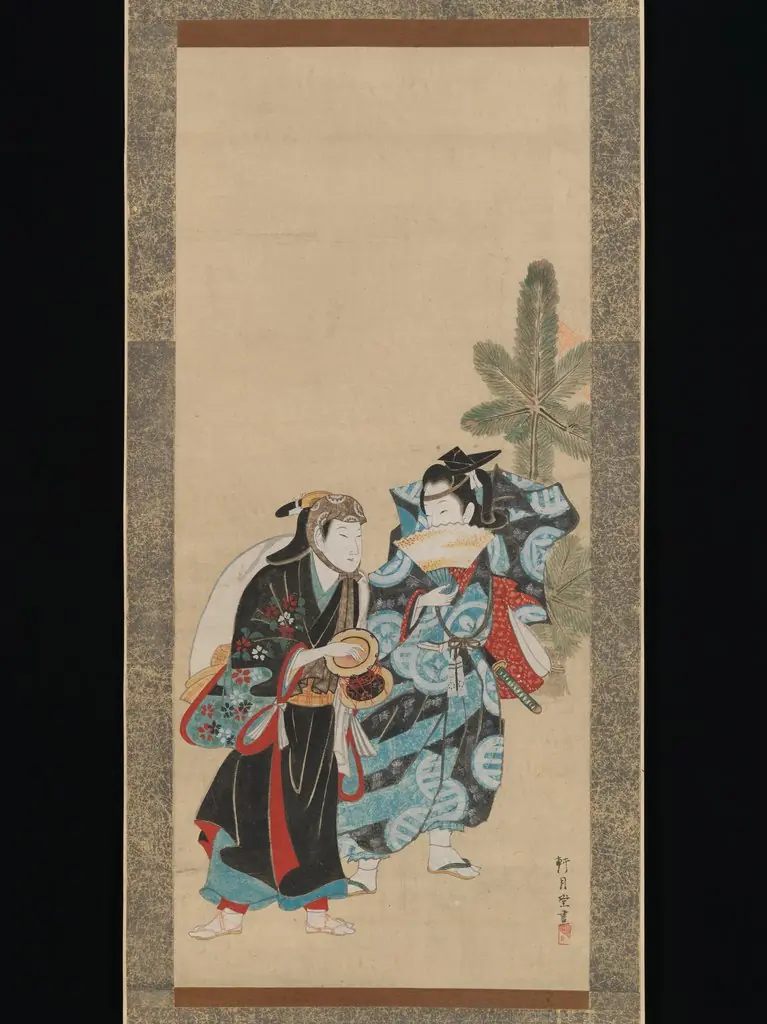 Itinerant Actors
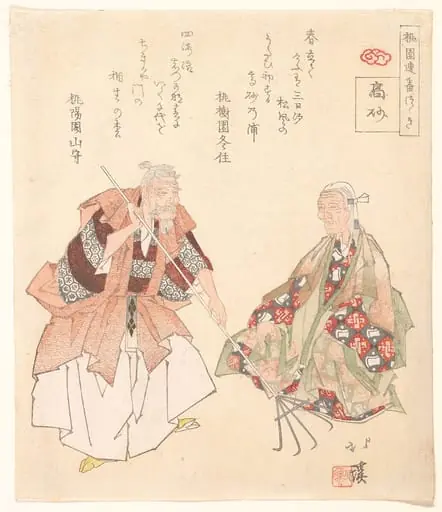 Untitled
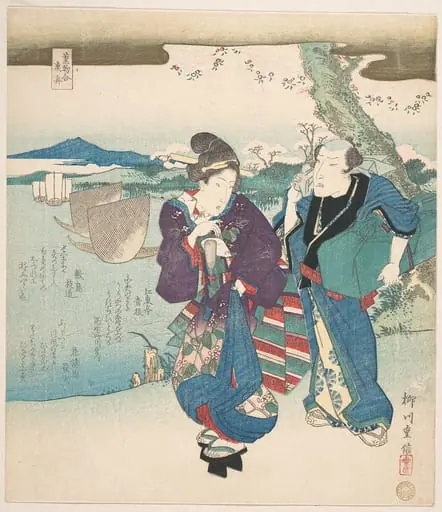 Untitled
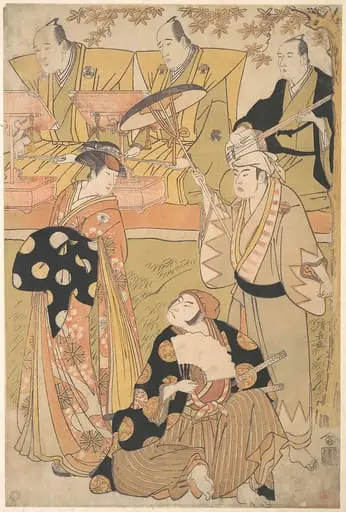 Untitled
 Woman by a Plum Tree Matched with the Wisteria Maiden (from a series of women compared to figures from Otsu paintings)