Artwork
Untitled
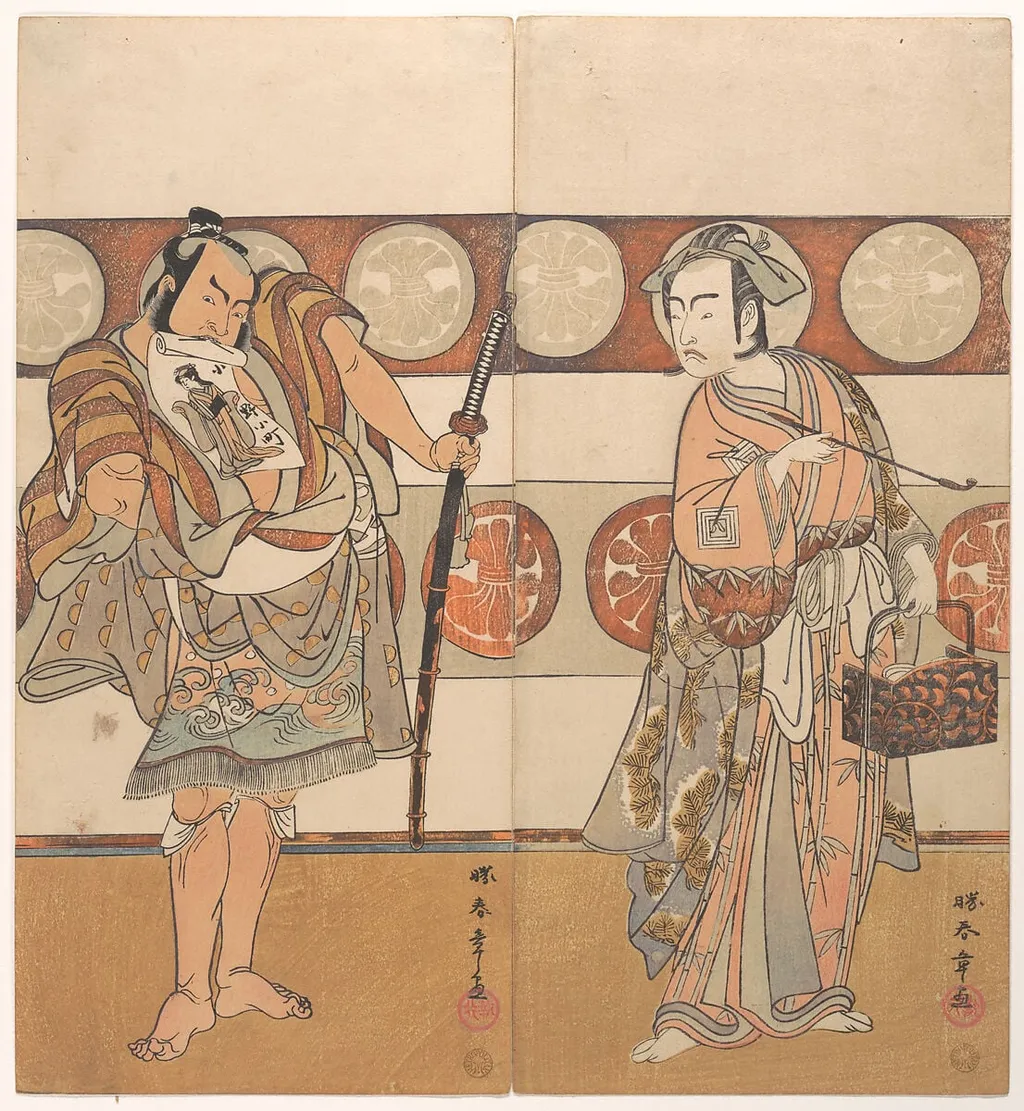
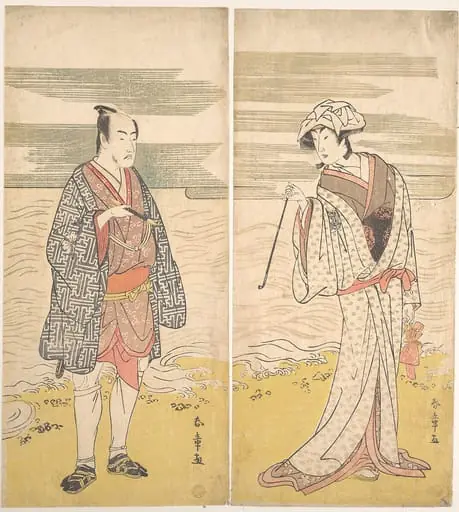
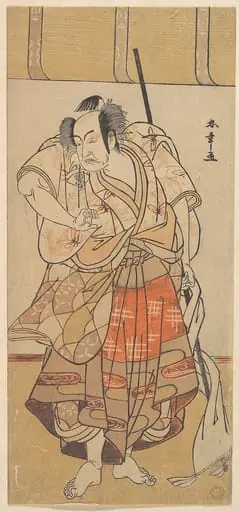
Untitled is an ink print by the Romanticist artist Katsukawa Shunshō. It dates from 1791 and is held in the collection of the Metropolitan Museum of Art.
About this work
The overall effect is one of simplicity and elegance, with a focus on the intricate details of the men's clothing and accessories.
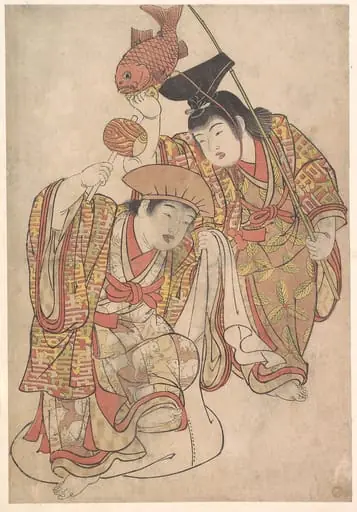
This Japanese woodblock print, created around 1791, features two men in traditional attire. The man on the left, wearing a patterned robe, holds a sword in his right hand and a scroll in his left. He stands barefoot, with his left leg bent and his right leg straight. The man on the right, dressed in a robe and hat, holds a basket in his left hand and a stick in his right. He also stands barefoot, with his weight shifted onto his right leg.
The background of the print is a muted color, with a subtle pattern of circles and lines. The overall effect is one of simplicity and elegance, with a focus on the intricate details of the men's clothing and accessories.
If you're interested in learning more about the artist behind this print, you might want to look up Katsukawa Shunshō.
Overview
Created around 1791, this woodblock print by Katsukawa Shunshō belongs to the nishiki-e tradition of full-color Japanese prints. Executed in ink and color on paper, it is part of The Metropolitan Museum of Art’s collection. The composition centers on two figures in formal attire, rendered with restrained detail and a muted background that emphasizes their posture and attire without ornate distraction.
Subject & Meaning
The two figures appear to be men of status, possibly actors or scholars, engaged in a quiet, deliberate interaction. One holds a sword and scroll, suggesting martial or literary authority; the other carries a basket and staff, hinting at travel or service. Their bare feet and balanced stances imply a moment of stillness, perhaps after movement or before speech, evoking an unspoken narrative rooted in Edo-period social roles.
Technique & Style
Shunshō employed fine linework and layered color to define the textures of fabric, footwear, and accessories. The background’s faint circular and linear motifs provide subtle depth without competing with the figures. The print’s simplicity reflects the ukiyo-e preference for clarity and elegance, with attention to the folds of robes and the weight of objects held, all rendered with precision typical of late 18th-century woodblock craftsmanship.
History & Provenance
The print entered The Metropolitan Museum of Art’s collection as part of its broader acquisition of Japanese prints from the Edo period. While its exact provenance before the 20th century is undocumented, its condition and style align with prints produced in Shunshō’s workshop during the 1790s, a period when actor portraits and genre scenes dominated the market.
Context
Produced during the Kansei era, this print reflects a time when ukiyo-e artists moved beyond theatrical subjects toward more intimate, everyday depictions. Shunshō, once known for actor prints, was increasingly exploring nuanced character studies. The subdued palette and lack of overt drama suggest a shift toward quiet realism, resonating with broader cultural interests in restraint and refinement.
Legacy
Though unsigned and untitled, the work exemplifies Shunshō’s later stylistic maturity and his influence on the evolution of ukiyo-e portraiture. Its preservation in a major Western institution underscores its role in shaping international appreciation for Japanese printmaking’s subtlety and technical discipline during the 19th and 20th centuries.
Artist & collection
Artist
Katsukawa Shunshō spent his life in Edo (now Tokyo), where the city’s teahouses and theaters buzzed with energy.

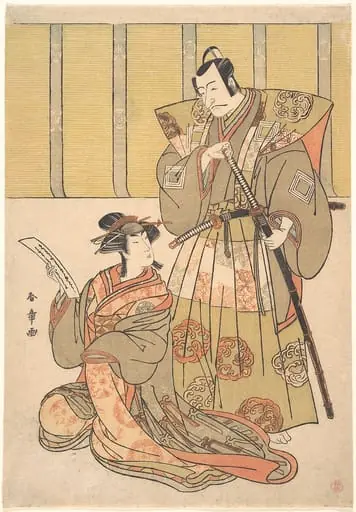
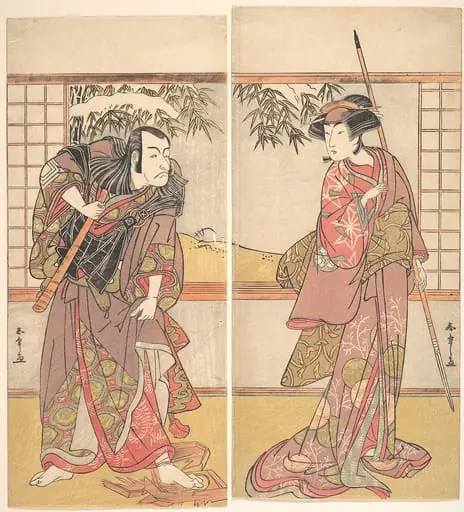 勝川春章画 二代目小佐川常世・五代目市川団十郎|Kabuki Actors Osagawa Tsuneyo II and Ichikawa Danjūrō V
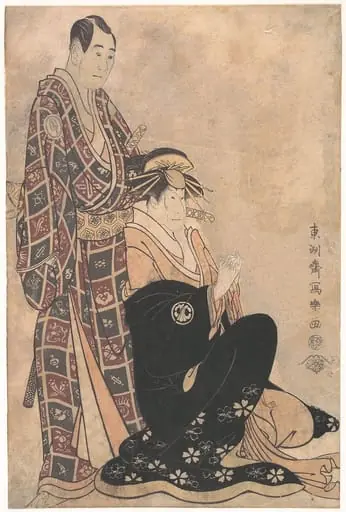 Untitled
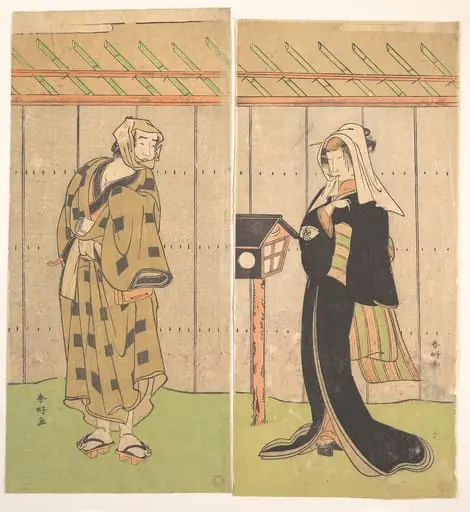
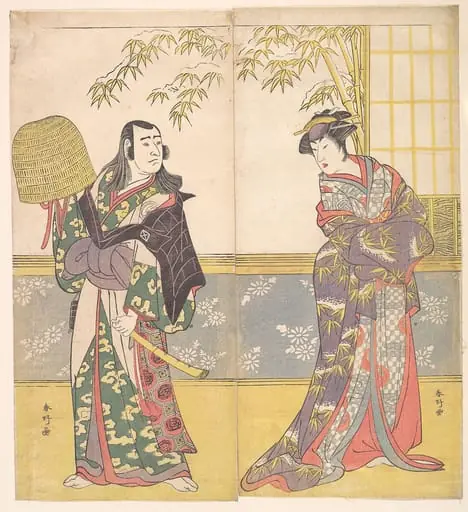 勝川春好画 三代目澤村宗十郎 三代目佐野川市松 |Kabuki Actors Sawamura Sōjūrō III and Sanogawa Ichimatsu III in "A Courtesan’s Mirror for the Eastern Provinces" (Keisei Azuma kagami)
 Untitled
 Untitled
 Untitled
 Untitled
 Untitled
 Untitled
 Untitled
 Untitled
 Untitled