Artwork
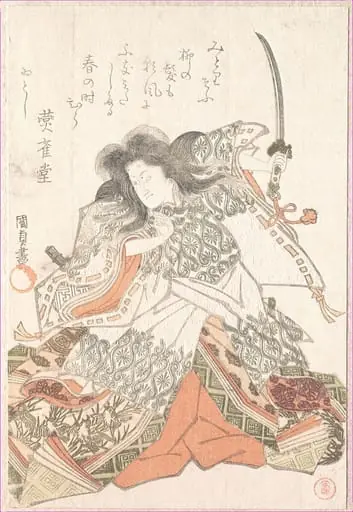
歌川国貞画 七代目市川団十郎と初代市川団十郎|Ichikawa Danjūrō VII Admiring Ichikawa Danjūrō I in an Inset Portrait
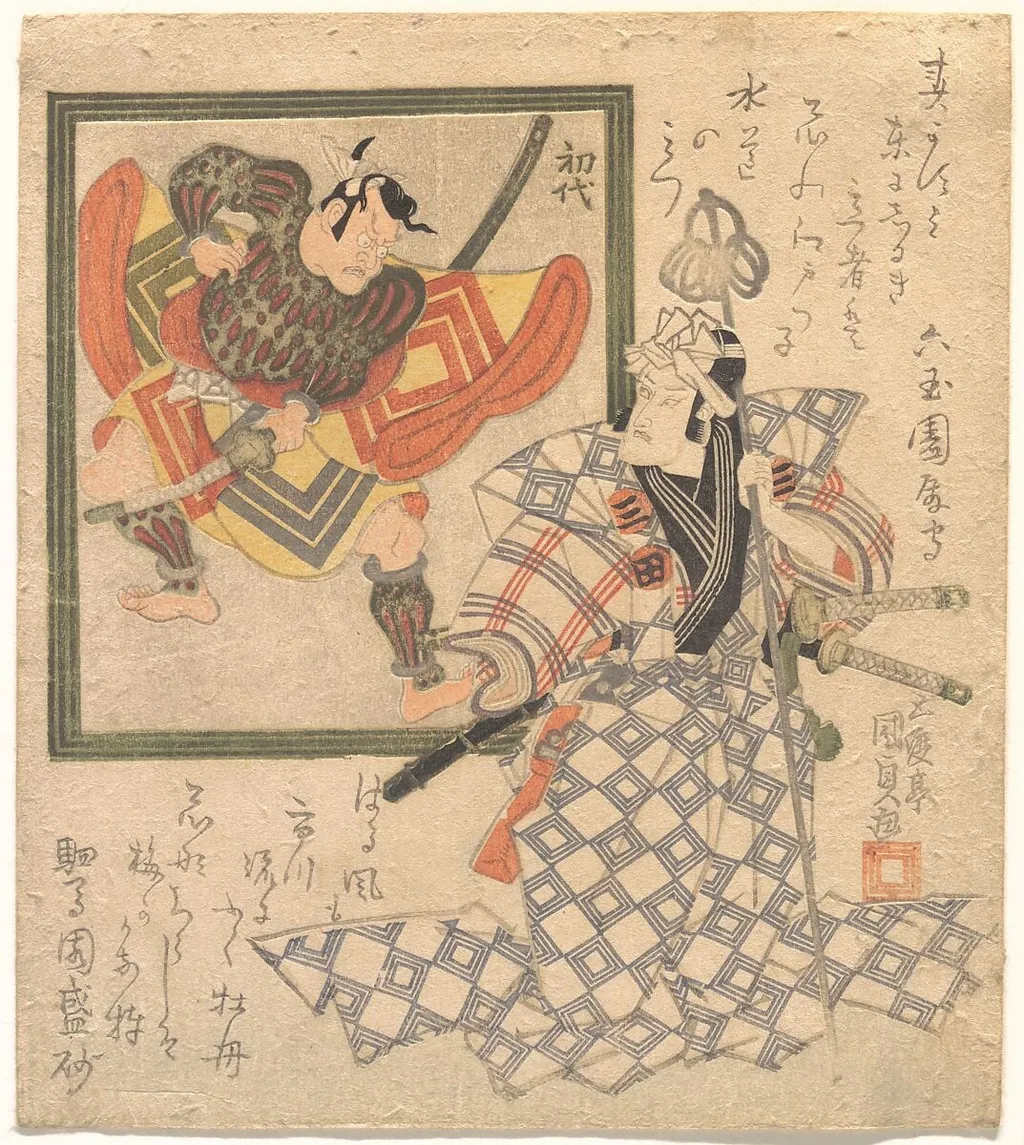
歌川国貞画 七代目市川団十郎と初代市川団十郎|Ichikawa Danjūrō VII Admiring Ichikawa Danjūrō I in an Inset Portrait is an ink print by the Romanticist artist Utagawa Kunisada. It dates from 1819 and is held in the collection of the Metropolitan Museum of Art.
About this work
The picture in the background shows a man with a similar hairstyle and clothing, but with a more relaxed expression.
This painting shows a man in a traditional Japanese outfit, holding a sword and wearing a patterned robe. He's standing in front of a framed picture of another man, also in traditional clothing, with a sword and a fan. The background is a light color, and there are some Japanese characters written on the right side.
The man in the foreground is looking at the picture with a serious expression. He's wearing a white robe with a blue and red pattern, and his hair is tied back in a ponytail. The picture in the background shows a man with a similar hairstyle and clothing, but with a more relaxed expression.
The painting is a beautiful example of Japanese art from the early 19th century. You might want to learn more about the artist, Utagawa Kunisada.
Overview
Utagawa Kunisada's 1819 woodblock print depicts a poignant intergenerational moment within the renowned Ichikawa Danjūrō theatrical lineage. Executed in ink, color, and metallic pigment on paper in the shikishiban format, the work is part of The Metropolitan Museum of Art's collection.
Subject & Meaning
The print shows Ichikawa Danjūrō VII contemplatively admiring an inset portrait of his illustrious ancestor, Ichikawa Danjūrō I. The composition conveys reverence and continuity between generations of Japan's esteemed kabuki actors.
Technique & Style
Kunisada employs traditional woodblock techniques, combining bold ink outlines with vibrant color and metallic accents. The contrast between the serene background and intricately patterned robes highlights the subject's contemplation.
History & Provenance
Created in 1819, the print is a product of Edo-period Japan's flourishing ukiyo-e culture. It is now housed at The Metropolitan Museum of Art, testifying to the global appreciation of Japanese woodblock art.
Context
This work reflects the cultural significance of kabuki theatre in 19th-century Japan, as well as the tradition of honoring artistic lineage. The use of a framed inset portrait within the print nods to the period's innovative compositional practices.
Artist & collection

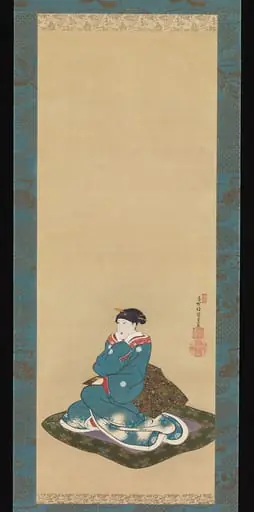 二代目岩井粂三郎の肖像|Portrait of Iwai Kumesaburō II
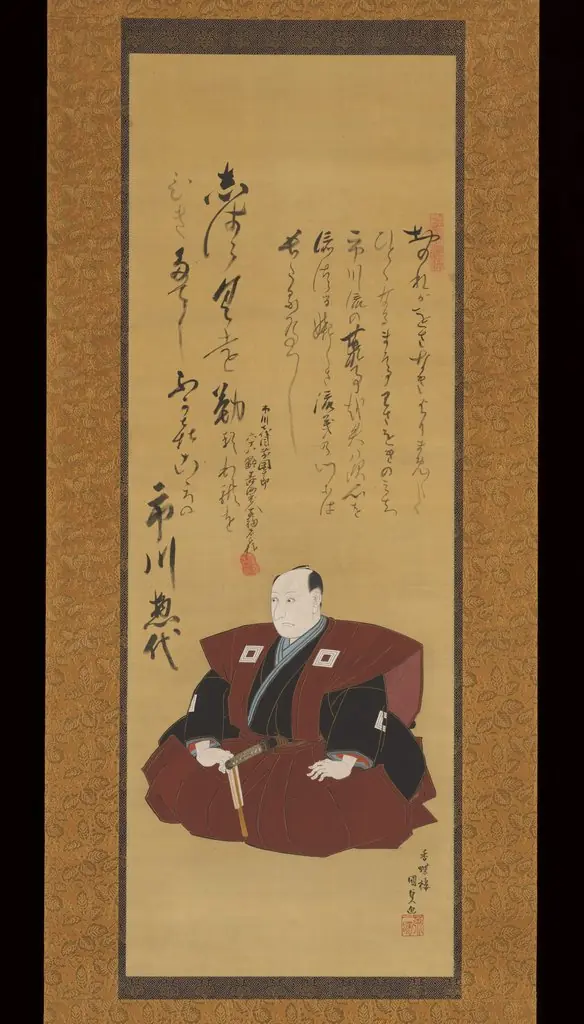 Memorial Portrait of the Actor Ichikawa Ōmezō I
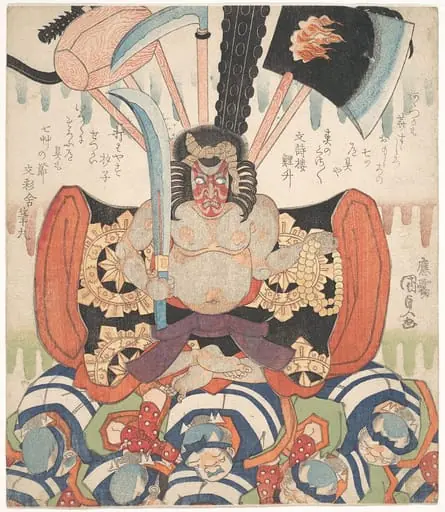 Untitled
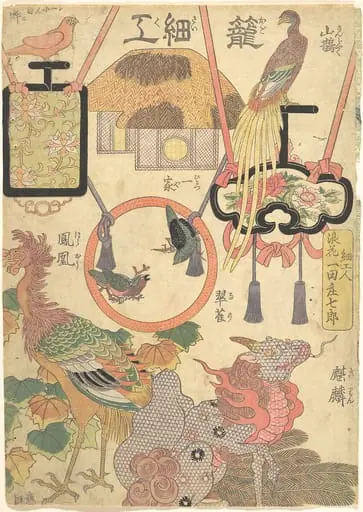 「籠細工 浪花細工人一田庄七郎」|Basketry Work: By the Craftsman Ichida Shōshichirō of Naniwa (Kagosaiku Naniwa saikujin Ichida Shōshichirō)
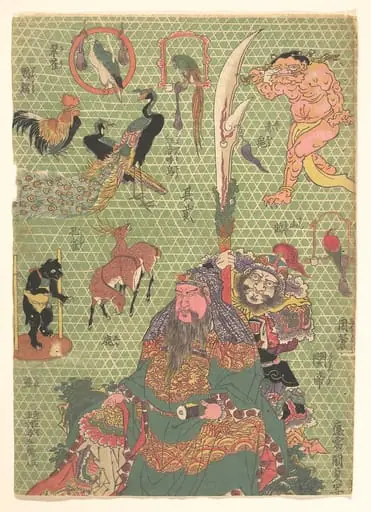 歌川国貞画 「籠細工 浪花細工人 一田庄七郎」|Basketry Work: By the Craftsman Ichida Shōshichirō of Naniwa (Kagozaiku Naniwa saikunin Ichida Shōshichirō)
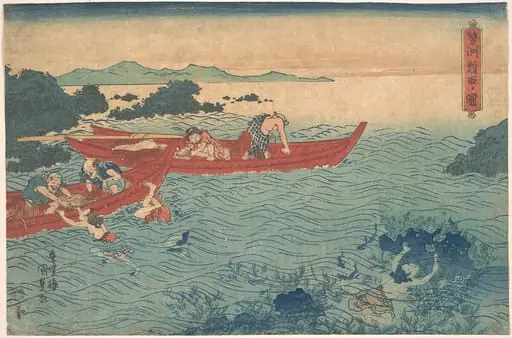 Untitled
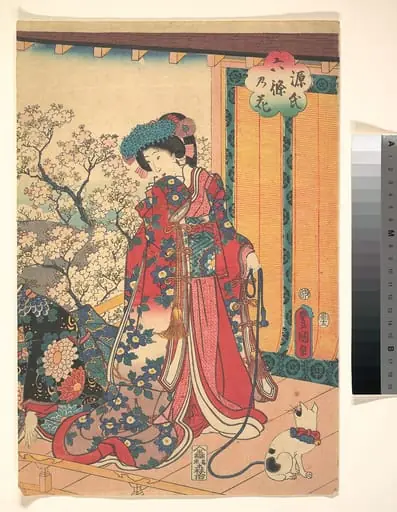 Untitled
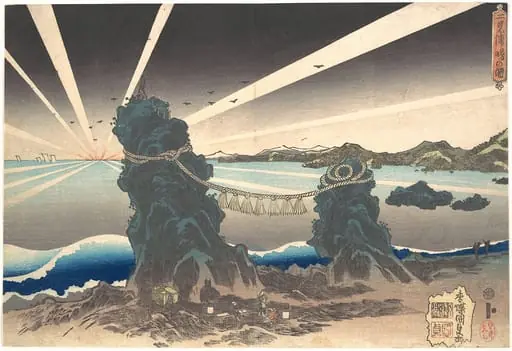 Futami-ga-ura akebono-no kuni|Futami-ga-ura Rocks at Ise, Land of Dawn