Artwork
Untitled
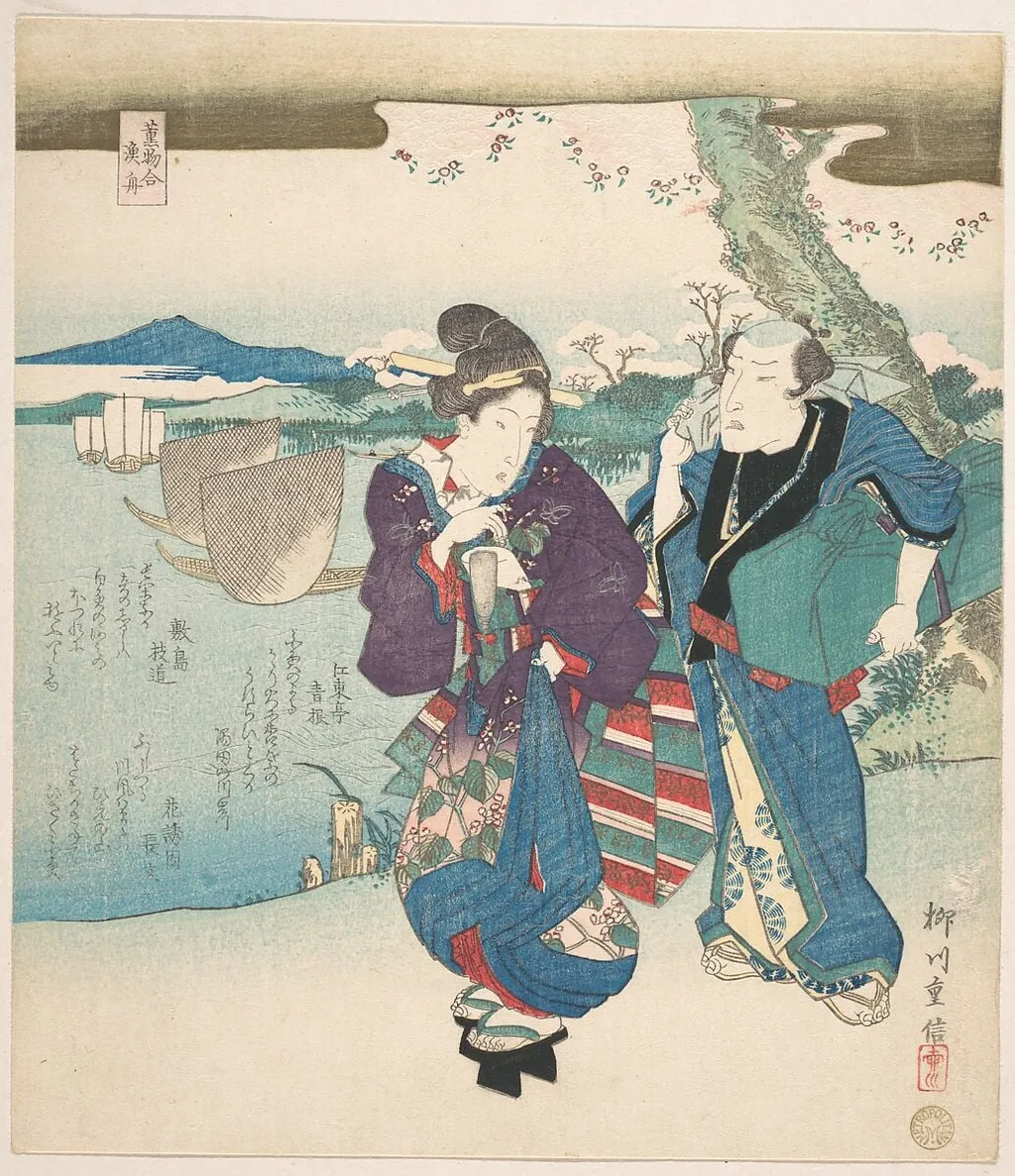
Untitled is an ink print by the Romanticist artist Yanagawa Shigenobu II. It dates from 1830 and is held in the collection of the Metropolitan Museum of Art.
About this work
Overview
Executed in ink and color on paper, it reflects the refined aesthetic of early 19th-century Japanese printmaking.
This woodblock print, dated 1830, is the work of Yanagawa Shigenobu II and belongs to the surimono genre—privately commissioned prints often produced for poetic or seasonal occasions. Executed in ink and color on paper, it reflects the refined aesthetic of early 19th-century Japanese printmaking. The piece is part of The Metropolitan Museum of Art’s collection, where it is preserved as an example of intimate, high-quality print production outside the commercial ukiyo-e market.
Subject & Meaning
Two figures stand near a quiet waterfront: a woman in a vividly striped purple robe holds a fan, while a man in a dark-accented blue garment gestures toward her. Their interaction suggests a moment of quiet exchange, possibly tied to a seasonal or literary theme common in surimono. The distant mountain range and still water evoke tranquility, while the Japanese text in the background hints at an accompanying poem, reinforcing the print’s connection to literary culture and private celebration.
Technique & Style
The print employs precise woodblock carving and hand-coloring, characteristic of surimono’s meticulous production. Bold outlines define the figures and garments, while flat areas of saturated color—purple, red, blue, and black—create visual harmony. The background is minimally detailed, allowing the figures and text to dominate. The use of metallic pigments or layered inks may enhance certain elements, though these are not visible in standard reproductions.
History & Provenance
Created in 1830, this print was likely commissioned by a member of the literati or a poetry circle, as surimono were typically produced in small batches for exclusive audiences. It entered The Metropolitan Museum of Art’s collection through documented acquisition, though its immediate post-production history remains undocumented. Its survival in good condition reflects careful preservation by private collectors before institutional ownership.
Context
Surimono emerged in the late 18th century as luxury prints, distinct from mass-produced ukiyo-e. They often combined poetry, seasonal imagery, and refined design, appealing to educated elites. This work aligns with trends in Edo-period print culture that valued subtlety and literary allusion over spectacle. The waterfront setting and formal attire suggest a connection to travel, farewell, or autumnal themes common in contemporary poetry.
Legacy
Though not widely circulated, surimono like this one influenced later printmakers through their emphasis on craftsmanship and integration of text and image. Today, they are studied for their role in bridging visual art and literary expression in Edo Japan. This print contributes to understanding how private artistic patronage sustained innovation in printmaking beyond commercial demands.
Artist & collection

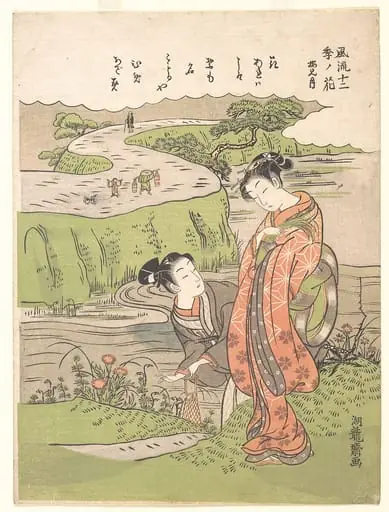 Umemi Tsuki|Plum-Seeing Month: Second Month
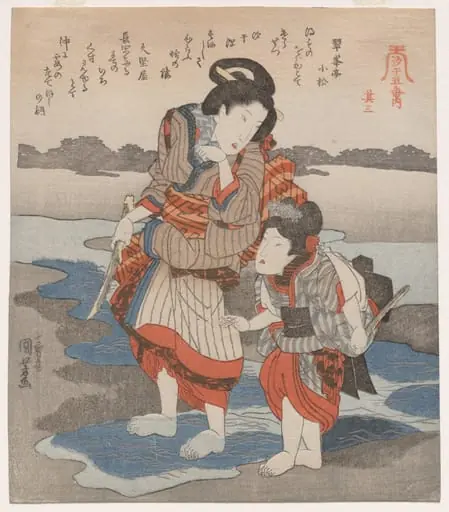 Third Print from A Low Tide Pentaptych
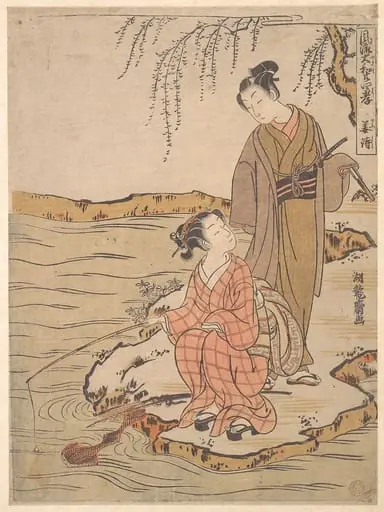 Untitled
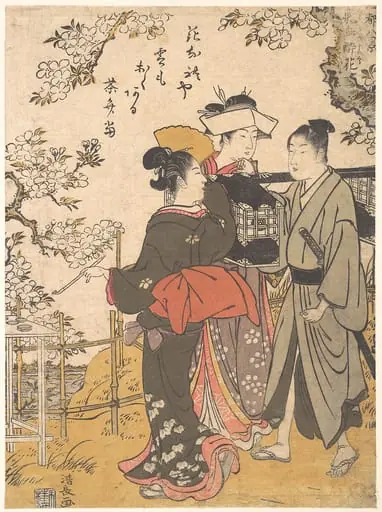 Untitled
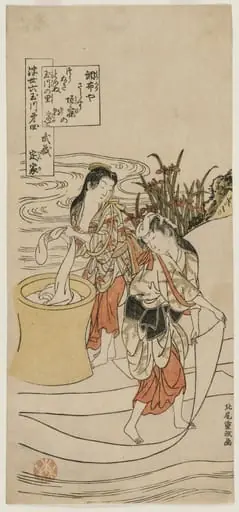 The Chofu Tama River in Musashi Province (from the series The Six Tama Rivers of the Floating World)
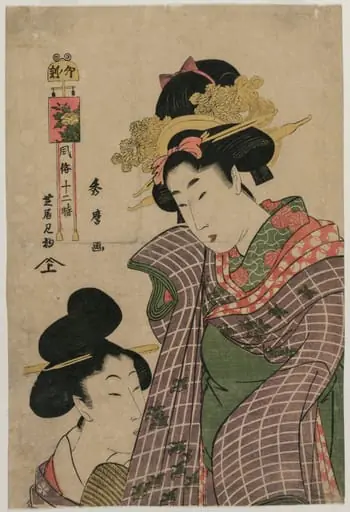 Going to the Kabuki Theater in the Hour of the Hare (From the Series The Twelve Hours with Daily Events)
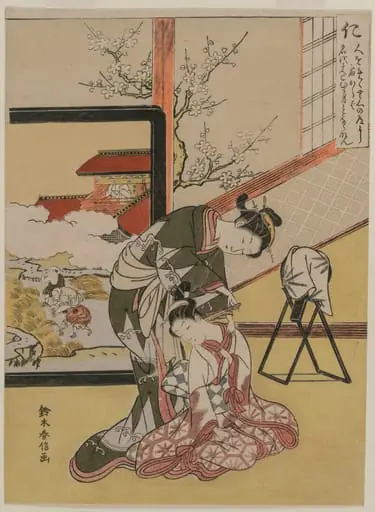 Benevolence, from The Five Virtues
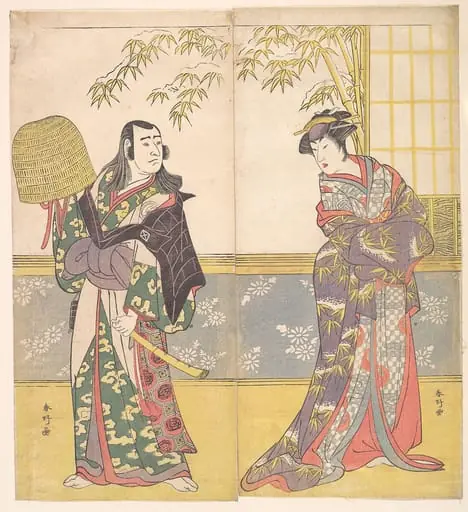 勝川春好画 三代目澤村宗十郎 三代目佐野川市松 |Kabuki Actors Sawamura Sōjūrō III and Sanogawa Ichimatsu III in "A Courtesan’s Mirror for the Eastern Provinces" (Keisei Azuma kagami)
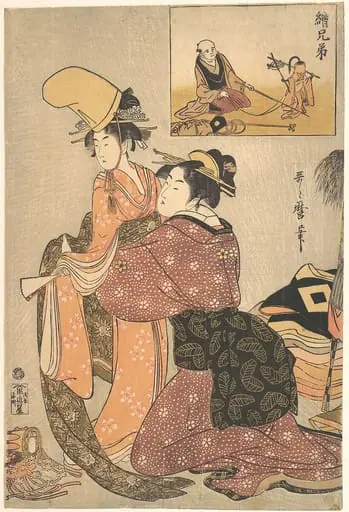 喜多川歌麿画 絵兄弟娘道成寺 見立猿廻し 「絵兄弟」|A Woman Dressing a Girl for a the Kabuki Dance “Musume Dojōji,” with “Brother Picture” (E-kyōdai) of a Monkey Trainer
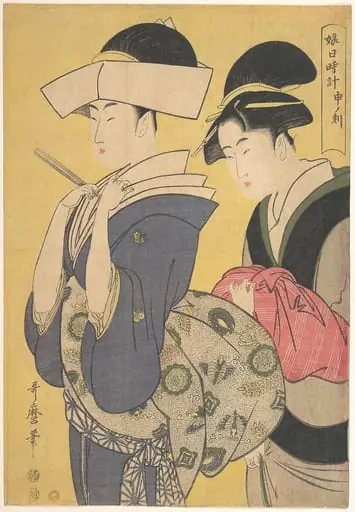 娘日時計 申ノ刻|Seru no Koku
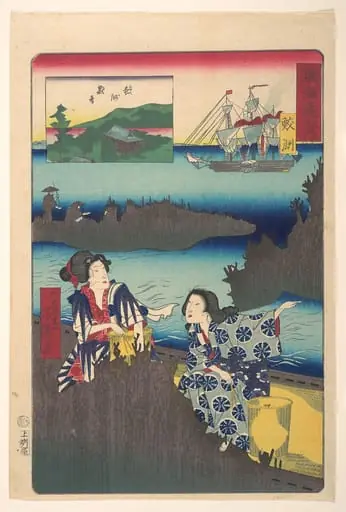 Untitled
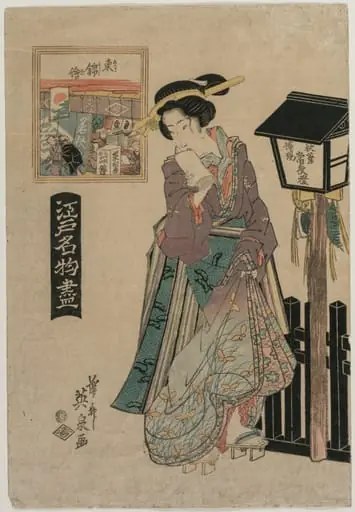 Pictures of Eastern Brocade (from the series Famous Products of Edo)