Artwork
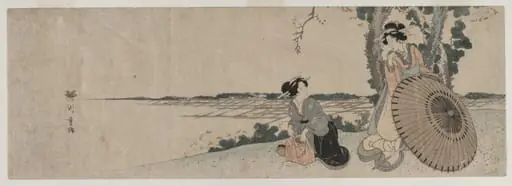
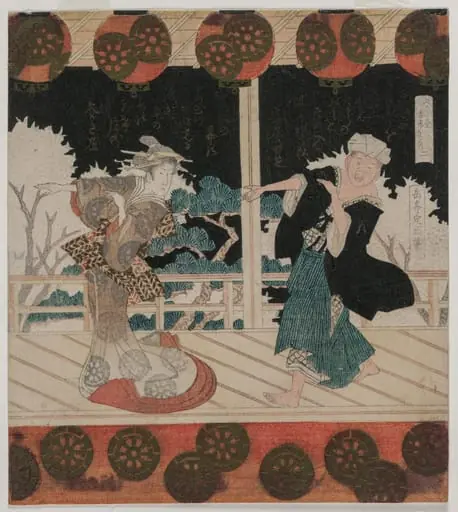
Woman by a Plum Tree Matched with the Wisteria Maiden (from a series of women compared to figures from Otsu paintings)
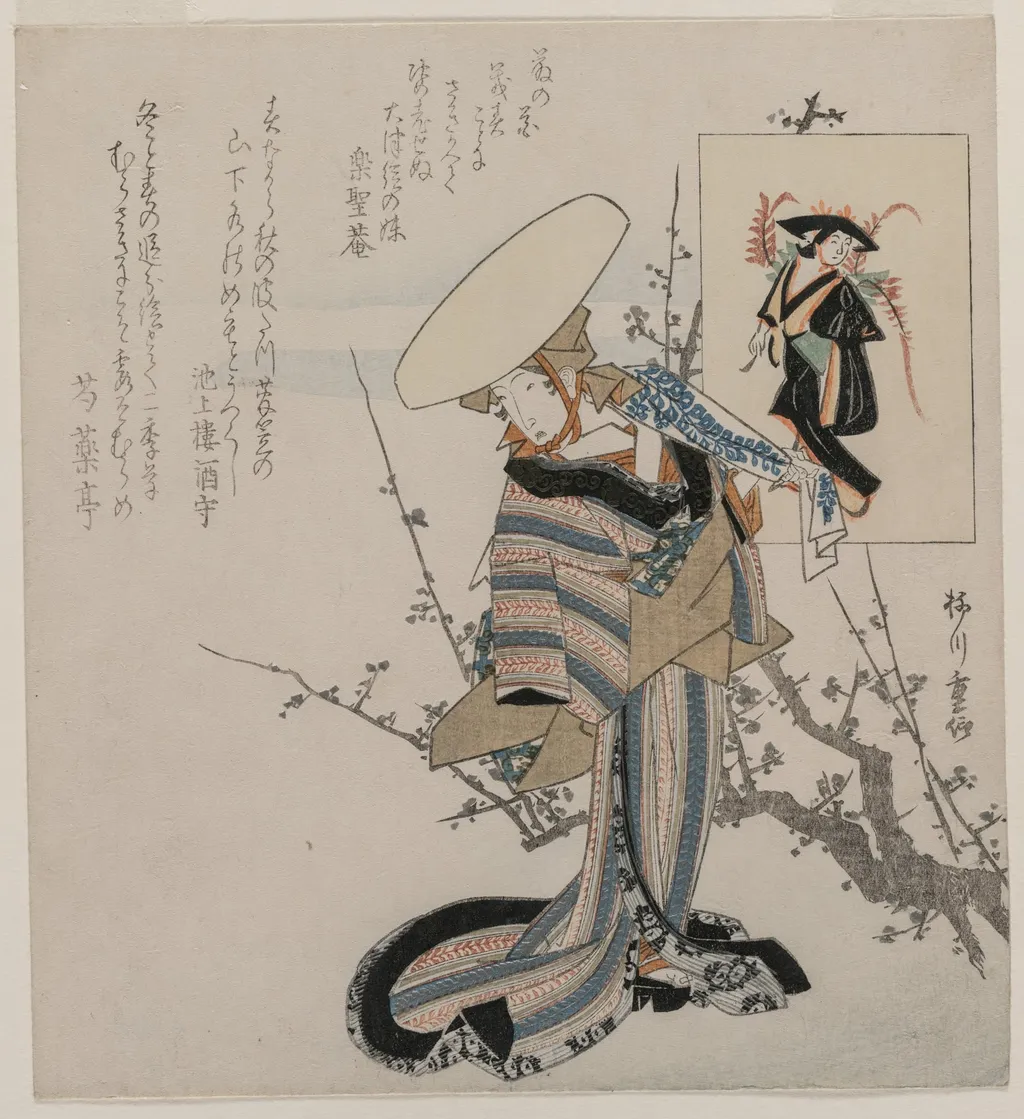
Woman by a Plum Tree Matched with the Wisteria Maiden (from a series of women compared to figures from Otsu paintings) is a print by the Romanticist artist Yanagawa Shigenobu. It is held in the collection of the Cleveland Museum of Art. This surimono print belongs to a series pairing contemporary women with figures drawn from Otsu-e folk art.
About this work
Overview
This surimono print belongs to a series pairing contemporary women with figures drawn from Otsu-e folk art. Produced for private circulation among poetry enthusiasts, it features refined printing techniques and delicate coloration, distinguishing it from mass-produced ukiyo-e. The composition merges a real-world figure with a spectral counterpart, blending observation with cultural allusion.
Subject & Meaning
A woman in a deep indigo kimono stands beside a blooming plum tree, her extended sleeve echoing the fluidity of the season. Behind her, a translucent figure of the Wisteria Maiden—drawn from Otsu-e traditions—hovers as a symbolic echo. This pairing connects the woman to the ritualistic origins of festival dance, suggesting continuity between popular folk imagery and refined urban aesthetics.
Technique & Style
The plum blossoms are rendered in soft pink washes, while the spectral maiden appears as a faint, ghostly outline, achieved through selective ink transparency.
Executed as a surimono, the print employs luxurious materials: metallic pigments, embossing, and layered hand-coloring to achieve subtle tonal gradations. The plum blossoms are rendered in soft pink washes, while the spectral maiden appears as a faint, ghostly outline, achieved through selective ink transparency. The composition balances naturalism with symbolic abstraction, typical of private commission prints.
History & Provenance
Created in the early 19th century, the print was likely commissioned by a member of a literary circle for seasonal exchange. Its survival in museum collections, including The Cleveland Museum of Art, reflects its rarity and the esteem in which surimono were held by collectors. Unlike commercial prints, these were made in small batches, often inscribed with poetry or personal messages.
Context
Otsu-e imagery, originating from temple souvenirs in the town of Otsu, depicted folk deities and moral tales with bold, simplified forms. By incorporating such figures into refined surimono, artists elevated vernacular culture into elite artistic discourse. This print situates the modern woman within a lineage of popular visual traditions, bridging rural symbolism and urban literary sensibilities.
Legacy
The print exemplifies how Edo-period artists reinterpreted folk motifs for intimate, intellectual audiences. Its preservation in major collections underscores its role in documenting the intersection of popular and high art. Though not widely known outside specialist circles, it remains a quiet testament to the layered cultural references embedded in private print culture.
Artist & collection


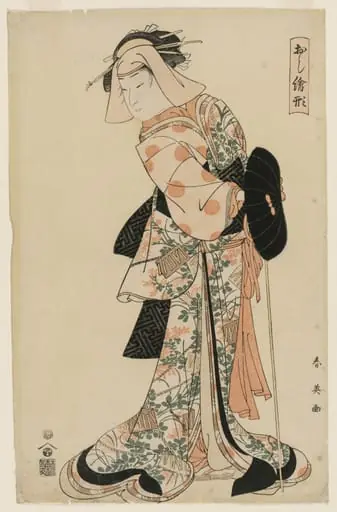 Dancer as Kuzunoha, Fox Spirit Disguised as a Woman
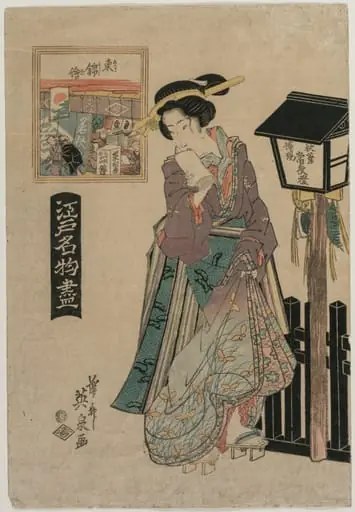 Pictures of Eastern Brocade (from the series Famous Products of Edo)
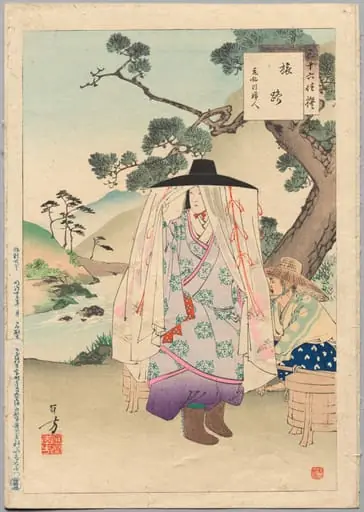 On the Road, A Lady of the Genkō Era (1313-34), from the series Thirty-Six Elegant Selections
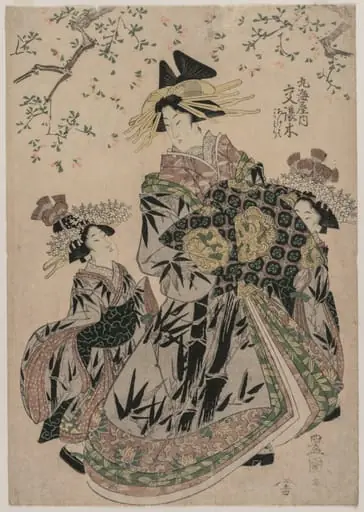 The Courtesan Katakoshigi (?) of Maruebiya with her Kamuro Ageha and Midori
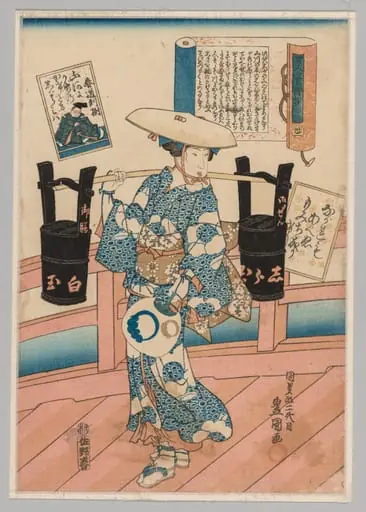 Harumichi no Tsuraki from the series A Pictorial Commentary on One Hundred Poems by One Hundred Poets, no. 31
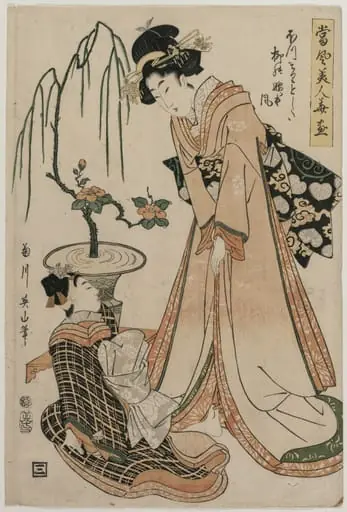 A Lady-in-Waiting with Waist as Slender as a Willow from the series Flowers and Modern Beauties
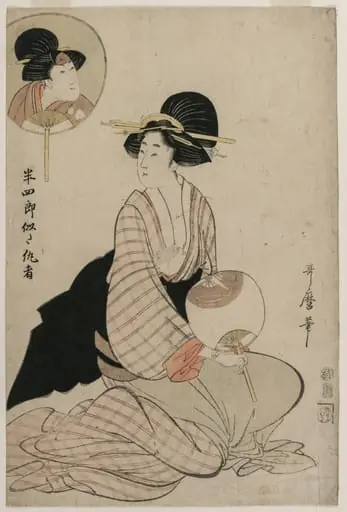 An Attractive Woman Who Looks Like the Actor Iwai Hanshiro V
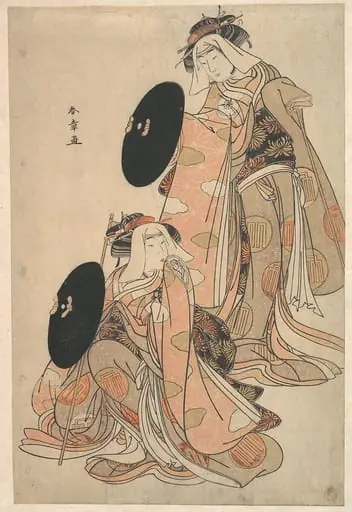 Untitled
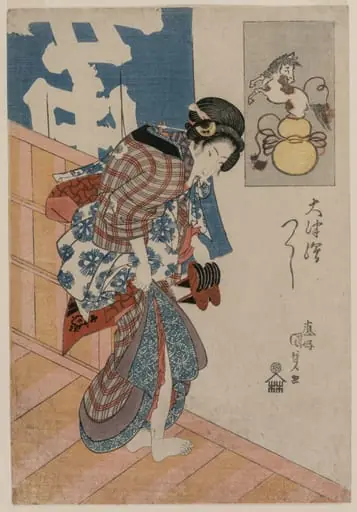 Woman Leaving a Bath House (from the series Pictures from Otsu)
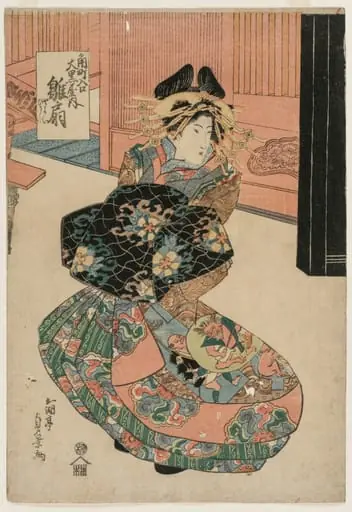 The Courtesan Hinaogi of the Daikokuya at the Entrance of Kadomachi
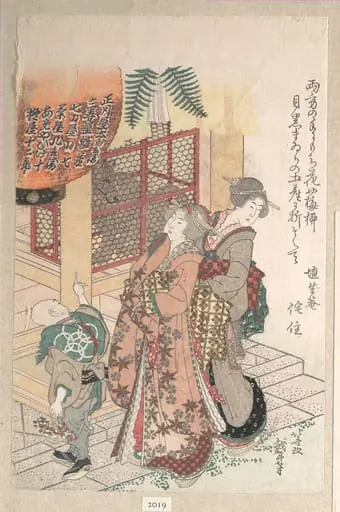 初詣|Young Women Visiting a Shinto Shrine
 Furuichi Dance at the Hisagataya