Artwork
Virgin and Child
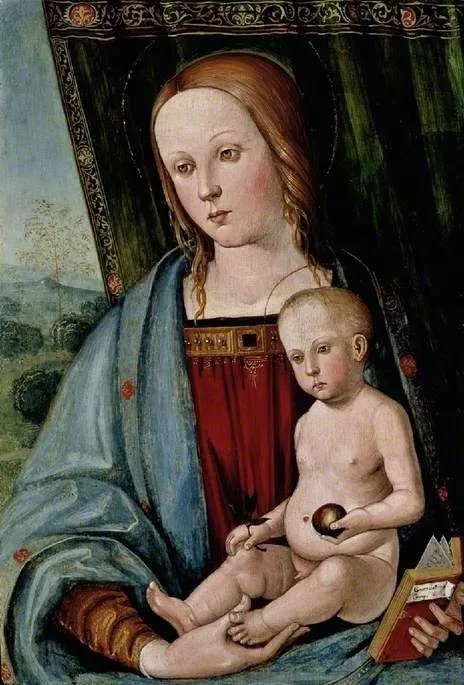
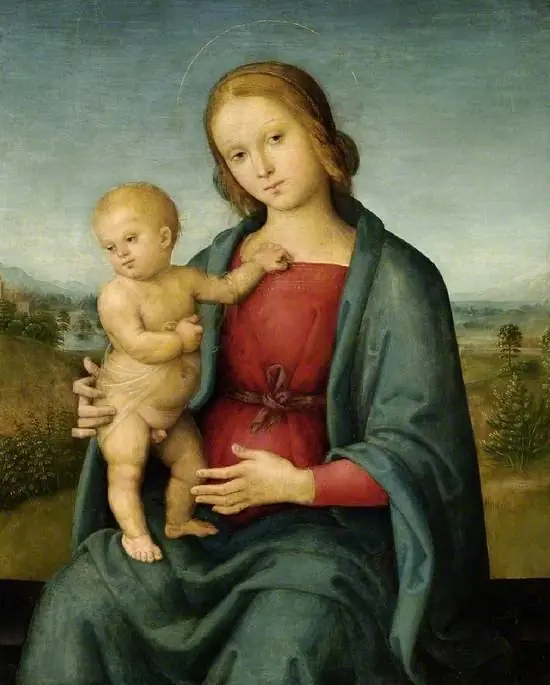
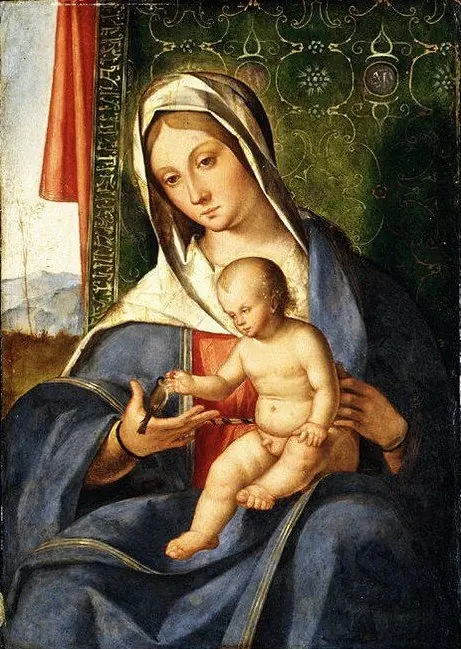
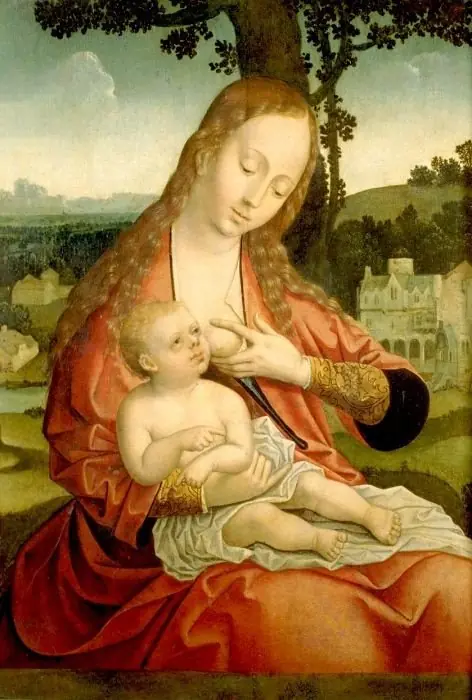
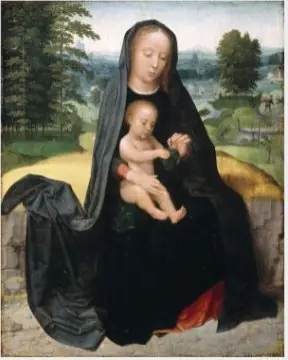
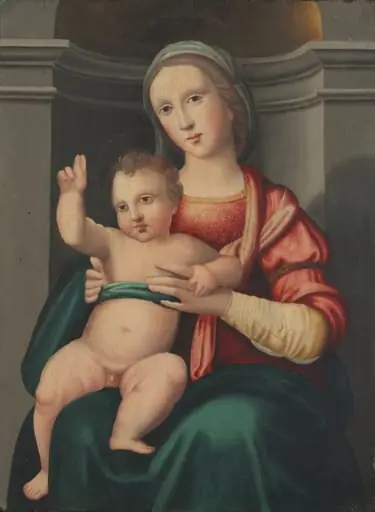
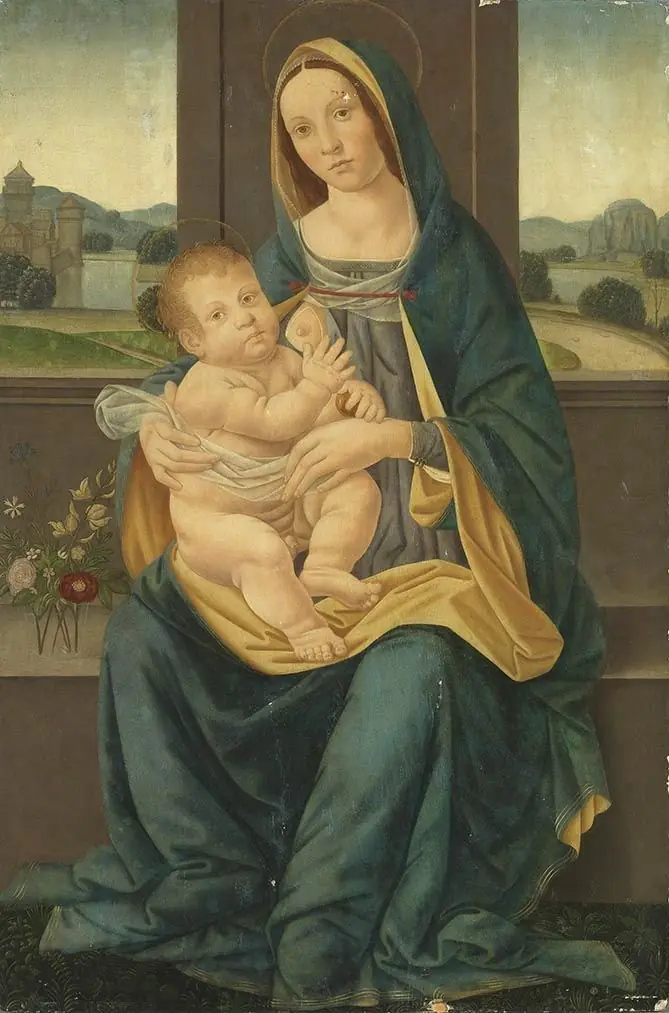
Virgin and Child is an unspecified painting by the Northern Renaissance artist Galeazzo Campi. It dates from 1498 and is held in the collection of the Fitzwilliam Museum.
About this work
Overview
Created in 1498 by Cremonese painter Galeazzo Campi, this small panel presents a conventional devotional image of the Virgin Mary cradling the infant Christ. Executed during the Northern Renaissance, the work now belongs to the collection of the Fitzwilliam Museum in Cambridge, where it is displayed among other early‑modern Italian pieces.
Subject & Meaning
The composition centers on a solemn Madonna, her hair gathered and her gaze directed inward, holding the newborn Jesus on her lap. The child reaches toward a red‑bound book, a conventional symbol of the Holy Scriptures and the future role of Christ as teacher. The intimate interaction underscores themes of maternal devotion and divine revelation.
Technique & Style
Campi renders the figures with a measured, almost formal precision, characteristic of his training under Boccaccio Boccaccini. The palette is restrained, dominated by deep blues, muted reds and earthy tones, while the flesh is painted with a smooth, pallid quality. The background recedes into a dark, indistinct landscape, allowing the central pair to command visual focus.
History & Provenance
The panel entered the Fitzwilliam Museum’s holdings through acquisition in the early twentieth century, though earlier ownership records are scarce. Its provenance reflects the broader movement of Lombard Renaissance works into British collections during that period, providing scholars with a clear example of Campi’s output beyond his native Cremona.
Artist & collection
Artist
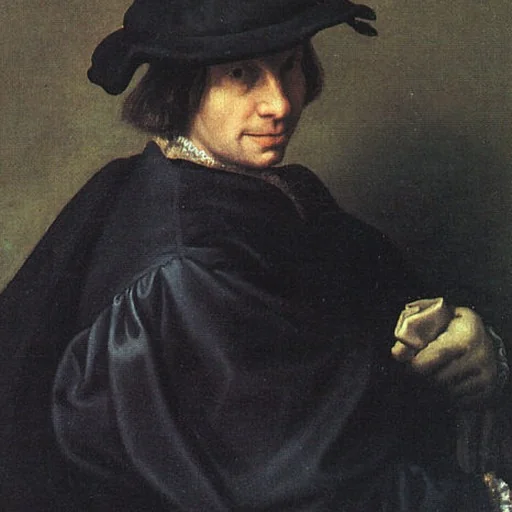
Galeazzo Campi (1475/1477 – 1536) was an Italian painter of the Renaissance from Cremona in Lombardy.