Artwork
Virgin and Child
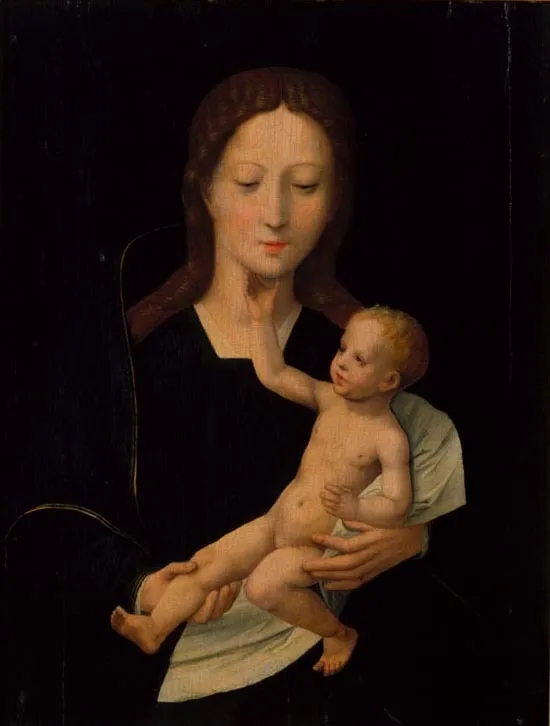
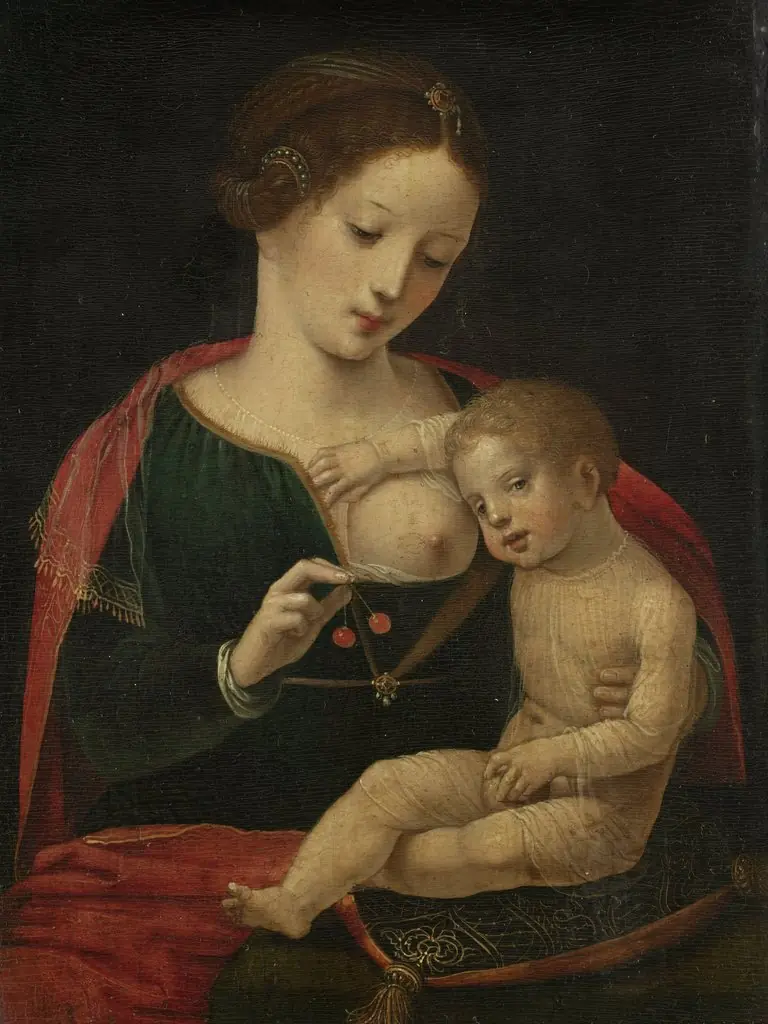
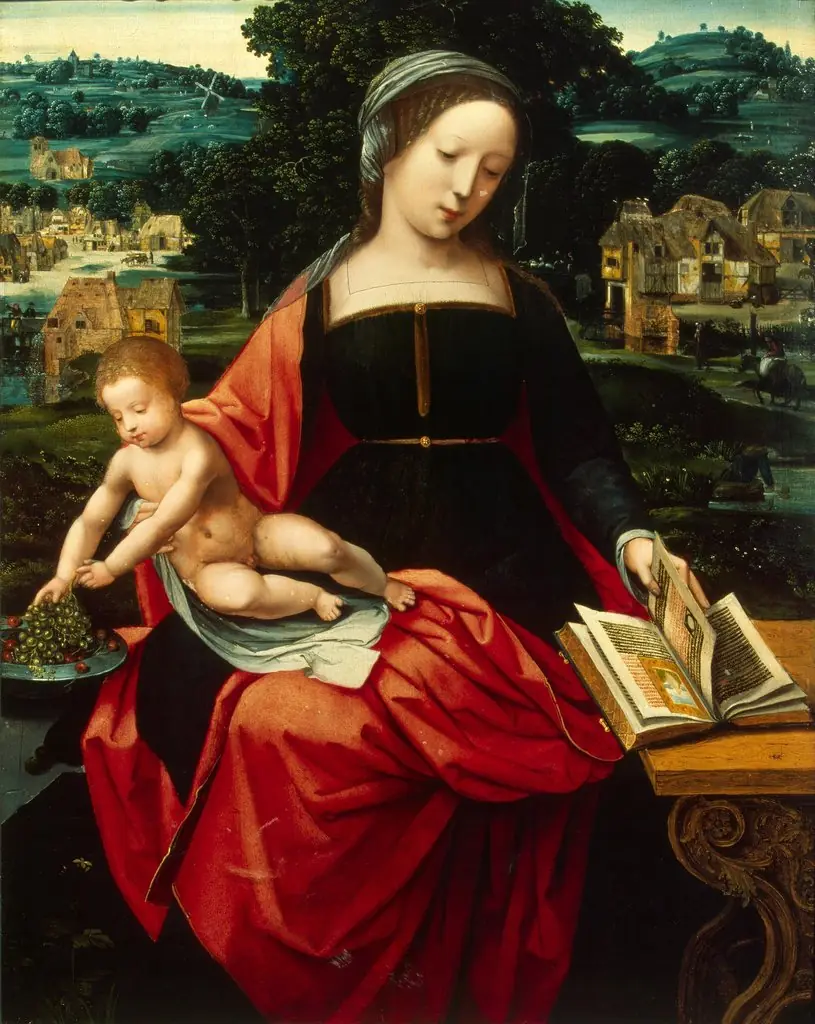
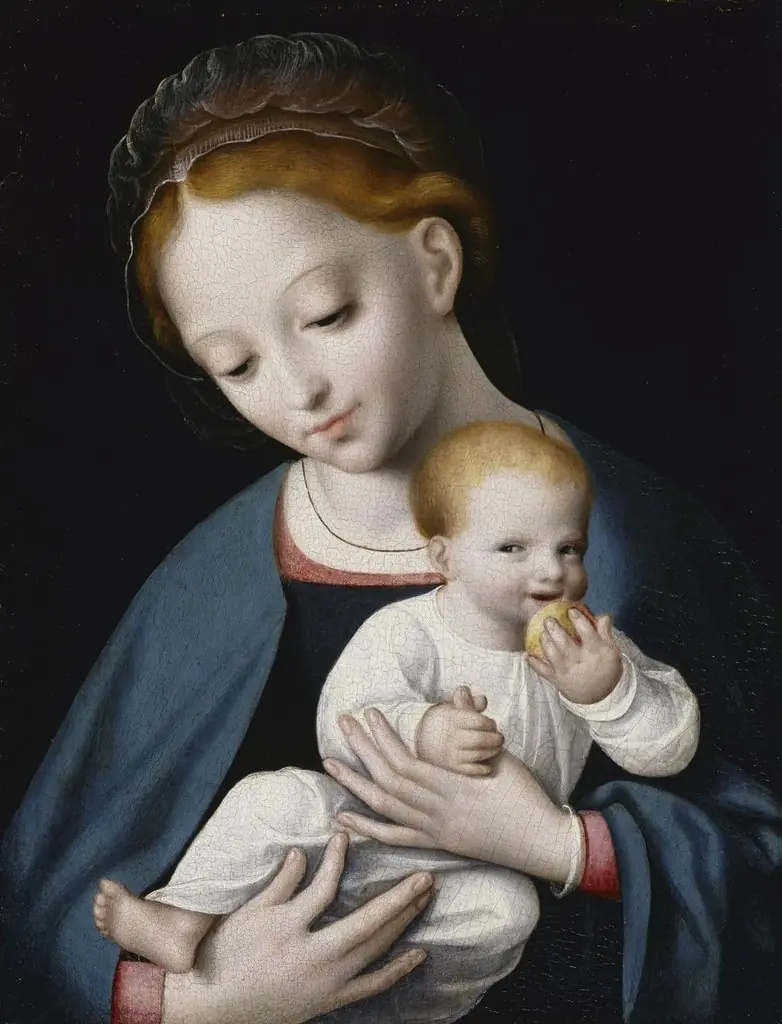
Virgin and Child is a tempera painting by the Northern Renaissance artist Master of the Female Half-Lengths. It dates from 1520 and is held in the collection of the National Museum of Ancient Art. Created around 1520, this tempera panel presents a quiet devotional image of the Virgin Mary cradling the infant Jesus.
About this work
Overview
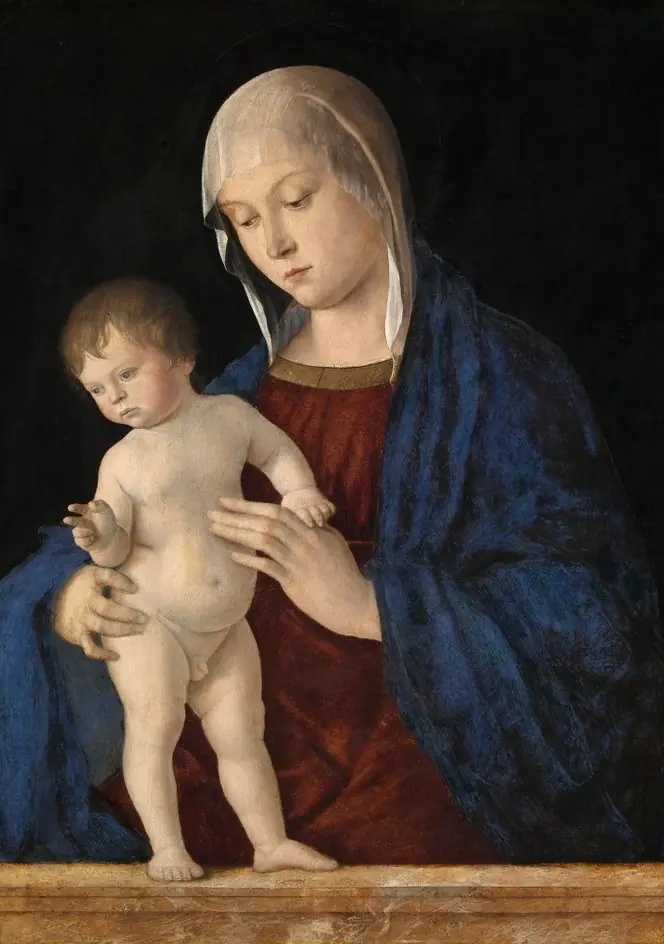
Created around 1520, this tempera panel presents a quiet devotional image of the Virgin Mary cradling the infant Jesus. The composition is intimate, set against a darkened backdrop that emphasizes the figures’ gentle interaction. The work is part of the collection of the National Museum of Ancient Art, where it is displayed among other early‑sixteenth‑century religious paintings.
Subject & Meaning
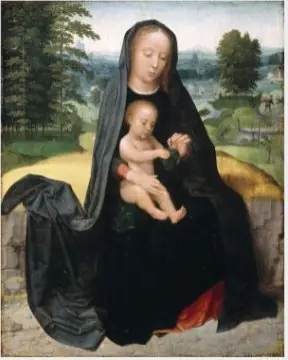
The painting shows Mary with her hair pulled back, dressed in a black gown over a white under‑garment, her gaze lowered in modest contemplation.
The painting shows Mary with her hair pulled back, dressed in a black gown over a white under‑garment, her gaze lowered in modest contemplation. She supports the child’s left leg with her right hand, while the infant, partially covered by a white cloth, looks toward his right. The tender pose underscores themes of maternal care and the divine bond between mother and son, common in devotional imagery of the period.
Technique & Style
Executed in egg tempera, the artist achieved fine, luminous detail through layered, fast‑drying pigments. The contrast between the dark background and the illuminated figures creates depth without the use of chiaroscuro modeling typical of oil painting. The handling of drapery and the delicate rendering of flesh reflect the precise, linear quality associated with the Master of the Female Half‑Lengths.
History & Provenance
Attributed to the anonymous Master of the Female Half‑Lengths, the work emerged in the early sixteenth century in the Iberian artistic milieu. It entered the National Museum of Ancient Art’s holdings through a 20th‑century acquisition, though earlier ownership records are scarce. The painting’s provenance reflects the broader movement of religious panels from private devotion to public museum collections.
Artist & collection
Artist
Master of the Female Half-Lengths
The Master of the Female Half-Lengths is a notname coined by the German art historian Max J.