Artwork
Virgin and Child
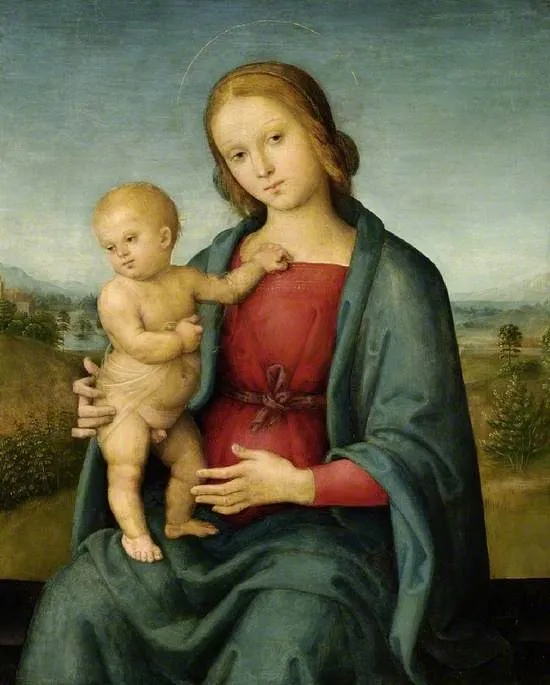
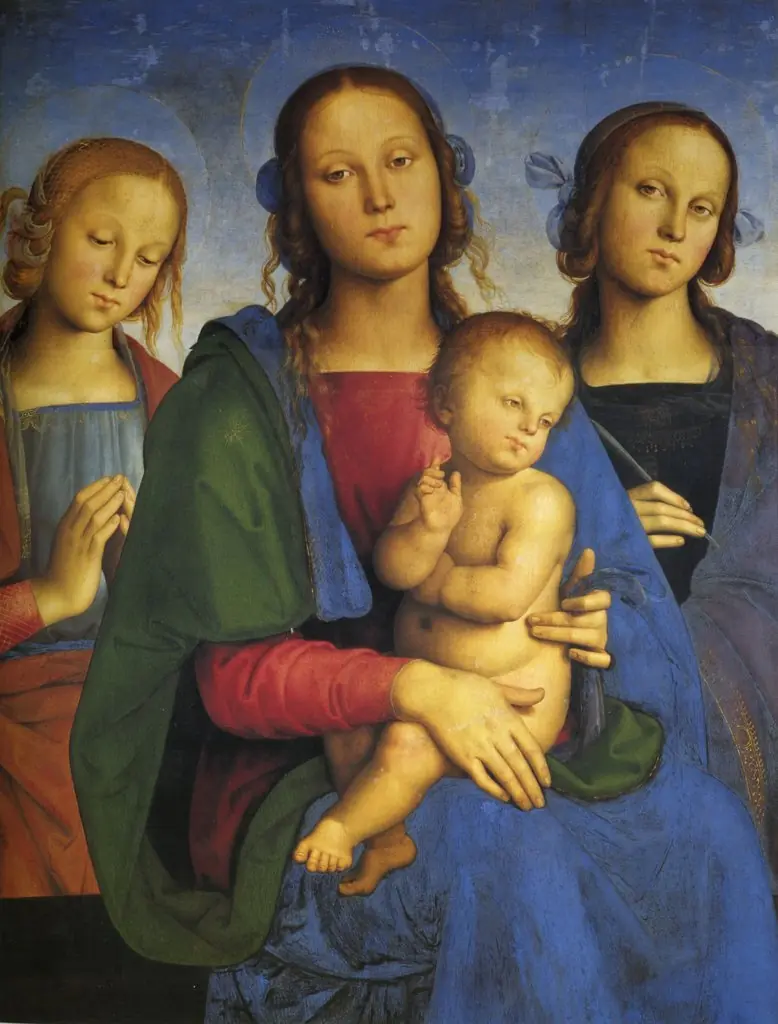
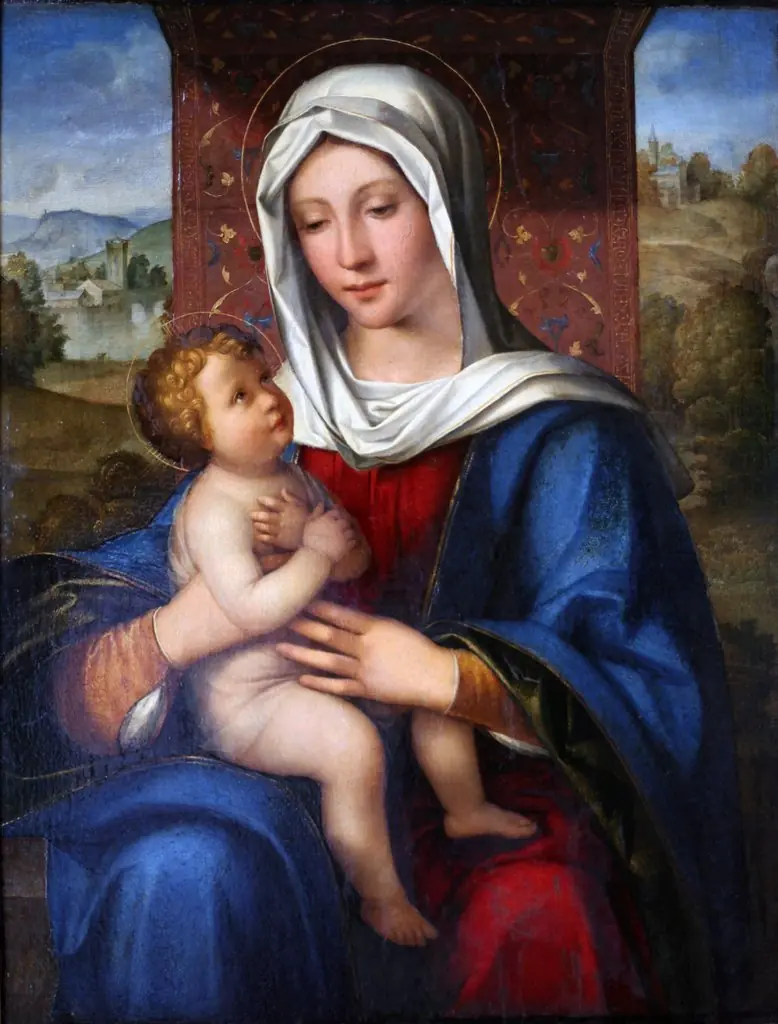
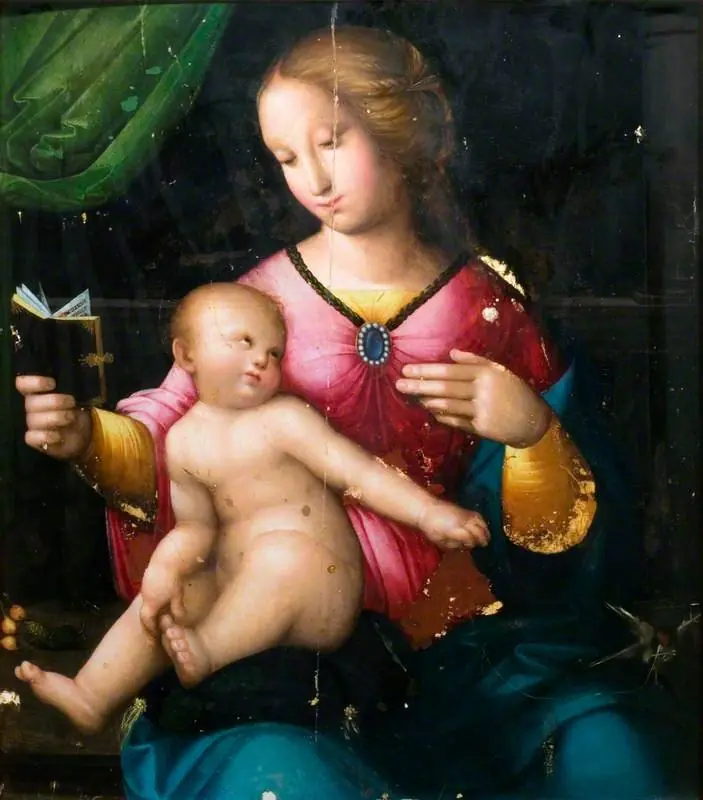
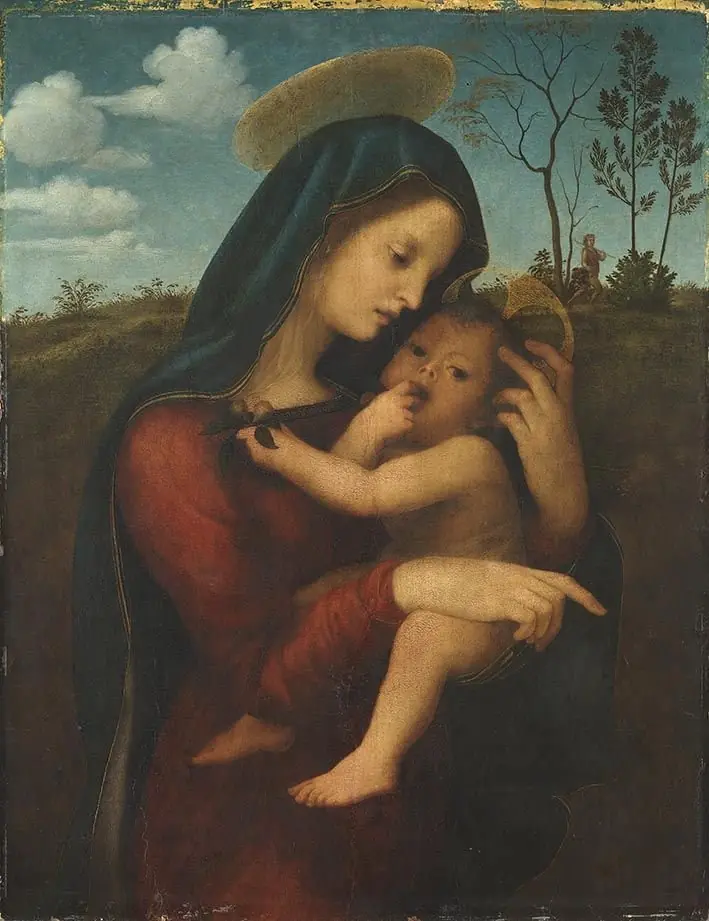
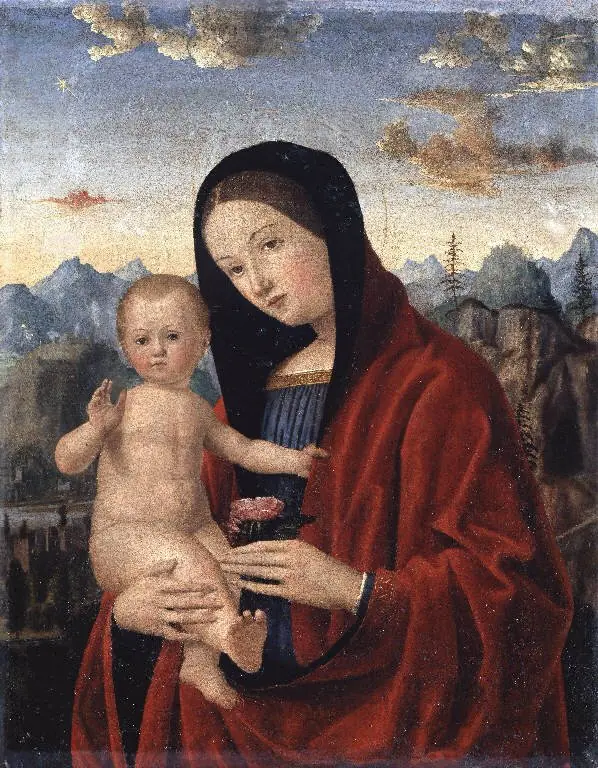
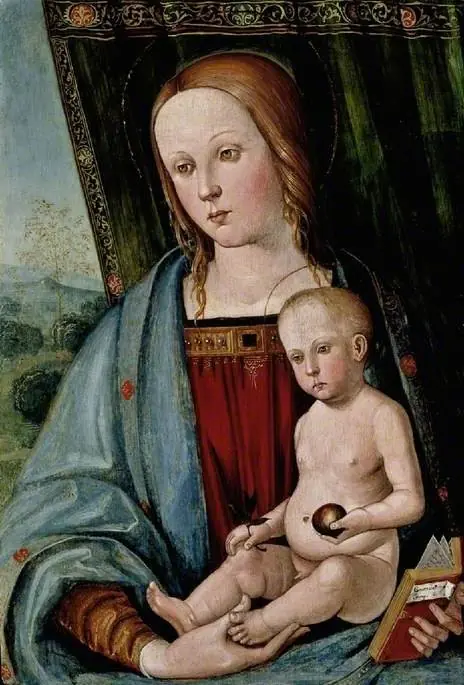
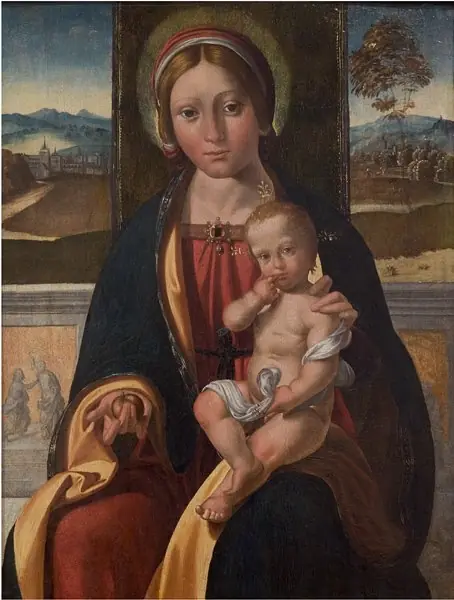
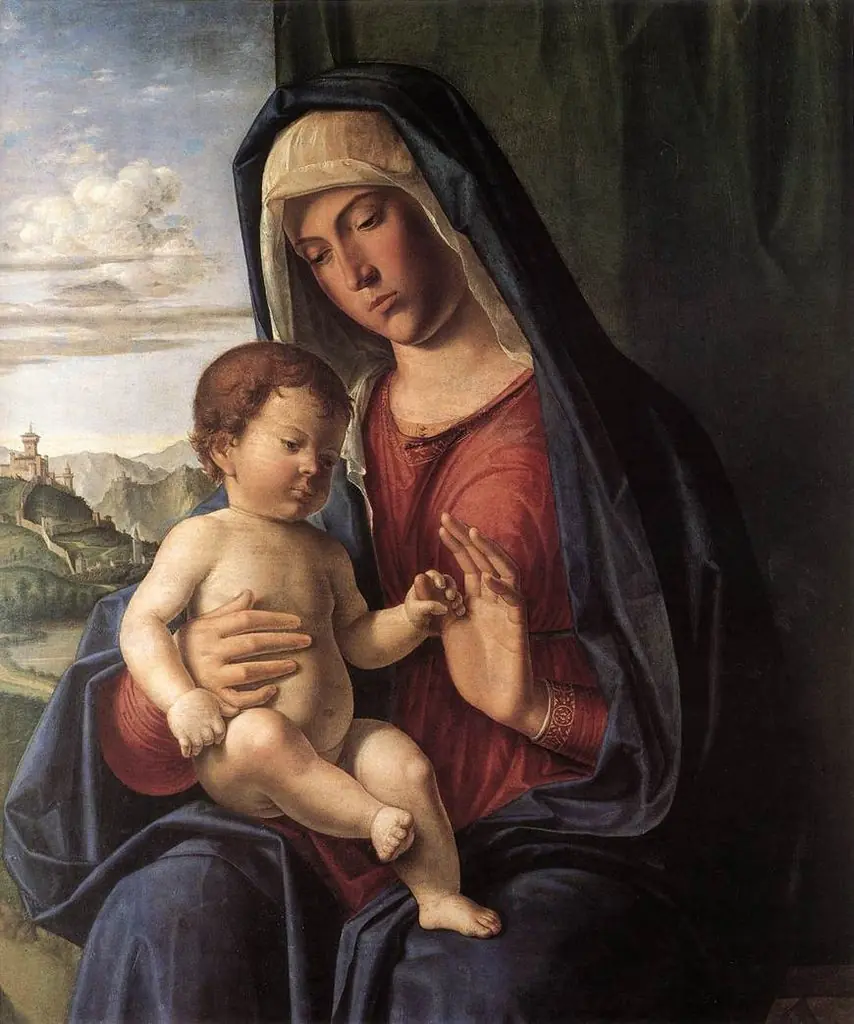
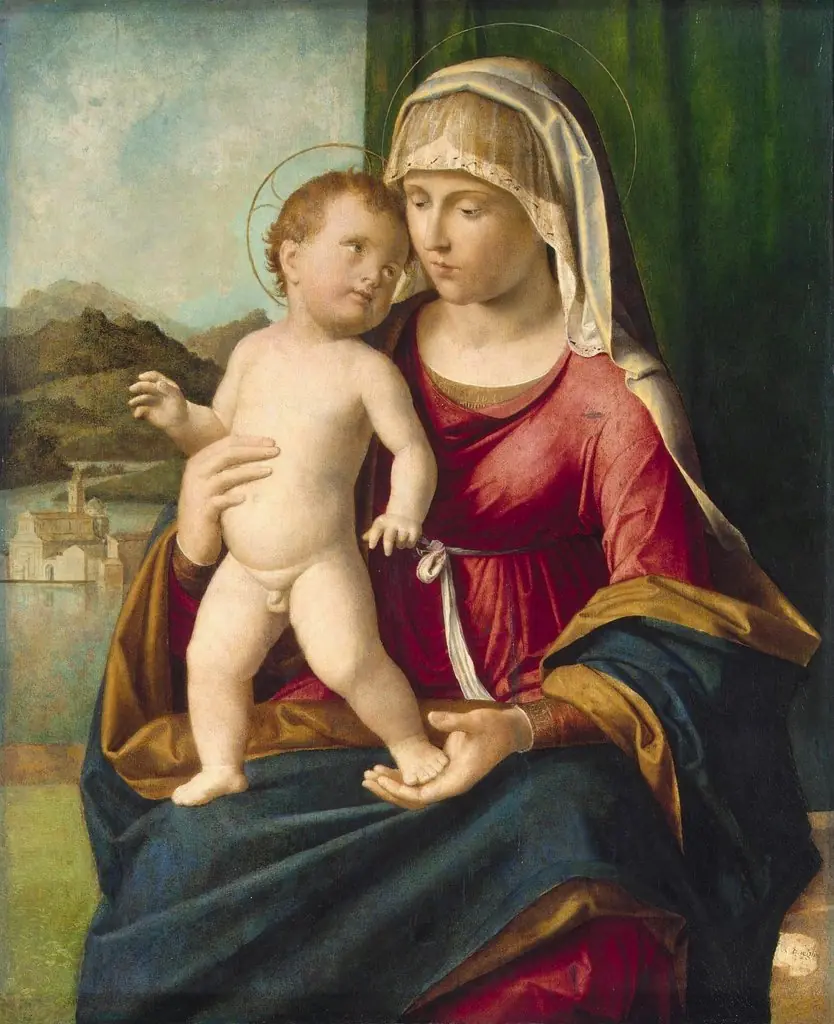
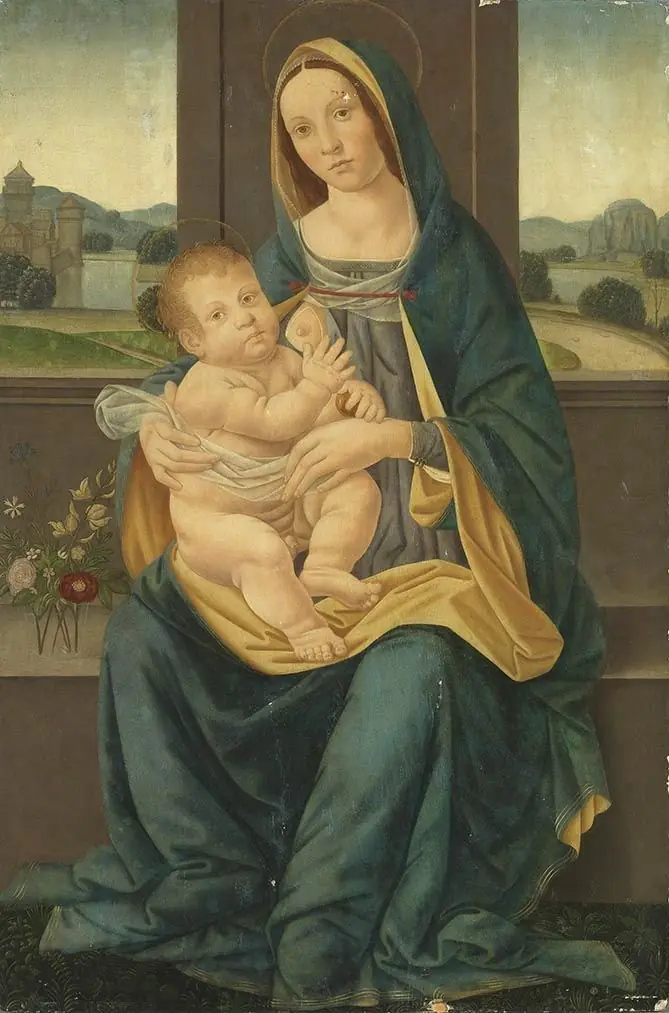
Virgin and Child is a tempera painting by the High Renaissance artist Pietro Perugino. It dates from 1515 and is held in the collection of the Fitzwilliam Museum. Created in 1515, this tempera panel portrays the Virgin Mary with the infant Jesus.
About this work
Overview
Created in 1515, this tempera panel portrays the Virgin Mary with the infant Jesus. Executed by Pietro Perugino, a leading figure of the Umbrian school, the work exemplifies the compositional clarity and gentle expressiveness that characterize the High Renaissance. The painting is part of the Fitzwilliam Museum’s collection, where it is displayed among other Renaissance pieces.
Subject & Meaning
The scene presents a seated Mary, draped in a red garment and a blue mantle, holding a naked child who reaches toward her face. Their near‑touching gestures convey an intimate, tender bond, a motif frequently employed to underscore the humanity and divine love inherent in Christian iconography of the period.
Technique & Style
Rendered in tempera, the work relies on pigment mixed with a water‑soluble binder, allowing fine detail and a luminous surface that endures over centuries. Perugino’s composition balances a calm foreground with a softly receding landscape, employing subtle atmospheric perspective to create depth while maintaining a serene, harmonious atmosphere.
History & Provenance
The painting entered the Fitzwilliam Museum’s holdings through acquisition in the early twentieth century, though its earlier ownership remains less documented. Its presence in a major public collection ensures scholarly access and contributes to the broader understanding of Perugino’s output and the diffusion of High Renaissance aesthetics beyond Italy.
Artist & collection
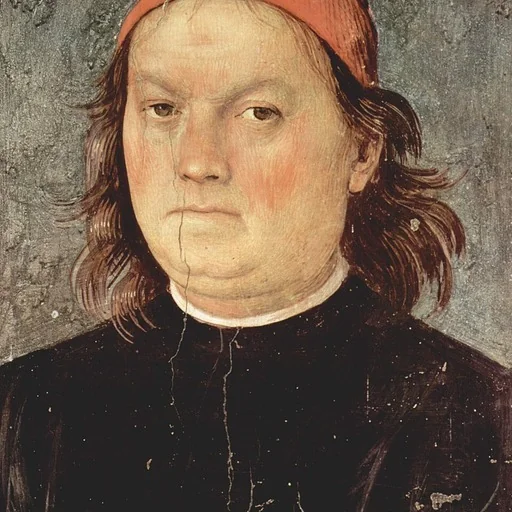
Artist
Pietro Perugino (US: PERR-ə-JEE-noh, -oo-; Italian: ; born Pietro Vannucci or Pietro Vanucci; c.