Artwork
A Breton Boy with a Jug; Five Animal Forms [verso]
![A Breton Boy with a Jug; Five Animal Forms [verso], by Paul Gauguin, graphite, 1886](https://artifactworldgallery.com/img/paul-gauguin--a-breton-boy-with-a-jug-five-animal-forms-verso--6c7ccd6ec6ab04ac-w1024.webp)
A Breton Boy with a Jug; Five Animal Forms [verso] is a graphite drawing by the Impressionist artist Paul Gauguin. It dates from 1886 and is held in the collection of the National Gallery of Art.
About this work
Overview
The work belongs to a period when he was distancing himself from Impressionist conventions, seeking more symbolic and personal expression.
Created in 1886, this drawing by Paul Gauguin combines crayon and graphite on wove paper, capturing a Breton youth with a jug on one side and five indistinct animal shapes on the reverse. It reflects Gauguin’s interest in everyday rural life and his tendency to explore multiple motifs on a single support. The work belongs to a period when he was distancing himself from Impressionist conventions, seeking more symbolic and personal expression.
Subject & Meaning
The figure is a young boy from Brittany, dressed in simple garments and holding a jug, likely a symbol of domestic labor or local tradition. His face is softly rendered, avoiding detailed realism, suggesting an emphasis on presence over individual identity. The animal forms on the reverse may allude to folk symbolism or Gauguin’s fascination with primal, instinctual life—elements that would later define his Symbolist leanings.
Technique & Style
Gauguin employed loose, expressive lines in crayon and graphite, with muted tones of blue, green, yellow, and red applied sparingly to suggest form and atmosphere. The wove paper’s texture enhances the sketch’s immediacy. Unlike Impressionist precision, the work favors suggestion over detail, blurring boundaries between figure and ground—a hallmark of his evolving Synthetist approach, prioritizing emotional resonance over optical accuracy.
History & Provenance
This drawing emerged during Gauguin’s first extended stay in Brittany, following his departure from Paris and the Impressionist circle. It was likely made as a study or private exercise, not intended for public display. Its survival reflects Gauguin’s habit of reusing paper, a practice that preserved both finished ideas and fleeting observations, offering insight into his creative process.
Context
In 1886, Gauguin was immersed in Breton culture, drawn to its perceived authenticity and spiritual depth. He sought to escape urban modernity, aligning with artists like Émile Bernard in developing a style that reduced forms to essential shapes and symbolic color. This drawing reflects that shift—away from naturalism toward a more introspective, stylized vision rooted in regional life and mythic suggestion.
Legacy
Though modest in scale, this drawing exemplifies Gauguin’s transition toward the symbolic language that would influence modern art movements. Its dual-sided composition reveals his habit of layering meaning and his interest in the unseen. The work contributes to understanding how everyday subjects became vessels for deeper, often spiritual, inquiries in his later oeuvre.
Artist & collection
Artist
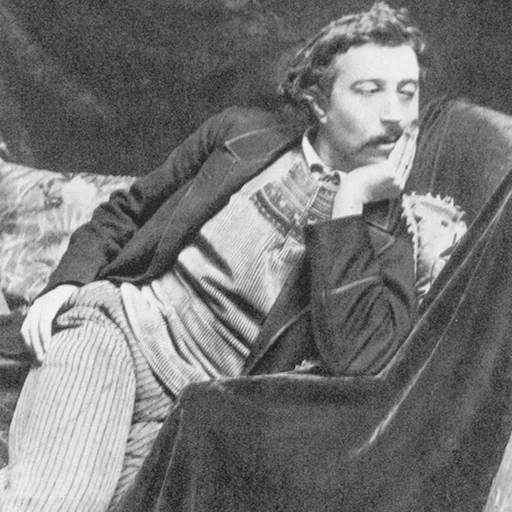
Eugène Henri Paul Gauguin (; French: ; 7 June 1848 – 8 May 1903) was a French painter, sculptor, printmaker, ceramist, and writer, whose work has been primarily associated with the Post-Impressionist and Symbolist movements.

![Monkey and Cottage; Little Breton Boy [recto], by Paul Gauguin](https://artifactworldgallery.com/img/paul-gauguin--monkey-and-cottage-little-breton-boy-recto--b3a09959c238ad80-w320.webp) Monkey and Cottage; Little Breton Boy [recto]
Monkey and Cottage; Little Breton Boy [recto]![A Pig; Breton Peasant Kneeling [verso], by Paul Gauguin](https://artifactworldgallery.com/img/paul-gauguin--a-pig-breton-peasant-kneeling-verso--7b9f71fc8b8672db-w320.webp) A Pig; Breton Peasant Kneeling [verso]
A Pig; Breton Peasant Kneeling [verso]![Landscape with a Cottage; Profile of Boy, Profile of Man, Two Women in a Landscape, and Five Other Studies [verso], by Paul Gauguin](https://artifactworldgallery.com/img/paul-gauguin--landscape-with-a-cottage-profile-of-boy-profile-of-man-two-w--ddd62bebceef23ee-w320.webp) Landscape with a Cottage; Profile of Boy, Profile of Man, Two Women in a Landscape, and Five Other Studies [verso]
Landscape with a Cottage; Profile of Boy, Profile of Man, Two Women in a Landscape, and Five Other Studies [verso]![A Man Leaning on a Wall with Five Other Studies; Two Bearded Men Wearing Hats, and Five Other Studies [recto], by Paul Gauguin](https://artifactworldgallery.com/img/paul-gauguin--a-man-leaning-on-a-wall-with-five-other-studies-two-bearded--2df262058c2bfe48-w320.webp) A Man Leaning on a Wall with Five Other Studies; Two Bearded Men Wearing Hats, and Five Other Studies [recto]
A Man Leaning on a Wall with Five Other Studies; Two Bearded Men Wearing Hats, and Five Other Studies [recto]![Eye and Part of Face; A Breton Woman and Two Men [recto], by Paul Gauguin](https://artifactworldgallery.com/img/paul-gauguin--eye-and-part-of-face-a-breton-woman-and-two-men-recto--81c9125f35b9b9e6-w320.webp) Eye and Part of Face; A Breton Woman and Two Men [recto]
Eye and Part of Face; A Breton Woman and Two Men [recto]![A Breton Woman and a Standing Man; Head and Hand of a Monkey [recto], by Paul Gauguin](https://artifactworldgallery.com/img/paul-gauguin--a-breton-woman-and-a-standing-man-head-and-hand-of-a-monkey--e35c46eb8cb6c297-w320.webp) A Breton Woman and a Standing Man; Head and Hand of a Monkey [recto]
A Breton Woman and a Standing Man; Head and Hand of a Monkey [recto]![Three Studies of Men's Heads, One with Spectacles; Dogs, Children, and Two Bearded Men in Profile [verso], by Paul Gauguin](https://artifactworldgallery.com/img/paul-gauguin--three-studies-of-men-s-heads-one-with-spectacles-dogs-childr--5397d62ca5c9a48b-w320.webp) Three Studies of Men's Heads, One with Spectacles; Dogs, Children, and Two Bearded Men in Profile [verso]
Three Studies of Men's Heads, One with Spectacles; Dogs, Children, and Two Bearded Men in Profile [verso]![Two Heads; Studies of Sheep [recto], by Paul Gauguin](https://artifactworldgallery.com/img/paul-gauguin--two-heads-studies-of-sheep-recto--d045b25e15a504f5-w320.webp) Two Heads; Studies of Sheep [recto]
Two Heads; Studies of Sheep [recto]