Artwork
Monkey and Cottage; Little Breton Boy [recto]
![Monkey and Cottage; Little Breton Boy [recto], by Paul Gauguin, graphite, 1886](https://artifactworldgallery.com/img/paul-gauguin--monkey-and-cottage-little-breton-boy-recto--b3a09959c238ad80-w1024.webp)
Monkey and Cottage; Little Breton Boy [recto] is a graphite drawing by the Impressionist artist Paul Gauguin. It dates from 1886 and is held in the collection of the National Gallery of Art.
About this work
Overview
Created in 1886, this drawing by Paul Gauguin combines graphite and crayon on wove paper, capturing a quiet rural scene from Brittany. It reflects his shift away from Impressionist naturalism toward more personal, symbolic expression. The work belongs to a formative phase in his career, when he began simplifying forms and infusing everyday subjects with emotional resonance.
Subject & Meaning
The drawing depicts a young Breton boy beside a modest cottage, with a monkey perched nearby. These elements—child, animal, and dwelling—suggest themes of innocence, domesticity, and the connection between humans and nature. Gauguin often drew from local folklore and peasant life, using such imagery to evoke a sense of timeless, unspoiled existence, distinct from urban modernity.
Technique & Style
Gauguin employed loose graphite lines to define forms, layered with bold crayon strokes for color and texture. The application is deliberate but unrefined, avoiding detailed modeling in favor of flat, expressive areas. This approach prioritizes emotional tone over optical accuracy, aligning with Symbolist ideals that valued inner experience over external realism.
History & Provenance
The drawing was made during Gauguin’s time in Brittany, where he sought refuge from Parisian artistic pressures and immersed himself in regional culture. It was likely part of a series of sketches documenting rural life, later integrated into his broader exploration of non-Western and folk traditions. Its current location is not specified in the source material.
Context
In the mid-1880s, Gauguin distanced himself from Impressionism, aligning with emerging Post-Impressionist circles that valued structure and symbolism. His interest in Breton customs coincided with a wider European fascination with 'primitive' cultures. This drawing reflects that trend, framing rural life as spiritually authentic, even as it idealized its simplicity.
Legacy
This work exemplifies Gauguin’s evolving visual language, which would later influence modernist movements through its rejection of naturalism. Its synthesis of line, color, and symbolic content helped pave the way for expressive abstraction. Though modest in scale, it stands as an early indicator of his lifelong pursuit of meaning beyond surface appearance.
Artist & collection
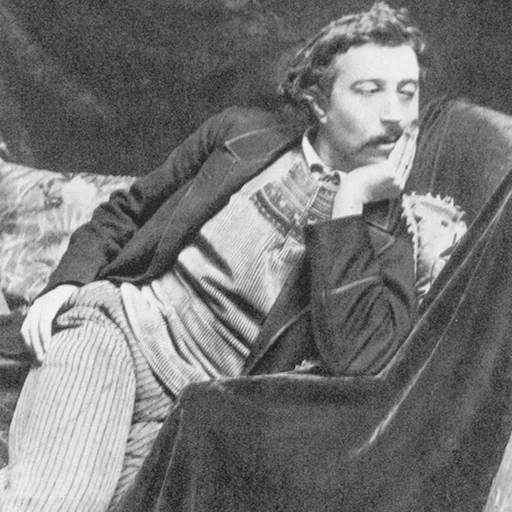
Artist
Eugène Henri Paul Gauguin (; French: ; 7 June 1848 – 8 May 1903) was a French painter, sculptor, printmaker, ceramist, and writer, whose work has been primarily associated with the Post-Impressionist and Symbolist movements.

![Eye and Part of Face; A Breton Woman and Two Men [recto], by Paul Gauguin](https://artifactworldgallery.com/img/paul-gauguin--eye-and-part-of-face-a-breton-woman-and-two-men-recto--81c9125f35b9b9e6-w320.webp) Eye and Part of Face; A Breton Woman and Two Men [recto]
Eye and Part of Face; A Breton Woman and Two Men [recto]![Studies of Dogs and a Seated Boy [recto], by James Goodwyn Clonney](https://artifactworldgallery.com/img/james-goodwyn-clonney--studies-of-dogs-and-a-seated-boy-recto--440d550e9055fba3-w320.webp) Studies of Dogs and a Seated Boy [recto]
Studies of Dogs and a Seated Boy [recto]![A Breton Woman and a Standing Man; Head and Hand of a Monkey [recto], by Paul Gauguin](https://artifactworldgallery.com/img/paul-gauguin--a-breton-woman-and-a-standing-man-head-and-hand-of-a-monkey--e35c46eb8cb6c297-w320.webp) A Breton Woman and a Standing Man; Head and Hand of a Monkey [recto]
A Breton Woman and a Standing Man; Head and Hand of a Monkey [recto]![Three Studies of Men's Heads, One with Spectacles; Dogs, Children, and Two Bearded Men in Profile [verso], by Paul Gauguin](https://artifactworldgallery.com/img/paul-gauguin--three-studies-of-men-s-heads-one-with-spectacles-dogs-childr--5397d62ca5c9a48b-w320.webp) Three Studies of Men's Heads, One with Spectacles; Dogs, Children, and Two Bearded Men in Profile [verso]
Three Studies of Men's Heads, One with Spectacles; Dogs, Children, and Two Bearded Men in Profile [verso]![A Pig; Breton Peasant Kneeling [verso], by Paul Gauguin](https://artifactworldgallery.com/img/paul-gauguin--a-pig-breton-peasant-kneeling-verso--7b9f71fc8b8672db-w320.webp) A Pig; Breton Peasant Kneeling [verso]
A Pig; Breton Peasant Kneeling [verso]![A Breton Woman Walking; Sketch with Stairs [verso], by Paul Gauguin](https://artifactworldgallery.com/img/paul-gauguin--a-breton-woman-walking-sketch-with-stairs-verso--5957dfa28320cc03-w320.webp) A Breton Woman Walking; Sketch with Stairs [verso]
A Breton Woman Walking; Sketch with Stairs [verso]![A Grazing Cow; Head of a Woman with Her Hand on Her Cheek, and Head of a Man with His Hand on His Ear [verso], by Paul Gauguin](https://artifactworldgallery.com/img/paul-gauguin--a-grazing-cow-head-of-a-woman-with-her-hand-on-her-cheek-and--634600a51135ea0b-w320.webp) A Grazing Cow; Head of a Woman with Her Hand on Her Cheek, and Head of a Man with His Hand on His Ear [verso]
A Grazing Cow; Head of a Woman with Her Hand on Her Cheek, and Head of a Man with His Hand on His Ear [verso]![Woman with Cow, and Goose; Counterproof [verso], by Paul Gauguin](https://artifactworldgallery.com/img/paul-gauguin--woman-with-cow-and-goose-counterproof-verso--ad37f793d5af148e-w320.webp) Woman with Cow, and Goose; Counterproof [verso]
Woman with Cow, and Goose; Counterproof [verso]