Artwork
Two Cow's Heads [verso]
![Two Cow's Heads [verso], by Paul Gauguin, graphite, 1886](https://artifactworldgallery.com/img/paul-gauguin--two-cow-s-heads-verso--d880ac31a237a947-w1024.webp)
Two Cow's Heads [verso] is a graphite drawing by the Impressionist artist Paul Gauguin. It dates from 1886 and is held in the collection of the National Gallery of Art.
About this work
Overview
The sketch captures two bovine heads with minimal strokes, revealing Gauguin’s focus on immediate visual observation rather than polished finish.
Created in 1886, this graphite drawing on wove paper is a modest study by Paul Gauguin, executed during a period of artistic transition. It bears the label 'verso,' indicating it was drawn on the reverse side of another work, a common practice for the artist when paper was scarce. The sketch captures two bovine heads with minimal strokes, revealing Gauguin’s focus on immediate visual observation rather than polished finish.
Subject & Meaning
The two cow heads are rendered without idealization, emphasizing their physical presence rather than symbolic meaning. Gauguin’s choice of rural subjects reflects his growing disinterest in urban modernity and his search for authenticity in everyday life. The simplicity of the forms suggests a contemplative engagement with the natural world, possibly influenced by his time in rural Brittany.
Technique & Style
Gauguin employed light, rapid pencil strokes to suggest form rather than define it. The top head is loosely outlined with faint contours for ears and neck; the lower head is reduced to a few decisive marks—an eye, a jawline. The absence of shading and the flatness of the composition align with early Synthetist tendencies, prioritizing essential shapes over naturalistic detail.
History & Provenance
The drawing was likely made during Gauguin’s stays in Brittany, where he produced numerous sketches on available paper. Its verso placement and smudged margins suggest it was a working study, not intended for public display. It entered the National Gallery of Art’s collection as part of a broader acquisition of Gauguin’s graphic works, preserving its original condition and marginal notations.
Context
In 1886, Gauguin was distancing himself from Impressionism, seeking a more expressive, symbolic language. This sketch emerged alongside his experiments with bold outlines and flattened forms, precursors to his later Synthetist style. Rural subjects like these cattle were part of his broader turn toward primitive and non-urban themes, influenced by Breton peasant life and medieval woodcuts.
Legacy
Though minor in scale, this drawing exemplifies Gauguin’s commitment to direct, unembellished observation. Its economy of line influenced later modernists who valued gesture over finish. As a working sketch, it offers insight into his creative process—how ideas were tested in private before evolving into larger compositions.
Artist & collection
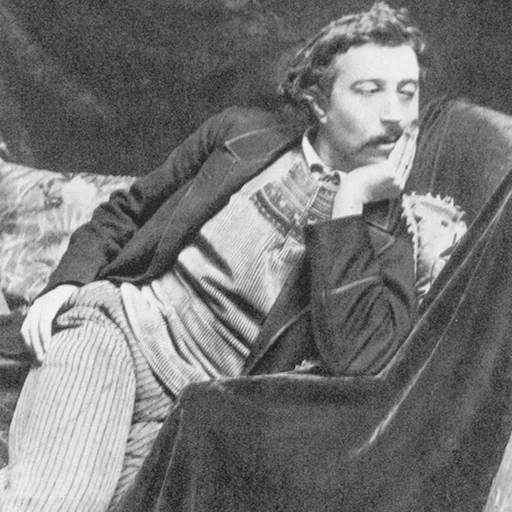
Artist
Eugène Henri Paul Gauguin (; French: ; 7 June 1848 – 8 May 1903) was a French painter, sculptor, printmaker, ceramist, and writer, whose work has been primarily associated with the Post-Impressionist and Symbolist movements.

![Studies of a Cow [verso], by Paul Gauguin](https://artifactworldgallery.com/img/paul-gauguin--studies-of-a-cow-verso--80694066ae3cfdb3-w320.webp)
![Figure Studies [verso], by George Romney](https://artifactworldgallery.com/img/george-romney--figure-studies-verso--19708132818b32a0-w320.webp)
![Study of the "Ecorché" [recto], by Paul Cezanne](https://artifactworldgallery.com/img/paul-cezanne--study-of-the-ecorche-recto--1614b86d796e004d-w320.webp)
![Father of the Artist [verso], by Paul Cezanne](https://artifactworldgallery.com/img/paul-cezanne--father-of-the-artist-verso--74e24a3aa4f42c1a-w320.webp)
![A Person Holding an Umbrella and a Seated Man with a Hat and a Glass [verso], by Paul Gauguin](https://artifactworldgallery.com/img/paul-gauguin--a-person-holding-an-umbrella-and-a-seated-man-with-a-hat-and--8307c4522b7d6e38-w320.webp)