Artwork
Te Atua (The Gods) Small Plate
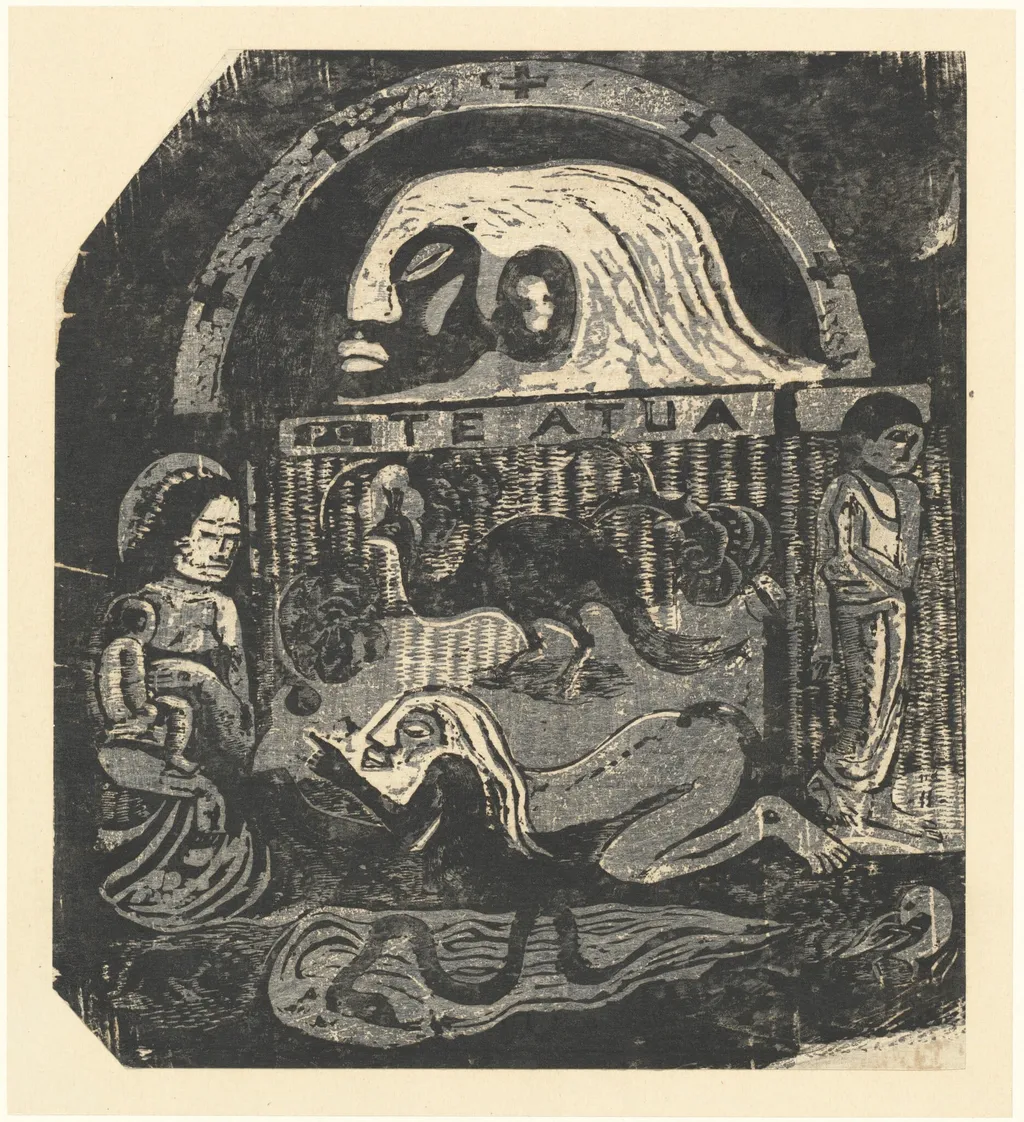
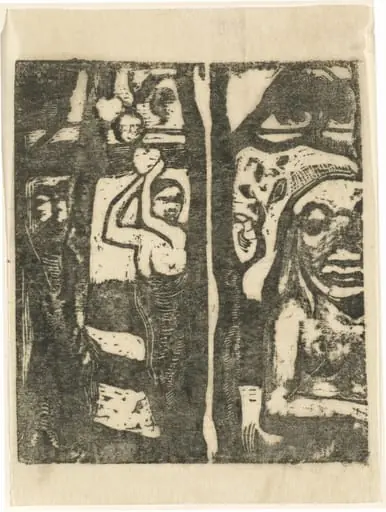
Te Atua (The Gods) Small Plate is an ink print by the Impressionist artist Paul Gauguin. It dates from 1898 and is held in the collection of the National Gallery of Art.
About this work
Overview
Te Atua (The Gods) Small Plate, created in 1898 by Paul Gauguin, is a print composed of two laminated woodcuts on Japanese paper, mounted on wove paper. This work exemplifies Gauguin's experimental approach to printmaking during his later career.
Subject & Meaning
The print depicts a central female figure reclining on her back, surrounded by other simplified, stylized figures, including a standing male and a seated female. The title suggests a thematic engagement with divine or mythological subjects, characteristic of Gauguin's Symbolist explorations.
Technique & Style
Gauguin employed woodcut techniques to achieve a rough, textured quality, with visible lines and marks. The figures are rendered in bold lines and flat, stylized forms, aligning with Gauguin's Synthetist aesthetic, which emphasized emotional intensity through simplified shapes and expressive lines.
History & Provenance
Part of the National Gallery of Art, Washington collection, the precise history of ownership prior to its acquisition is not detailed here, though its creation in 1898 places it within Gauguin's prolific later period, marked by experimentation in various mediums.
Context
Created during Gauguin's later years, this work reflects his continued experimentation with wood engraving as an artistic medium. It also situates itself within the broader context of Post-Impressionist and Symbolist movements, where artists sought to move beyond realistic representations.
Artist & collection
Artist
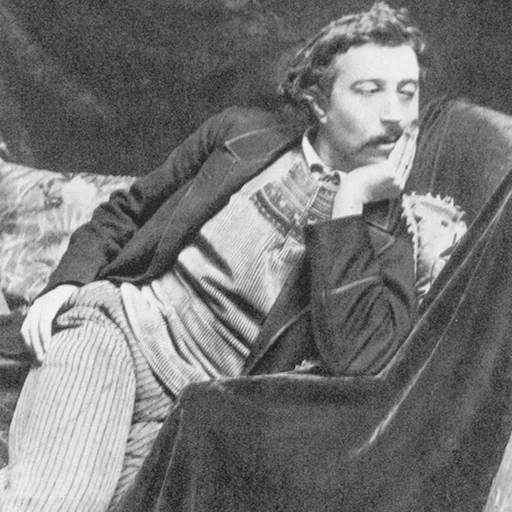
Eugène Henri Paul Gauguin (; French: ; 7 June 1848 – 8 May 1903) was a French painter, sculptor, printmaker, ceramist, and writer, whose work has been primarily associated with the Post-Impressionist and Symbolist movements.

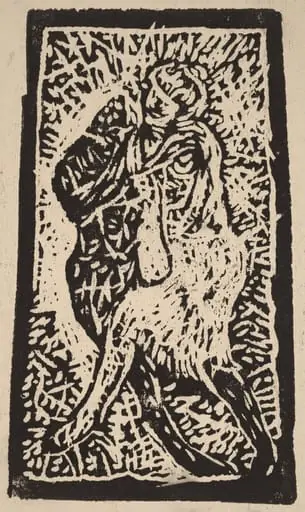 Lovers
 Woman Picking Fruit and the Savage (Femme cueillant des fruits et oviri)
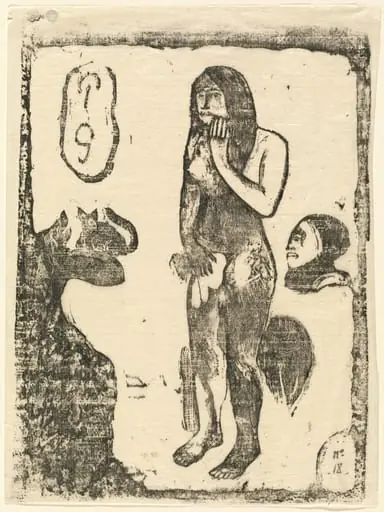 Eve
Eve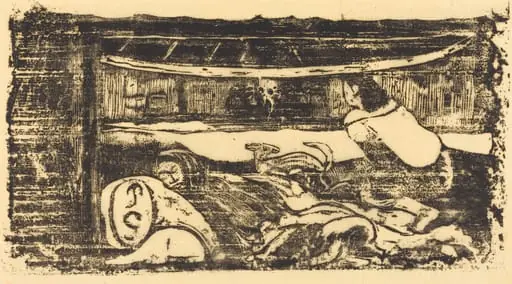 Interior of a Hut (Interieur de case)
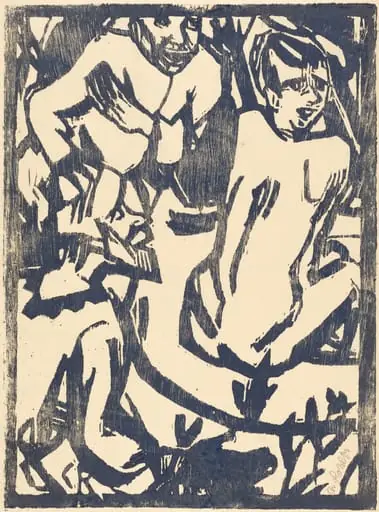 Susanna and the Elders
 Untitled
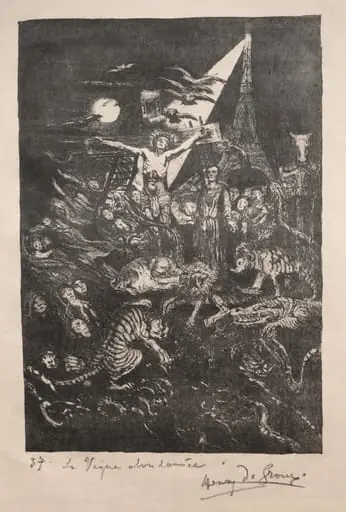 The Vintages!: The Abandoned Vine
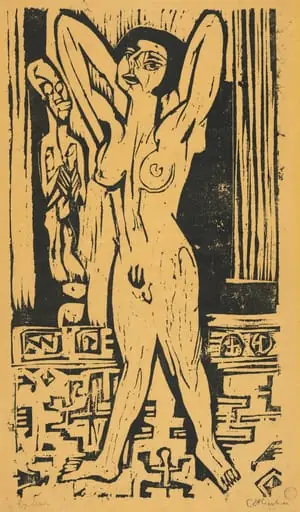 Naked Girl on a Carpet (Nacktes Mädchen auf Teppich)
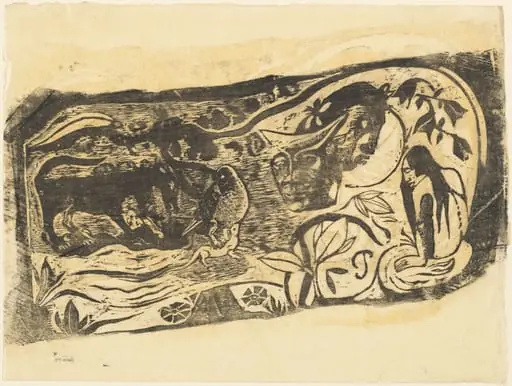 Plate with the Head of a Horned Devil (Planche au diable cornu)
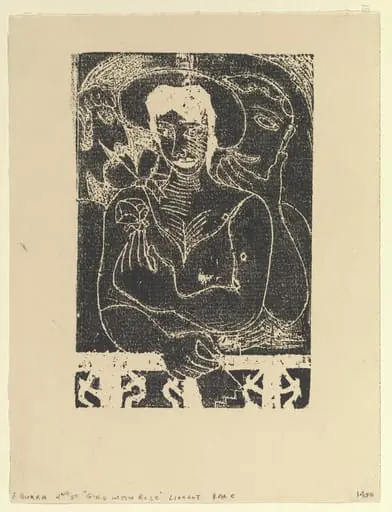 Untitled