Artwork
Eve
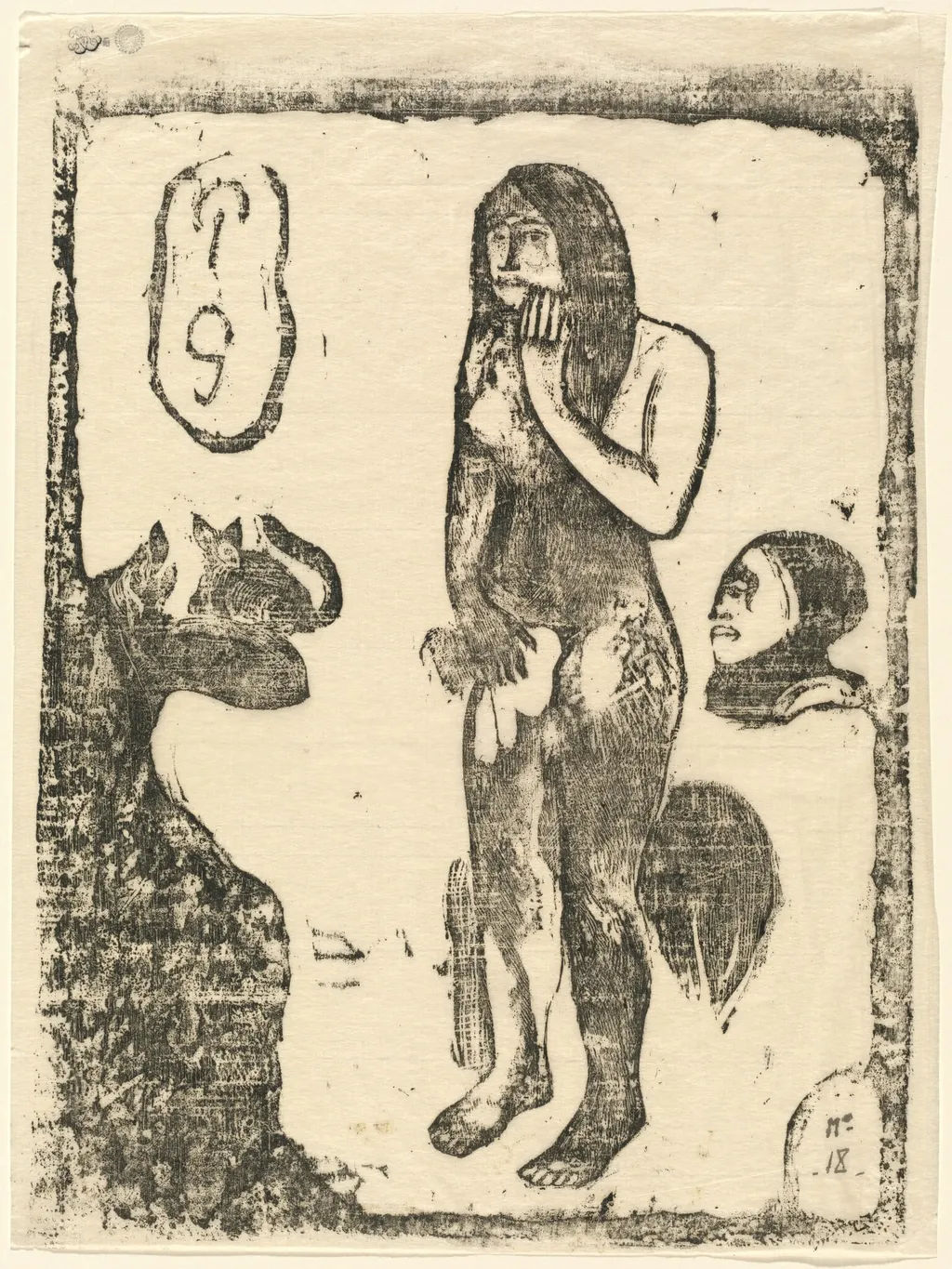
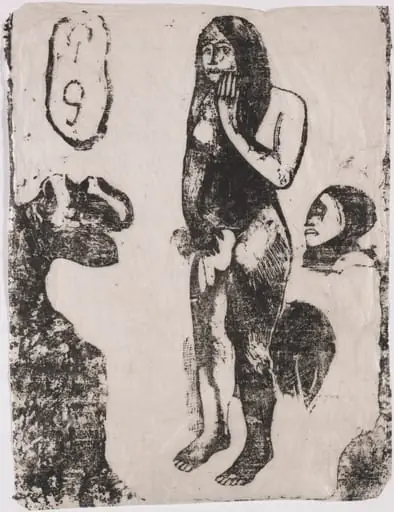
Eve is an ink print by the Impressionist artist Paul Gauguin. It dates from 1898 and is held in the collection of the National Gallery of Art.
About this work
Overview
Created in 1898, this woodcut titled *Eve* was produced by Paul Gauguin on Japanese paper. The print presents a solitary, barefoot woman in a simple robe, her hands poised near her face, while a seated figure leans forward behind her. A large, stylized letter “G” occupies the left side, set against a rough, textured ground.
Subject & Meaning
The central figure evokes a contemplative, almost mythic Eve, suggested by her nudity and modest attire. The secondary seated presence may allude to a companion or observer, adding narrative ambiguity. The prominent “G” functions as an authorial signature, integrating the artist’s identity into the composition.
Technique & Style
Gauguin employed the woodcut process, carving the image into a wood block and printing it onto Japanese paper. This method yields bold, uneven lines and a grainy surface, emphasizing stark shapes over subtle shading. The hand‑drawn quality of the marks underscores the work’s direct, expressive character.
History & Provenance
The print belongs to Gauguin’s later period, when he explored printmaking alongside painting. Produced shortly after his return from Tahiti, it reflects his ongoing interest in non‑European techniques and materials, such as Japanese paper, which he incorporated into his experimental practice.
Context
During the 1890s Gauguin moved beyond Impressionist concerns for fleeting light, embracing Symbolist ideas that prioritized inner meaning and primitive forms. *Eve* illustrates this shift, merging a simplified visual language with symbolic content, and aligns with his broader engagement with wood engraving as a vehicle for artistic expression.
Artist & collection
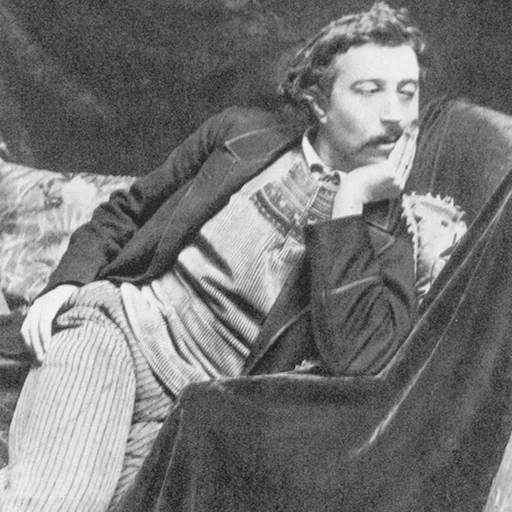
Artist
Eugène Henri Paul Gauguin (; French: ; 7 June 1848 – 8 May 1903) was a French painter, sculptor, printmaker, ceramist, and writer, whose work has been primarily associated with the Post-Impressionist and Symbolist movements.

 Eve
Eve Woman Picking Fruit and the Savage (Femme cueillant des fruits et oviri)
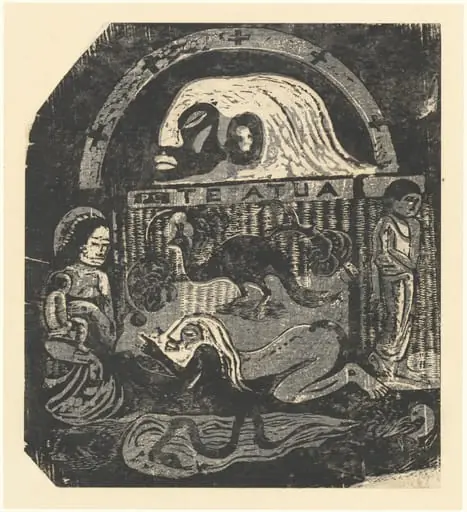 Te Atua (The Gods) Small Plate
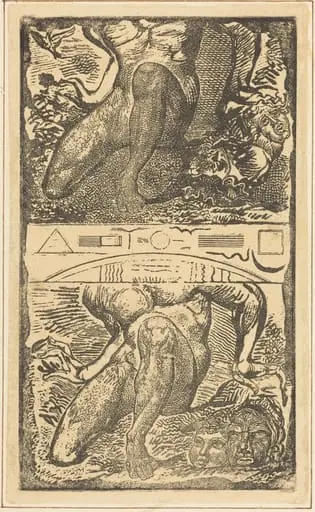 Unknown subject (Let Him look up into the Heaven and laugh in the bright air)
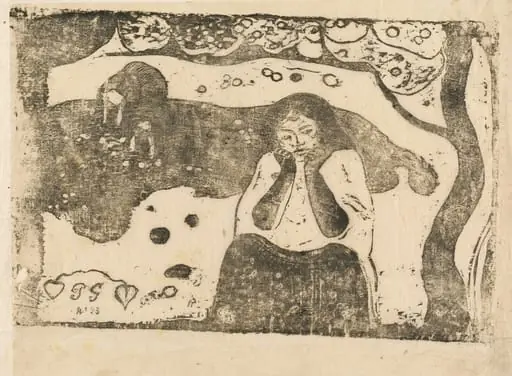 Human Misery (Misères humaines)
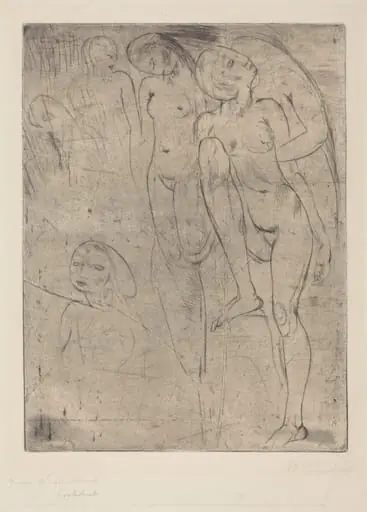 Large Resurrection (Grosse Auferstehung)
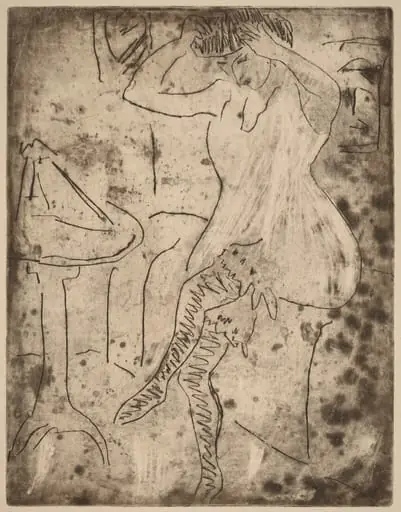 Dodo Arranging Her Hair
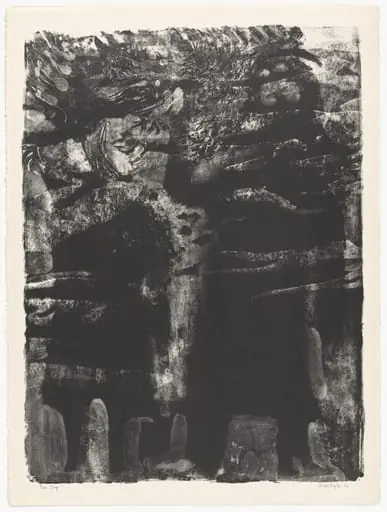 Untitled
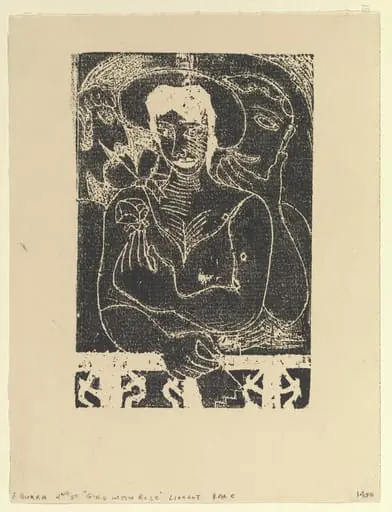 Untitled
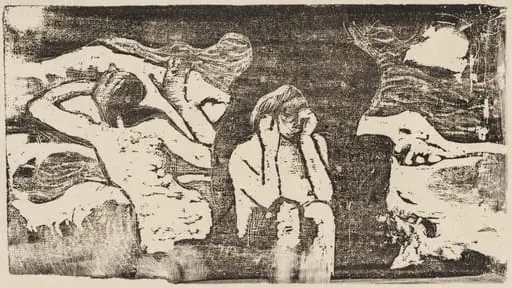 At the Black Rocks (Aux roches noires)
![Oviri (The Savage) [recto], by Paul Gauguin](https://artifactworldgallery.com/img/paul-gauguin--oviri-the-savage-recto--026f405dcdd65283-w320.webp) Oviri (The Savage) [recto]
Oviri (The Savage) [recto]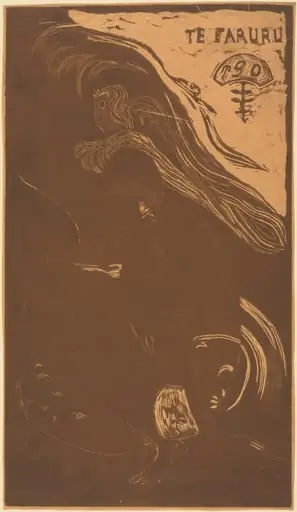 Te Faruru (They are Making Love Here)