Artwork
Interior of a Hut (Interieur de case)
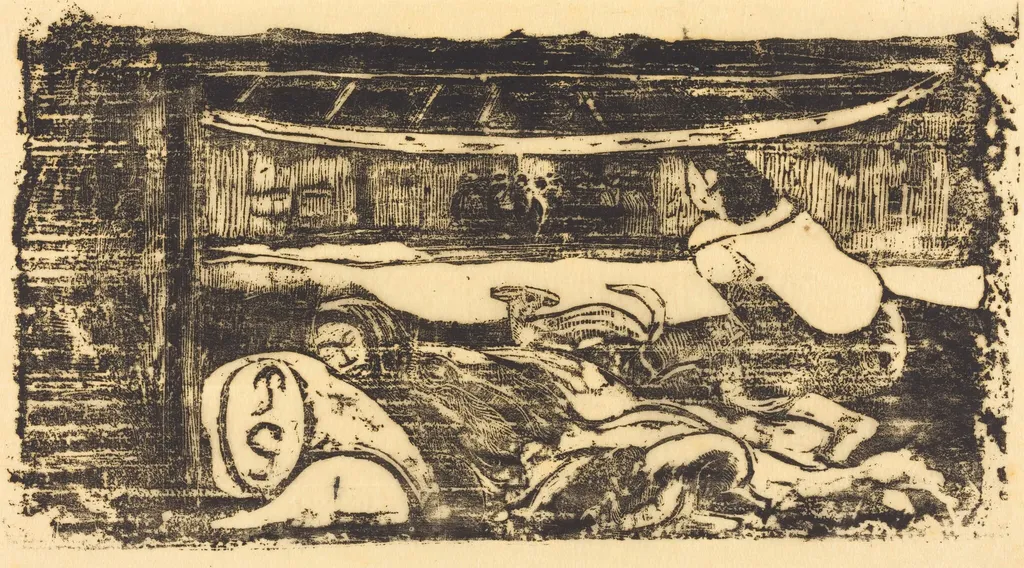
Interior of a Hut (Interieur de case) is an ink print by the Impressionist artist Paul Gauguin. It dates from 1895 and is held in the collection of the National Gallery of Art.
About this work
Overview
Interior of a Hut (Interieur de case) is a 1895 woodcut by Paul Gauguin, created in black ink. It exemplifies the artist's experimentation with printmaking and his distinctive Synthetist style.
Subject & Meaning
The woodcut depicts a dimly lit, cramped interior with three women in contemplative poses. The scene conveys a sense of stillness and intimacy, with the figures and space simplified to emphasize symbolic meaning.
Technique & Style
Gauguin's use of bold, dark lines and minimal shading creates a raw, dreamlike atmosphere. The woodcut technique, involving carving images into wood blocks, allowed for the simplification of forms and bold contrasts characteristic of Synthetism.
Context
This work reflects Gauguin's broader engagement with printmaking and his development of a Synthetist style, distinct from Impressionism. It belongs to a period when he sought to convey symbolic meaning through simplified forms and bold contrasts.
Artist & collection
Artist
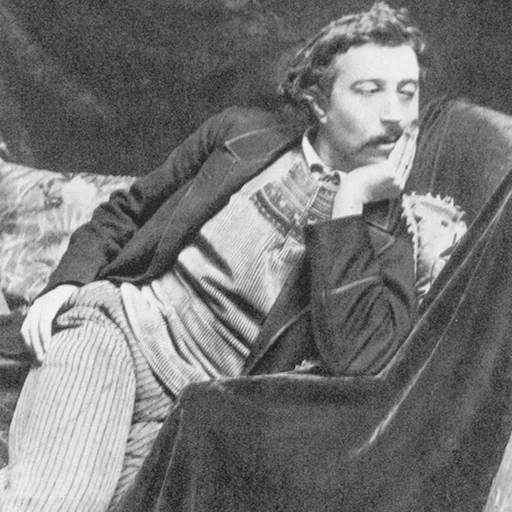
Eugène Henri Paul Gauguin (; French: ; 7 June 1848 – 8 May 1903) was a French painter, sculptor, printmaker, ceramist, and writer, whose work has been primarily associated with the Post-Impressionist and Symbolist movements.

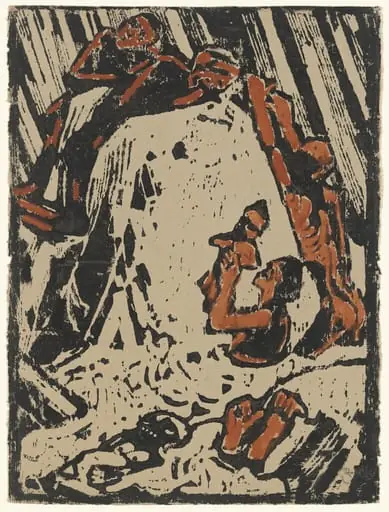 Flood (Sintflut)
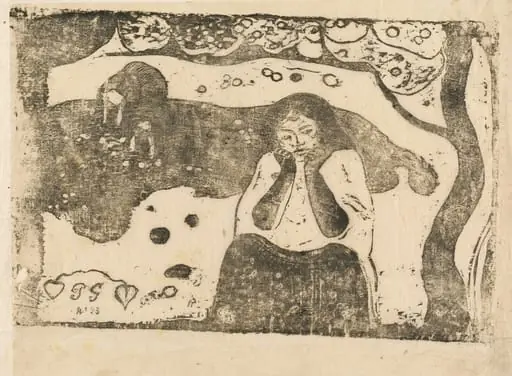 Human Misery (Misères humaines)
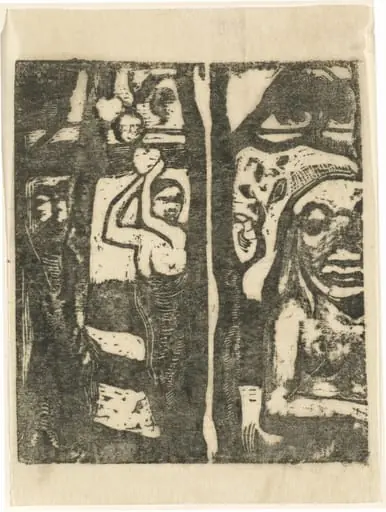 Woman Picking Fruit and the Savage (Femme cueillant des fruits et oviri)
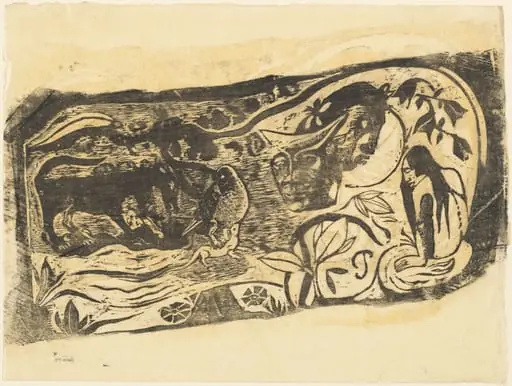 Plate with the Head of a Horned Devil (Planche au diable cornu)
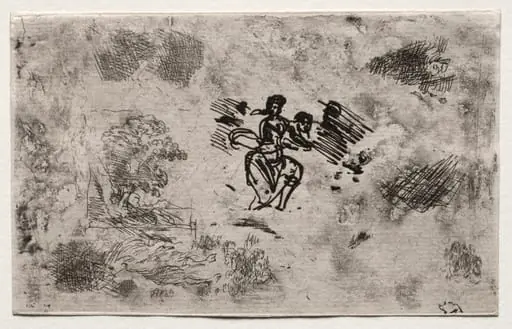 Study of a Seated Woman and other Sketches
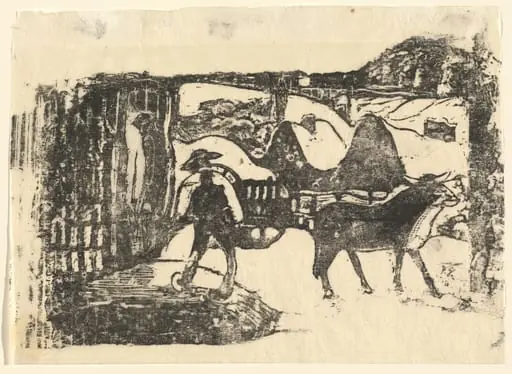 The Ox Cart (Le char a boeufs)
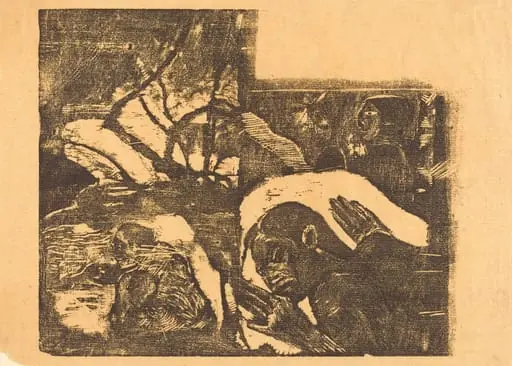 A Maori Woman in a Forest; Manao Tupapau (She is Haunted by a Spirit)
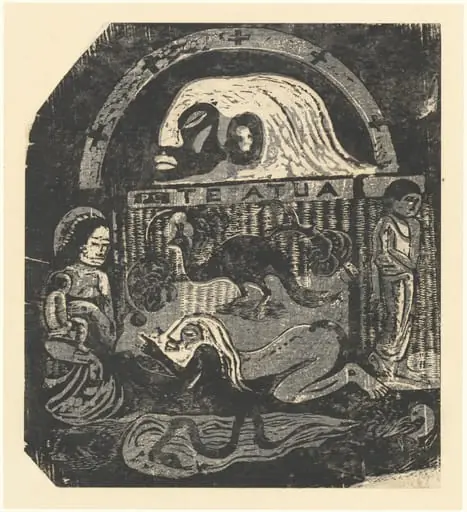 Te Atua (The Gods) Small Plate
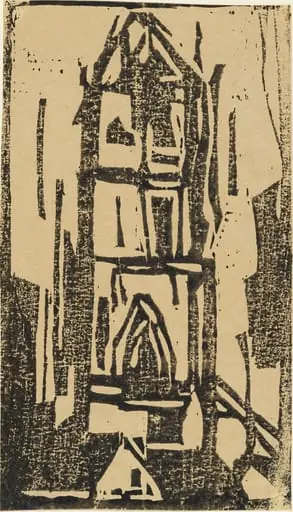 Untitled
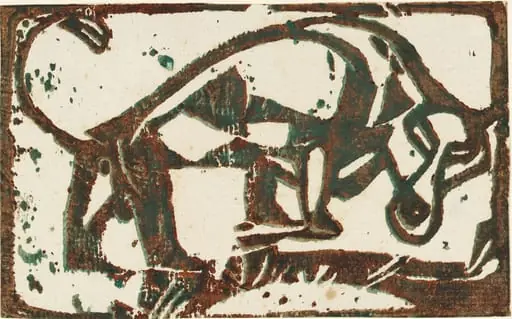 Untitled
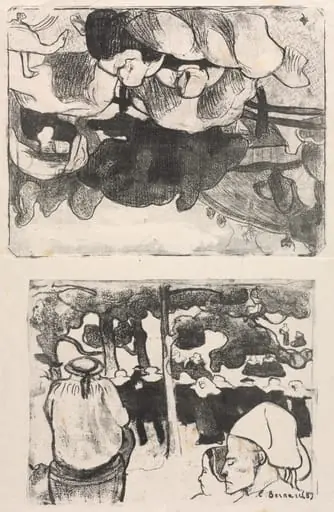 Les Bretonneries: Breton Women Making Haystacks (Bretonnes Faisant les Foins) and Wedding in Brittany (La Noce en Bretange)
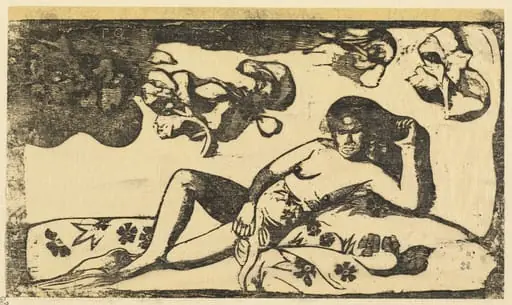 Te Arii Vahine (Lady of Royal Blood)