Artwork
The Universe is Created (L'Univers est créé)
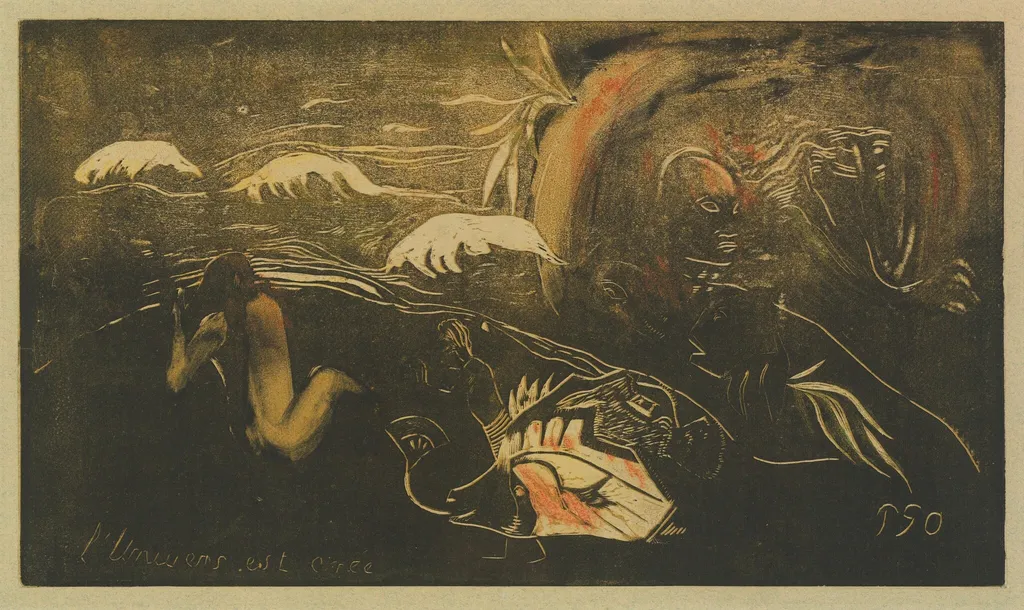
The Universe is Created (L'Univers est créé) is an ink print by the Impressionist artist Paul Gauguin. It dates from 1894 and is held in the collection of the National Gallery of Art.
About this work
Overview
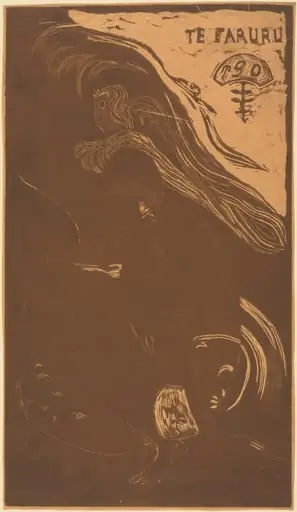
Created around 1894, *The Universe is Created* is a trial proof woodcut by Paul Gauguin, executed in tan, red-brown, red, and black inks.
Created around 1894, *The Universe is Created* is a trial proof woodcut by Paul Gauguin, executed in tan, red-brown, red, and black inks. Unlike his painted works, this print reveals his deepening interest in relief printing as a vehicle for primal, symbolic expression. The limited palette and coarse lines reflect his move away from naturalism toward a more archaic, emotionally charged visual language.
Subject & Meaning
The image depicts two indistinct figures entangled amid turbulent, wave-like forms beneath a dark, swirling sky. One holds a creature resembling a bat or bird; the other appears to dissolve into the void. A faint, masked face emerges from the shadows, suggesting a hidden force. The title evokes cosmic genesis, yet the scene conveys disarray rather than order, hinting at mythic chaos or inner turmoil rather than divine creation.
Technique & Style
Gauguin carved directly into a woodblock, using bold, irregular lines to define forms and create rhythmic movement. The colors—applied in separate blocks—were layered sparingly, emphasizing contrast over nuance. The black ink dominates, anchoring the composition, while muted earth tones suggest decay or primordial matter. The rough texture and uneven inking reveal the print’s trial status, preserving the raw energy of the carving process.
History & Provenance
This print is a trial proof, made during Gauguin’s experimentation with multi-color woodcut techniques in the mid-1890s. Few impressions were pulled, and most were retained by the artist or given to close associates. It was never published in a commercial edition, remaining a private exploration of form and myth. Its survival offers insight into Gauguin’s working methods during his final years in France before returning to the Pacific.
Context
In the 1890s, Gauguin rejected Western artistic conventions, turning to non-European sources and spiritual themes. His woodcuts emerged alongside writings on myth and religion, influenced by Breton folklore, Polynesian cosmology, and esoteric thought. This print aligns with his broader project: to access primal truths through simplified, symbolic imagery, distancing himself from academic traditions and Impressionist observation.
Legacy
Though little known during his lifetime, this woodcut exemplifies Gauguin’s influence on modern printmaking. His use of bold line, symbolic content, and expressive carving inspired Expressionist and Primitivist artists in the early 20th century. As a trial proof, it remains a rare document of his process—evidence of an artist seeking new forms to express the ineffable, beyond the reach of conventional representation.
Artist & collection
Artist
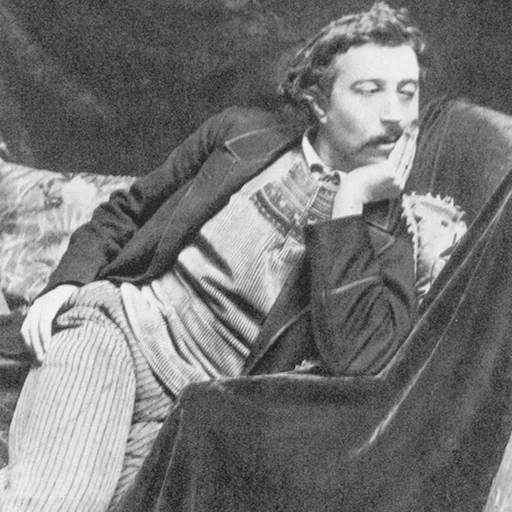
Eugène Henri Paul Gauguin (; French: ; 7 June 1848 – 8 May 1903) was a French painter, sculptor, printmaker, ceramist, and writer, whose work has been primarily associated with the Post-Impressionist and Symbolist movements.

![Mahna no Varua Ino (The Demon Speaks) [verso], by Paul Gauguin](https://artifactworldgallery.com/img/paul-gauguin--mahna-no-varua-ino-the-demon-speaks-verso--4d5371963e3166cc-w320.webp)