Artwork
Two Breton Figures; Bridge at Pont-Aven [recto]
![Two Breton Figures; Bridge at Pont-Aven [recto], by Paul Gauguin, crayon, 1886](https://artifactworldgallery.com/img/paul-gauguin--two-breton-figures-bridge-at-pont-aven-recto--c0e464ebc5606803-w1024.webp)
Two Breton Figures; Bridge at Pont-Aven [recto] is a crayon drawing by the Impressionist artist Paul Gauguin. It dates from 1886 and is held in the collection of the National Gallery of Art. Created in 1886, this crayon drawing on wove paper presents two separate sketches on a single sheet.
About this work
Overview
Created in 1886, this crayon drawing on wove paper presents two separate sketches on a single sheet. The left side shows a lone figure wearing a hat accompanied by a small portrait‑type head, while the right side depicts a modest street scene with three people, a building and a bridge. The work records a brief moment in a Breton landscape that Gauguin observed during his stay in Pont‑Aven.
Subject & Meaning
The compositions focus on everyday rural life in Brittany. The solitary, hat‑clad figure suggests an individual presence within the local community, whereas the broader street scene situates that presence amid a communal setting, emphasizing the interaction between people and their built environment, such as the bridge that links different parts of the village.
Technique & Style
Executed with crayon, the drawing employs bold, expressive lines and varied textures that give the figures a sense of immediacy. The use of color is restrained yet purposeful, highlighting forms without relying on the detailed naturalism typical of earlier Impressionist works. The handling anticipates Gauguin’s later move toward a more synthetic, symbolic visual language.
History & Provenance
The piece originates from Gauguin’s productive period in Pont‑Aven, where he spent several months in 1886 absorbing the region’s scenery and culture. It remains a paper work from his early explorations of post‑Impressionist ideas, prior to his later, more famous oil paintings and prints.
Context
During the mid‑1880s, Gauguin was part of a circle of artists who gathered in Brittany to escape the urban focus of Parisian Impressionism. The Pont‑Aven community encouraged experimentation with simplified forms and a heightened emotional tone, influences that are evident in this drawing’s composition and execution.
Legacy
Although less celebrated than his later canvases, this drawing illustrates Gauguin’s transition from naturalistic observation toward the symbolic and stylized approaches that would define his mature work. It offers insight into the developmental stages of his artistic language, marking an early step toward the Synthetist style that would later influence modern art.
Artist & collection
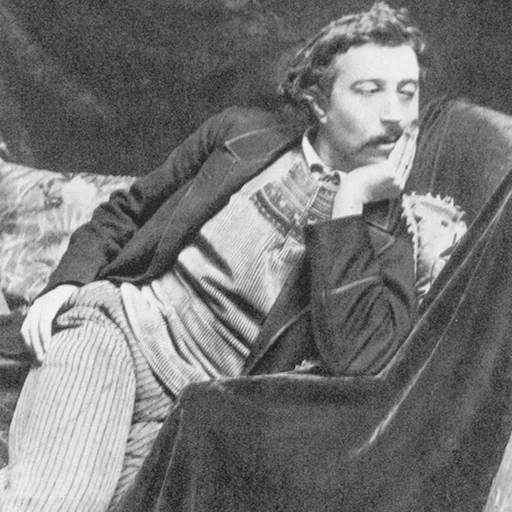
Artist
Eugène Henri Paul Gauguin (; French: ; 7 June 1848 – 8 May 1903) was a French painter, sculptor, printmaker, ceramist, and writer, whose work has been primarily associated with the Post-Impressionist and Symbolist movements.

![Trees; Sketch of Breton Boy [verso], by Paul Gauguin](https://artifactworldgallery.com/img/paul-gauguin--trees-sketch-of-breton-boy-verso--ffac7faa10ac7e52-w320.webp) Trees; Sketch of Breton Boy [verso]
Trees; Sketch of Breton Boy [verso]![Breton Boy Tending Geese; Cows and a Figure Leaning on a Ledge [verso], by Paul Gauguin](https://artifactworldgallery.com/img/paul-gauguin--breton-boy-tending-geese-cows-and-a-figure-leaning-on-a-ledg--cfc57715ceb582d8-w320.webp) Breton Boy Tending Geese; Cows and a Figure Leaning on a Ledge [verso]
Breton Boy Tending Geese; Cows and a Figure Leaning on a Ledge [verso]![Five Studies of Soldiers and a Woman's Face; Two Figures [recto], by Paul Gauguin](https://artifactworldgallery.com/img/paul-gauguin--five-studies-of-soldiers-and-a-woman-s-face-two-figures-rect--9d09632e7e517067-w320.webp) Five Studies of Soldiers and a Woman's Face; Two Figures [recto]
Five Studies of Soldiers and a Woman's Face; Two Figures [recto]![A Man Leaning on a Wall with Five Other Studies; Two Bearded Men Wearing Hats, and Five Other Studies [recto], by Paul Gauguin](https://artifactworldgallery.com/img/paul-gauguin--a-man-leaning-on-a-wall-with-five-other-studies-two-bearded--2df262058c2bfe48-w320.webp) A Man Leaning on a Wall with Five Other Studies; Two Bearded Men Wearing Hats, and Five Other Studies [recto]
A Man Leaning on a Wall with Five Other Studies; Two Bearded Men Wearing Hats, and Five Other Studies [recto]![Little Breton Boy; A Pig and a Washerwoman [recto], by Paul Gauguin](https://artifactworldgallery.com/img/paul-gauguin--little-breton-boy-a-pig-and-a-washerwoman-recto--e104e07b475c372e-w320.webp) Little Breton Boy; A Pig and a Washerwoman [recto]
Little Breton Boy; A Pig and a Washerwoman [recto]![Three Studies of Men's Heads, One with Spectacles; Dogs, Children, and Two Bearded Men in Profile [verso], by Paul Gauguin](https://artifactworldgallery.com/img/paul-gauguin--three-studies-of-men-s-heads-one-with-spectacles-dogs-childr--5397d62ca5c9a48b-w320.webp) Three Studies of Men's Heads, One with Spectacles; Dogs, Children, and Two Bearded Men in Profile [verso]
Three Studies of Men's Heads, One with Spectacles; Dogs, Children, and Two Bearded Men in Profile [verso]![Monkey and Cottage; Little Breton Boy [recto], by Paul Gauguin](https://artifactworldgallery.com/img/paul-gauguin--monkey-and-cottage-little-breton-boy-recto--b3a09959c238ad80-w320.webp) Monkey and Cottage; Little Breton Boy [recto]
Monkey and Cottage; Little Breton Boy [recto]![A Breton Woman and a Standing Man; Head and Hand of a Monkey [recto], by Paul Gauguin](https://artifactworldgallery.com/img/paul-gauguin--a-breton-woman-and-a-standing-man-head-and-hand-of-a-monkey--e35c46eb8cb6c297-w320.webp) A Breton Woman and a Standing Man; Head and Hand of a Monkey [recto]
A Breton Woman and a Standing Man; Head and Hand of a Monkey [recto]![Figure Studies; Studies of Soldiers [verso], by Paul Gauguin](https://artifactworldgallery.com/img/paul-gauguin--figure-studies-studies-of-soldiers-verso--91eae8279e0a44e1-w320.webp) Figure Studies; Studies of Soldiers [verso]
Figure Studies; Studies of Soldiers [verso]![Gillingham Pier, London [verso], by Félix-Hilaire Buhot](https://artifactworldgallery.com/img/felix-hilaire-buhot--gillingham-pier-london-verso--641e03dd7de8217b-w320.webp) Gillingham Pier, London [verso]
Gillingham Pier, London [verso]