Artwork
Women, Animals and Foliage (Femmes, animaux et feuillages)
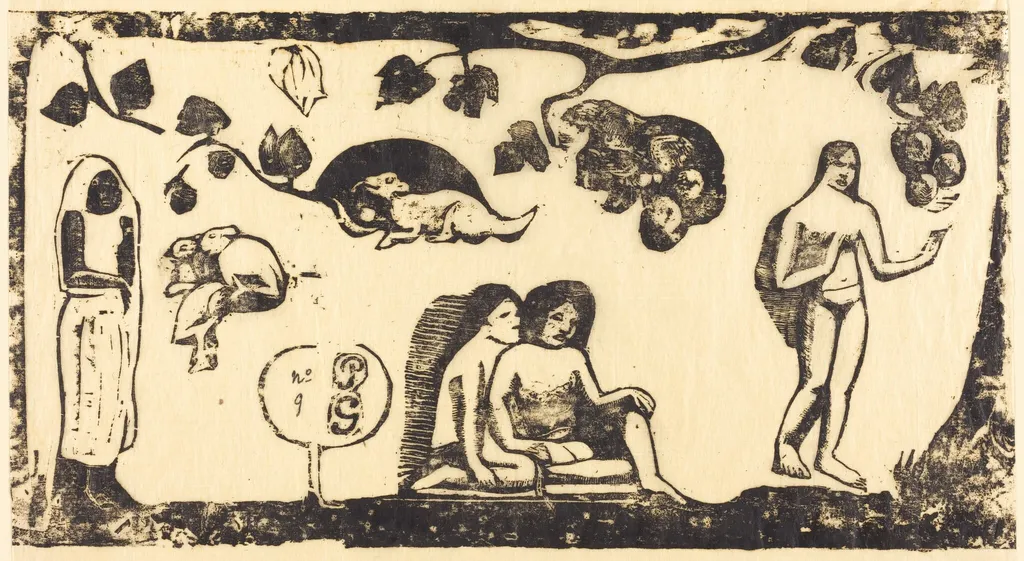
Women, Animals and Foliage (Femmes, animaux et feuillages) is an ink print by the Impressionist artist Paul Gauguin. It dates from 1895 and is held in the collection of the National Gallery of Art. Created in 1895, this black‑ink woodcut presents a tranquil tableau of four figures amid foliage and animals.
About this work
Overview
Created in 1895, this black‑ink woodcut presents a tranquil tableau of four figures amid foliage and animals. Two women stand at the edges, one holding fruit, while a pair of seated figures occupy the centre beneath a tree. A bird hovers above and a cat leaps from a branch, all set against a backdrop of floating leaves and a wavy horizon line.
Subject & Meaning
The composition juxtaposes human and animal forms within a stylized natural setting, suggesting a harmonious relationship between people and the environment. The inclusion of fruit, a bird, and a cat may allude to themes of abundance, freedom, and domesticity, while the dreamlike arrangement invites contemplation of an idealized, perhaps mythic, landscape.
Technique & Style
Executed solely with black ink on light paper, the print relies on stark contrasts and clean, flowing lines. Gauguin’s approach emphasizes simplified silhouettes and flat tonal areas, reducing detail to convey form through texture and line rather than realistic modeling. The woodcut’s crisp edges and repetitive patterns reflect his interest in the graphic qualities of the medium.
History & Provenance
The work belongs to Gauguin’s later period of experimentation with wood engraving, a phase in which he explored printmaking as a means of extending his visual language beyond painting. Produced shortly after his return from Tahiti, the piece illustrates his continued engagement with non‑European motifs and his shift toward more abstracted representation.
Context
During the 1890s, Gauguin moved away from Impressionist naturalism toward Symbolist and Post‑Impressionist ideals, favoring bold outlines and symbolic content. This woodcut aligns with his broader practice of integrating primitive and exotic influences, reflecting contemporary artistic currents that valued simplified forms and expressive, decorative qualities over literal depiction.
Artist & collection
Artist
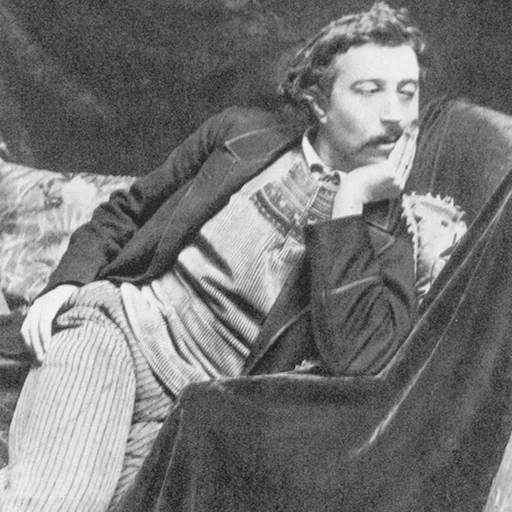
Eugène Henri Paul Gauguin (; French: ; 7 June 1848 – 8 May 1903) was a French painter, sculptor, printmaker, ceramist, and writer, whose work has been primarily associated with the Post-Impressionist and Symbolist movements.

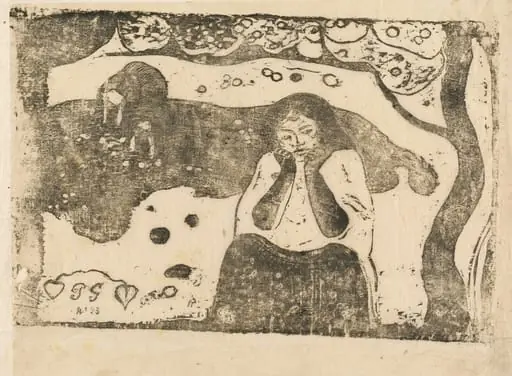 Human Misery (Misères humaines)
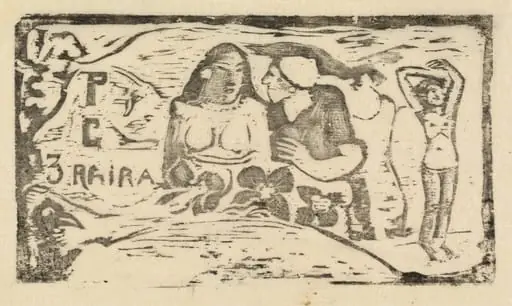 Title Page for "Le Sourire" (Titre du Sourire)
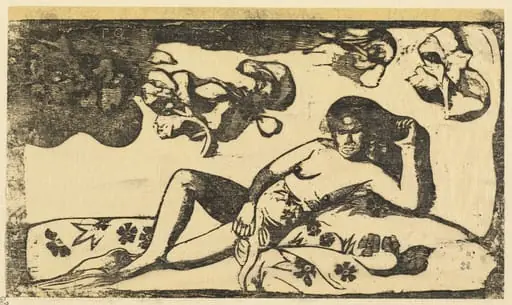 Te Arii Vahine (Lady of Royal Blood)
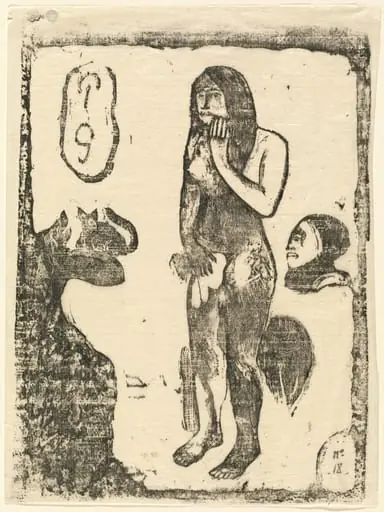 Eve
Eve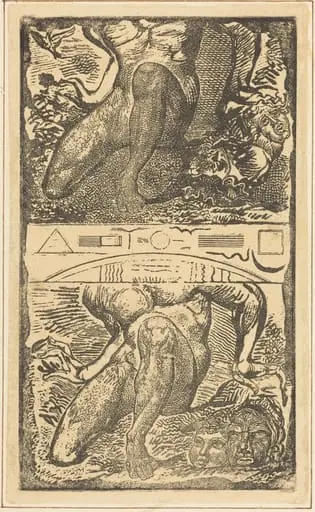 Unknown subject (Let Him look up into the Heaven and laugh in the bright air)
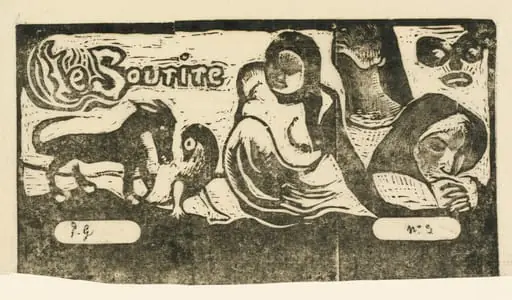 Title Page for "Le Sourire" (Titre du Sourire)
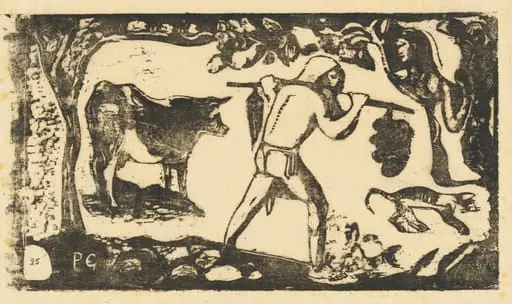 Tahitian Carrying Bananas (Le porteur de fei)
 Saint Christopher
 Landscape with a Lake and Sailing-Vessels
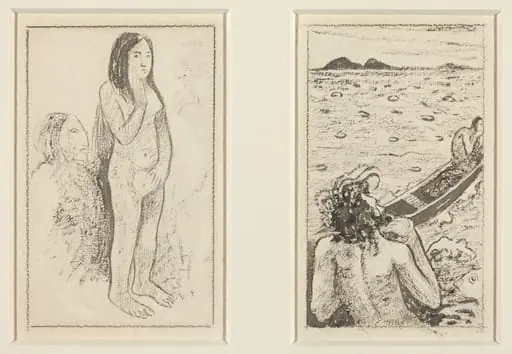 Parau No Te Varau Ino (left); Tahitian Legend (right)
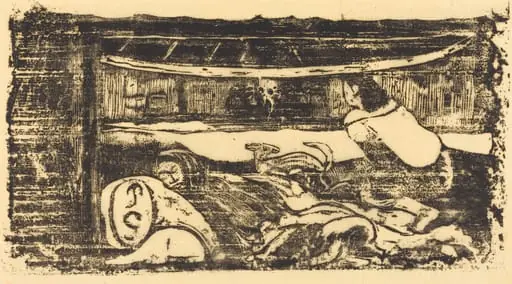 Interior of a Hut (Interieur de case)
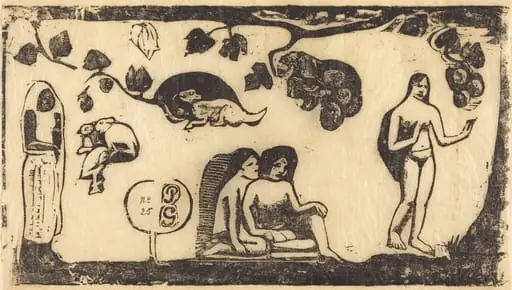 Women, Animals and Foliage (Femmes, animaux et feuillages)