Artwork
Women, Animals and Foliage (Femmes, animaux et feuillages)
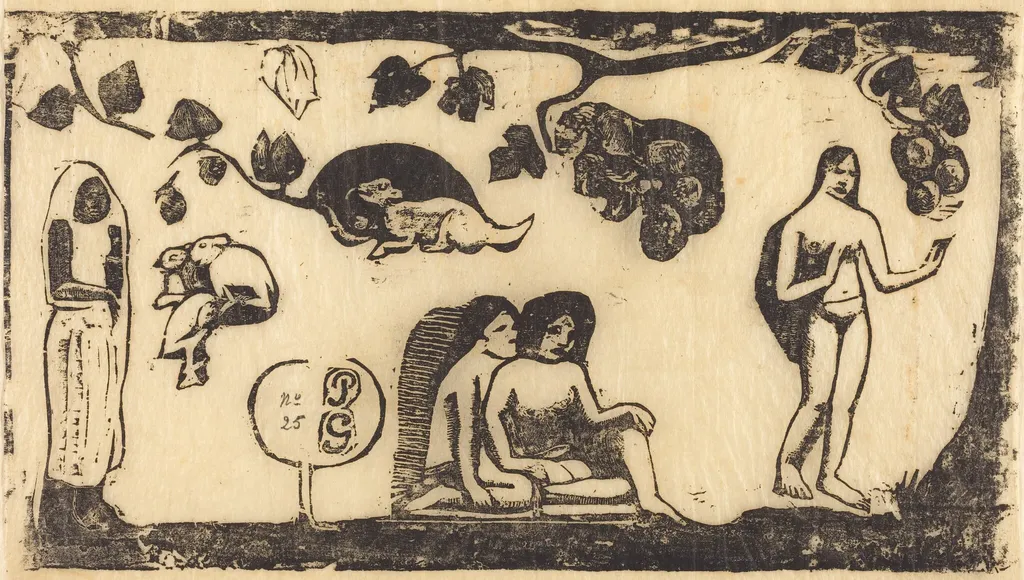
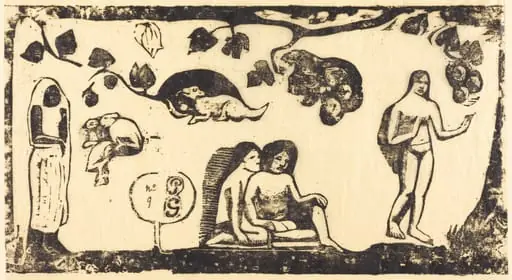
Women, Animals and Foliage (Femmes, animaux et feuillages) is an ink print by the Impressionist artist Paul Gauguin. It dates from 1895 and is held in the collection of the National Gallery of Art.
About this work
Overview
Paul Gauguin’s 1895 woodcut titled *Women, Animals and Foliage* presents a compact composition of human figures, an animal, and surrounding vegetation, all rendered in stark black. The print exemplifies Gauguin’s turn toward printmaking during the mid‑1890s, a period when he was exploring new graphic media alongside his painting practice.
Subject & Meaning
The image shows a standing woman in a loincloth extending her arms, two seated women to her left, and an animal positioned above them, framed by leafy branches that spill from the top and right edges. The arrangement suggests a symbolic interplay between the human form, animal presence, and natural environment, reflecting Gauguin’s interest in primitive motifs and mythic narratives.
Technique & Style
Executed as a black‑ink woodcut, the work displays the characteristic grainy texture of carved wood, with bold, simplified outlines that echo Gauguin’s Synthetist approach. Though his paintings are known for vivid color, this print relies on stark contrast and flattened forms to convey volume, emphasizing the decorative quality of line over realistic modeling.
History & Provenance
Created during Gauguin’s late‑period experimentation with print media, the woodcut was not widely circulated in his lifetime. It later entered museum collections as part of the broader reassessment of his graphic output, which has been recognized for its influence on early twentieth‑century modernist movements.
Artist & collection
Artist
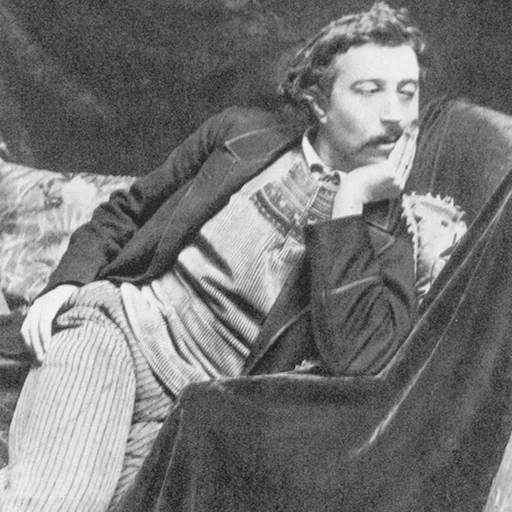
Eugène Henri Paul Gauguin (; French: ; 7 June 1848 – 8 May 1903) was a French painter, sculptor, printmaker, ceramist, and writer, whose work has been primarily associated with the Post-Impressionist and Symbolist movements.

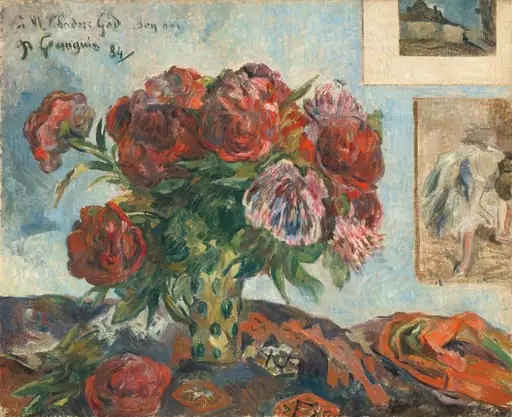
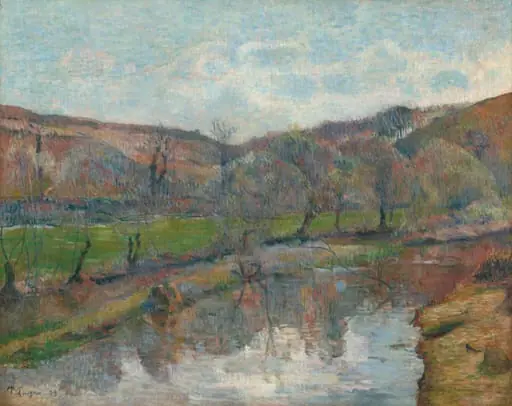
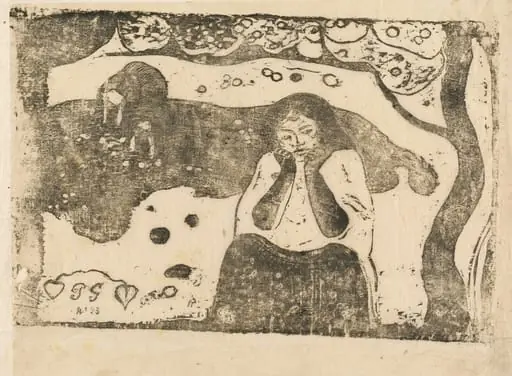 Human Misery (Misères humaines)
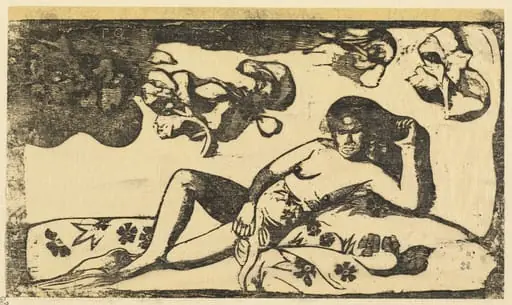 Te Arii Vahine (Lady of Royal Blood)
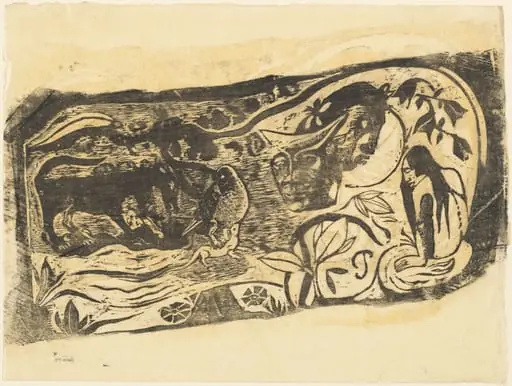 Plate with the Head of a Horned Devil (Planche au diable cornu)
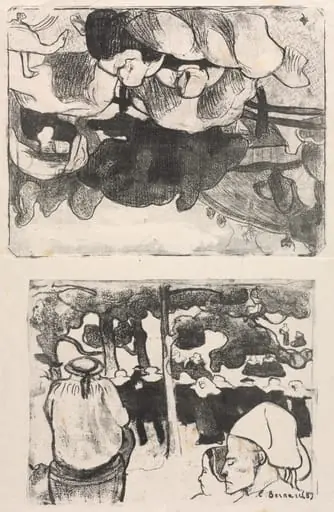 Les Bretonneries: Breton Women Making Haystacks (Bretonnes Faisant les Foins) and Wedding in Brittany (La Noce en Bretange)
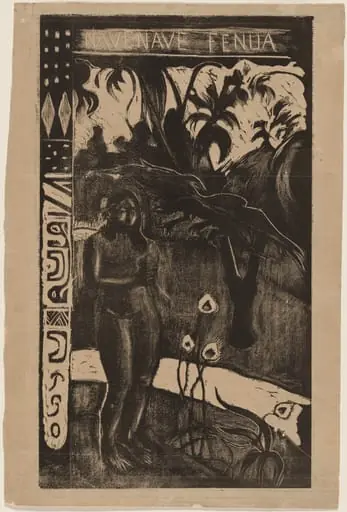 Nave Nave Fenua (Delightful Land)
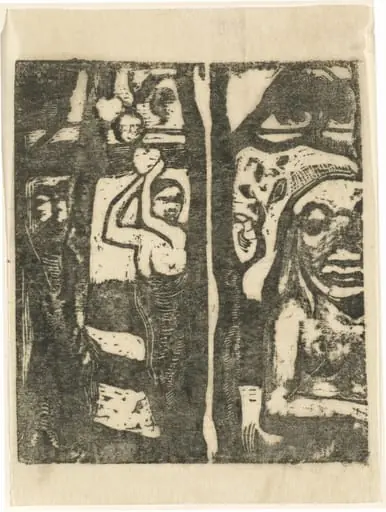 Woman Picking Fruit and the Savage (Femme cueillant des fruits et oviri)
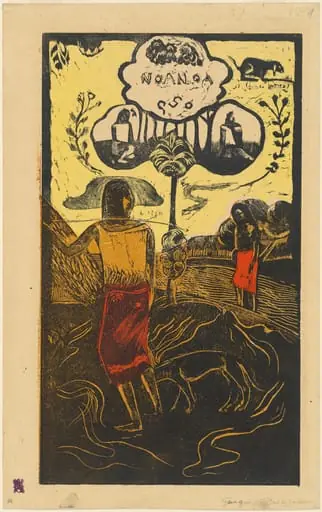 Noa Noa (Fragrant, Fragrant)
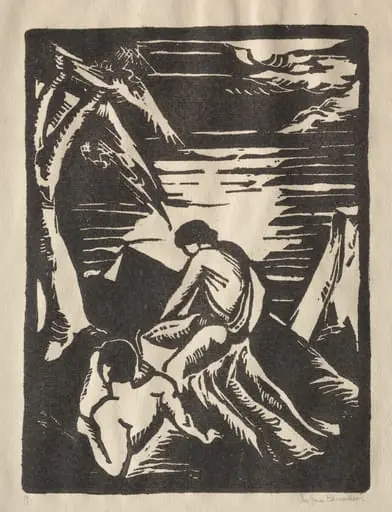 Orestes and Pylades
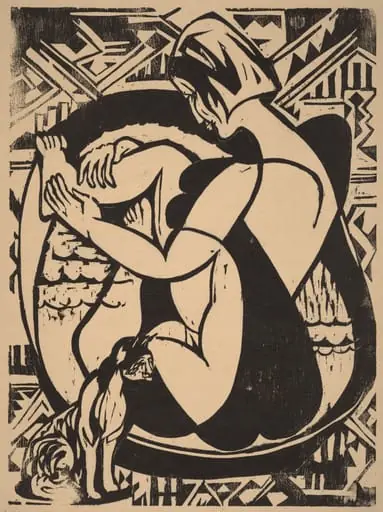 Woman in the Bathtub
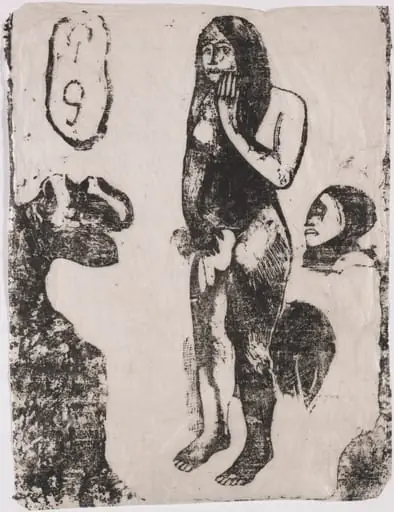 Eve
Eve Untitled
 Women, Animals and Foliage (Femmes, animaux et feuillages)