Artwork
Human Misery (Misères humaines)
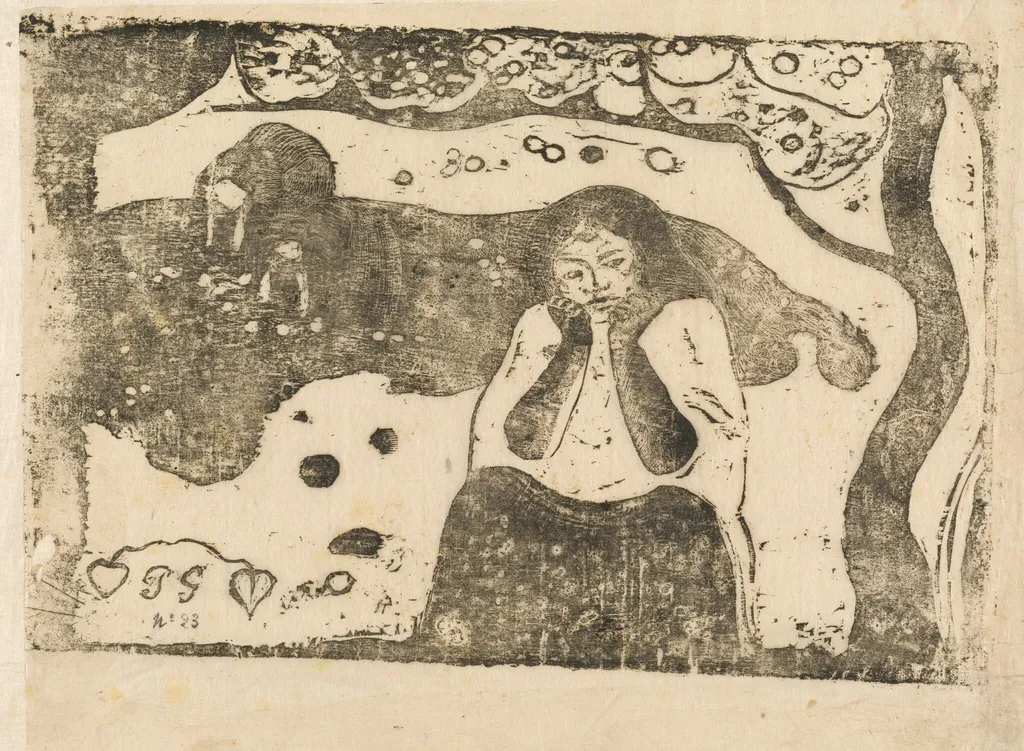
Human Misery (Misères humaines) is an ink print by the Impressionist artist Paul Gauguin. It dates from 1898 and is held in the collection of the National Gallery of Art.
About this work
Overview
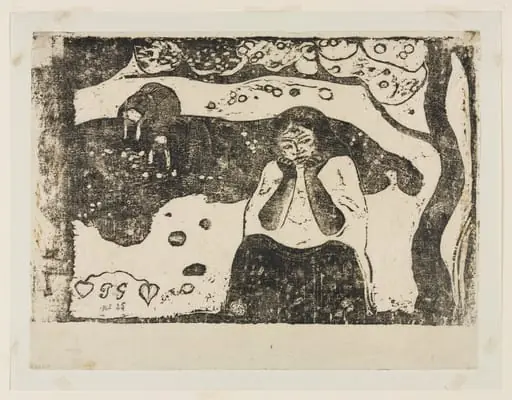
Human Misery (Misères humaines), executed in 1898, is a woodcut print mounted on the edges of Japanese paper. The work belongs to Paul Gauguin’s later period, when he expanded his practice beyond painting into printmaking. The image presents a solitary woman seated on the ground, her gaze directed downward, set against a dark, ambiguous landscape that suggests rocks or stones.
Subject & Meaning
The central figure—a woman in a long dress with long hair—appears withdrawn and sorrowful. Her posture, with shoulders slumped and head bowed, conveys a sense of burden or inner distress. The stark contrast between her pale form and the surrounding gloom intensifies the emotional weight, inviting contemplation of isolation and human suffering.
Technique & Style
Gauguin employed a woodcut process on Japanese paper, a medium that allowed bold, flat areas of tone and strong outlines. The print’s edges are mounted, preserving the paper’s delicate texture. While the work reflects his Symbolist concerns, its simplified forms and emphasis on surface color echo the Synthetist approach that distinguished his departure from Impressionist naturalism.
History & Provenance
Created during the final decade of Gauguin’s career, the print illustrates his sustained interest in print techniques such as wood engraving and woodcut.
Created during the final decade of Gauguin’s career, the print illustrates his sustained interest in print techniques such as wood engraving and woodcut. It was produced after his extensive travels in the South Pacific, a period that informed his symbolic language. The work has remained in private and institutional collections, documented in catalogues of Gauguin’s prints from the late 19th century.
Artist & collection
Artist
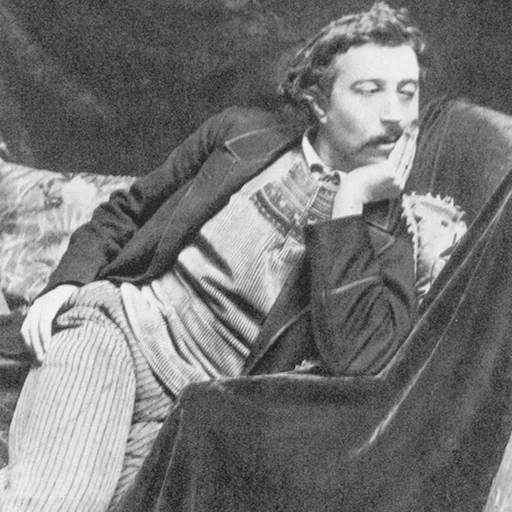
Eugène Henri Paul Gauguin (; French: ; 7 June 1848 – 8 May 1903) was a French painter, sculptor, printmaker, ceramist, and writer, whose work has been primarily associated with the Post-Impressionist and Symbolist movements.

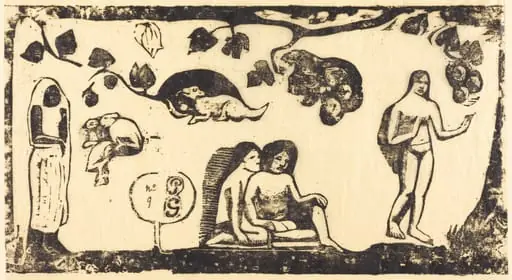 Women, Animals and Foliage (Femmes, animaux et feuillages)
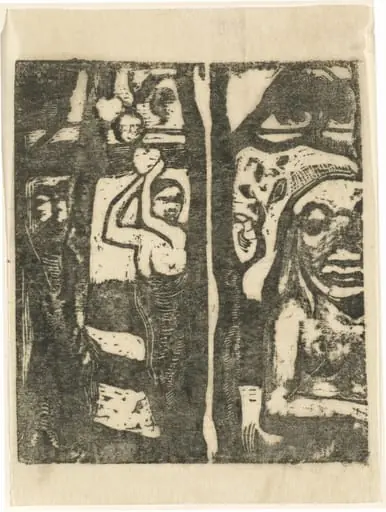 Woman Picking Fruit and the Savage (Femme cueillant des fruits et oviri)
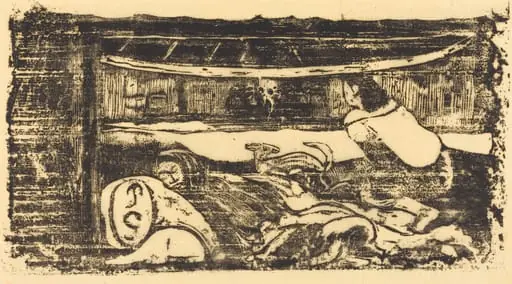 Interior of a Hut (Interieur de case)
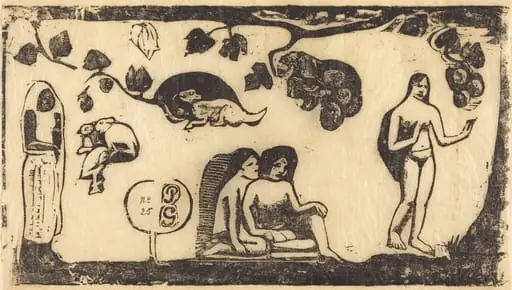 Women, Animals and Foliage (Femmes, animaux et feuillages)
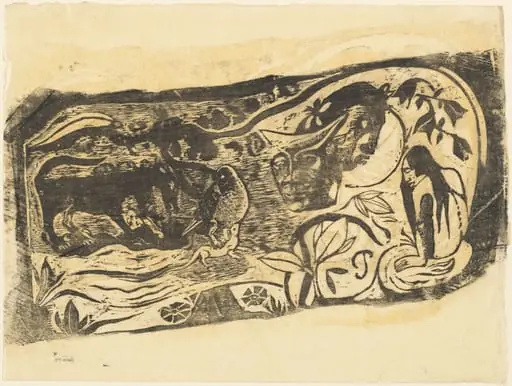 Plate with the Head of a Horned Devil (Planche au diable cornu)
 Laundry (La Lessive)
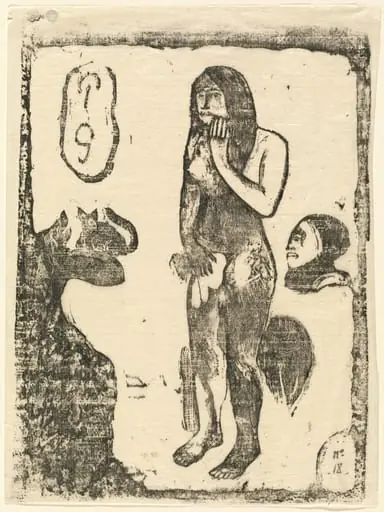 Eve
Eve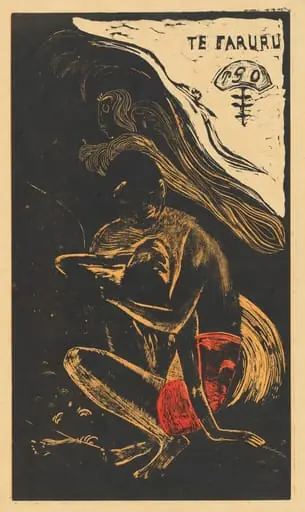 Te Faruru (They are Making Love Here)
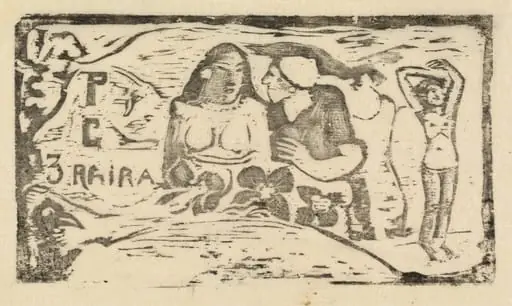 Title Page for "Le Sourire" (Titre du Sourire)
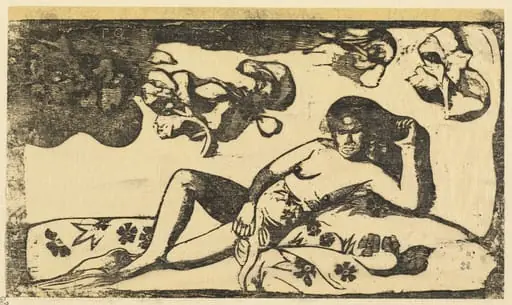 Te Arii Vahine (Lady of Royal Blood)
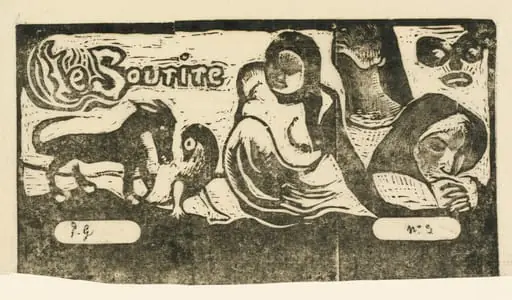 Title Page for "Le Sourire" (Titre du Sourire)
 Untitled