Artwork
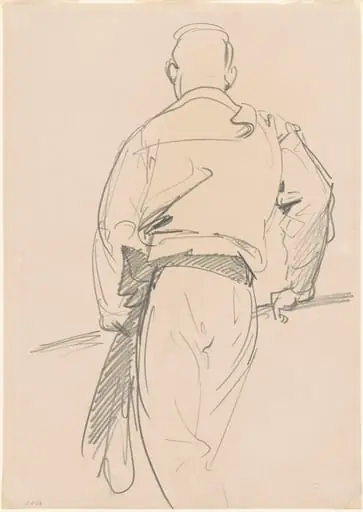
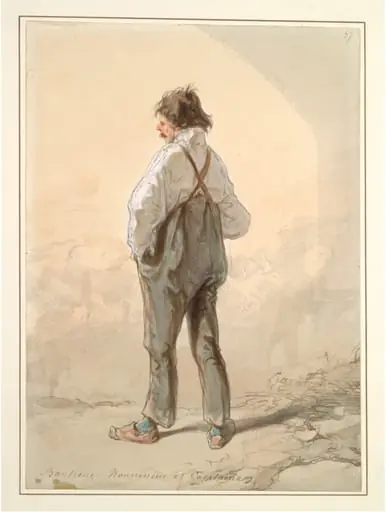
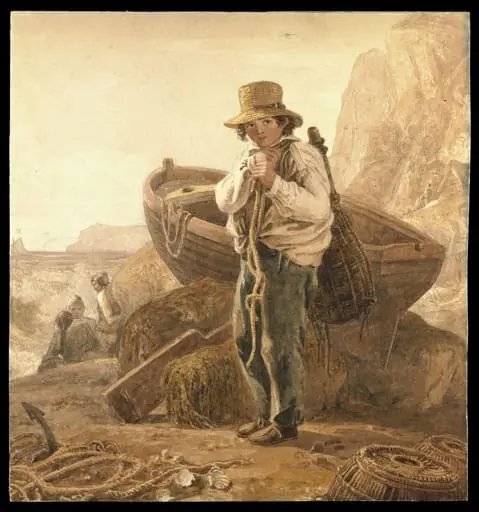
Visser met een mand, van achteren gezien
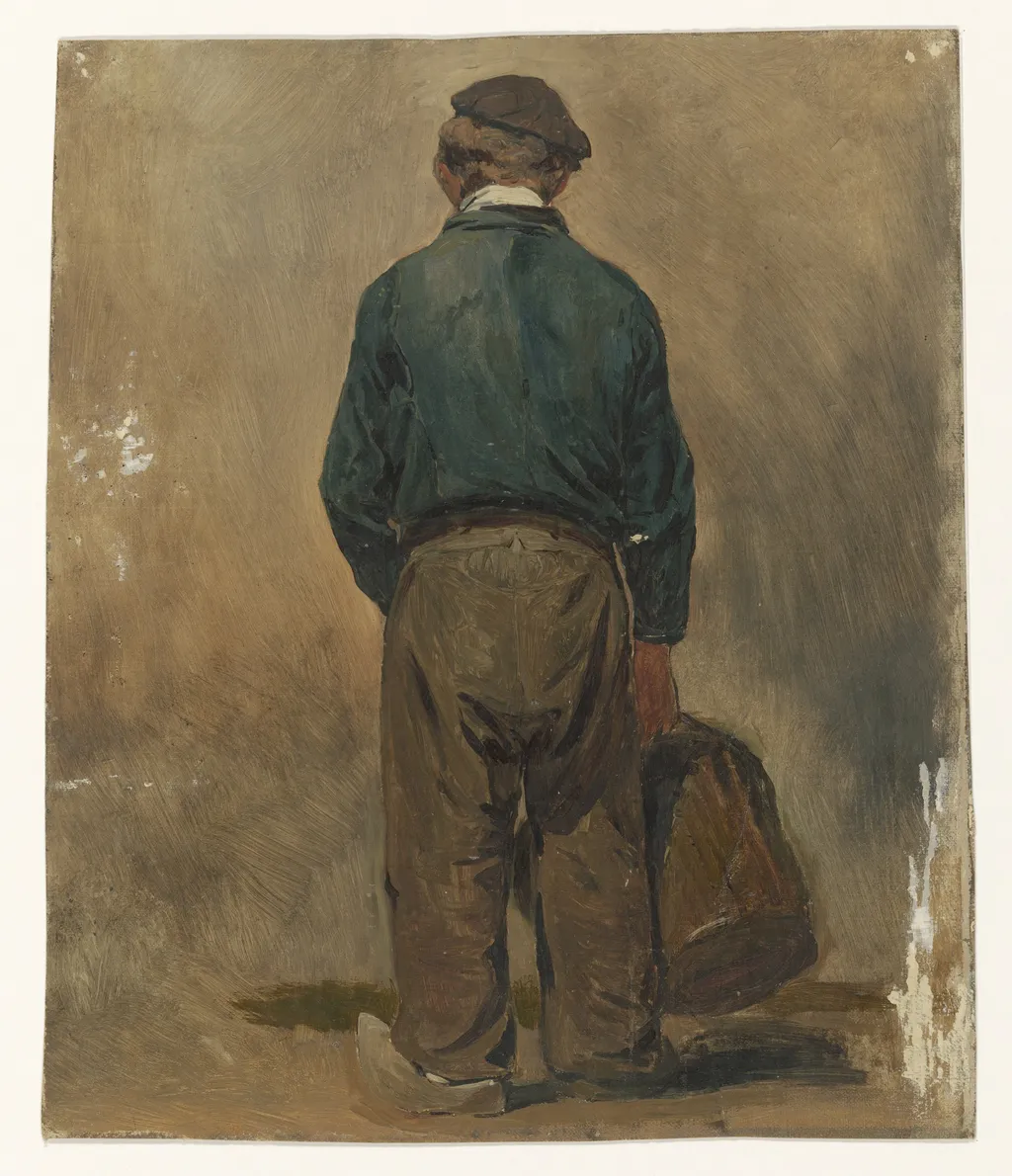
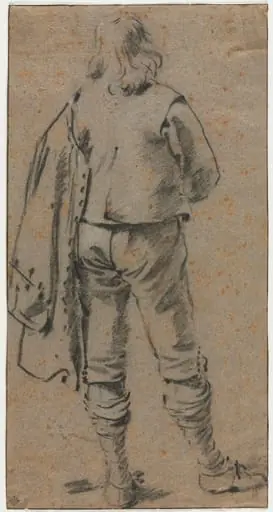
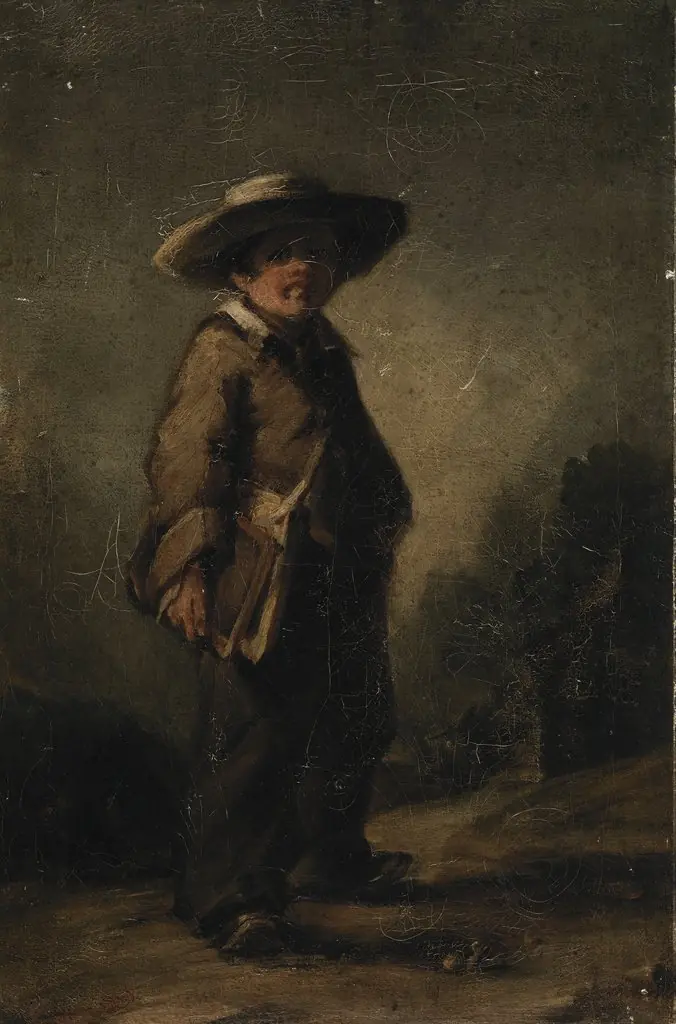
Visser met een mand, van achteren gezien is an oil painting by the Biedermeier artist Jan Weissenbruch. It dates from 1850 and is held in the collection of the Rijksmuseum.
About this work
Overview
Created circa 1850, this oil painting by Jan Weissenbruch shows a solitary figure viewed from behind, clutching a sizeable basket. The composition is restrained, set against a muted brown backdrop that emphasizes the figure’s dark attire and the weight of the load. The work reflects the artist’s focus on everyday labor and the quiet moments of rural life.
Subject & Meaning
The central character is a working‑class individual, likely a fisherman or laborer, identifiable by his hat, dark jacket, and the heavy basket he bears. By presenting the figure from the rear, Weissenbruch invites viewers to contemplate the toil and routine of such occupations without dramatizing the scene, suggesting a contemplative dignity in ordinary work.
Technique & Style
Weissenbruch employs a limited palette of earth tones, using subtle chiaroscuro to model the figure and convey volume. The brushwork is smooth and controlled, typical of the Biedermeier period’s preference for modest realism. The simple composition and restrained detail highlight the artist’s Romantic sensibility while maintaining a realistic portrayal of the subject.
History & Provenance
Jan Weissenbruch (1809–1880), a Dutch painter trained under George Pieter Westenberg and Jan Willem Pieneman, produced this work during his mature period after living in Deventer, Paris, and The Hague. Though primarily known for seascapes, this piece illustrates his broader interest in genre scenes of daily life.
Artist & collection
Artist
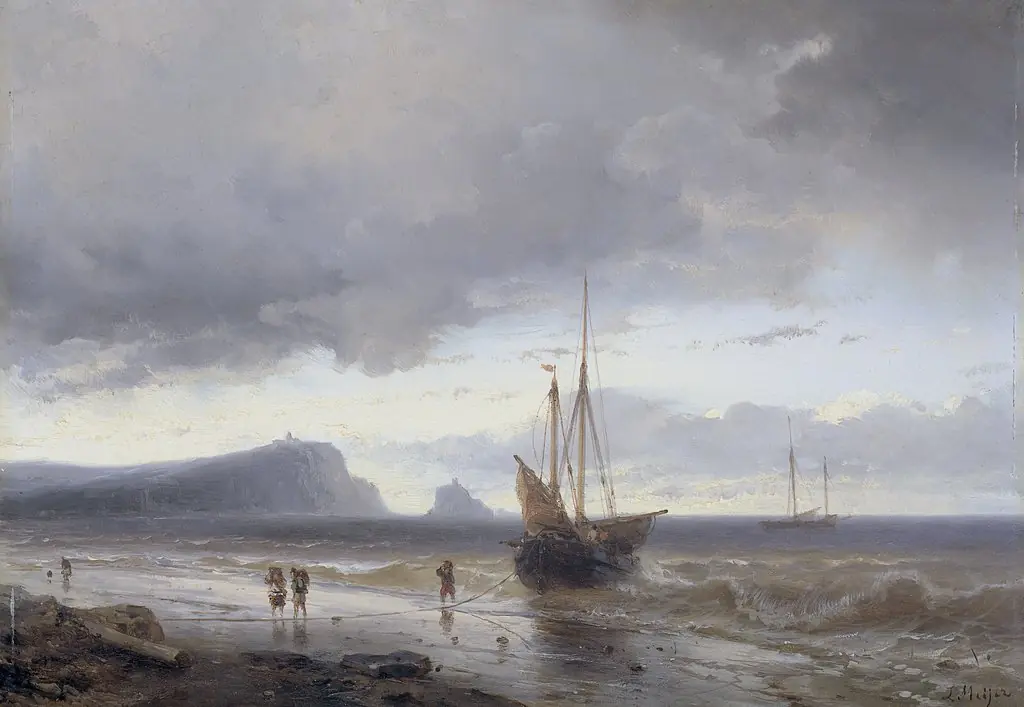
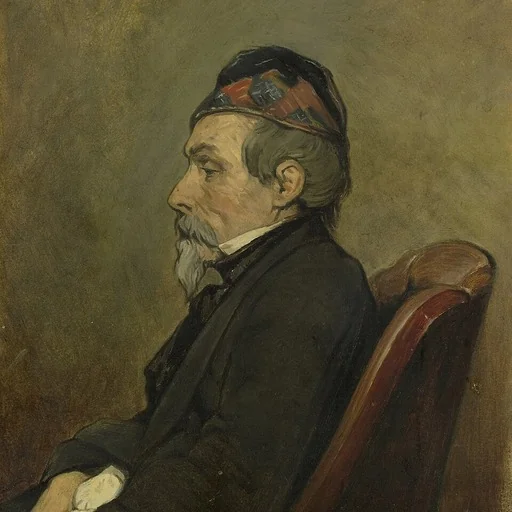
Johan Hendrik Louis Meijer (9 March 1809 – 31 March 1866) was a Dutch painter, etcher, lithographer, and draftsman.