Artwork
Peisaj din Vâlcov
Peisaj din Vâlcov is a print by Mihail Gavrilov. It is held in the collection of the Gavrila Simion Eco-Museum Research Institute Tulcea.
About this work
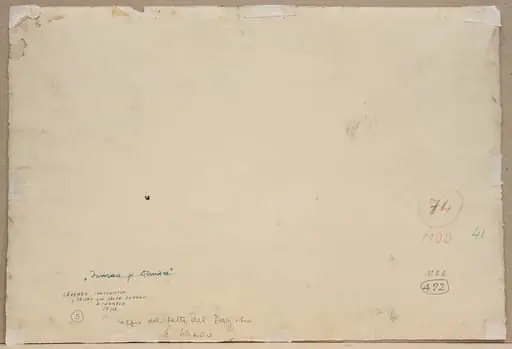
The note mentions a landscape titled *Peisaj din Vâlcov*, likely describing a painting or sketch.
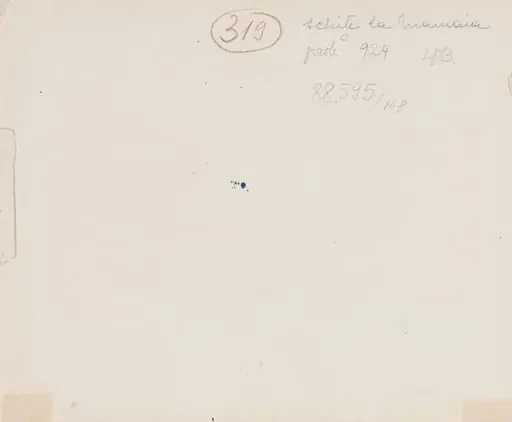
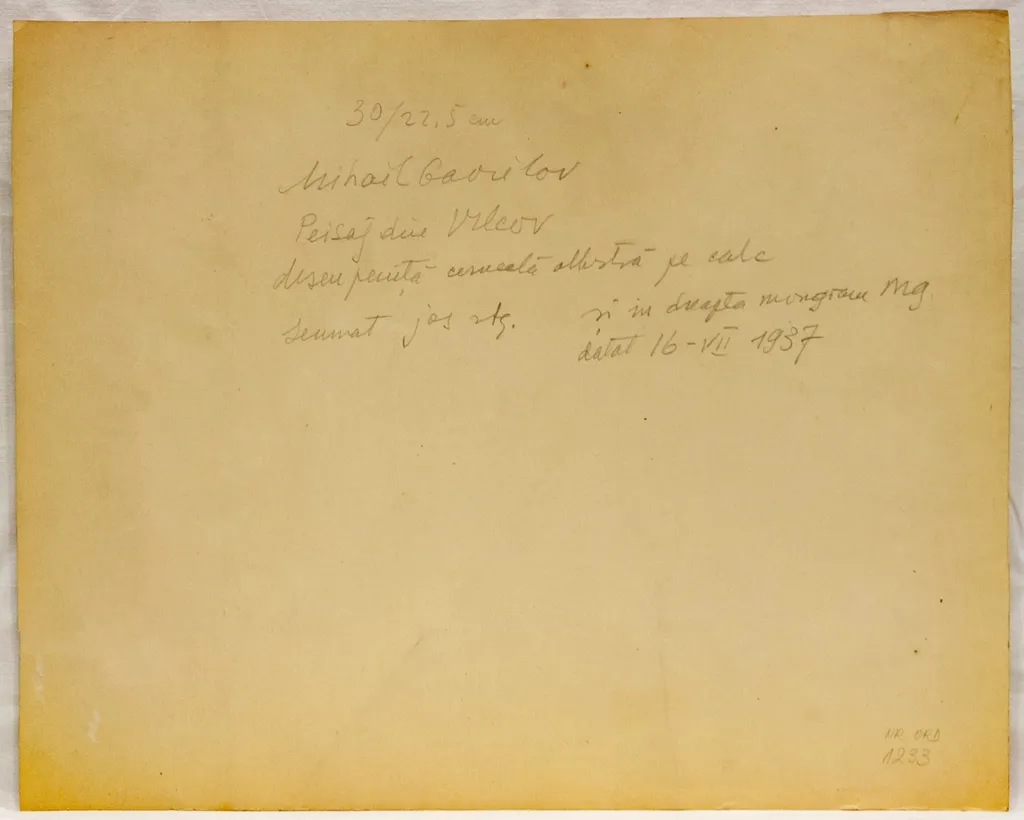
This is a yellowed paper with black handwritten text in Romanian. The words are cramped and uneven, filling most of the page. The ink looks faded in spots, and there’s a small handwritten number in the corner.
The note mentions a landscape titled *Peisaj din Vâlcov*, likely describing a painting or sketch. It’s dated July 16, 1937, but we don’t know what the scene includes.
If you’re curious about where this might be kept, look up the Museum of Ethnography.
Overview
A handwritten note on yellowed paper, dated July 16, 1937, references a landscape painting titled *Peisaj din Vâlcov*. The text, written in Romanian with cramped, uneven script, fills most of the page. Ink has faded in places, and a small numeral appears in one corner. The note itself is not the artwork but a record or annotation related to it, possibly from an artist’s archive or collector’s file.
Subject & Meaning
The note refers to a landscape from Vâlcov, a region in southern Romania, but offers no visual description. The absence of detail suggests the writer assumed familiarity with the scene or intended the note as a personal reminder. The title implies a connection to place, possibly reflecting regional identity or a moment of observation, though the specific features of the landscape remain unknown.
Technique & Style
The note is executed in black ink with a hand-written script, showing irregular spacing and varying pressure, typical of informal documentation. The paper has yellowed with age, and ink has partially faded, indicating exposure to light and time. No drawing or illustration accompanies the text; the medium is purely textual, serving as a metadata record rather than an artistic composition.
History & Provenance
The note’s origin is undocumented, but its association with the Museum of Ethnography suggests it may have been part of a collection related to Romanian rural culture or artistic documentation from the interwar period. Its survival implies it was preserved as part of a broader archive, possibly linked to a painter, ethnographer, or regional collector active in the 1930s.
Context
In 1937 Romania, interest in regional landscapes and folk traditions was growing among artists and scholars. Notes like this often accompanied fieldwork or studio records, linking visual art to geographic and cultural identity. Vâlcov, a rural area, may have been visited for its unspoiled scenery, making such annotations common among those documenting national heritage.
Legacy
The note survives as a fragment of a larger, now-unseen artwork. It functions as a trace—evidence of a moment of observation, a lost image, and a quiet record of how place was acknowledged in Romanian artistic circles before World War II. Its value lies not in aesthetics but in its role as a historical artifact of cultural documentation.
Artist & collection
Artist
Mihail Gavrilov made prints of everyday life in mid-20th-century Romania. His 1958 print Peisaj din Vâlcov shows the Danube port town in soft black-and-white lines, fishing nets and boats trailing into the distance.…
Museum
Gavrila Simion Eco-Museum Research Institute Tulcea
Continue through works from the same source collection.