Artwork
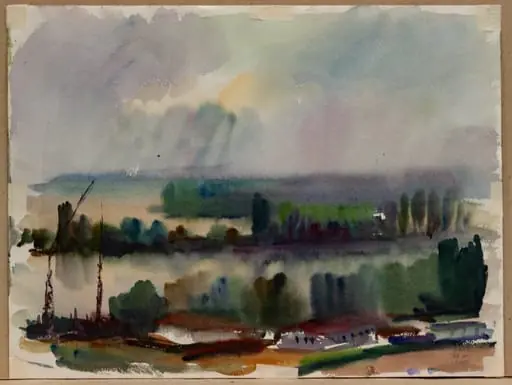
Înserare pe Dunăre
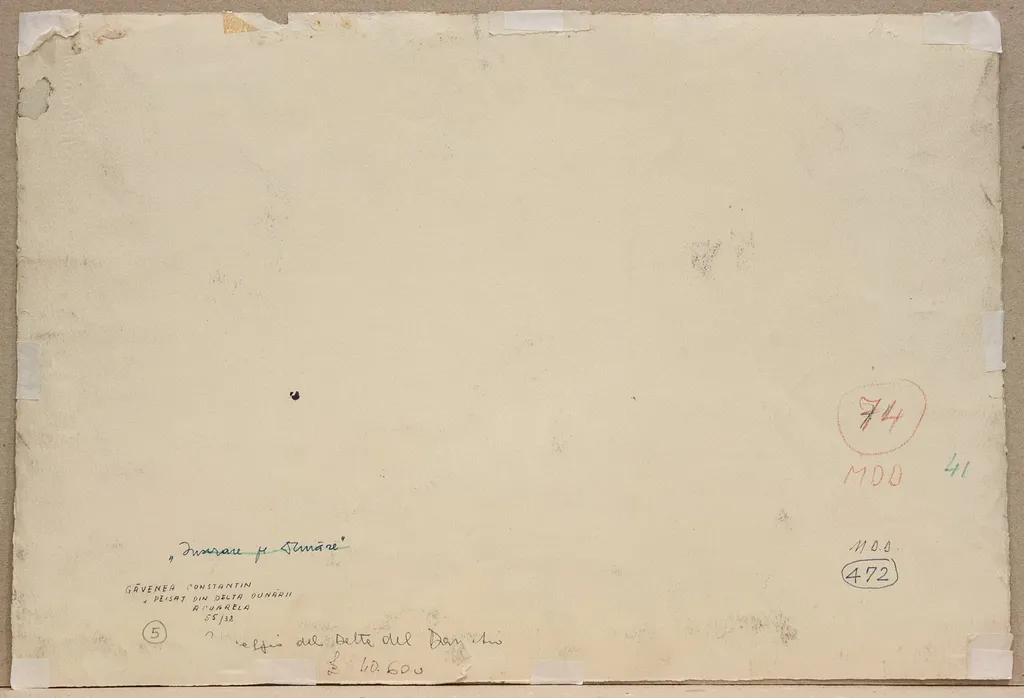
Înserare pe Dunăre is an unspecified painting by Constantin Găvenea. It dates from 1950 and is held in the collection of the Gavrila Simion Eco-Museum Research Institute Tulcea.
About this work
Overview
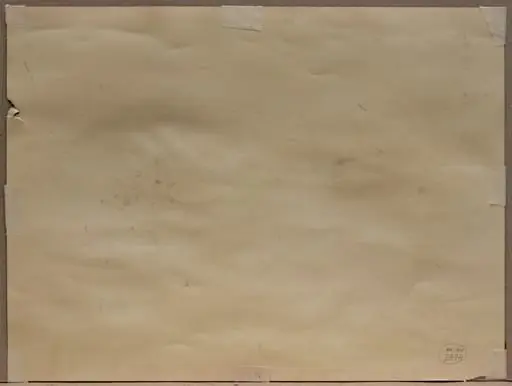
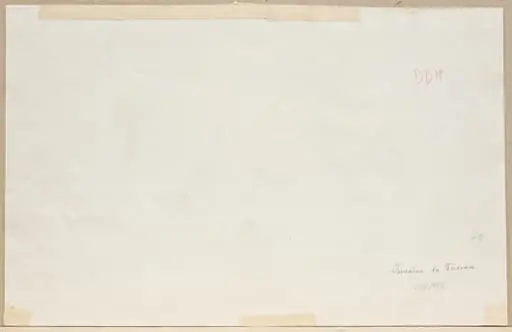
„Înserare pe Dunăre” is attributed to Romanian artist Constantin Găvenea and dates from around 1950. The work is part of the collection of the Museum of Ethnography, where it is catalogued as an image. Although the title suggests a twilight scene over the Danube, the physical object currently appears as an unpainted canvas with a faded beige ground.
Subject & Meaning
The title evokes a nocturnal view of the Danube River, a motif often linked to themes of transition and reflection in Romanian visual culture. While the canvas itself shows no painted imagery, the suggested subject invites viewers to imagine the river’s calm surface under evening light, aligning with Găvenea’s interest in landscape and atmosphere.
Technique & Style
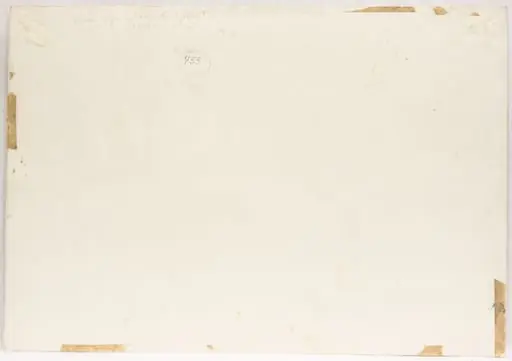
The piece consists of a stretched canvas prepared with a light beige ground. Visible signs of handling include worn edges, faint pencil markings in the corners, and strips of tape along the sides, indicating careful storage. The absence of pigment suggests either an unfinished work or a conceptual approach where the blank surface functions as the artwork.
History & Provenance
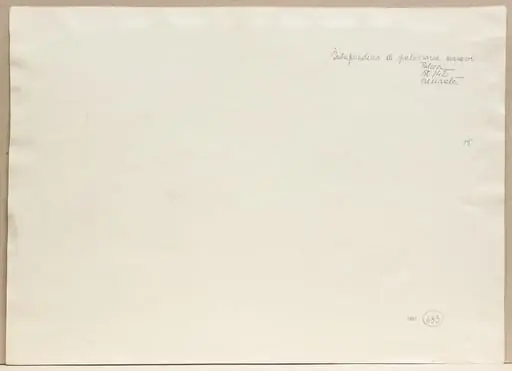
Created circa 1950, the canvas entered the Museum of Ethnography’s holdings at an unspecified date. Documentation includes handwritten notes in the lower‑left corner that record the title and the artist’s name, confirming its attribution to Găvenea. The museum’s records list the medium simply as “image,” reflecting its status as a visual document rather than a conventional painted work.
Context
During the mid‑20th century, Romanian artists often explored national landscapes, and the Danube featured prominently in cultural representations. Găvenea’s oeuvre includes several river scenes, making this title consistent with his broader thematic concerns, even though the visual component is presently absent.
Legacy
The canvas, despite its lack of visible imagery, contributes to scholarly understanding of Găvenea’s practice and the museum’s documentation of Romanian visual heritage. Its preservation, noted by the careful tape and marginal notes, underscores the institution’s role in safeguarding works that may be incomplete or conceptually minimal.
Artist & collection
Museum
Gavrila Simion Eco-Museum Research Institute Tulcea
Continue through works from the same source collection.
 Canal la Agighiol
 Întreprinderea de prelucrarea marmurei Tulcea
 S 33 - Peisaj la Sulina (Dunăre și faleză cu tufe de flori grena)
 Casă la Tulcea
 Peisaj la șantierul naval
 Pe marginea lacului
 Casă veche din Tulcea
 Blocuri noi în Constanța
 Iazurile la Calica
 Peisaj-Casă spre Dobrina
 Peisaj de iarnă
 Peisaj pe Dunăre