Artwork
"Portrait of Emperor Nicholas I" Type of Kruger
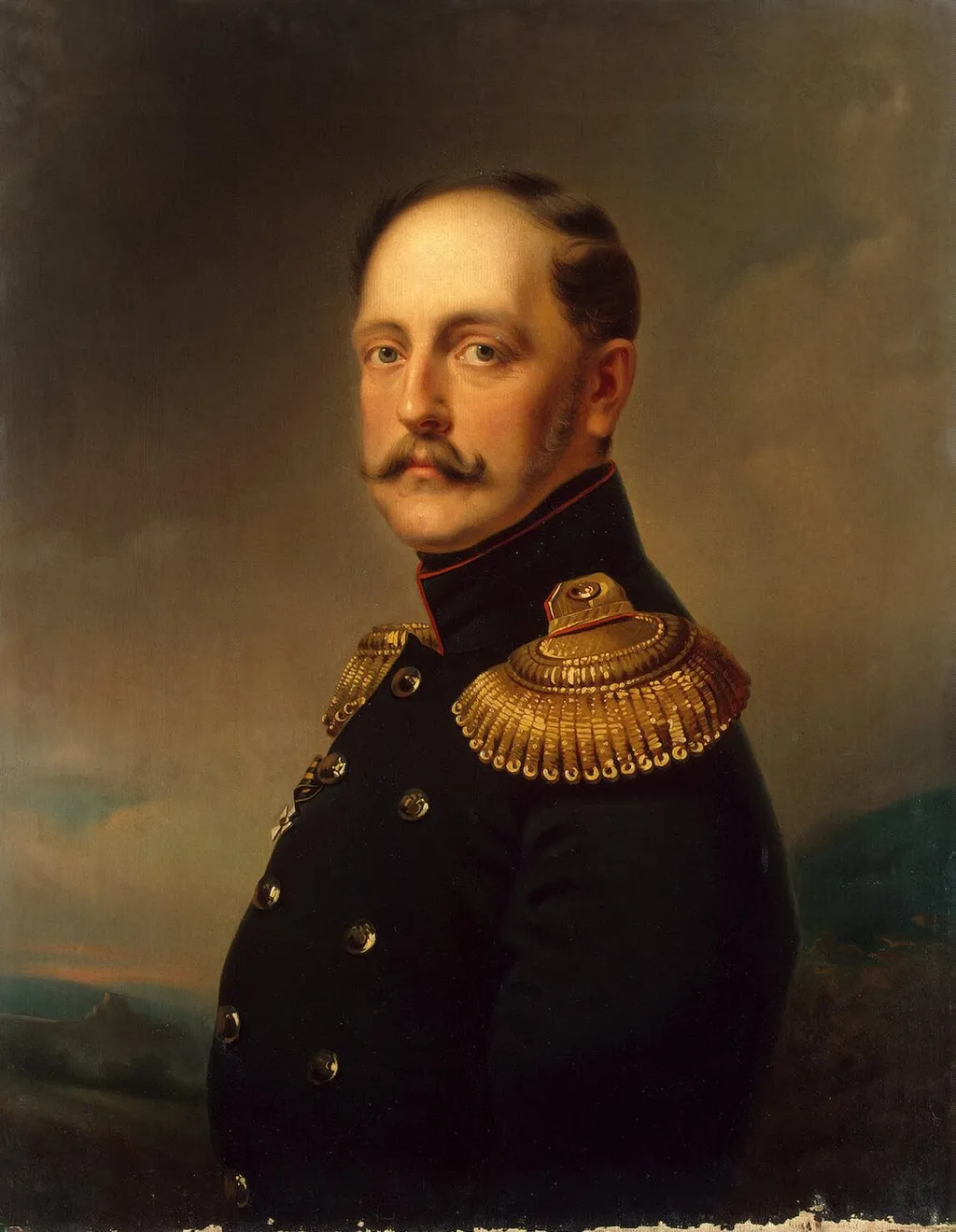
"Portrait of Emperor Nicholas I" Type of Kruger is an oil painting by the Realist artist Georg von Bothmann. It dates from 1854 and is held in the collection of the Hermitage Museum.
About this work
Overview
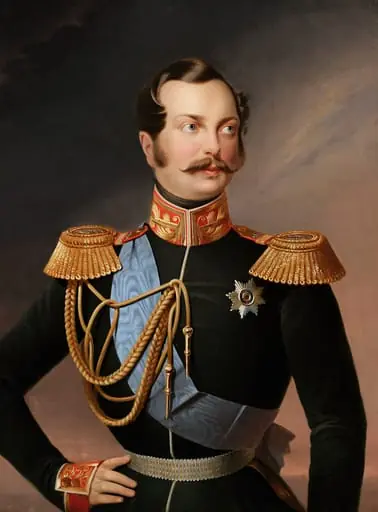
Georg von Bothmann’s 1854 oil portrait depicts Emperor Nicholas I in full military regalia. The work is part of the State Hermitage Museum’s collection, where it is displayed among other 19th‑century Russian portraits. The composition centers on the emperor, whose stern demeanor and meticulously rendered uniform convey the authority associated with his reign.
Subject & Meaning
The sitter, Nicholas I, is presented in a dark uniform adorned with gold epaulettes and buttons, symbols of his command and imperial status. His neatly trimmed moustache and hair, together with the composed expression, suggest a disciplined ruler, reflecting the autocratic character of his government and the era’s emphasis on order.
Technique & Style
Bothmann employs a smooth, even brushwork for the facial features, achieving a calm yet firm presence. The gold embellishments on the uniform catch light, creating a subtle contrast against the deep fabric. The background consists of a softly blurred landscape rendered in muted tones, allowing the figure to dominate the visual field.
History & Provenance
Completed in 1854, the portrait entered the State Hermitage Museum’s holdings shortly after its creation, becoming part of the imperial art collection. Its presence in the museum reflects the institution’s role in preserving Russian state portraiture from the mid‑19th century.
Context
The painting belongs to a tradition of official state portraiture that flourished during Nicholas I’s reign, a period marked by military expansion and strict governance. Such works served both as documentation of the sovereign’s image and as visual reinforcement of the centralized power structure of the Russian Empire.
Artist & collection

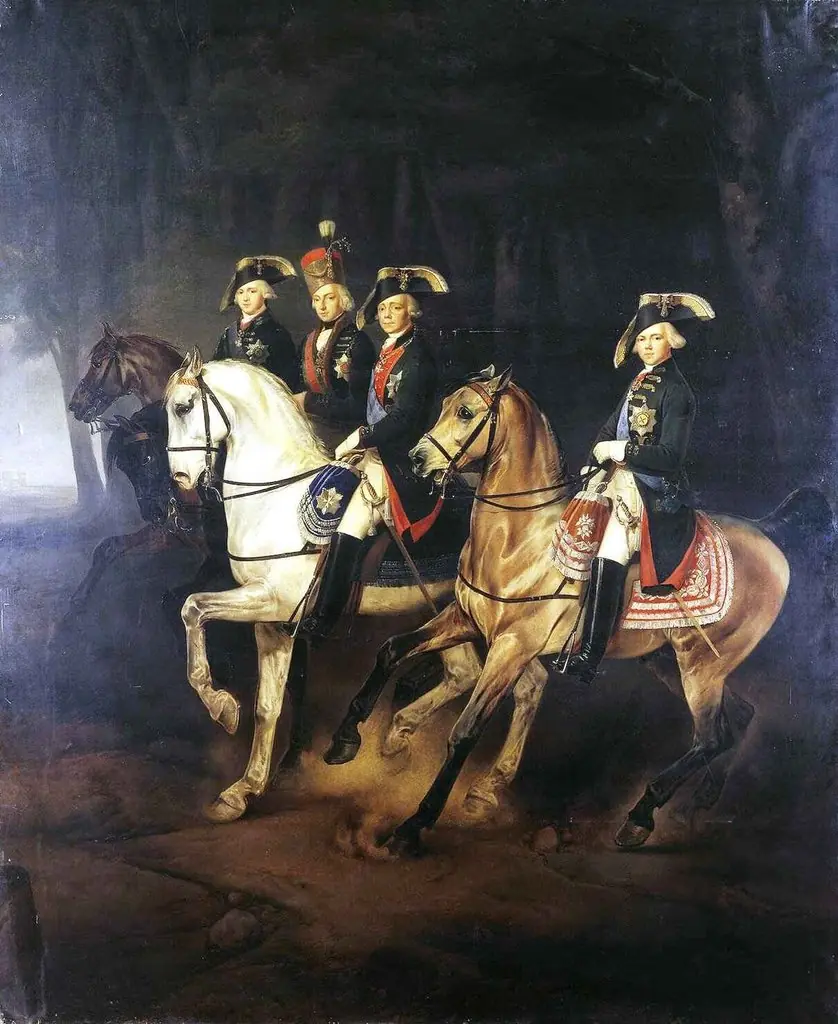 Equestrian Portrait of Emperor Paul I with his Sons and Joseph I, King of Hungary
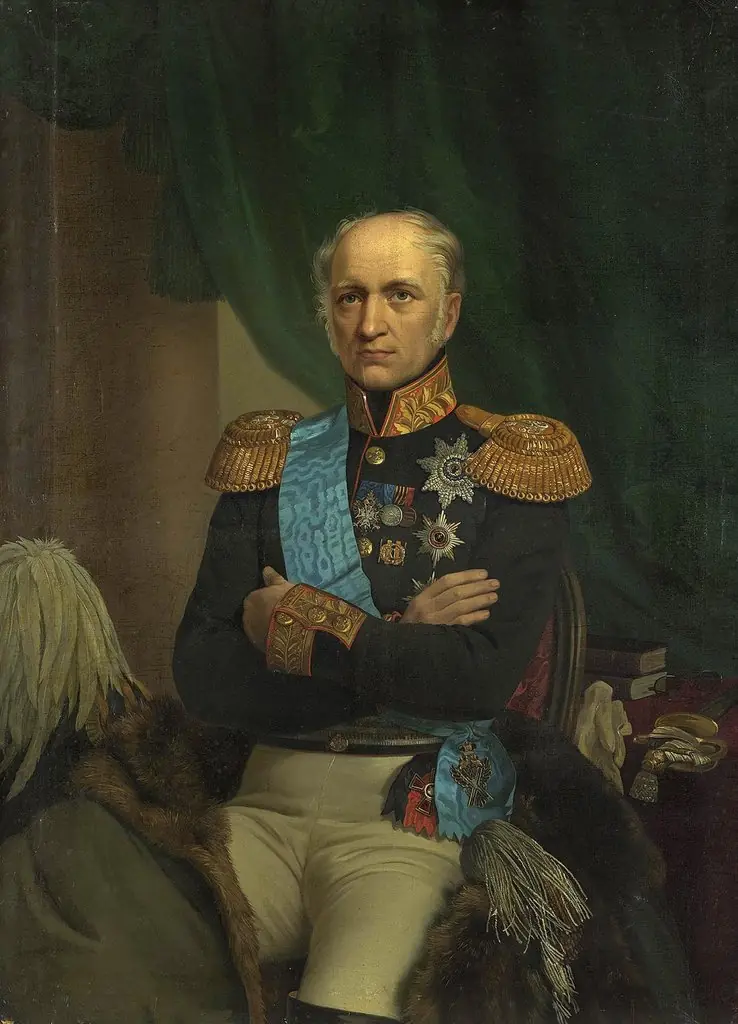 Portrait of Ye. F. Kankrin
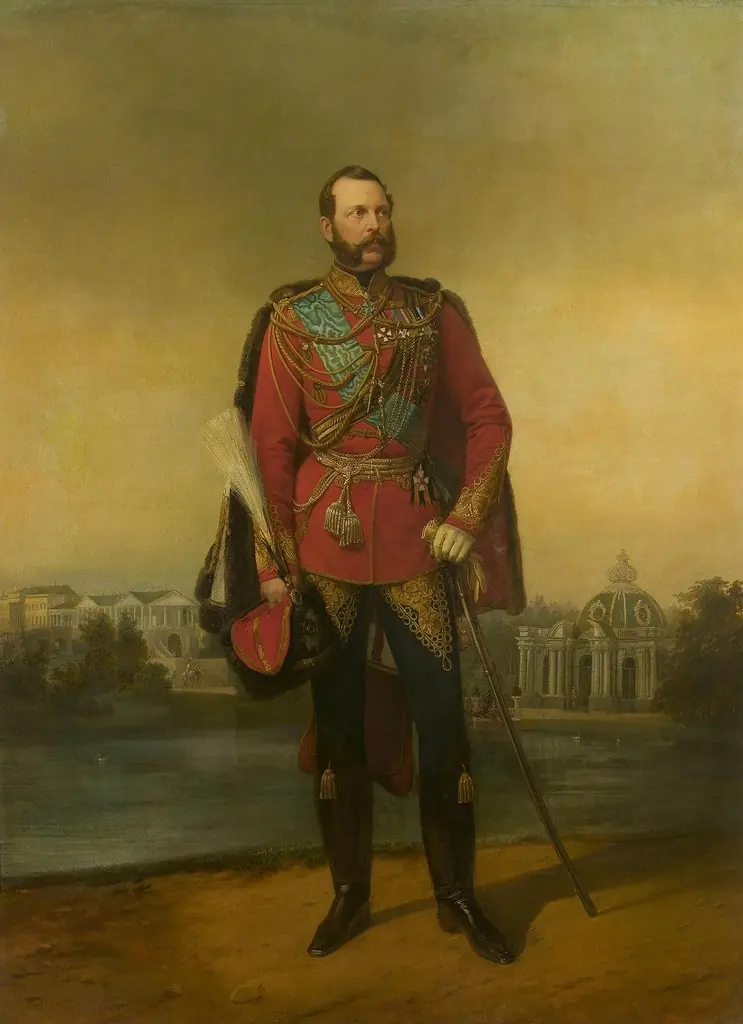 Portrait of Emperor Alexander II
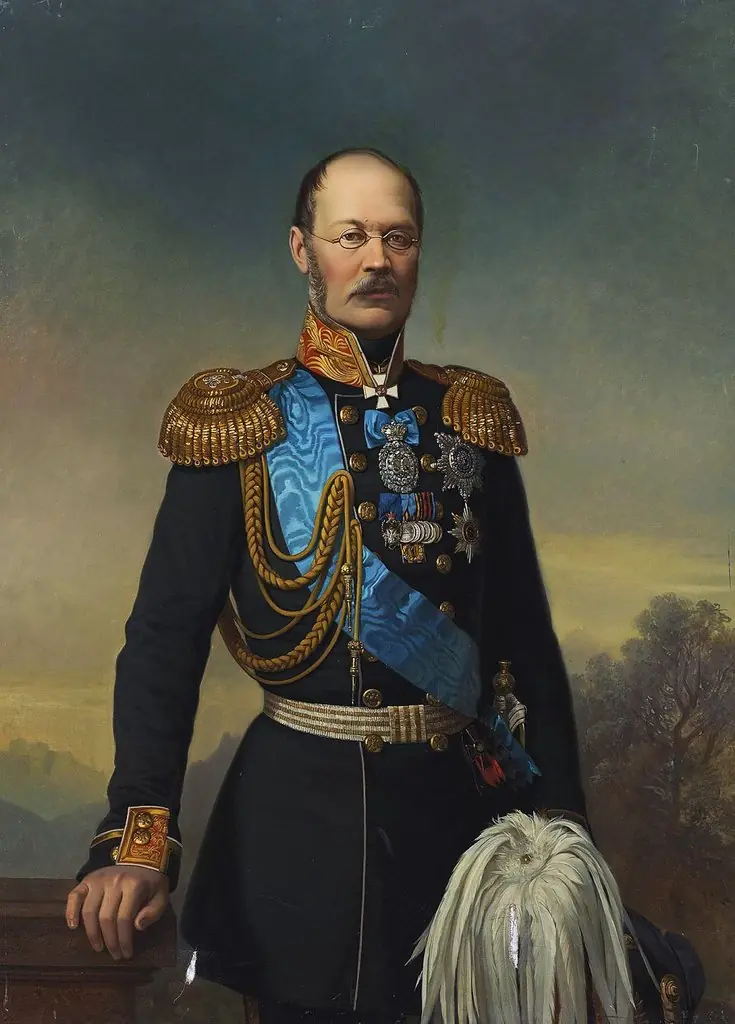 Portrait of Prince M.D. Gorchakov
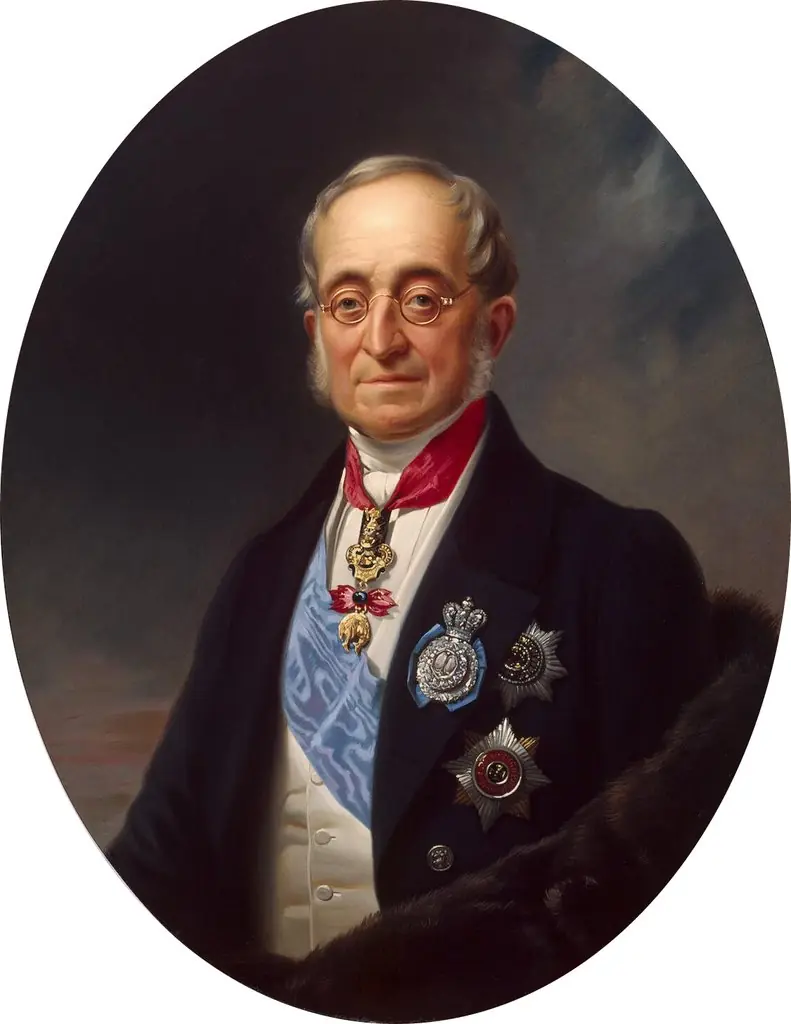 Portrait of Karl Nesselrode
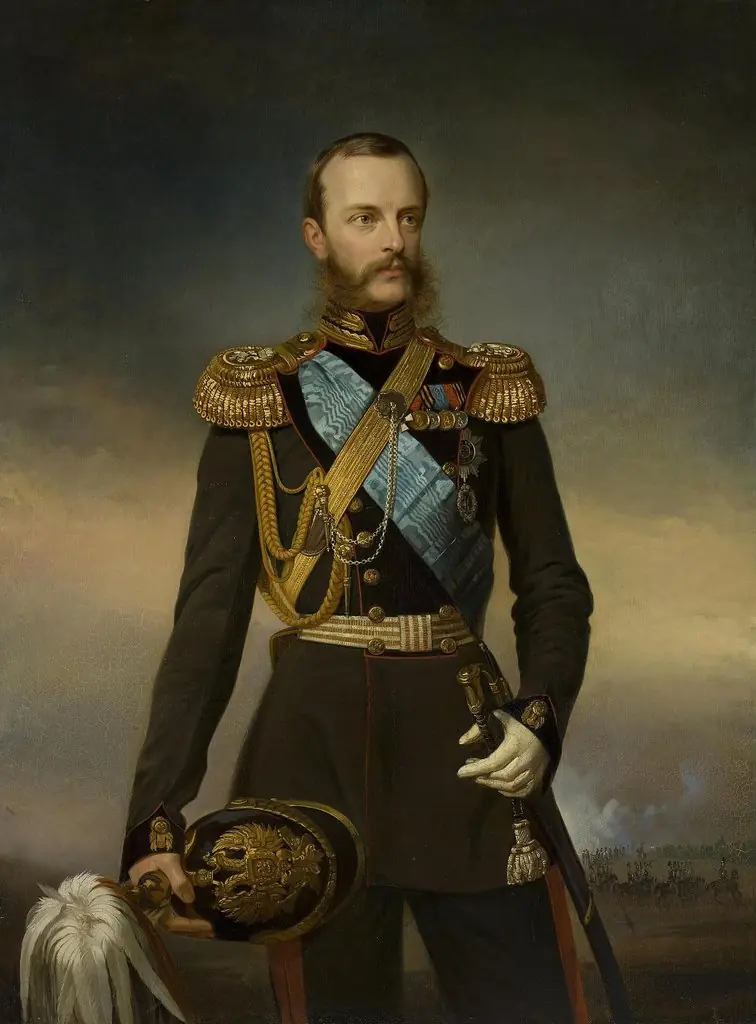 Portrait of Grand Duke Mikhail Nikolaevich
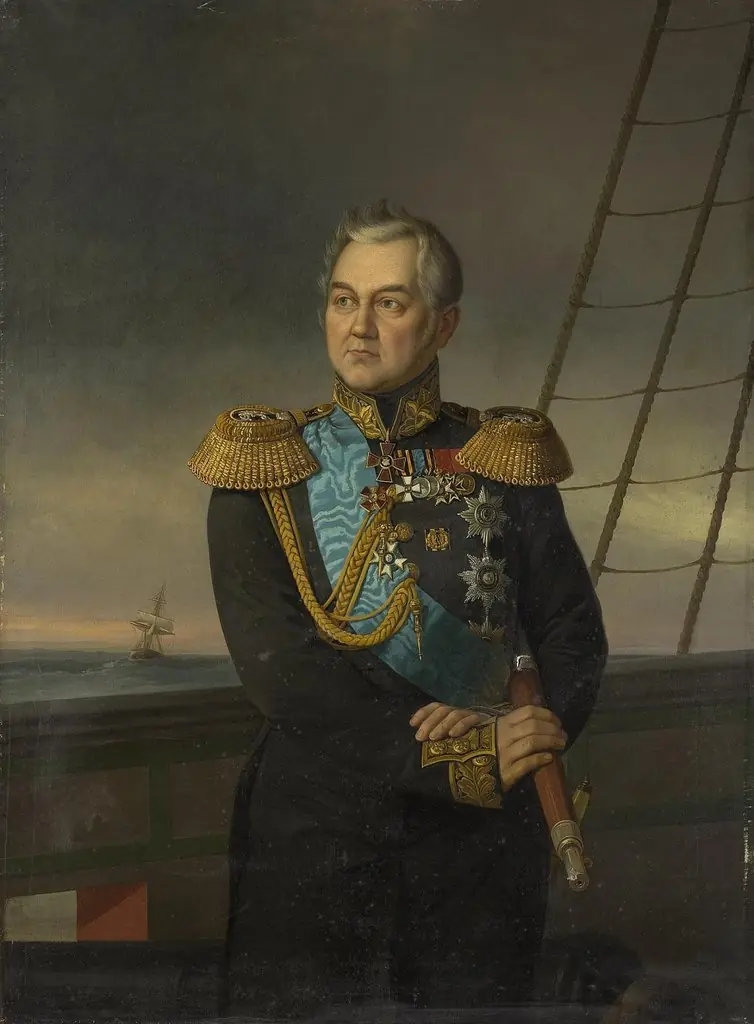 Portrait of Admiral Mikhail Lazarev
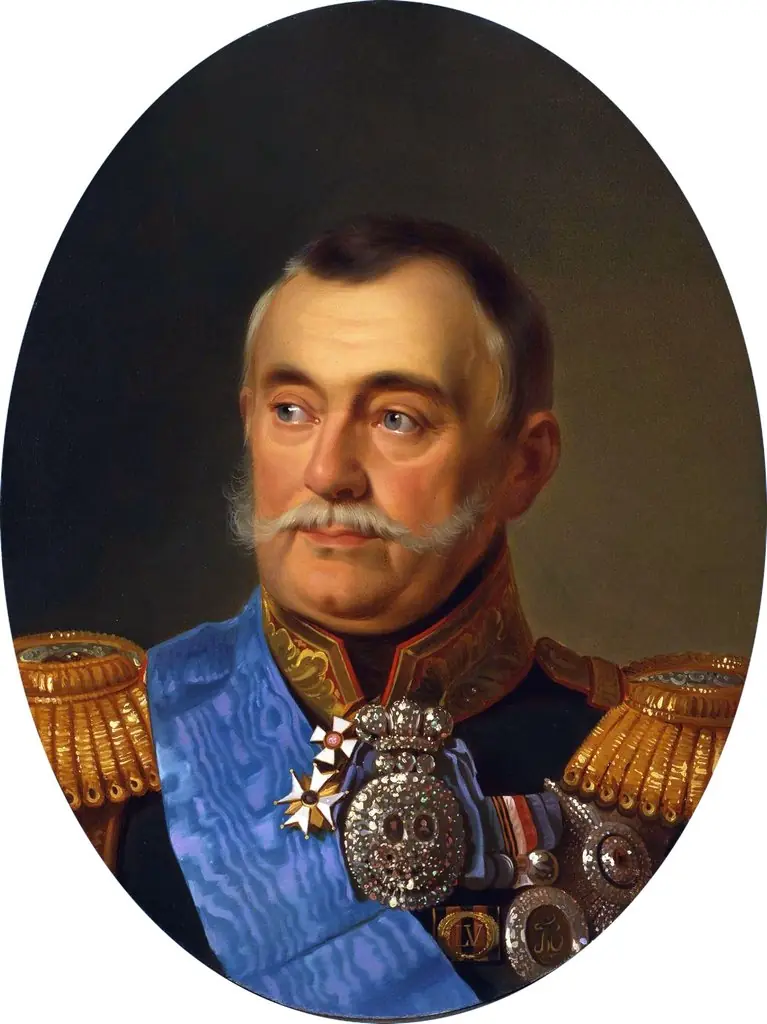 Portrait of the Minister of the Court of Prince Volkonsky