Artwork
The Rauschberg
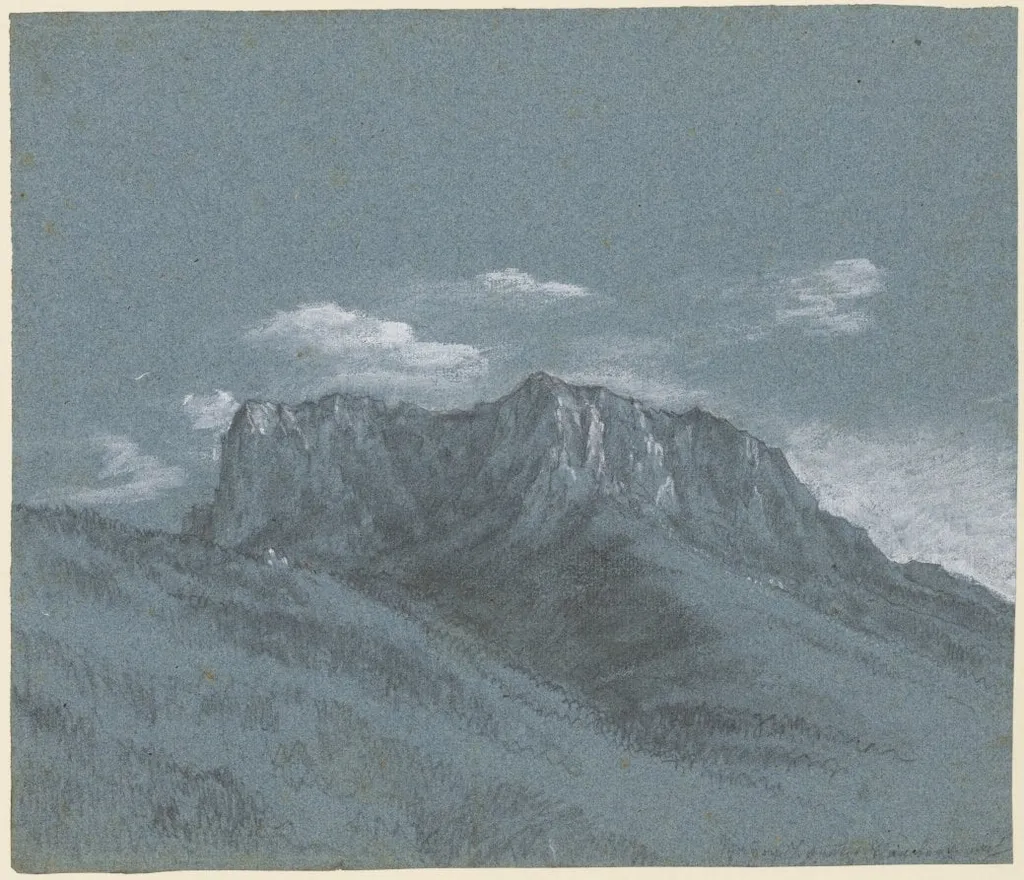
The Rauschberg is a drawing by the Romanticist artist Georg von Dillis. It dates from 1800 and is held in the collection of the Cleveland Museum of Art.
About this work
Clouds half-hide its peak while sunlight breaks through, painting shadows on the rocky face.
This painting shows a steep, jagged mountain called Rauschberg. Clouds half-hide its peak while sunlight breaks through, painting shadows on the rocky face. The trees below look small by comparison.
Dillis often sketched outdoors, not in studios. This piece feels alive because he caught light and air in quick, loose brushstrokes. That loose handling was new for German landscapes then.
Look up Georg von Dillis (German, 1759–1841) to see more like this.
Overview
Georg von Dillis, a German artist and art historian, produced numerous landscape sketches during his tenure as a professor at the Munich Academy between 1808 and 1814. This watercolor of the Rauschberg mountain exemplifies his practice of working en plein air, capturing natural scenes with immediacy rather than idealized studio compositions. His approach emphasized direct observation and transient effects of light.
Subject & Meaning
The Rauschberg, a towering peak in the Bavarian Alps, is rendered not as a monument but as a lived-in landscape. Its jagged form is partially veiled by drifting clouds, while shafts of sunlight carve shadows across its rock face. The diminutive trees at the base underscore the mountain’s scale, suggesting nature’s dominance over human presence without overt symbolism.
Technique & Style
Dillis employed loose, rapid brushwork in watercolor to convey atmosphere rather than detail. His handling of light and air—soft washes, abrupt highlights, and minimal definition—reflects a sensitivity to transient conditions. This method diverged from the more polished German landscape traditions of the time, aligning more closely with the spontaneity found in contemporary English watercolor practices.
History & Provenance
Created between 1808 and 1814, this drawing likely originated from one of Dillis’s field studies during his academic duties. As a professor, he encouraged students to sketch outdoors, and this work exemplifies his pedagogical and personal commitment to direct observation. Its survival suggests it was retained as a study rather than a finished exhibition piece.
Context
In early 19th-century Germany, landscape painting was often idealized or composed in studios. Dillis’s commitment to sketching from nature placed him at odds with prevailing norms. His exposure to English watercolor techniques, which valued immediacy and atmospheric effect, provided a model for a more empirical approach to depicting the natural world.
Legacy
Dillis’s emphasis on direct observation and fluid technique influenced a generation of German landscape artists who sought authenticity over convention. While not widely celebrated in his lifetime, his sketches helped shift German art toward a more observational mode, paving the way for later movements that valued naturalism and plein air practice.
Artist & collection

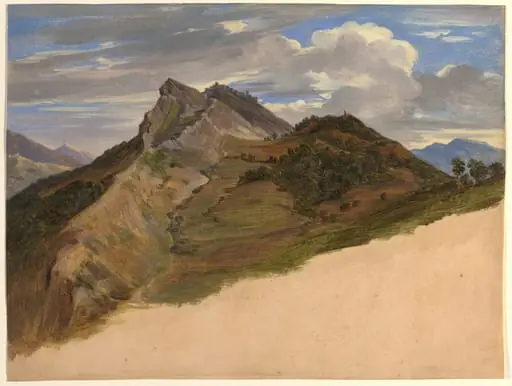 Civitella Seen from the North
 Sketches made during the Campaign of 1854-55 in the Crimea, Circassia and Constantinople
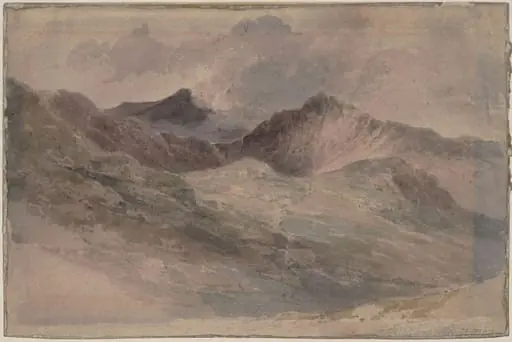 Snowdon and the Vale of Llanberis
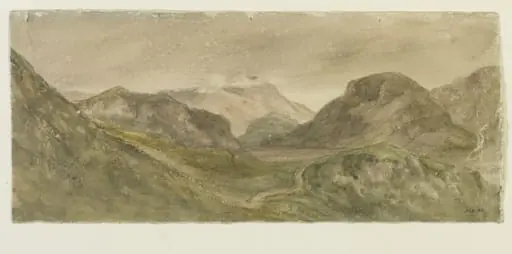 Hellvellyn
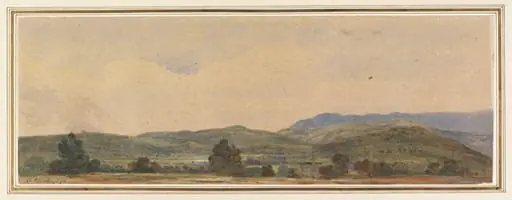 At Azizieh, Lydia
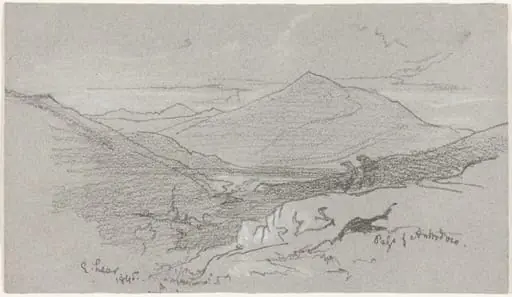 Mountainous View from Antrodoco
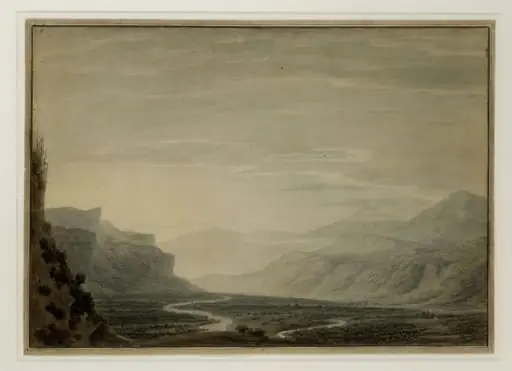 Valley with winding streams, a range of mountains in the background, and a village on the left
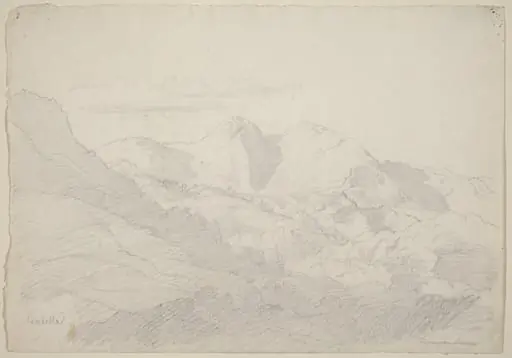 The Sabine Hills and Rocca Santo Stefano Seen from Civitella
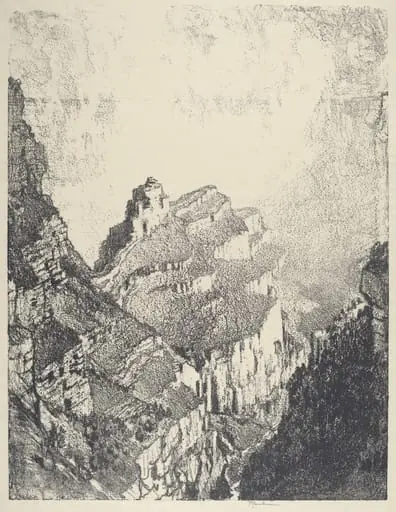 Road to the White City, No.II
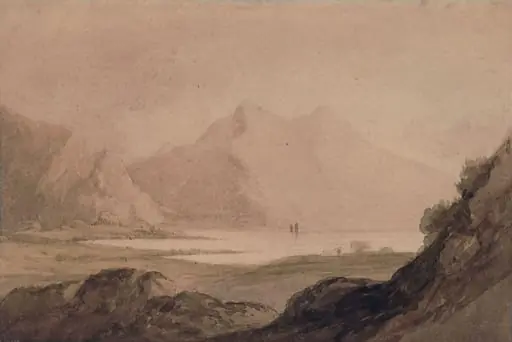 Snowdon with Llanberis Lake
![The Alps [recto], by John Singer Sargent](https://artifactworldgallery.com/img/john-singer-sargent--the-alps-recto--be3c1d8551c9fe49-w320.webp) The Alps [recto]
The Alps [recto]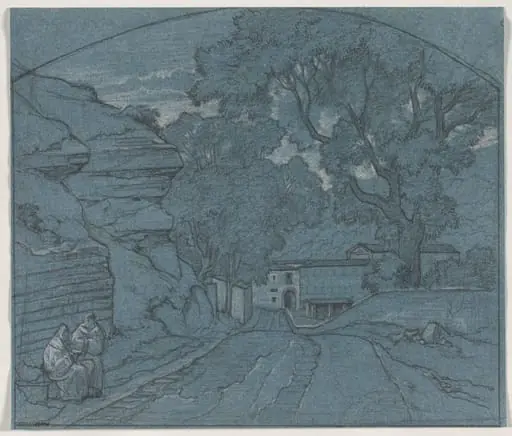 Landscape with Two Monks