Artwork
Four Friends, second state
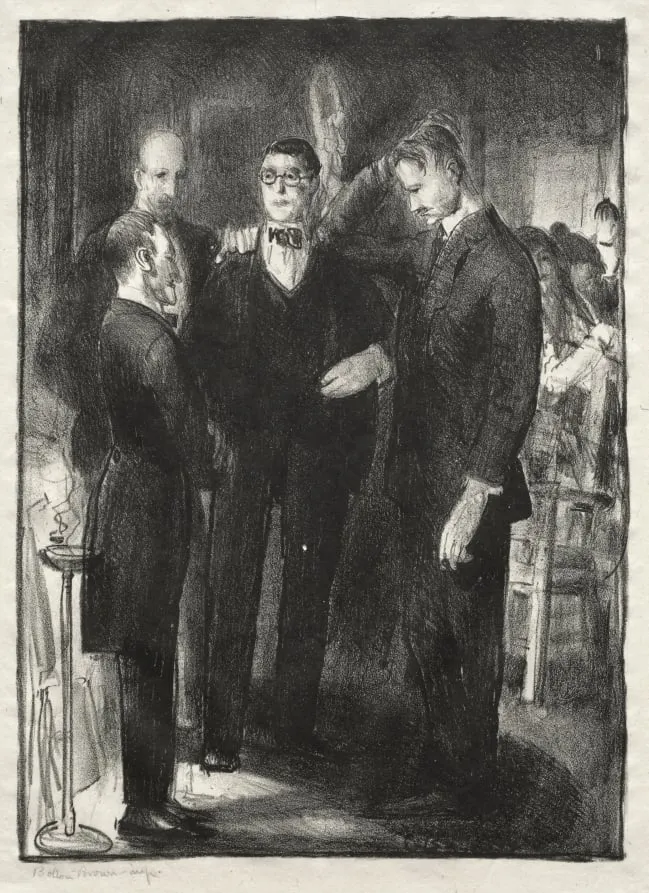
Four Friends, second state is a print by George Bellows. It dates from 1921 and is held in the collection of the Cleveland Museum of Art.
About this work
Overview
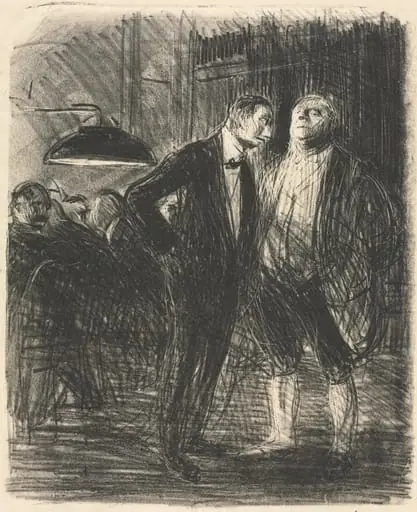
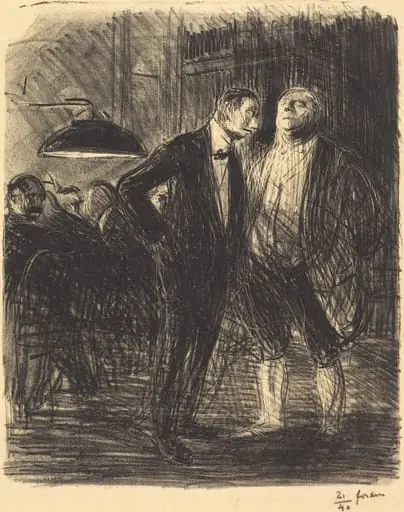
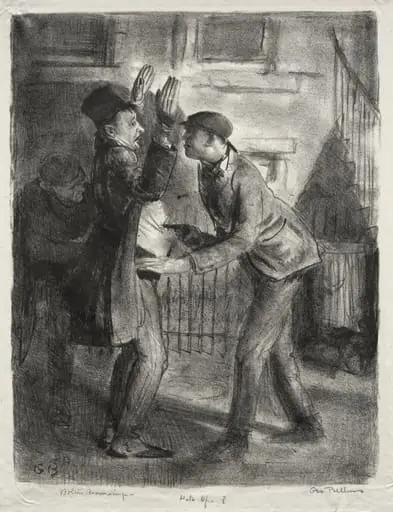
Created in 1921, *Four Friends, second state* is a lithograph by George Bellows that captures a quiet, interior moment among four individuals. Unlike his more famous urban scenes, this work turns inward, focusing on personal connection rather than public energy. The composition suggests a private gathering, rendered with the immediacy of a sketch but refined through printmaking techniques.
Subject & Meaning
The group includes two men in suits, a woman in dark dress and glasses, and another woman in a long coat who rests a hand on the first woman’s shoulder.
The group includes two men in suits, a woman in dark dress and glasses, and another woman in a long coat who rests a hand on the first woman’s shoulder. Their proximity and subtle gesture imply familiarity and quiet solidarity. The scene resists narrative clarity, instead emphasizing emotional resonance through physical closeness and restrained expression, inviting contemplation rather than storytelling.
Technique & Style
Bellows employed bold, expressive lines and strong contrasts of light and shadow to model forms and suggest depth. The faces are illuminated by a nearby lamp, drawing attention to expressions while the surrounding space recedes into near-darkness. The background figures are softly blurred, enhancing the intimacy of the central group. The technique reflects a mastery of chiaroscuro, adapted for the graphic immediacy of lithography.
History & Provenance
This print is the second state of a composition Bellows developed in 1921, likely as part of his exploration of intimate domestic and social scenes during a period of artistic experimentation. It was produced in limited numbers through lithographic printing, a medium he increasingly favored for its tonal flexibility. The work entered public collections in the decades following its creation, preserving its place in early 20th-century American printmaking.
Context
In the early 1920s, Bellows moved beyond the gritty urban vigor of his earlier work to explore quieter, more introspective subjects. This shift coincided with broader cultural changes in postwar America, where artists began to examine personal relationships and interior life with greater nuance. *Four Friends* reflects this transition, aligning with a growing interest in psychological depth over spectacle.
Legacy
Though less widely known than Bellows’s boxing scenes or cityscapes, *Four Friends* exemplifies his ability to convey emotional weight through minimal means. The print influenced later American realists who sought to capture unguarded human moments with dignity and restraint. Its quiet power endures as a testament to his versatility and sensitivity beyond the public realm.
Artist & collection
Artist
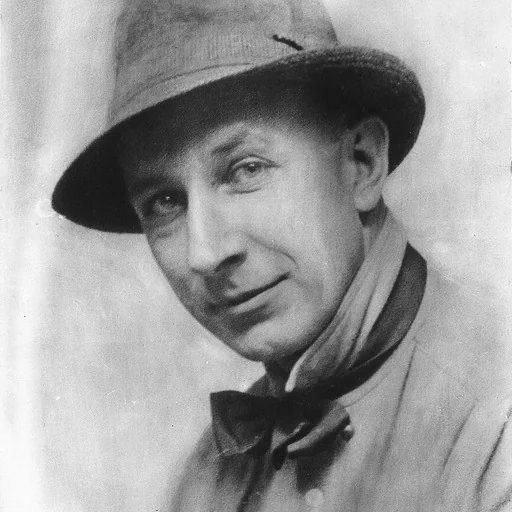
George Wesley Bellows (August 12 or August 19, 1882 – January 8, 1925) was an American realist painter, known for his bold depictions of urban life in New York City.