Artwork
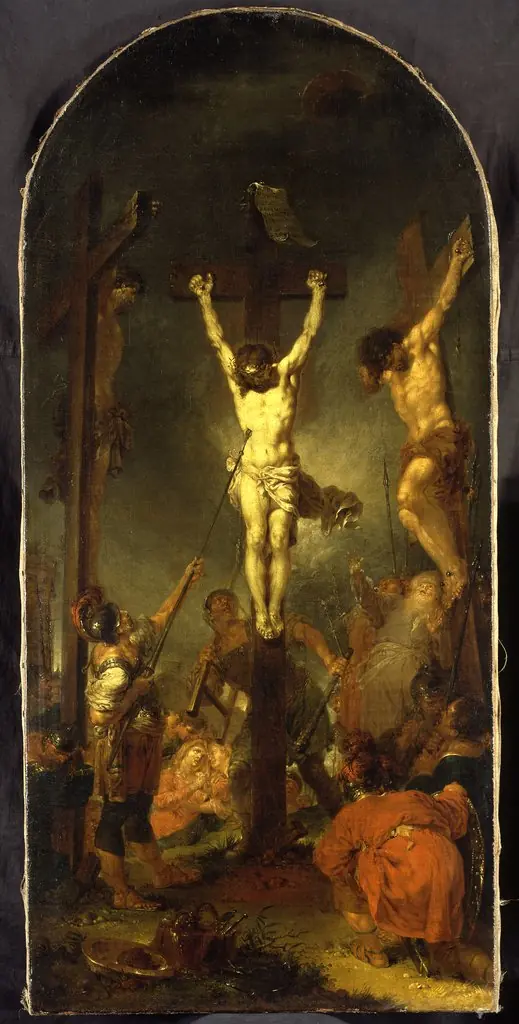
Crucifixion of Christ
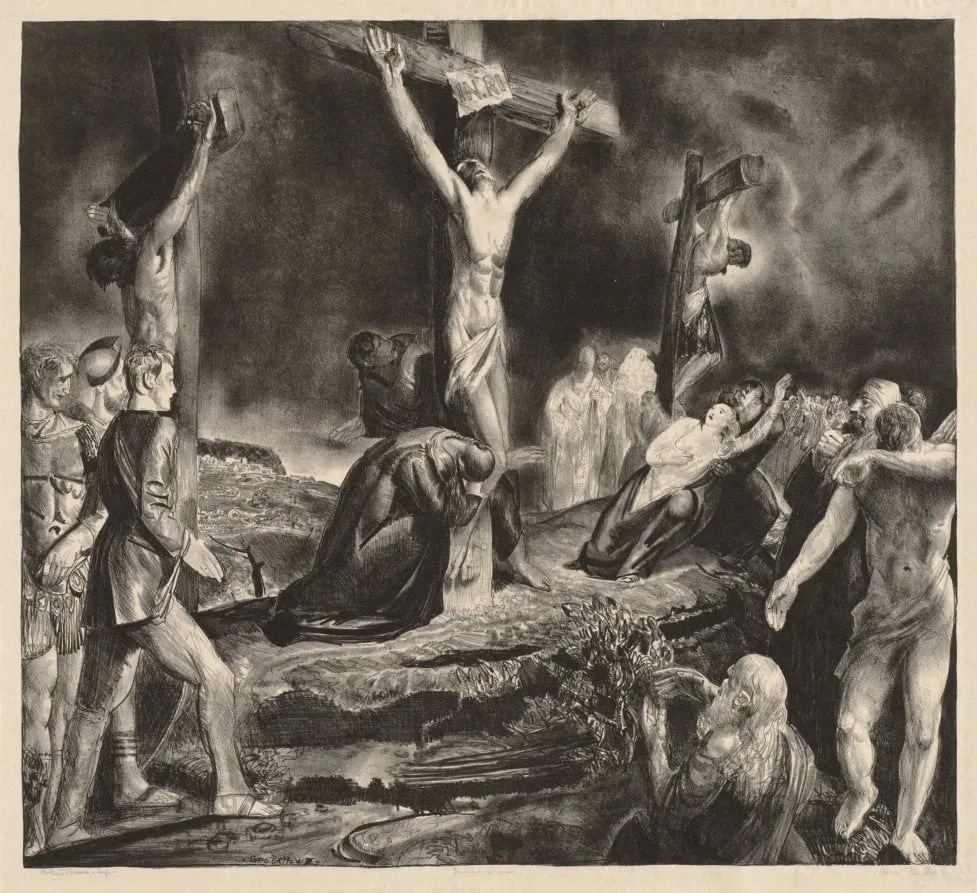
Crucifixion of Christ is a print by George Bellows. It dates from 1923 and is held in the collection of the Cleveland Museum of Art.
About this work
Overview
Created in 1923, *Crucifixion of Christ* is a print by American artist George Bellows, known primarily for his gritty urban scenes.
Created in 1923, *Crucifixion of Christ* is a print by American artist George Bellows, known primarily for his gritty urban scenes. Though less familiar than his cityscapes, this religious subject reflects his commitment to realism. The work is part of the permanent collection at The Cleveland Museum of Art, where it stands as a rare example of Bellows engaging with sacred imagery through his characteristic visual language.
Subject & Meaning
The scene depicts Christ and two thieves crucified on a barren hill, surrounded by a varied crowd—some watching, others kneeling or collapsing in grief. A soldier in armor holds a spear, while a robed observer stands apart in the distance. The composition conveys human suffering and collective response, avoiding idealization. Bellows emphasizes emotional gravity over theological symbolism, grounding the sacred in physical and psychological realism.
Technique & Style
Bellows employs strong chiaroscuro to isolate the figures against a dark, turbulent sky and rocky terrain. Bold contrasts between light and shadow define the bodies and drapery, enhancing their three-dimensionality. The print’s linear precision and textured surfaces reflect his mastery of graphic media, while the loose, almost sketch-like rendering of the crowd adds immediacy and unrest to the scene.
History & Provenance
Executed in 1923, the print was likely produced as part of Bellows’s exploration of religious themes during a period of personal and artistic reflection. It entered the collection of The Cleveland Museum of Art in the 20th century, where it has remained accessible to the public. No record suggests it was widely distributed or exhibited during the artist’s lifetime, making its presence in the museum’s holdings particularly significant.
Context
In the early 1920s, Bellows was transitioning from urban realism toward more introspective subjects. While American art of the time often avoided overt religious imagery, Bellows returned to classical themes with a secular, humanist lens. His depiction aligns with broader early 20th-century efforts to reframe traditional narratives through modern visual idioms, rejecting sentimentality in favor of raw, unembellished form.
Legacy
Though not among Bellows’s most frequently reproduced works, *Crucifixion of Christ* remains a compelling example of his ability to infuse traditional subjects with contemporary emotional intensity. It illustrates his willingness to confront difficult themes beyond his usual subjects, offering insight into his broader artistic concerns. The print continues to be studied for its technical rigor and its quiet challenge to conventional religious iconography.
Artist & collection

Artist
George Wesley Bellows (August 12 or August 19, 1882 – January 8, 1925) was an American realist painter, known for his bold depictions of urban life in New York City.

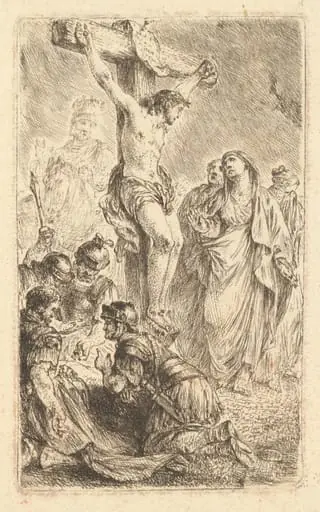 Christ on the Cross
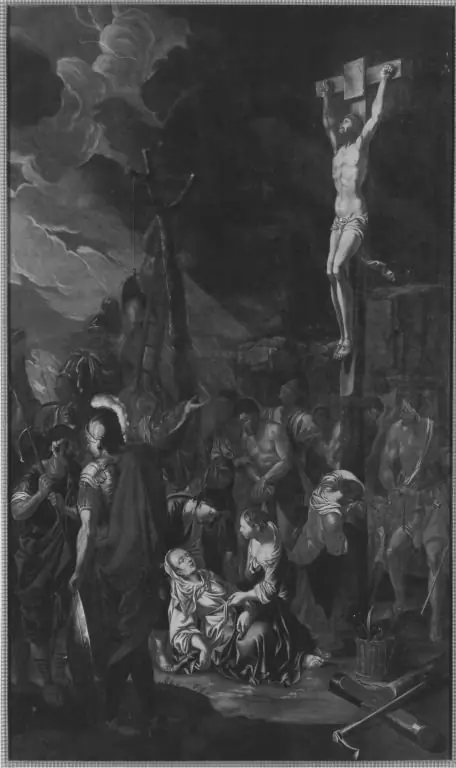 Kreuzigung
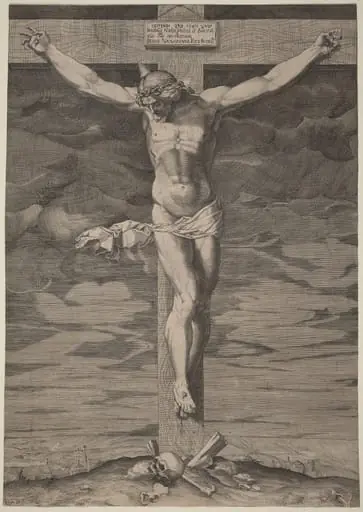 The Crucifixion
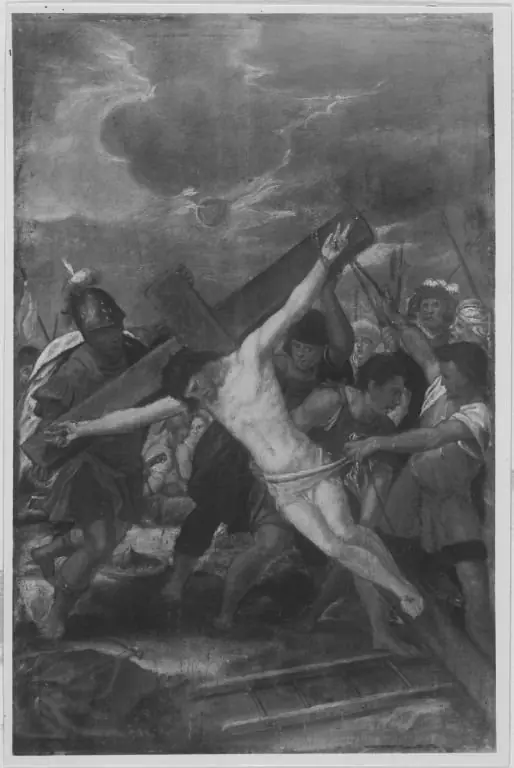 Kreuzaufrichtung Christi (Kopie nach)
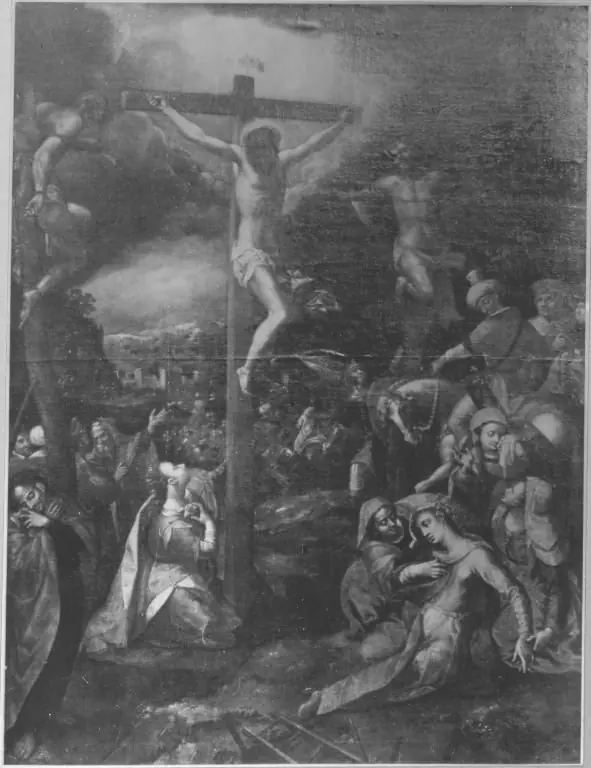 Kreuzigung Christi (Kopie nach)
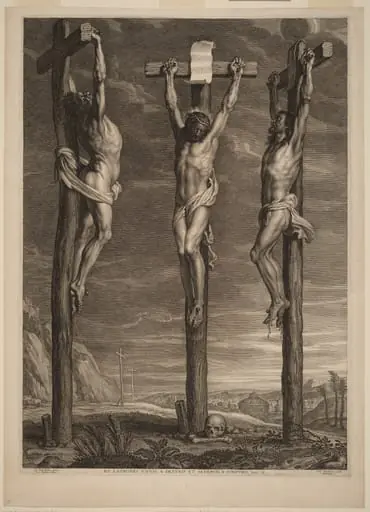 Christ Crucified between Two Thieves
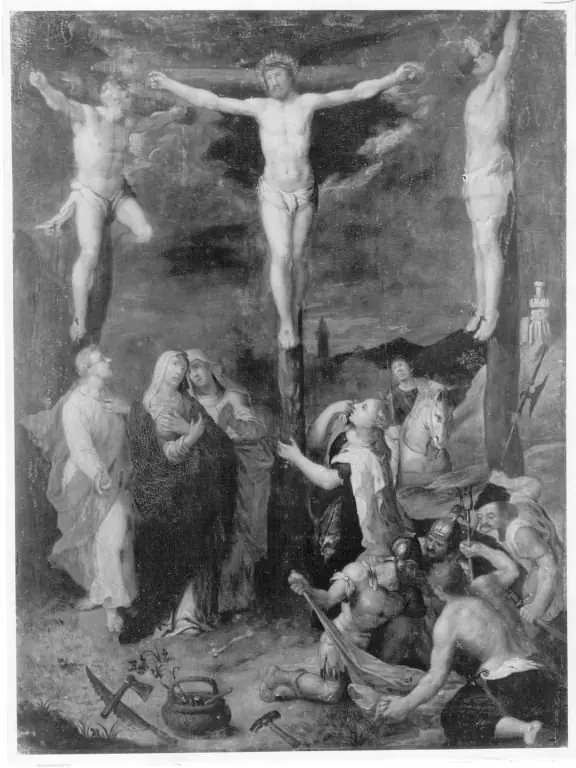 Christus am Kreuz
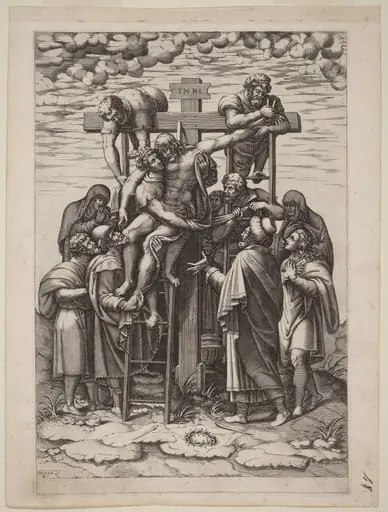 The Descent from the Cross
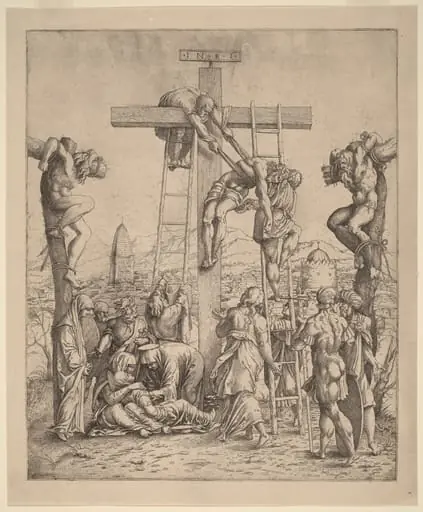 The Descent from the Cross
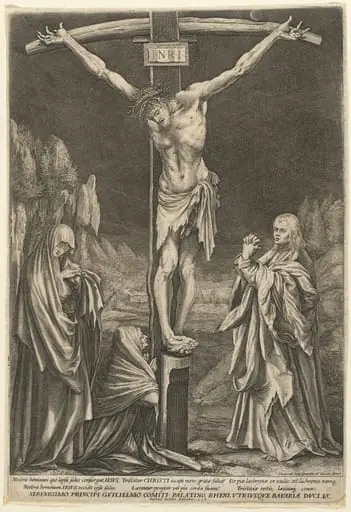 The Small Crucifixion
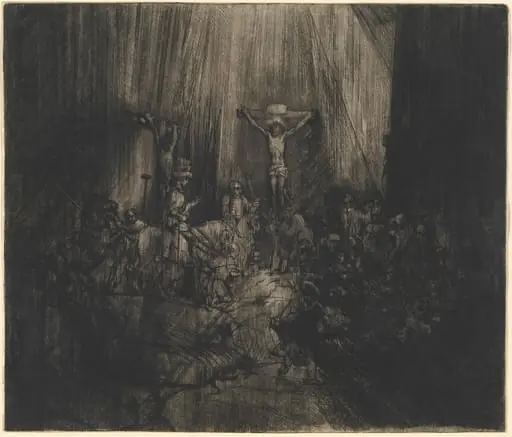 Christ Crucified between the Two Thieves (The Three Crosses)
 The Crucifixion of Christ