Artwork
The Holdup, first state
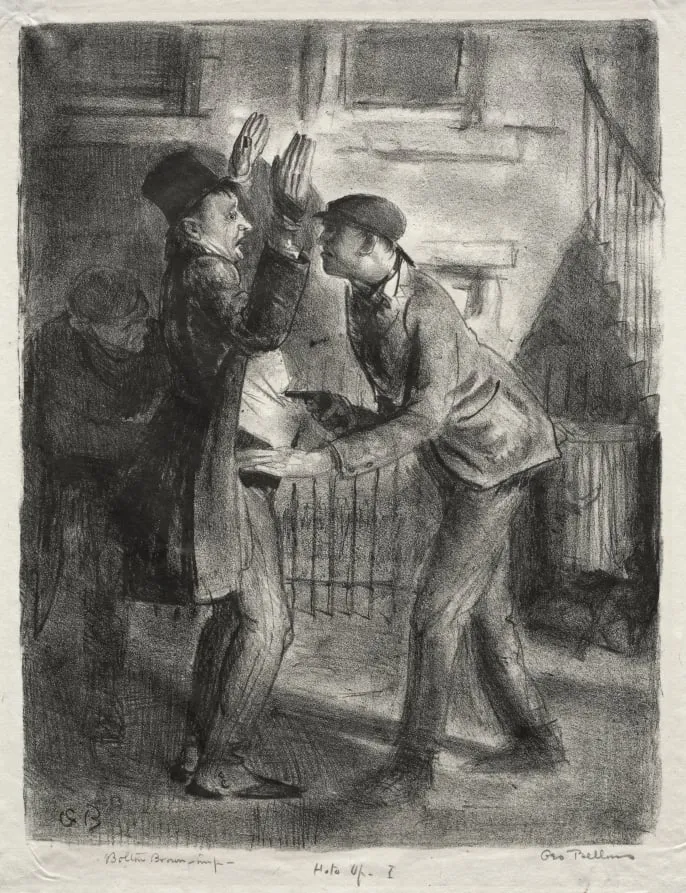
The Holdup, first state is a print by George Bellows. It dates from 1921 and is held in the collection of the Cleveland Museum of Art.
About this work
Overview
George Bellows’ print titled The Holdup, first state, depicts a staged robbery on a dimly lit street. A well‑dressed man in a top hat and waistcoat is confronted by a small‑armed thief, while a second figure lurks in the shadows. The composition balances tension with a comic undertone, presenting the incident as a theatrical tableau rather than a violent act.
Subject & Meaning
The scene juxtaposes a genteel victim, whose expression suggests irritation more than fear, with two caricatured assailants. Bellows frames the crime as a farcical episode, inviting viewers to see the robbery as a staged performance, echoing the narrative tone of 19th‑century literature and satire.
Technique & Style
Executed in a bold graphic style, the print emphasizes stark contrasts and exaggerated gestures. Bellows employs strong line work and simplified forms that recall the visual language of contemporary political cartoons, reinforcing the work’s satirical edge.
History & Provenance
When the New York Times reviewed the piece in 1921, it noted the work’s Dickensian spirit, describing it as a blend of melodrama, comedy, and realism. The Holdup exists in two states; this version is the initial iteration, created before Bellows produced a second, altered version of the same composition.
Context
Bellows’ choice of a robbery as subject aligns with a long tradition of satirical illustration in the popular press, where everyday crimes were rendered with humor to comment on social conditions. The print reflects early‑20th‑century American interest in both urban grit and its comic representation.
Artist & collection
Artist
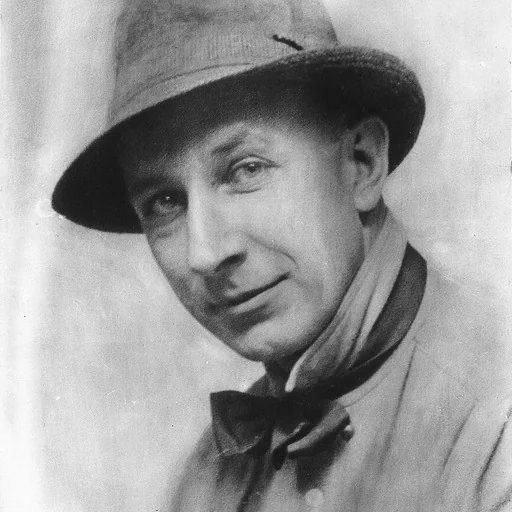
George Wesley Bellows (August 12 or August 19, 1882 – January 8, 1925) was an American realist painter, known for his bold depictions of urban life in New York City.

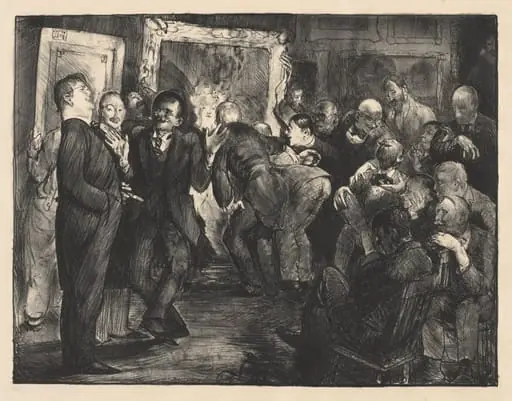 Artists Judging Works of Art
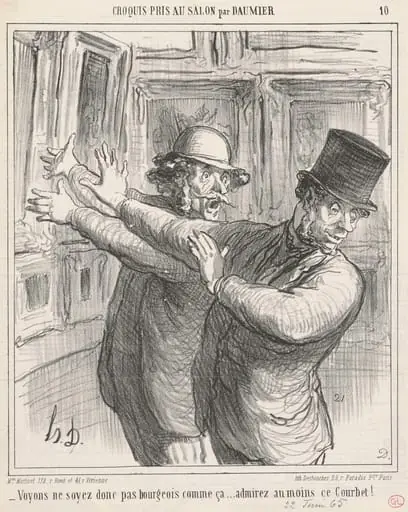 Voyons ... admirez au moins ce Courbet! ...
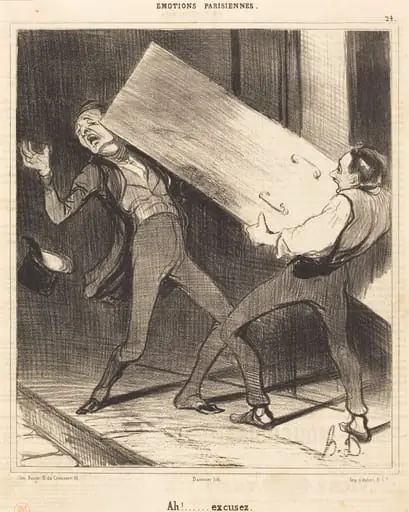 Ah! Excusez
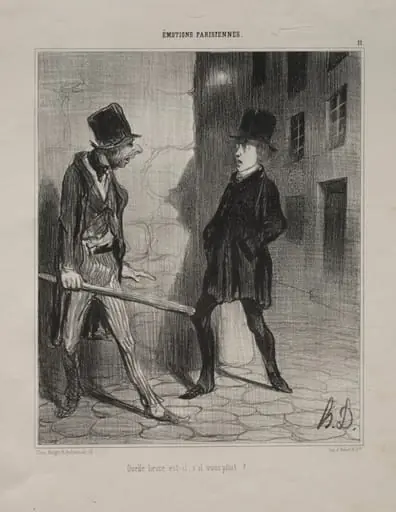 What Time is it, Please?
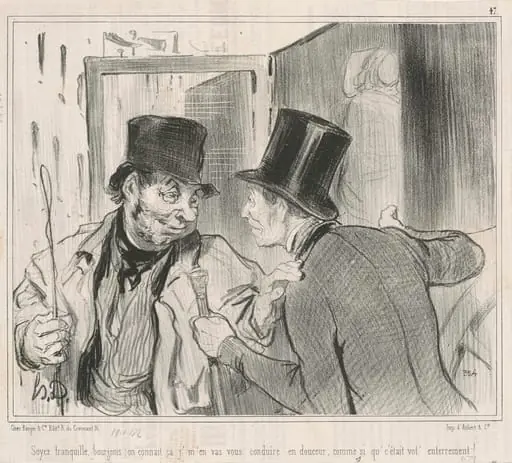 Soyez tranquille bourgeois, on connait
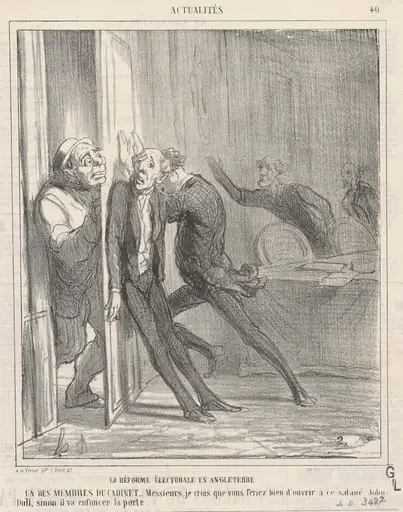 La rèforme électorale en angleterre
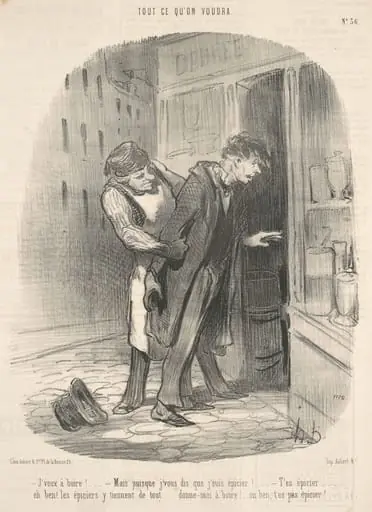 J'veux a boire! Mais puisque j'vous dis ...
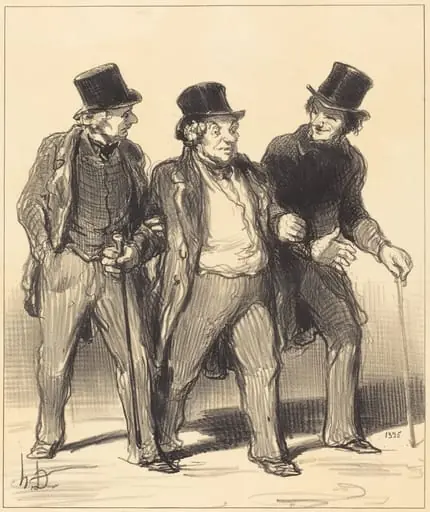 Il me semble que j'aperçois... un... chien... pas muselé!...
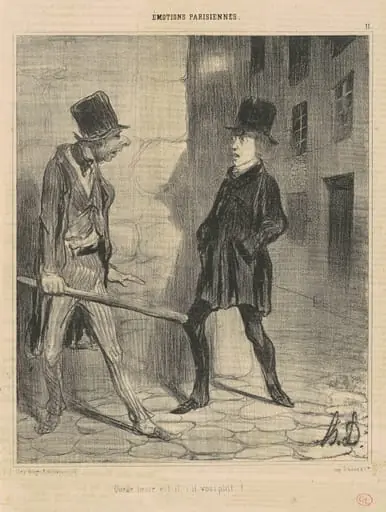 Quelle heure est'il, s'il vous plait?...
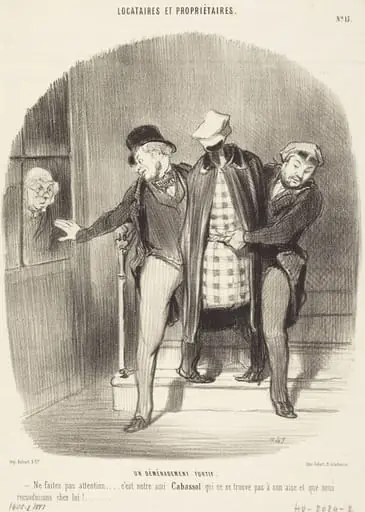 Un Déménagement furtif
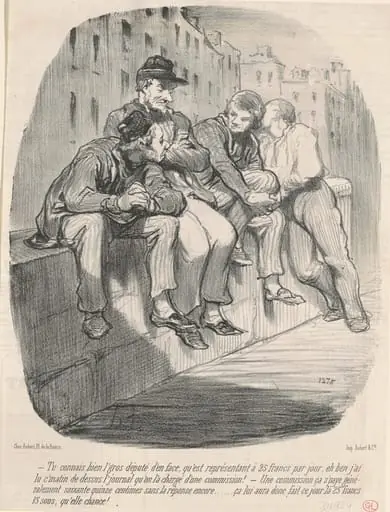 Tu connais bien l'gros député d'en face ...
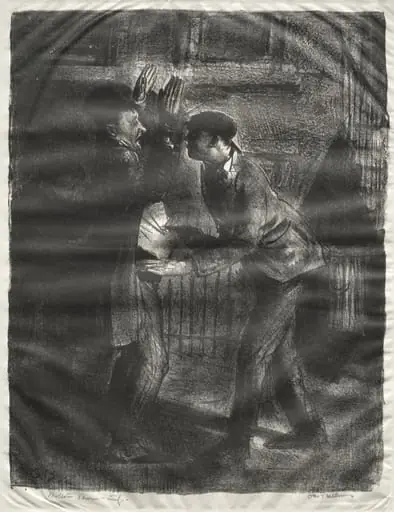 The Holdup, second state