Artwork
The Appeal to the People
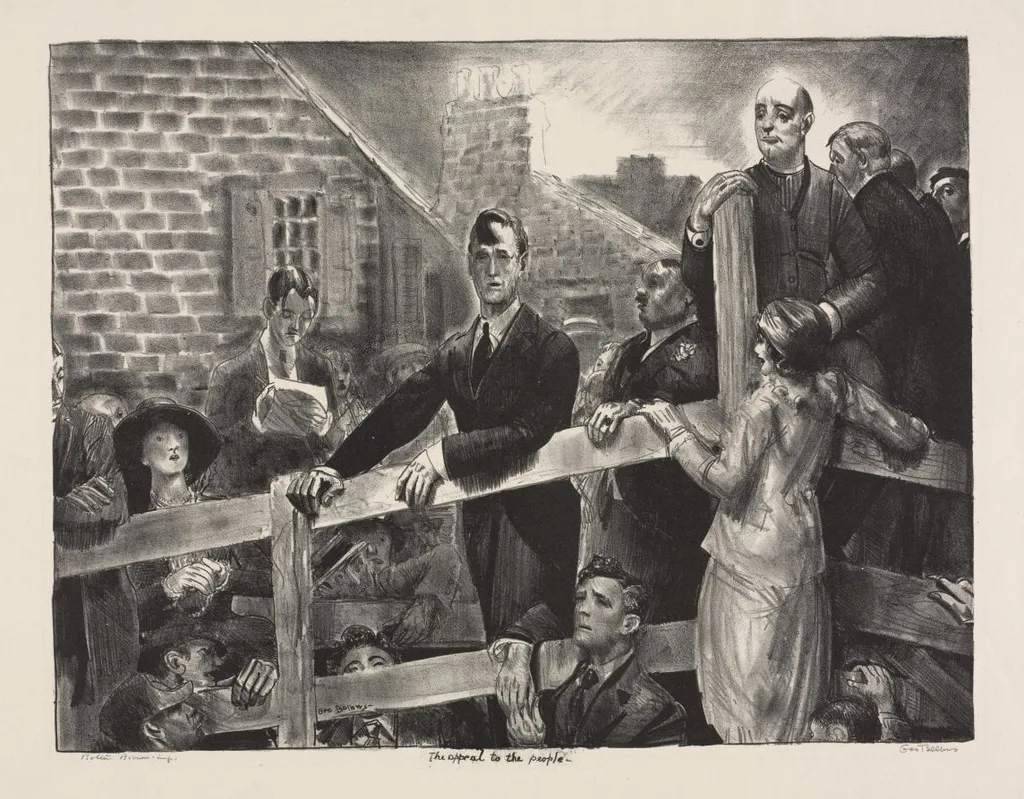
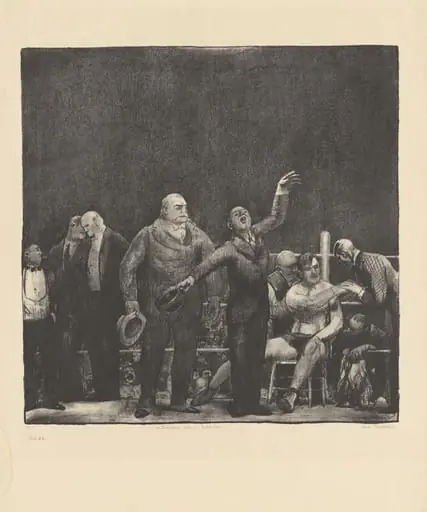
The Appeal to the People is a print by George Bellows. It dates from 1924 and is held in the collection of the Cleveland Museum of Art.
About this work
Overview
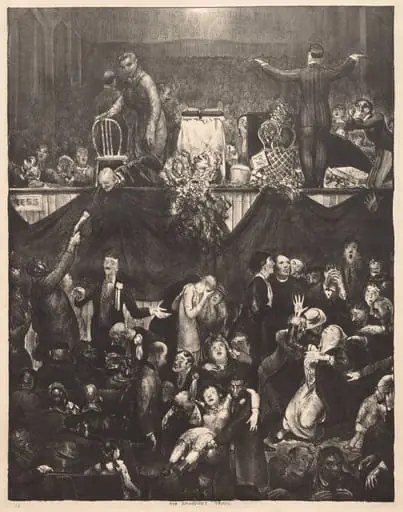
The composition centers on a speaker addressing an attentive, densely packed audience, suggesting a political or civic gathering.
Painted in 1924 by George Bellows, *The Appeal to the People* is a lithograph capturing a moment of public address. Unlike his earlier urban scenes, this work focuses on a single, charged interaction within a crowd. The composition centers on a speaker addressing an attentive, densely packed audience, suggesting a political or civic gathering. Bellows used the medium of print to reach broader audiences, aligning with his interest in social themes.
Subject & Meaning
The scene depicts a man in a suit delivering a speech to a crowd gathered on a balcony, his gesture reinforced by a rolled document. Faces in the crowd vary in expression—some intent, others skeptical—hinting at the complexity of public persuasion. The title suggests a direct appeal to civic consciousness, possibly referencing labor movements or reformist rhetoric of the era. The setting, with its brick architecture and partial sign reading 'BRO,' anchors the moment in a specific urban context.
Technique & Style
Bellows employed stark contrasts of light and shadow to isolate the speaker and heighten emotional tension. The figures emerge from deep, muted backgrounds through bold chiaroscuro, a technique that emphasizes volume and drama. Brushwork is energetic yet controlled, with simplified forms that prioritize movement and gesture over detail. The print’s tonal range enhances the sense of immediacy, drawing the viewer into the crowd’s collective focus.
History & Provenance
Created during Bellows’s later years, *The Appeal to the People* was produced as a lithograph, part of his engagement with printmaking after 1920. It was likely made for exhibition or distribution to amplify its social message. The work entered public collections shortly after its creation, reflecting its resonance with contemporary audiences interested in civic life and political expression during the interwar period.
Context
The early 1920s in America saw rising labor activism, political polarization, and public debates over reform. Bellows, though not an activist, was attuned to these currents. His choice to depict a speech—rather than a riot or sport—signals a shift toward quieter, yet no less potent, forms of social engagement. The setting, possibly Brooklyn given the 'BRO' sign, reflects his ongoing connection to New York’s evolving neighborhoods.
Legacy
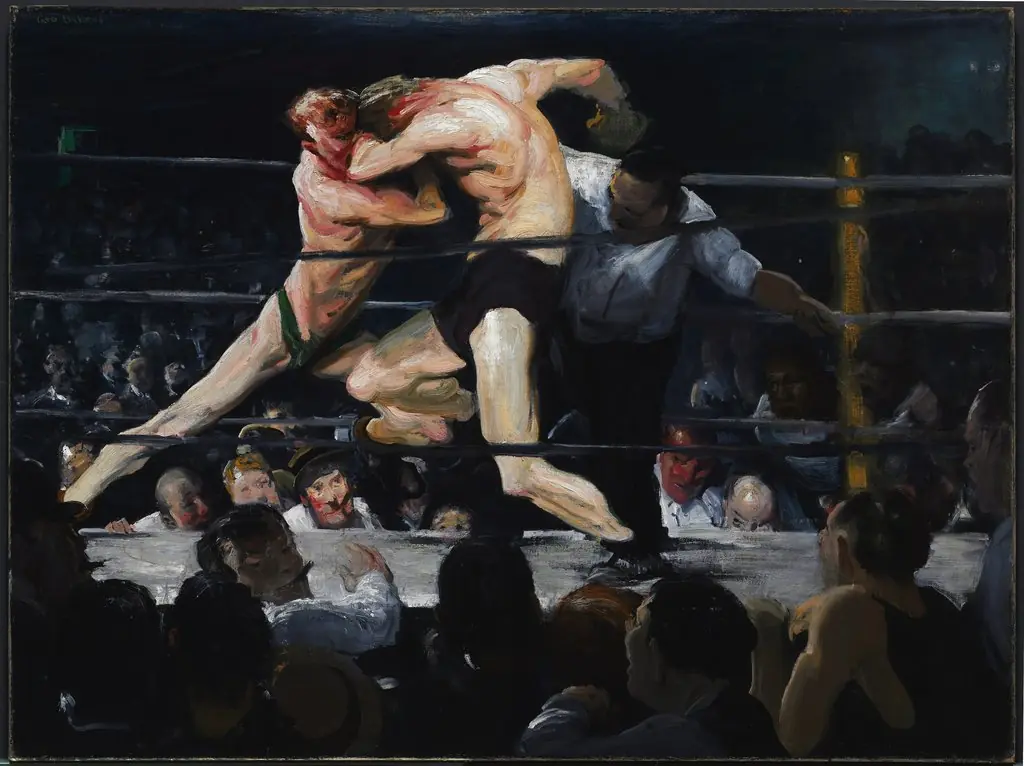
While less famous than Bellows’s boxing or tenement scenes, *The Appeal to the People* remains a significant example of his commitment to documenting ordinary civic moments. The print influenced later socially engaged artists who sought to capture public discourse through visual means. Its restrained power and focus on collective attention distinguish it within his oeuvre as a quiet but deliberate commentary on democracy in action.
Artist & collection
Artist
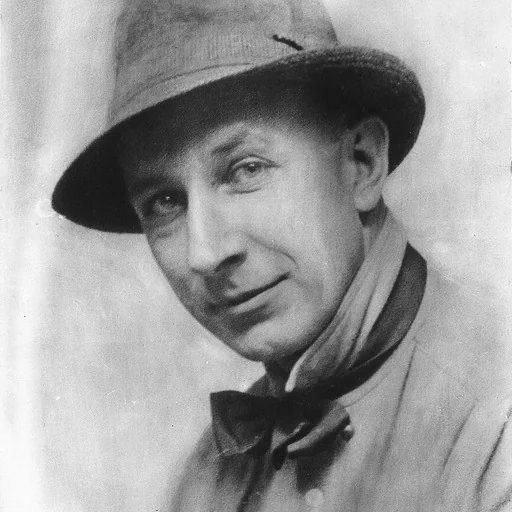
George Wesley Bellows (August 12 or August 19, 1882 – January 8, 1925) was an American realist painter, known for his bold depictions of urban life in New York City.