Artwork
A figure on a path between rocks and trees
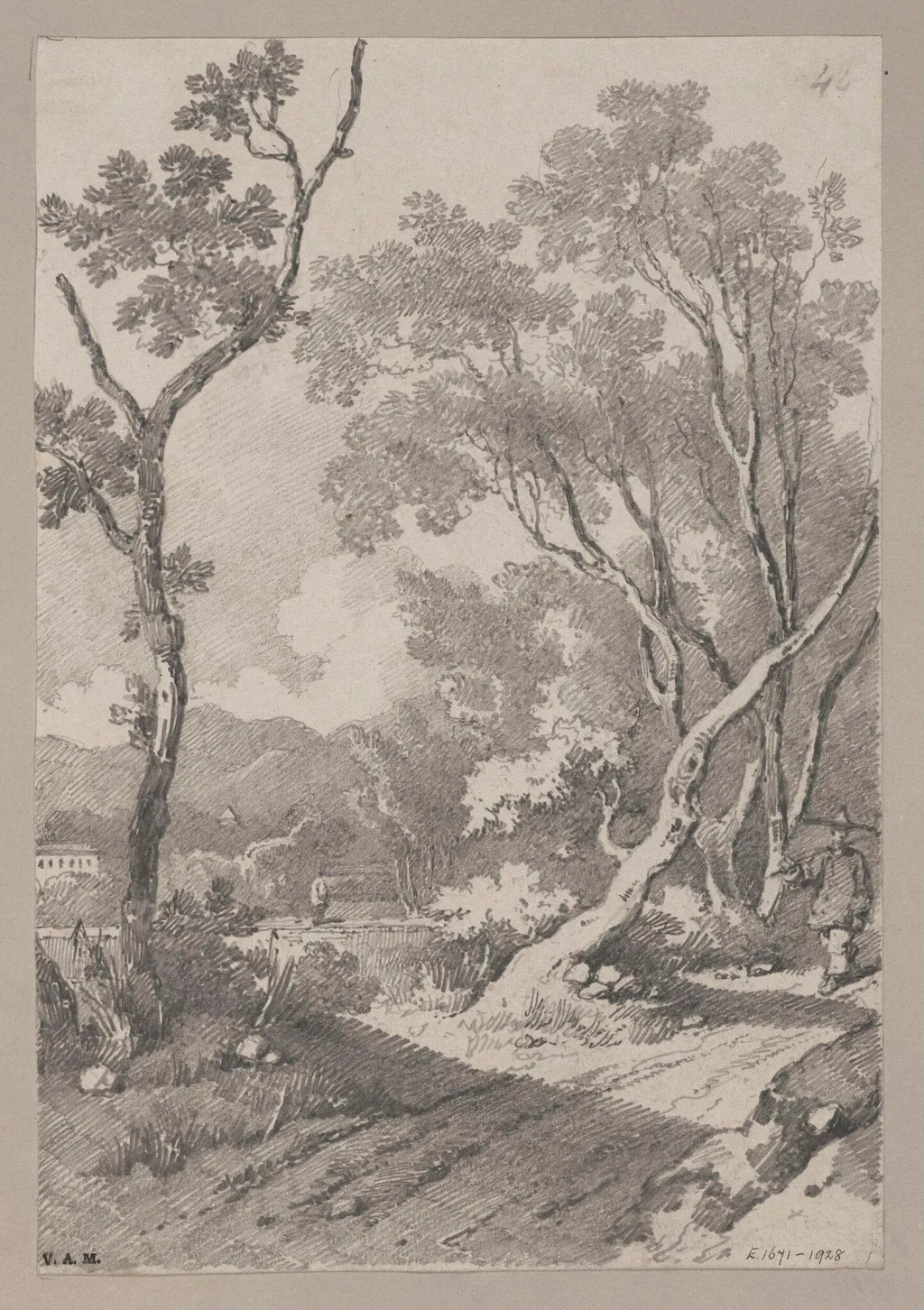
A figure on a path between rocks and trees is a drawing by the Romanticist artist George Chinnery. It dates from 19 and is held in the collection of the Victoria and Albert Museum.
About this work
George Chinnery made this drawing in 1825. It shows a path cutting between rocks and trees. The view looks out over open land called a “Campo” in Macau.
Chinnery worked in India and coastal China in the 1800s. This sketch is one of many he made outdoors. The museum keeps both quick studies and polished works.
Look up George Chinnery next.
Overview
Unlike finished paintings, this work captures a spontaneous moment of observation, reflecting his habit of recording landscapes directly from nature.
This 1825 drawing by George Chinnery depicts a narrow path winding between rocky outcrops and dense vegetation, offering a view toward the open, undeveloped land known locally as the 'Campo' in Macau. Executed in pencil or ink, it belongs to a series of outdoor sketches Chinnery produced during his time in southern China. Unlike finished paintings, this work captures a spontaneous moment of observation, reflecting his habit of recording landscapes directly from nature.
Subject & Meaning
The composition centers on a solitary figure traversing a quiet trail, framed by natural elements that suggest isolation and contemplation. The 'Campo'—a term for open, rural terrain in Macau—represents a liminal space between settlement and wilderness. Chinnery’s choice to include a human presence, however small, introduces a quiet narrative of movement and transience, aligning with his broader interest in everyday life along the China coast.
Technique & Style
Chinnery employed loose, rapid strokes to suggest form and texture, favoring immediacy over detail. The drawing’s economy of line conveys the density of foliage and the ruggedness of stone without heavy shading or finish. This approach reflects his training in British sketching traditions, adapted to the subtropical environment of Macau. The absence of perspective markers reinforces the sketch’s sense of spontaneity, typical of his plein-air practice.
History & Provenance
Created during Chinnery’s years in Macau, this drawing is one of many made between 1820 and 1852 as he documented the region’s landscapes and people. It was likely retained in his personal collection and later entered institutional holdings, possibly through acquisition from his estate or a collector. Related versions in oil and other media exist, indicating the sketch served as a preparatory study for later works.
Context
Chinnery worked as a British artist in India and coastal China during a period of expanding Western trade and colonial presence. His sketches offer rare visual records of Macau’s rural margins, where Portuguese influence met Chinese landscapes. Unlike official records, his drawings capture informal, unidealized views—valued today for their ethnographic and topographical insight rather than aesthetic polish.
Legacy
Chinnery’s outdoor drawings, including this one, helped shape the visual documentation of 19th-century southern China. They influenced later artists and travelers seeking authentic portrayals of the region. While not widely exhibited in his lifetime, these works are now recognized as important artifacts of cross-cultural observation, preserving the appearance of places that have since transformed beyond recognition.
Own this work as a print
Artist & collection
Artist
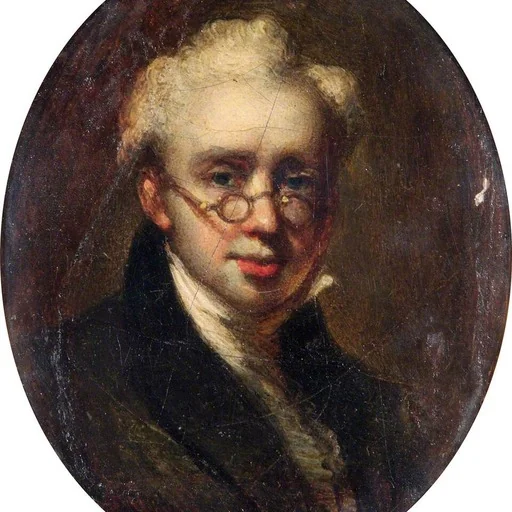
George Chinnery (Chinese: 錢納利; 5 January 1774 – 30 May 1852) was an English painter who spent most of his life in Asia, especially India and southern China.

 Italian Landscape
 Brook in the Val Mondois
 Abandoned Park
 Six Large Upright Landscapes: A Mother and Three Children at Rest
 The Woman on the Hinny
 Landscape with hermit
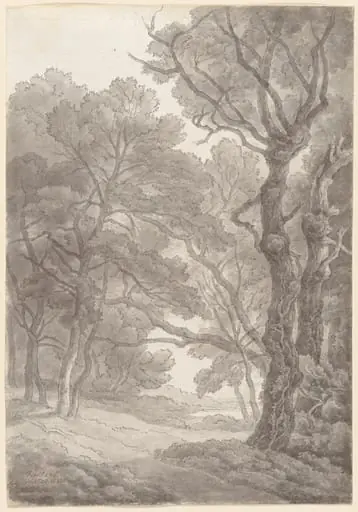 Trees at Fordland, Devon
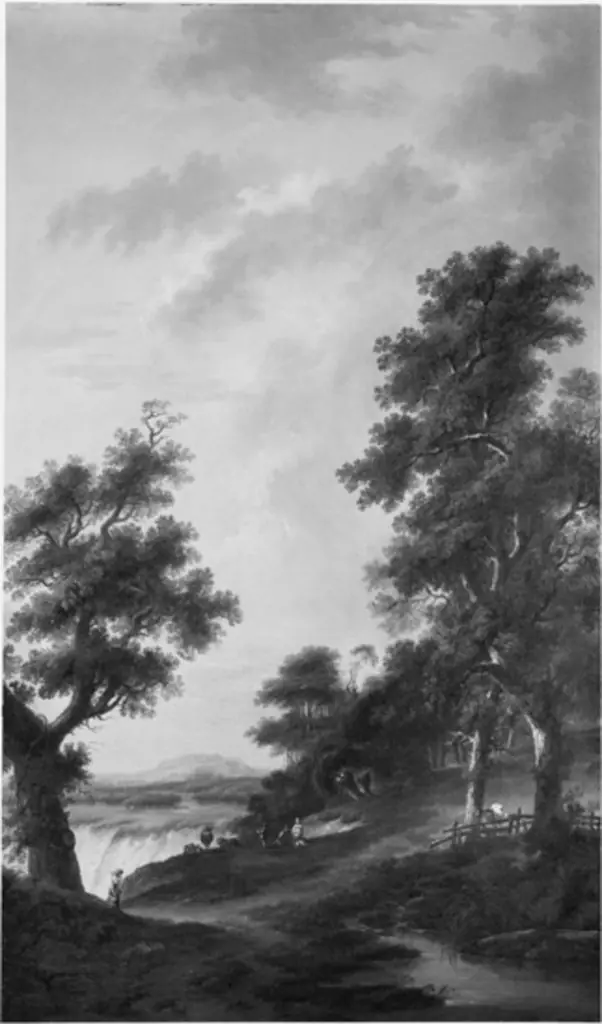 Komponierte Landschaft mit Staffage
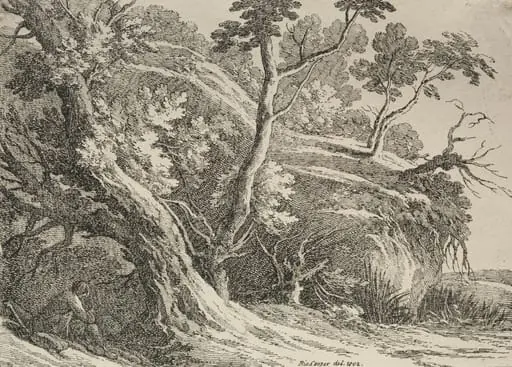 Specimens of Polyautography: Man Seated under an Oak
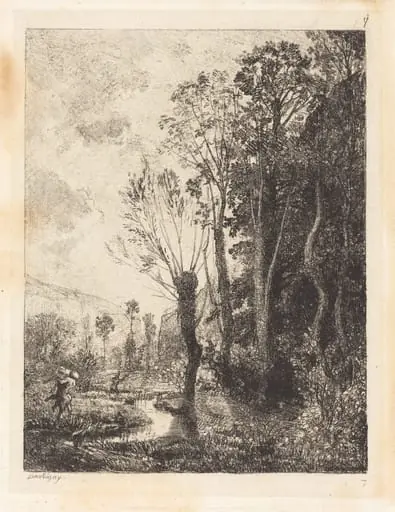 Satyr (Le Satyre)
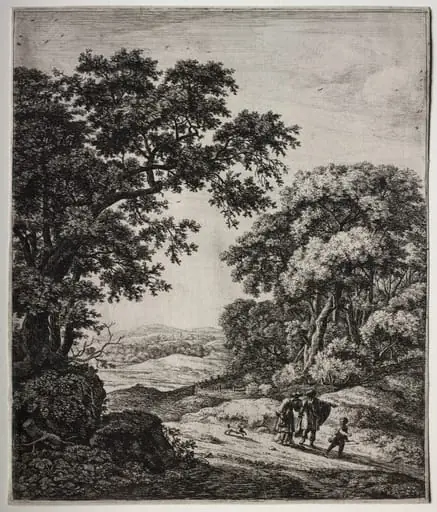 Six large upright landscapes with scenes from the Old Testament
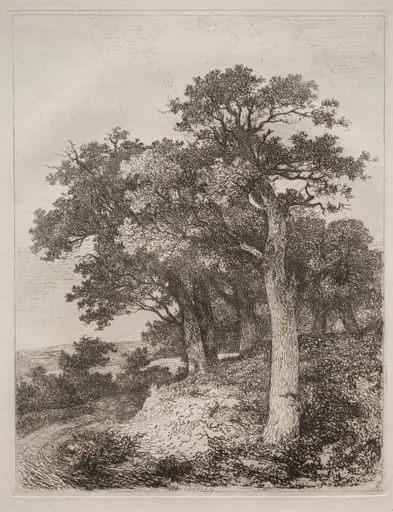 At Colney