Artwork
A Wayside Temple, China
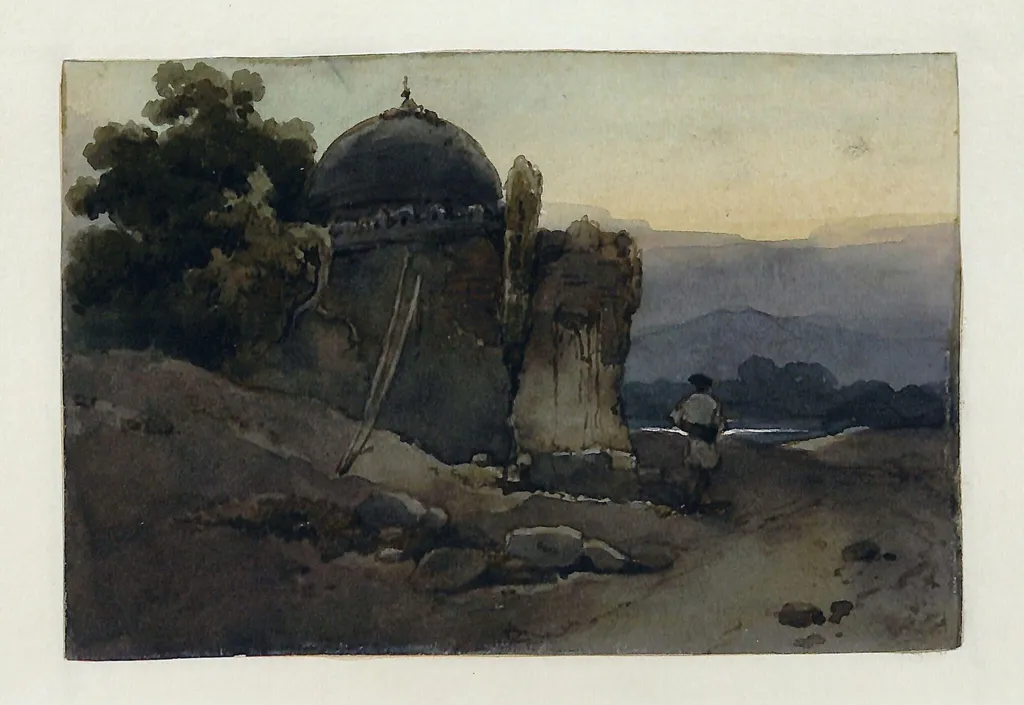
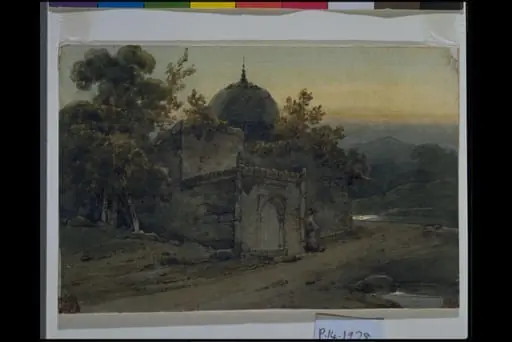
A Wayside Temple, China is a watercolor work on paper by the Patna School of Painting artist George Chinnery. It dates from 1850 and is held in the collection of the Victoria and Albert Museum.
About this work
Overview
Rendered in delicate washes, the composition emphasizes stillness and scale, with human presence minimized to underscore the solitude of the setting.
Painted in 1850 by George Chinnery, this watercolour captures a quiet rural scene in South Asia, likely in Bengal. The work presents a modest religious or funerary structure nestled against a rocky outcrop, surrounded by sparse vegetation and distant hills. Rendered in delicate washes, the composition emphasizes stillness and scale, with human presence minimized to underscore the solitude of the setting.
Subject & Meaning
The structure, possibly a tomb or temple, stands isolated amid natural terrain, suggesting a place of quiet devotion or remembrance. A solitary figure seated on the hillside faces the building, their small scale reinforcing the theme of human transience against enduring landscape. The ambiguity of the building’s function invites contemplation rather than narrative, aligning with the contemplative tone of Chinnery’s travel sketches.
Technique & Style
Chinnery employed loose, fluid watercolour washes to suggest form without detail, favoring atmosphere over precision. Soft gradients in the sky and mountains create depth, while muted earth tones ground the scene. The temple’s rounded dome and the figure’s minimal rendering are rendered with economy, allowing the viewer’s eye to rest in the quiet spaces between elements, characteristic of his observational approach.
History & Provenance
Created during Chinnery’s decades-long residence in South and Southeast Asia, the work reflects his practice of documenting local architecture and landscapes during his travels. Though catalogued under multiple titles, the piece remains unattributed to a specific site, consistent with his tendency to record impressions rather than topographical records. Its survival in collections suggests early appreciation for his ethnographic sketches.
Context
Chinnery worked in a period when European artists in Asia often recorded unfamiliar environments for audiences back home. Unlike grand colonial commissions, this piece avoids spectacle, focusing instead on quiet, everyday sites. Its subject matter aligns with a broader trend among British artists in India to depict spiritual and vernacular architecture with sensitivity, rather than exoticism.
Legacy
This watercolour exemplifies Chinnery’s role in shaping Western visual records of South Asian landscapes during the 19th century. His unembellished style influenced later artists interested in atmospheric realism over romanticized detail. While not widely exhibited, his works remain important for their understated documentation of regional architecture and daily life beyond colonial centers.
Artist & collection
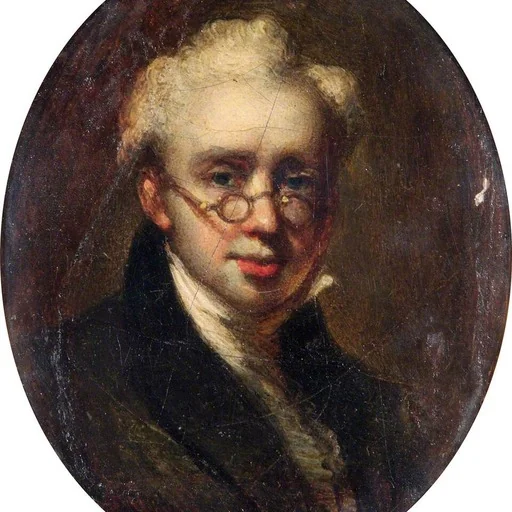
Artist
George Chinnery (Chinese: 錢納利; 5 January 1774 – 30 May 1852) was an English painter who spent most of his life in Asia, especially India and southern China.

 Chinese Temple, Evening
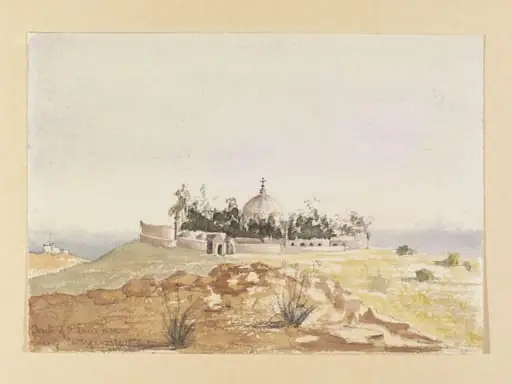 Tomb of St. Louis on the ruins of Carthage
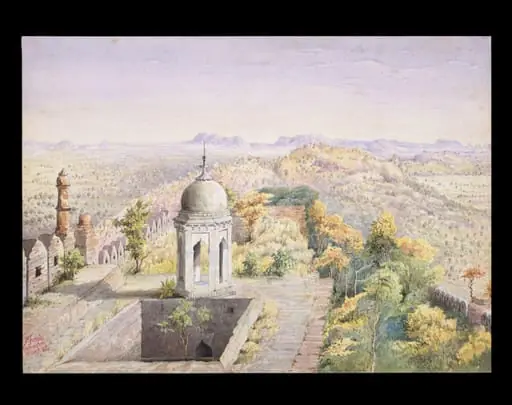 Landscape in Ambagarh, Bhandara (Central Provinces), India
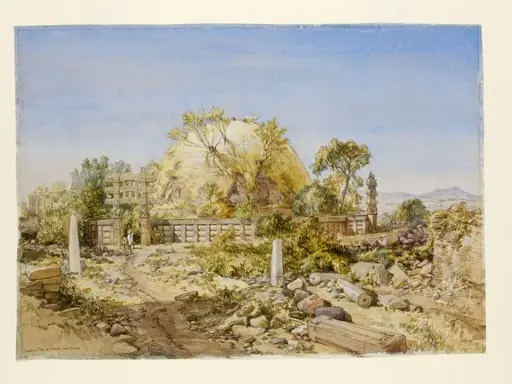 The Sanchi tope
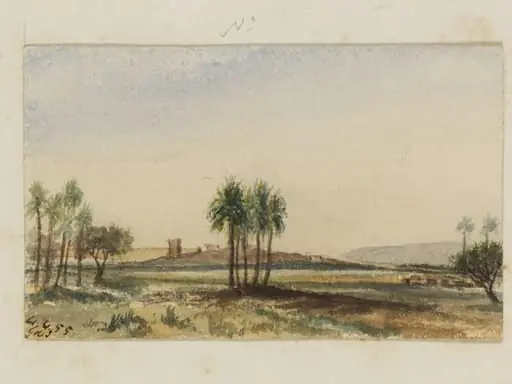 `Temple of Denderah. Distant view from bank of River. Upper Egypt'
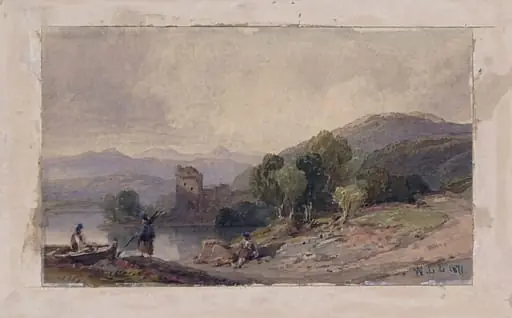 Kilchurn Castle
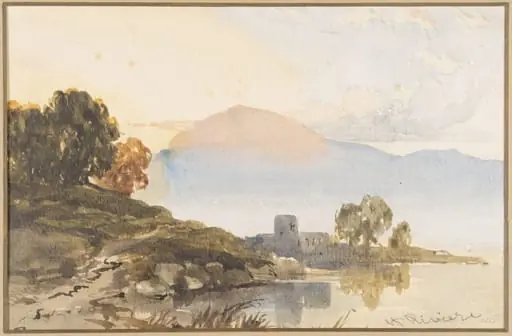 Mountain: Sunrise
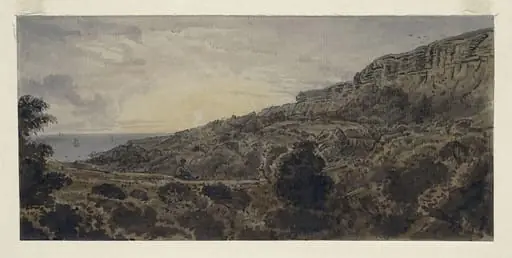 Landscape
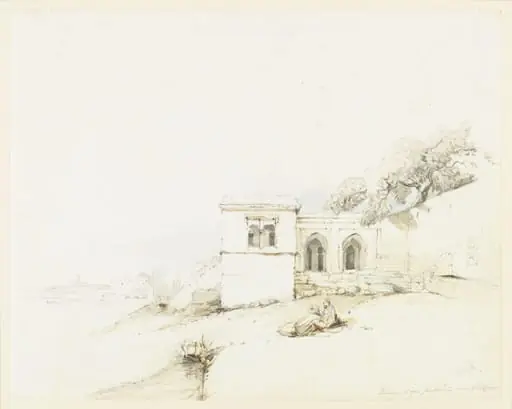 Ruines dune fontaine près dAlger
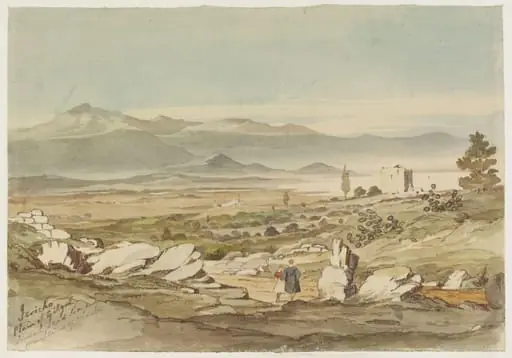 Jericho Plain of Gilgal, Jordan, Dead Sea, and Mountains of Moab
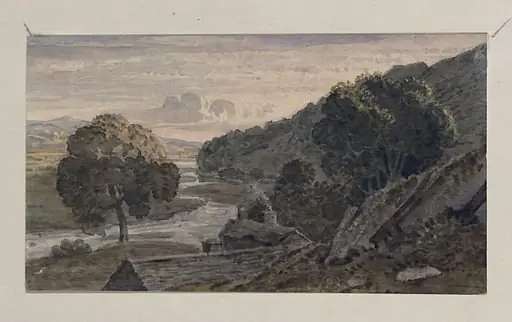 Landscape, with a wiinding river - evening
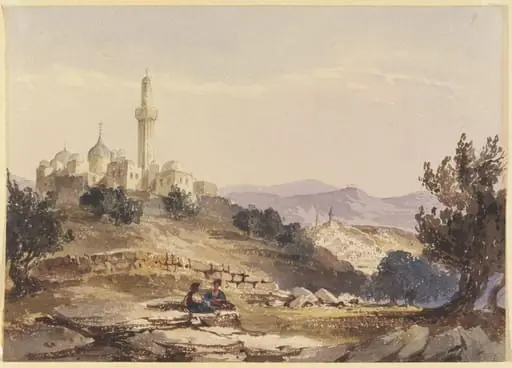 Mosque of the Ascension on the Mount of Olives