Artwork
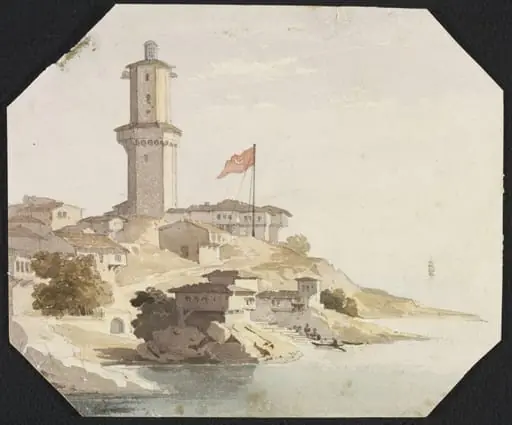
Mosque of the Ascension on the Mount of Olives
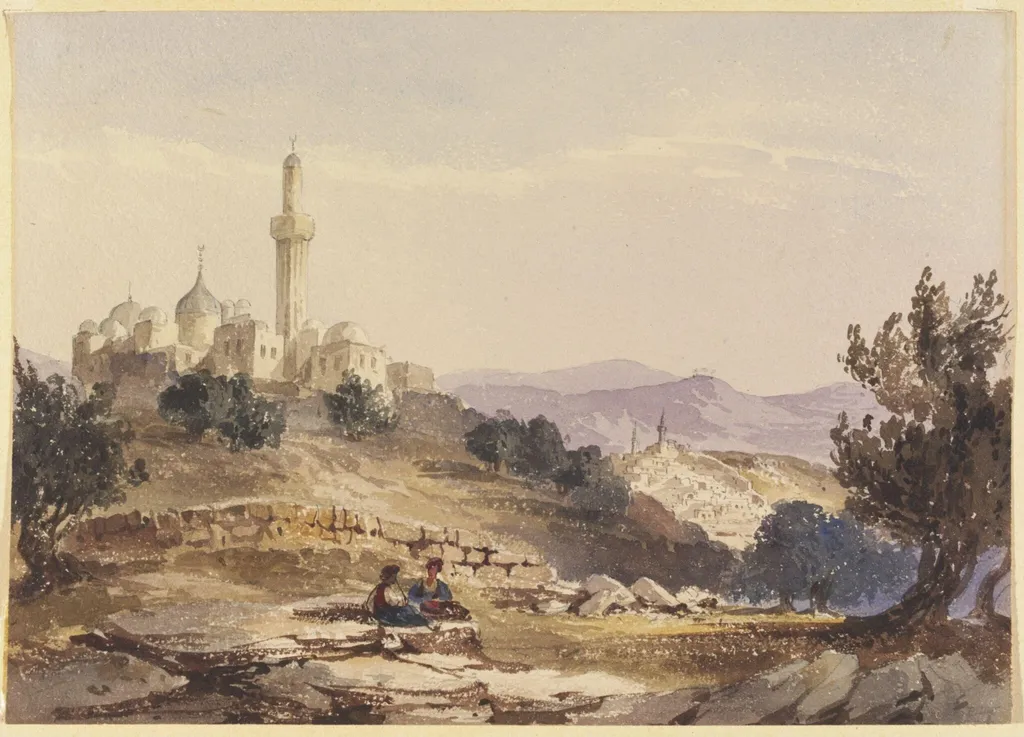
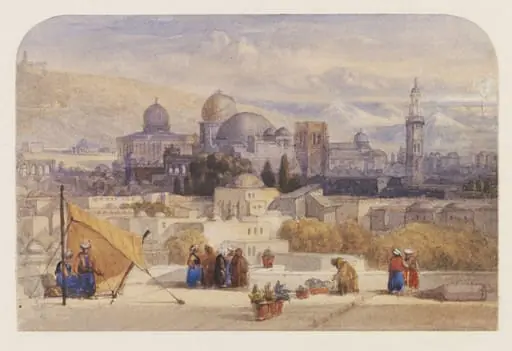
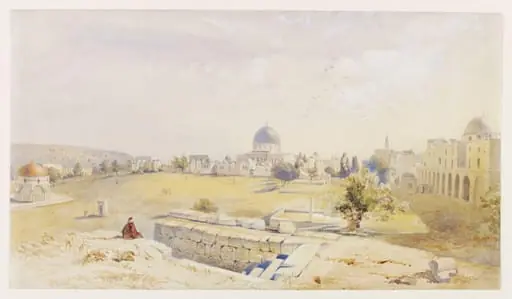
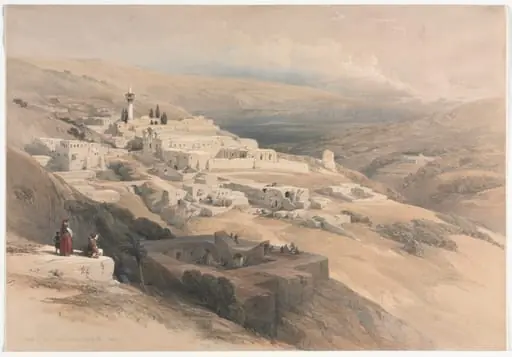
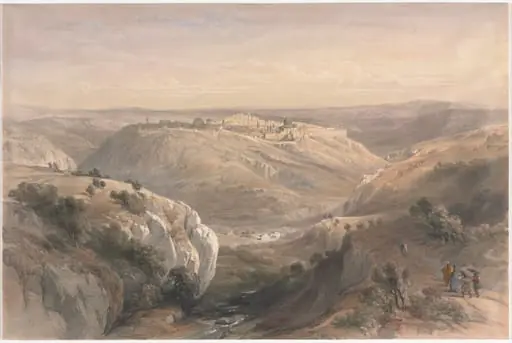
Mosque of the Ascension on the Mount of Olives is a watercolor work on paper by the American Folk Art artist William Page. It dates from 1834 and is held in the collection of the Victoria and Albert Museum. This watercolor portrays the Mosque of the Ascension atop the Mount of Olives, viewed from a lower slope.
About this work
Overview
The work belongs to William Page’s mature period, likely created between 1828 and 1840, and reflects his shift toward lyrical landscape representation.
This watercolor portrays the Mosque of the Ascension atop the Mount of Olives, viewed from a lower slope. The composition includes the village of Siloam in the distance and two figures seated near a narrow stream. Rendered in muted tones with delicate brushwork, the scene captures a tranquil, contemplative atmosphere. The work belongs to William Page’s mature period, likely created between 1828 and 1840, and reflects his shift toward lyrical landscape representation.
Subject & Meaning
The mosque, associated with the Islamic tradition of the Prophet Muhammad’s ascension, anchors the scene as a sacred landmark. Its placement on the hill contrasts with the humble human figures below, suggesting quiet reverence. The stillness of the figures and the undisturbed landscape imply a moment of solitude, aligning with Romantic-era ideals that valued nature as a space for introspection and spiritual resonance.
Technique & Style
Page employed loose, translucent washes to suggest dry terrain, sparse vegetation, and soft atmospheric light. The pale sky and muted earth tones create a harmonious tonal range, while minimal detail in the architecture and figures enhances the sense of calm. His brushwork avoids sharp definition, favoring subtle gradations that evoke the hazy quality of light in the Judean hills.
History & Provenance
The watercolor was once part of an album compiled by S. Bracebridge, containing works by several artists. It was later dispersed through auction, appearing at Sotheby’s in 1972. Page’s landscapes from this era are represented in institutional collections, including the British Museum, indicating his recognition among British watercolorists of the period.
Context
Created during a time of growing European interest in the Holy Land, this work reflects the Romantic fascination with distant, spiritually charged landscapes. Though not a topographical record, it responds to contemporary travel narratives and religious tourism, translating observed scenery into a mood-driven composition that prioritizes emotional tone over precise detail.
Legacy
Page’s approach here exemplifies the British watercolor tradition’s evolution toward poetic realism. While not widely known today, his works contribute to a broader 19th-century corpus that reimagined sacred sites through personal, atmospheric interpretation rather than documentary precision, influencing later landscape artists seeking emotional depth over topographical accuracy.
Own this work as a print
Artist & collection