Artwork
Landscape in Ambagarh, Bhandara (Central Provinces), India
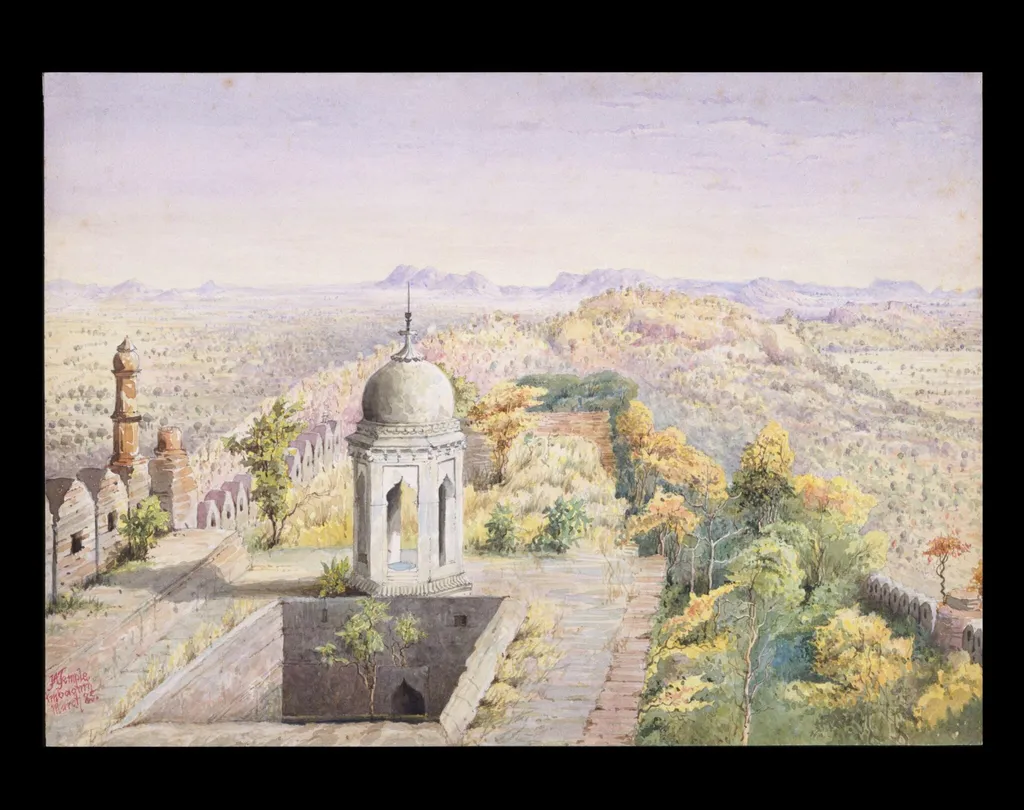
Landscape in Ambagarh, Bhandara (Central Provinces), India is a paint painting by the British Romanticist artist John Alexander Temple. It dates from 1885 and is held in the collection of the Victoria and Albert Museum.
About this work
A British officer painted this in India in 1885. You see a flat landscape with soft green hills, a few trees, and a distant village under a cloudy sky.
It’s unusual because it mixes British and Indian styles—tight brushwork meets local scenery. The artist wasn’t a pro painter but recorded what he saw.
Look up the Victoria and Albert Museum to see more like it.
Overview
Painted in 1885 by Major John Alexander Temple, this watercolor depicts a quiet stretch of landscape near Ambagarh in the Central Provinces of India.
Painted in 1885 by Major John Alexander Temple, this watercolor depicts a quiet stretch of landscape near Ambagarh in the Central Provinces of India. Temple, a British colonial officer and amateur artist, captured the scene during his service in the region. The work is one of five by him held by the Victoria and Albert Museum, acquired in 1937, reflecting his personal engagement with the Indian environment rather than formal artistic training.
Subject & Meaning
The painting presents a modest rural vista: a distant building with a minaret rises above a flat expanse of cultivated land, flanked by scattered trees, low mounds, and rolling hills under a diffuse sky. There is no dramatic narrative—only a quiet observation of place. The inclusion of local architecture amid open fields suggests an interest in the everyday topography of colonial India, recorded without idealization or overt symbolism.
Technique & Style
Temple employed precise, controlled brushwork typical of British watercolor traditions, yet the composition and subject matter align with Indian landscape conventions. The soft modeling of hills, the loose rendering of vegetation, and the atmospheric sky reveal an adaptation of European techniques to local visual rhythms. The result is a restrained, observational style that bridges colonial documentation and regional sensibility.
History & Provenance
John Alexander Temple, son of Sir Richard Temple, served in the Indian Civil Service and was stationed in the Central Provinces. His artistic output was personal, not commercial. The five known watercolors by him entered the V&A’s collection in 1937, likely through family donation or acquisition from his estate. Their survival reflects the informal artistic practices of British officials in 19th-century India.
Context
During the late 19th century, British officers often documented Indian landscapes as part of their administrative duties or personal interest. Temple’s work fits within a broader tradition of amateur topographical painting, distinct from official surveys or academic art. His father’s involvement in Indian art education may have influenced his approach, though Temple’s style remains unpolished and intimate, focused on quiet observation rather than grandeur.
Legacy
Temple’s paintings offer a modest but valuable record of colonial-era India through the eyes of a non-professional observer. They provide insight into how British officials engaged visually with their surroundings, blending European techniques with indigenous scenery. While not widely known, these works contribute to the understudied genre of amateur colonial art, preserving everyday landscapes now altered by time.
Artist & collection
Artist
This British artist painted detailed landscapes of Central India in the late 1800s.

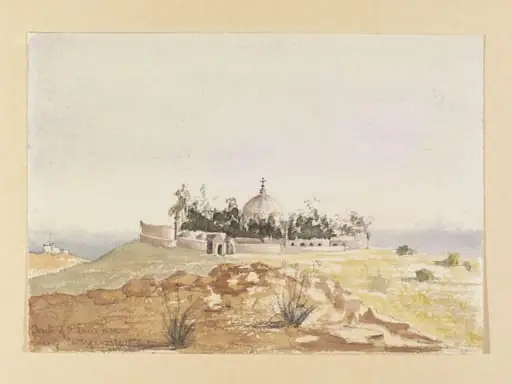 Tomb of St. Louis on the ruins of Carthage
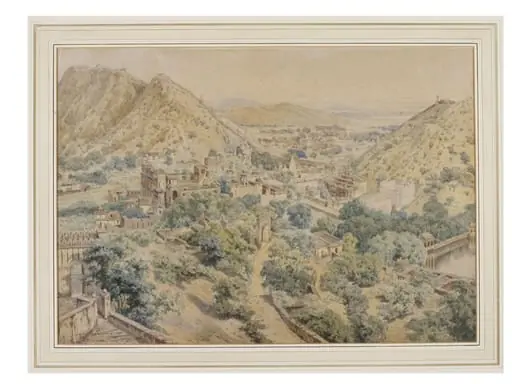 Bird's eye view of the old city of Amber
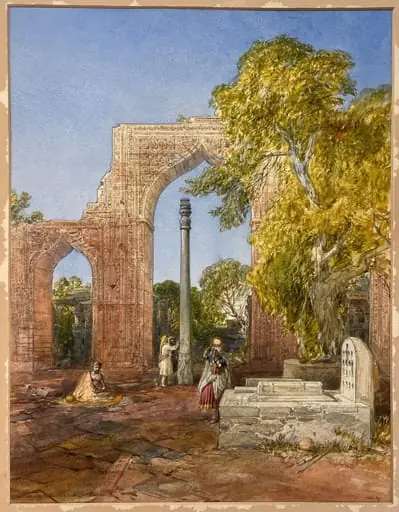 Iron Laht at the Kootub, Old Delhi
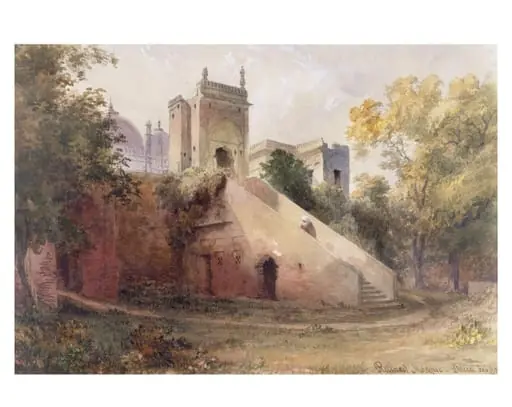 Ruined Mosque - Dacca
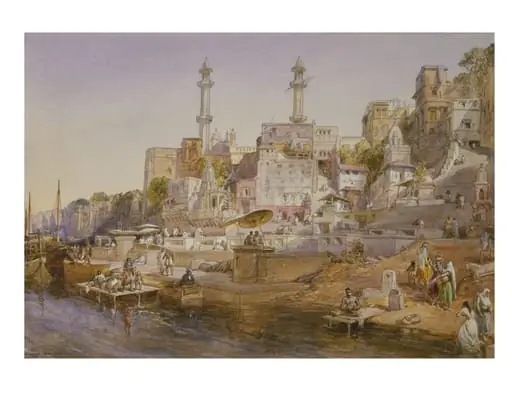 The Mosque of Aurangzeb and Panchganga Ghat from the Ganges, Benares.
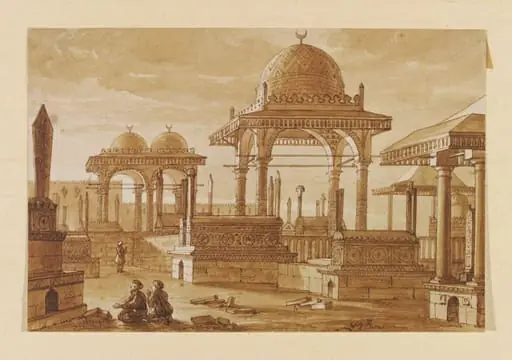 Part of the City of Tombs at Cairo
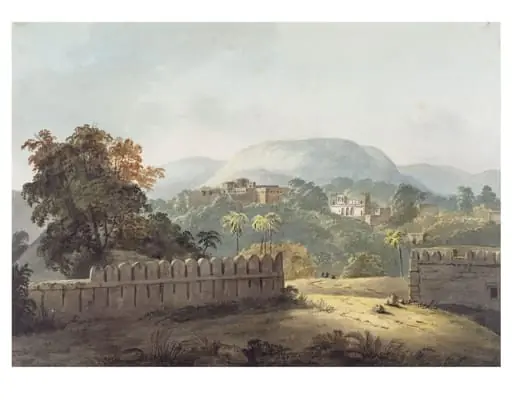 View of Latifgarh near Chunar
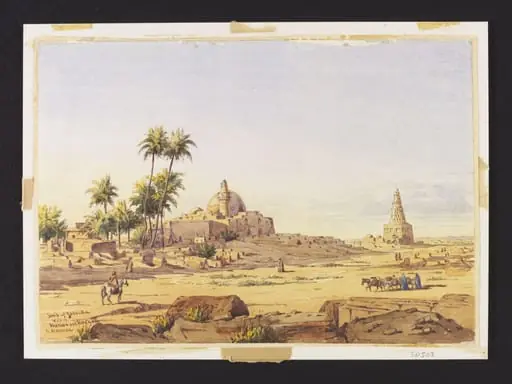 Tomb of Zobeida wife of Haroon ool Rashid in distance
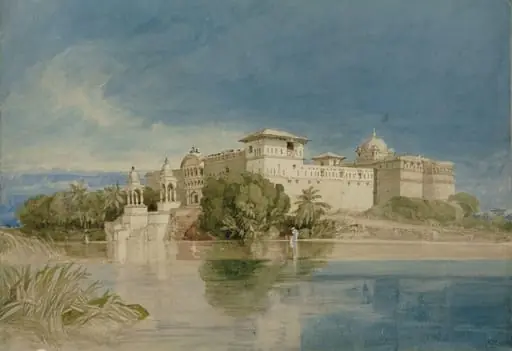 Palace at Perawa, Malwa, Bengal
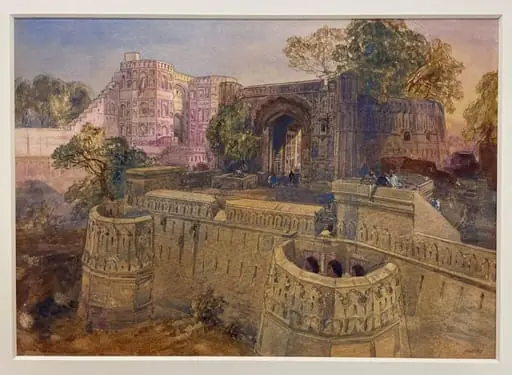 Taxali Darwaza, Lahore